
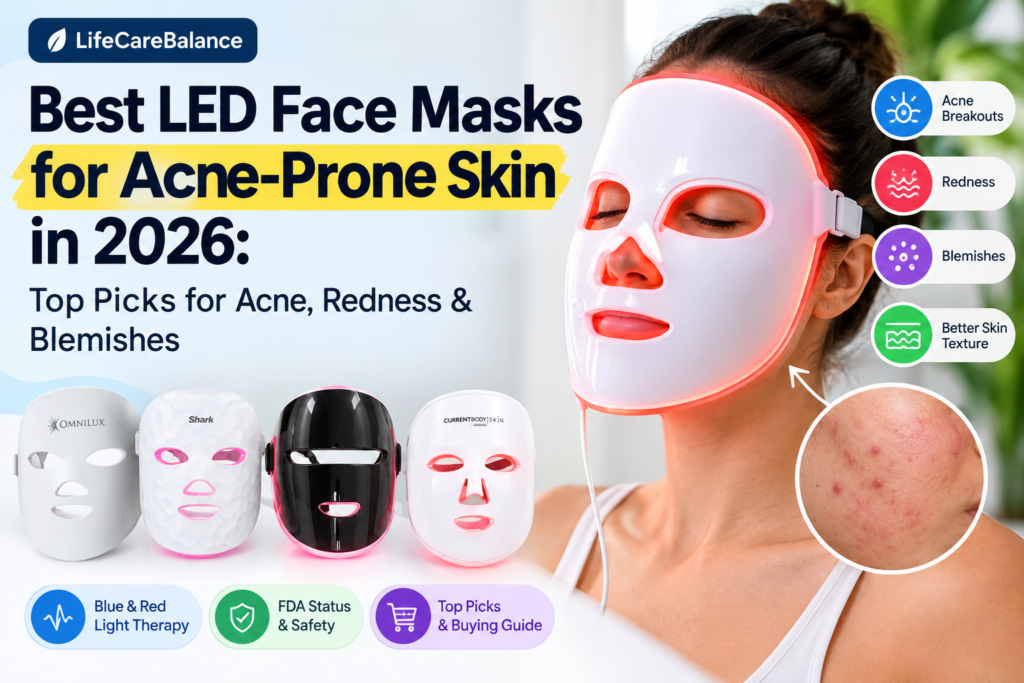
Best LED face masks for acne-prone skin in 2026. Compare top red and blue light masks for acne, redness, blemishes, inflammation, and clearer-looking skin.
LifeCareBalance.com is reader-supported. When you buy through links on our site, we may earn an affiliate commission at no extra cost to you. As an Amazon Associate, we earn from qualifying purchases.
If you’ve been researching the best LED face masks for acne-prone skin, you’ve probably noticed that most buying guides read like spec sheets: wavelength here, LED count there, a “shop now” button at the end. That’s not particularly helpful when your actual goal is clearer skin, less redness, and fewer new breakouts.
This guide takes a different approach. Instead of ranking devices from “best” to “worst,” it explains why a specific LED mask might be a better match for your skin than another one — based on wavelength, how the light is delivered, what the FDA has and hasn’t cleared it for, and what the published research actually supports. Acne isn’t one thing. A hormonal jawline breakout, a scattering of whiteheads, and lingering post-acne redness don’t necessarily respond the same way to the same device, so the “right” LED mask really does depend on what you’re dealing with.
One thing this article won’t do is promise a cure. LED light therapy is a supportive tool, not a replacement for a dermatologist’s diagnosis or a prescription-strength treatment plan, and the research behind it — while genuinely promising — is still evolving.
Quick Answer: Best LED Face Masks for Acne-Prone Skin
If you want the short version before diving into the details:
- Best overall for active breakouts: Omnilux Clear — a dedicated, FDA-cleared acne device with a straightforward two-wavelength design and no anti-aging distractions.
- Best value: CurrentBody Skin Blue Light Therapy Face Mask (Series 1) — the same core blue/red combination at a lower price point.
- Best for combining acne and early anti-aging concerns: Dr. Dennis Gross DRx SpectraLite FaceWare Pro — a fast, 3-minute treatment that layers acne and fine-line support.
- Best budget-premium pick with extra comfort features: Shark CryoGlow — adds under-eye cooling and a dedicated “Skin Clearing” mode at a lower price than most premium masks.
- Best for acne plus full anti-aging and relaxation: Therabody TheraFace Mask — the most fully loaded option, with red, red+infrared, and blue light plus vibration therapy, at a premium price.
Keep reading to see how these masks actually compare on the details that matter for acne-prone skin — and which one fits your specific combination of concerns and budget.
Comparison Table
| Product | Price | Acne Wavelength | Other Wavelengths | LEDs | Irradiance | Treatment Time | FDA Status | Best For |
|---|---|---|---|---|---|---|---|---|
| Omnilux Clear | $395 | Blue 415nm | Red 633nm | 132 | Not clearly disclosed | 10 min | FDA-cleared for mild-to-moderate acne vulgaris | Dedicated acne-only routine |
| CurrentBody Skin Blue Light Therapy Face Mask (Series 1 / Series 2) | $379.99 / $469.99 | Blue 415nm | Red 633nm | 132 (Series 1) / 220 (Series 2) | 30 mW/cm² | 10 min | FDA-cleared | Value pick; Series 2 adds chin coverage for jawline breakouts |
| Dr. Dennis Gross DRx SpectraLite FaceWare Pro | $455 | Blue 415nm | Red 630nm | 162 (100 red + 62 blue) | Not clearly disclosed | 3 min | FDA-cleared | Acne + early anti-aging in a short session |
| Shark CryoGlow | $349.99 | Blue 415nm | Red 630nm, near-infrared 830nm | 480 light sources (160 tri-wick LEDs) | Not clearly disclosed | 8 min (Skin Clearing mode) | FDA-cleared | Budget-premium option with cooling for redness/puffiness |
| Therabody TheraFace Mask | $649.99 | Blue (exact nm not clearly disclosed) | Red, red+infrared (exact nm not clearly disclosed) | 648 | Not clearly disclosed | 9 min preset (3-min single-mode option) | FDA-cleared, Class II device | Acne + anti-aging + facial relaxation in one device |
Prices reflect brand or major-retailer listings and may change or vary by retailer, color, or promotion.
Best LED Face Masks for Acne-Prone Skin in 2026
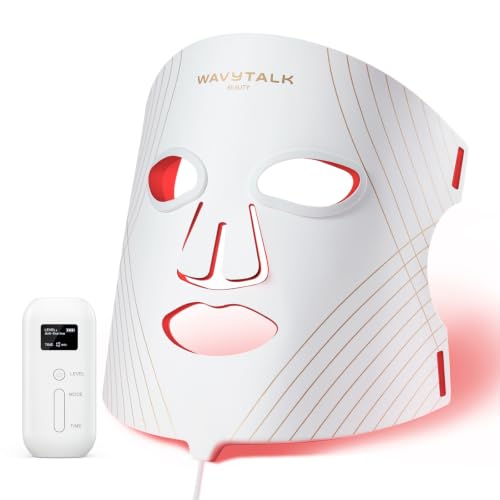
Omnilux Clear
- Clinically Proven Results in 28 Days: Achieve visible improvements backed by lab data with Wavytalk’s LED face mask ligh…
- 3-in-1 Light Therapy for Targeted Care: Wavytalk’s Glow Time LED Mask features Anti-Fine Line (630nm red + 850nm near-in…
- Medical-Grade Power & Full-Face Coverage: With 456 high-purity LED Chips and 40mW/cm² power density, this red light face…
Best for: A mask built specifically for acne, with no anti-aging modes competing for LED real estate.
Why we picked it: Omnilux Clear doesn’t try to double as an anti-aging tool — it’s built around two wavelengths (blue 415nm, red 633nm) aimed squarely at active breakouts and the inflammation around them. Specs: 132 LEDs, 10-minute sessions (4x/week for 6 weeks), FDA-cleared for mild-to-moderate acne vulgaris, flexible silicone with built-in eye shields, 2-year warranty, $395.
Acne-specific strengths: The blue/red pairing targets both surface bacteria and inflammation. Omnilux is also specific about not running the device beyond six consecutive weeks without a break — a more disciplined protocol than some competitors publish.
Pros: Focused, acne-only design; FDA-cleared for acne vulgaris; flexible, travel-friendly build; 2-year warranty. Cons: No anti-aging or pigmentation modes; premium price for two wavelengths; irradiance not publicly disclosed.
Buy it if acne is your primary skin concern and you want a dedicated tool. Skip it if you also want anti-aging support — see our best LED face masks roundup for broader options.
CurrentBody Skin Blue Light Therapy Face Mask

- Targeted full face, neck and chest anti-ageing treatment
- Reduces wrinkles by 30% after 8 weeks
- Upgraded best-fit coverage for optimal results
Best for: Shoppers who want the same acne wavelengths as pricier options at a lower price.
Why we picked it: CurrentBody’s mask uses the same 415nm/633nm pairing found in costlier devices, with Series 2 adding a chin strap for jawline and lower-face coverage. Specs: Series 1 — 132 LEDs, 30 mW/cm², $379.99. Series 2 — 220 LEDs, same wavelengths, added chin strap, $469.99. Both FDA-cleared; 3–5 sessions weekly for six weeks, then a break.
Acne-specific strengths: CurrentBody discloses its irradiance (30 mW/cm²) — more transparent than most competitors — and publishes detailed contraindications, including skincare ingredients and medications to avoid pairing with treatment.
Pros: Lower price than comparable acne masks; disclosed irradiance; Series 2 chin coverage; detailed contraindication guidance. Cons: Blue light can cause temporary hyperpigmentation in darker skin tones per the brand’s own disclaimer; not intended for cystic or nodular acne.
Buy it if you want a clinically studied wavelength pairing on a budget, especially with jawline breakouts. Skip it if you’re Fitzpatrick type V+ and concerned about hyperpigmentation — discuss with a dermatologist first. See our LED face mask review and comparison for a closer feature-by-feature look.
Dr. Dennis Gross DRx SpectraLite FaceWare Pro

- WHAT IT IS: Our compact, lightweight steamer is ideal for all skin types, especially those with dehydrated skin and enla…
- HOW IT WORKS: Micro-steam technology provides instant hydration, purifies, soothes, and softens skin, and clarifies the …
- FEATURES: The wide, open nozzle design offers full face steam coverage. Also includes an easy-to-carry handle and 5 ft c…
Best for: Managing breakouts and early fine lines with the fastest routine in this guide.
Why we picked it: At three minutes per session, this is by far the quickest treatment here, combining red light for fine lines with blue light for acne bacteria. Specs: 162 LEDs (100 red at 630nm, 62 blue at 415nm), 3-minute auto-shutoff sessions, three settings (red/blue/both), FDA-cleared, 1-year warranty, $455.
Acne-specific strengths: Its blue mode uses the same 415nm wavelength studied in the phototherapy research discussed later in this guide, and the auto-shutoff makes it easy to build into a daily routine.
Pros: Shortest treatment time here; dual acne-and-anti-aging function; FDA-cleared; long-established brand. Cons: 1-year warranty (shorter than competitors’ 2-year); irradiance not disclosed; rigid design may not contour every face shape.
Buy it if you want acne and early anti-aging addressed together without two separate devices. Skip it if acne is your only concern — a mask weighted more heavily toward blue LEDs may deliver more concentrated exposure. Our red light therapy buying guide covers wavelength ratios in more depth.
Shark CryoGlow
- RED LIGHT THERAPY MASK: CryoGlow is an at-home LED face mask combining red, blue & deep infrared light with under-eye co…
- MOST AWARDED LED MASK IN THE U.S.*: Real people. Real results. Clinically tested on 119 participants by an independent t…
- EXPERTLY DEVELOPED: Developed by Shark Beauty alongside optical light experts and engineers, bringing MedSpa-inspired re…
Best for: Acne, redness, and puffiness addressed in one device below premium pricing.
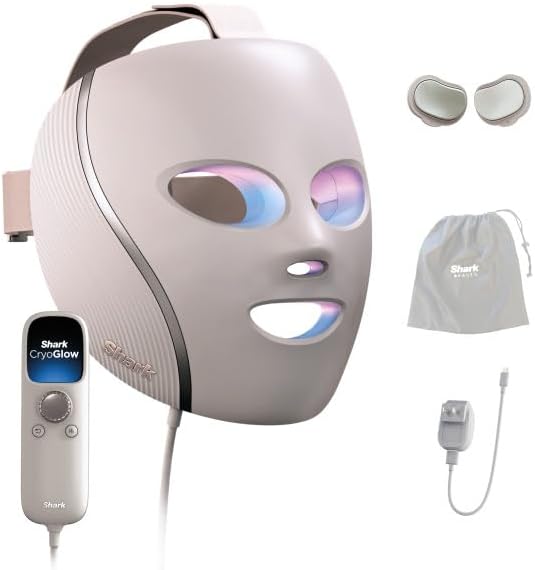
Why we picked it: CryoGlow adds a feature most competitors lack — built-in under-eye cooling (InstaChill) — plus a dedicated “Skin Clearing” acne mode rather than treating blue light as an afterthought. Specs: 480 light sources (160 tri-wick LEDs) emitting blue 415nm, red 630nm, and near-infrared 830nm; four modes including an 8-minute Skin Clearing Treatment; FDA-cleared; 2-year warranty; $349.99.
Acne-specific strengths: The Skin Clearing mode combines all three wavelengths rather than isolating blue light alone, aimed at both active blemishes and uneven-looking skin tone. Manufacturer claims cite improvement within four weeks — treat that as a starting expectation, not a guarantee.
Pros: Lower price than most three-wavelength masks; only mask here with built-in cooling; disclosed wavelengths; 2-year warranty. Cons: Newer entrant with a shorter track record than Omnilux or Dr. Dennis Gross; hard-shell design may fit differently than flexible silicone; irradiance not disclosed.
Buy it if you want a multi-wavelength device that also addresses puffiness, at a lower price than comparable three-wavelength competitors. Skip it if a hard-shell mask sounds uncomfortable — flexible silicone options like Omnilux or CurrentBody may fit more consistently.
Therabody TheraFace Mask
- Supercharged Face Care in 9 Minutes: A facial mask routine with 3 impressive LED light therapy technologies. Red light t…
- Vibrating Facial Massager, Too: TheraFace LED mask delivers a 15-minute vibration therapy treatment to key pressure poin…
- Powerful, Medical-Grade Lights: With 3x more LEDs than leading mask competitors for maximum efficacy and mask skincare r…
Best for: Acne support bundled with the most complete anti-aging and relaxation feature set here.
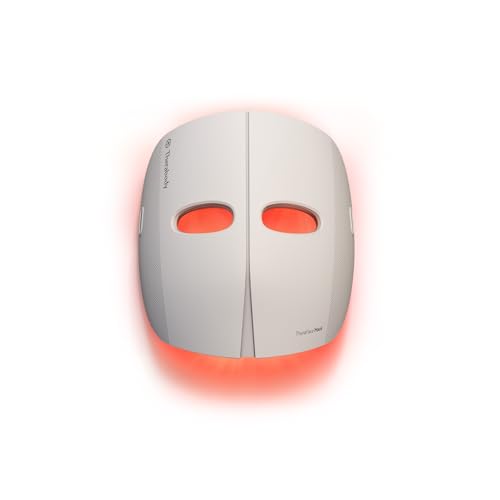
Why we picked it: TheraFace packs in more LEDs than any other device in this guide — 648 — across red, red+infrared, and blue light, plus vibration motors for facial massage. Specs: 648 medical-grade LEDs (exact nm not clearly disclosed); preset 9-minute treatment or selectable 3-minute single-wavelength sessions; vibration therapy; FDA-cleared Class II device; $649.99.
Acne-specific strengths: The blue-light mode targets acne-causing bacteria using the same general mechanism as every other mask here, though Therabody doesn’t publish its exact wavelength in nanometers, making direct comparison to the 415nm standard impossible.
Pros: Most complete feature set (three wavelength types plus vibration); full-face coverage including lips and nose; flexible session length; FDA-cleared Class II. Cons: Highest price in this guide by a wide margin; exact acne wavelength not disclosed; heavier and more complex than LED-only masks.
Buy it if you want acne, anti-aging, and tension relief in one premium device. Skip it if acne is your only goal — a dedicated mask like Omnilux Clear or CurrentBody’s puts more of its LED budget toward the wavelengths that matter most for breakouts.
How We Evaluated LED Face Masks for Acne
Selection here was based on acne relevance first: does the device include a clinically studied acne wavelength (blue light around 415nm), and is it FDA-cleared for that use? From there, we weighed publicly verifiable specifications — LED count, treatment time, disclosed irradiance where available — against price, facial coverage, comfort, eye safety, and how transparent each brand is about warranty and return terms. We did not conduct hands-on testing for this guide; all specifications are drawn from brand and retailer listings and cross-checked where possible. Where a spec could not be reliably confirmed, it’s marked “Not clearly disclosed” rather than estimated.
What Is LED Light Therapy?
LED light therapy uses light-emitting diodes to deliver specific wavelengths of visible or near-infrared light to the skin. Unlike lasers, LEDs are non-ablative and low-heat, meaning they don’t break the skin’s surface or require downtime. The idea is that different wavelengths penetrate the skin to different depths and interact with different biological targets — surface bacteria, blood vessels, or deeper collagen-producing cells — depending on the color of light used.
How Does LED Light Therapy Work for Acne?
For acne specifically, two wavelengths do most of the work discussed in consumer devices: blue light, which interacts with porphyrins produced by Cutibacterium acnes (formerly P. acnes) bacteria on the skin’s surface, and red light, which is thought to help calm inflammation and support the skin’s healing response. According to the American Academy of Dermatology, blue, red, and combined blue-and-red light devices can treat pimples but are not effective against blackheads, whiteheads, acne cysts, or nodules. That distinction matters — it’s the foundation of realistic expectations for any LED mask.
Blue Light vs Red Light for Acne
Blue light and red light do different jobs, and most acne-capable masks use both together rather than relying on just one.
- Blue light primarily targets surface bacteria associated with inflammatory acne.
- Red light is generally used to calm redness and support the skin’s recovery process after a breakout.
Neither wavelength on its own is a complete acne treatment, which is part of why nearly every mask in this guide pairs the two rather than offering blue light alone.
Why 415nm Blue Light Matters
You’ll see “415nm” mentioned constantly in LED mask marketing, and there’s a reason: this specific wavelength is the one most consistently studied in the published acne-phototherapy research, including a frequently cited study on phototherapy with blue (415 nm) and red (660 nm) light in the treatment of acne vulgaris, available via PubMed. Straying meaningfully from that wavelength — even by a few dozen nanometers — changes how the light interacts with skin bacteria, which is why devices that clearly disclose their exact wavelength (rather than a vague “blue light”) are generally easier to evaluate.
Can Red Light Help With Acne-Related Redness?
Research suggests red light in the 630–633nm range may help support the skin’s healing response and reduce the appearance of redness and inflammation associated with active breakouts. A widely referenced study on combination blue (415 nm) and red (633 nm) LED phototherapy in the treatment of acne vulgaris, published on PubMed, is part of why this specific pairing shows up so often in consumer devices. Results vary from person to person, and red light is best understood as a support for the skin’s own recovery process rather than a treatment that works independently of everything else in your routine.
Which Acne Types Can LED Light Help?
This is one of the most important — and most commonly oversimplified — parts of buying an LED mask. Not all “acne” is the same, and visible light doesn’t treat every form of it equally.
- Active inflammatory pimples: This is the category visible light is most associated with in published research.
- Blackheads and whiteheads: According to the AAD, visible light is not effective against these.
- Cystic or nodular acne: Also outside the scope of what visible light devices are shown to treat; this level of acne generally needs a dermatologist’s involvement.
- Post-acne redness: Red light may help support the appearance of calming this over time, though it won’t erase textural scarring.
- Uneven-looking skin tone and texture: Some users report improvement with consistent use, but evidence here is less robust than for active pimples specifically.
If your acne consistently includes deep, painful cysts or nodules, an LED mask alone is unlikely to be the right primary tool — this is exactly the situation where seeing a dermatologist matters more than any device.
LED Mask Specs Explained
Wavelength is the color of light measured in nanometers (nm) and determines what it interacts with in the skin — the most consistently studied acne combination is blue around 415nm paired with red around 630–633nm, which every mask in this guide uses. Irradiance (or power density, in mW/cm²) is how much light energy reaches the skin per second. Treatment dose combines wavelength, irradiance, and treatment time into the total light energy delivered per session. LED count is simply how many diodes a device has, and it’s tempting to assume more equals better — but count alone doesn’t reveal wavelength accuracy, irradiance, or how evenly light is distributed across the face. A mask with fewer, well-placed LEDs at the correct wavelength can outperform one with more LEDs at a weaker or less relevant wavelength, so it’s worth looking past the LED count to wavelength and disclosed power density whenever that information is available.
FDA Registered vs FDA Cleared vs FDA Approved: What Actually Matters
These three terms get used almost interchangeably in marketing copy, but they mean different things, and only one of them applies to the acne LED masks in this guide.
- FDA registered simply means a company has registered its facility and listed its device with the FDA. It is not a safety or effectiveness review, and a device can be “FDA registered” without ever being cleared for a specific medical claim.
- FDA cleared means the device went through a 510(k) premarket review process and was found to be “substantially equivalent” to an already-legally-marketed device for a specific intended use. This is the status that applies to every acne mask reviewed in this guide.
- FDA approved is a higher bar generally associated with drugs and certain high-risk (Class III) devices that go through a more extensive premarket approval process. Consumer LED acne masks are not FDA approved — they’re FDA cleared.
The FDA’s own product classification for this device category, listed as “over-the-counter powered light based laser for acne,” specifically describes a device intended for OTC use to treat mild-to-moderate acne vulgaris, emitting light in the red and blue region of the spectrum. That “mild to moderate” language is doing a lot of work — it’s the FDA’s own boundary on what these devices are cleared to claim, and it’s part of why more severe acne generally needs a different approach. You can also look up individual device listings directly, such as the CurrentBody Skin Anti-Acne LED Mask’s FDA device listing, to see how a specific product is registered.
Don’t assume a device is FDA cleared just because a listing uses the word “FDA” somewhere in its marketing — “FDA registered” and “FDA cleared” are routinely used loosely, and only the latter reflects an actual review of the device’s intended use.
LED Face Mask for Active Breakouts, Redness & Blemishes
Active breakouts: Look for a mask with a disclosed 415nm blue-light mode and a reasonable weekly usage schedule — Omnilux Clear and CurrentBody’s mask are both built specifically around this.
Redness: Red light around 630–633nm is the wavelength most associated with calming the look of redness; Shark CryoGlow’s added cooling technology can provide additional comfort here.
Blemishes and post-acne marks: Consistency matters more than any single device feature — most brands recommend a defined multi-week course rather than sporadic use.
Best LED Masks for Sensitive Acne-Prone Skin
If your skin tends to react easily, look for masks with clearly stated sensitivity-test instructions (CurrentBody explicitly recommends a patch test before first use) and avoid combining LED treatment with active exfoliants, retinoids, or benzoyl peroxide on treatment days, since these can increase photosensitivity.
LED Face Masks for Acne by Budget
Under $100: True clinical-grade acne devices are rare at this price point; see our guide to LED face masks under $100 for what’s realistically available and the trade-offs to expect. $100–$250: Few FDA-cleared acne-specific masks live here — this range more often includes entry-level red-light-only panels rather than full acne masks. $250–$400: Omnilux Clear, CurrentBody Series 1, and Shark CryoGlow fall here and represent the sweet spot for dedicated, FDA-cleared acne treatment. $400+: Dr. Dennis Gross FaceWare Pro, CurrentBody Series 2, and Therabody TheraFace Mask add anti-aging features, expanded coverage, or extras like vibration massage.
How to Use an LED Face Mask Correctly
Cleanse your skin thoroughly before each session and remove all makeup, sunscreen, and heavy skincare products, since these can block light from reaching the skin. Use the device on dry skin, secure it according to the manufacturer’s fit instructions, and use any included eye protection. After treatment, most brands recommend continuing with the rest of your normal skincare routine, including moisturizer.
How Often Should You Use an LED Face Mask?
Rather than following a generic universal schedule, follow the specific instructions that come with your device. Recommended frequency varies meaningfully across the masks in this guide — from three to five sessions per week over a defined multi-week course, often followed by a maintenance break. Using a device more often than instructed doesn’t necessarily speed up results and may increase the risk of skin irritation.
When Should You Expect Results?
Manufacturer timelines in this guide range from as early as a few days for initial changes to six-to-ten-week courses for more complete results, with several brands recommending a short break after the initial course before resuming. Evidence is still evolving on exactly how much visible improvement to expect and how consistent that improvement is across different skin types and acne severities. Results vary, and a mask that works well for one person’s breakouts may do less for someone else’s.
LED Face Mask Safety
Eye protection matters, particularly with blue light — most masks include eye shields or goggles, and skipping them is not advisable. People taking photosensitizing medications (including certain antibiotics, retinoids like isotretinoin, and some diuretics) should consult a doctor before starting LED treatment, as several brands explicitly list these as contraindications. The same caution applies to anyone with an active skin condition, a recent cosmetic procedure or surgery, a history of skin cancer, or who is pregnant or breastfeeding — evidence in these situations is limited, and manufacturer instructions typically recommend checking with a doctor first. If you experience unusual irritation, stop use and consult a dermatologist.
Who Should Avoid or Discuss LED Therapy With a Dermatologist?
Anyone with cystic or nodular acne, a diagnosed skin condition like rosacea or vitiligo, a history of skin cancer, photosensitive disorders, or who is currently using strong topical acne medications should talk to a dermatologist before adding an LED mask to their routine. This is also true for anyone unsure whether what they’re dealing with is actually acne — some conditions that look similar respond very differently to treatment.
LED Face Mask vs Red Light Therapy Panel
An LED mask is convenient, hands-free, and designed specifically to fit facial contours, but it typically covers less surface area and offers less flexibility over positioning than a standalone panel. A red light therapy panel can treat larger areas of the body and often allows for a wider range of session lengths and distances, but it requires more setup and doesn’t offer the same targeted, all-at-once facial coverage. For acne specifically, a mask’s built-in blue-light component is a meaningful advantage, since many panels are red/near-infrared only. If you’re comparing the two more specifically, our LED face mask vs red light therapy panel guide covers the trade-offs in more depth, and our budget red light therapy panels roundup is worth a look if body coverage matters more to you than facial convenience.
At-Home LED Mask vs Professional Light Treatment
In-office treatments generally use more powerful equipment and can be combined with other approaches, like photodynamic therapy, that aren’t available in consumer devices. According to the AAD, in-clinic light and laser treatments for acne typically require a series of sessions, and results are usually longest-lasting but often need follow-up treatments once or twice a year to maintain. At-home masks are gentler, more convenient, and far less expensive per session, but they’re also less powerful and are intended to be a supportive, ongoing part of a skincare routine rather than a substitute for professional treatment of more severe acne.
Is an LED Face Mask Worth It for Acne-Prone Skin?
For people with active inflammatory pimples and realistic expectations, a well-chosen LED mask can be a reasonable at-home addition to a broader acne-care routine — particularly for those who’ve already tried basic over-the-counter approaches and want another layer of support. It’s not going to replace prescription treatment for moderate-to-severe acne, and it won’t do much for blackheads, whiteheads, or cystic breakouts. Whether it’s “worth it” really depends on matching the device to your specific acne pattern, being consistent with the recommended schedule, and treating it as one part of a routine rather than the whole plan.
Frequently Asked Questions
What is the best LED face mask for acne-prone skin in 2026? There isn’t a single universal answer — it depends on whether you want a dedicated acne-only device (Omnilux Clear, CurrentBody’s blue-light mask), a dual acne-and-anti-aging option (Dr. Dennis Gross), or a broader feature set (Shark CryoGlow, Therabody TheraFace Mask).
Is blue or red LED light better for acne? They serve different roles. Blue light is associated with targeting surface bacteria linked to breakouts, while red light is more associated with calming redness and inflammation. Most acne-capable masks combine both rather than using one alone.
What wavelength is best for acne LED masks? The most commonly studied combination is blue light around 415nm paired with red light around 630–633nm.
Does 415nm blue light help acne? Research suggests 415nm blue light may help with active pimples by interacting with bacteria-produced compounds on the skin’s surface, though it is not shown to be effective against blackheads, whiteheads, cysts, or nodules.
Can red light reduce acne redness? Evidence suggests red light in the 630–633nm range may help support the appearance of reduced redness and inflammation, though individual results vary.
Can LED masks help with blemishes? LED masks are generally associated with helping the appearance of active inflammatory blemishes rather than blackheads, whiteheads, or deeper cystic acne.
Are LED face masks good for sensitive acne-prone skin? Many are marketed as gentle and non-irritating, but sensitive skin should start with a patch test where recommended and avoid combining sessions with strong actives like retinoids or benzoyl peroxide on the same day.
How often should you use an LED mask for acne? Follow the specific schedule provided with your device rather than a generic rule — most brands in this guide recommend three to five sessions per week over a defined multi-week course.
How long does an LED mask take to work for acne? Manufacturer timelines vary from days for early changes to six-to-ten weeks for more complete results, and evidence on consistency of these timelines is still evolving.
Can you use an LED face mask every day? Some devices are designed for daily use, but most acne-specific protocols in this guide recommend three to five sessions weekly rather than daily use — check your specific device’s instructions.
Are LED face masks safe for acne? Generally, yes, when used according to instructions and with proper eye protection, though people on photosensitizing medications, with active skin conditions, or who are pregnant or breastfeeding should consult a doctor first.
Can LED masks treat cystic acne? No. Visible light devices, including at-home LED masks, are not shown to be effective against cystic or nodular acne. This level of acne generally requires a dermatologist’s involvement.
Can LED masks help blackheads and whiteheads? According to the AAD, visible light is not effective against blackheads or whiteheads. LED masks are more associated with active inflammatory pimples.
Should I use skincare before or after an LED mask? Cleanse and remove all products before treatment so light can reach the skin directly, then apply your regular serums and moisturizer afterward.
Is an LED mask better than a red light therapy panel? Neither is universally “better” — masks are more convenient and specifically shaped for the face with built-in blue light for acne, while panels cover more surface area and offer more flexibility for body treatment.
Are expensive LED acne masks worth it? A higher price often reflects additional features — more wavelengths, added coverage, or extra therapies like vibration — rather than a more effective acne treatment specifically. A dedicated, well-reviewed acne mask at a mid-range price can be just as relevant for breakouts as a premium multi-feature device.
What should I look for when buying an LED acne mask? Look for a disclosed 415nm blue-light wavelength (ideally paired with red light around 630–633nm), FDA-cleared status specific to acne, a clear usage schedule, eye protection, and transparency about specifications the brand can and can’t verify.
Final Verdict
Among the best LED face masks for acne-prone skin in 2026, there’s no single winner for every situation. If your priority is a no-frills, dedicated acne treatment, Omnilux Clear or CurrentBody’s blue-light mask deliver the clinically referenced 415nm/633nm pairing without extra features to pay for. If you’re managing acne alongside early fine lines, Dr. Dennis Gross’s fast, dual-purpose design is worth a look. For added comfort features at a lower price than most three-wavelength devices, Shark CryoGlow stands out. And if you want the broadest feature set — acne, anti-aging, and relaxation — Therabody’s TheraFace Mask is the most complete, at the highest price.
Whichever mask you choose, remember that it’s a supportive tool, not a standalone cure, and that a dermatologist remains the right resource for diagnosing your specific acne type and building a complete treatment plan.;https://lifecarebalance.com/
This article is for general informational purposes and is not a substitute for professional medical advice. If you have concerns about acne, redness, or a diagnosed skin condition, consult a board-certified dermatologist.