
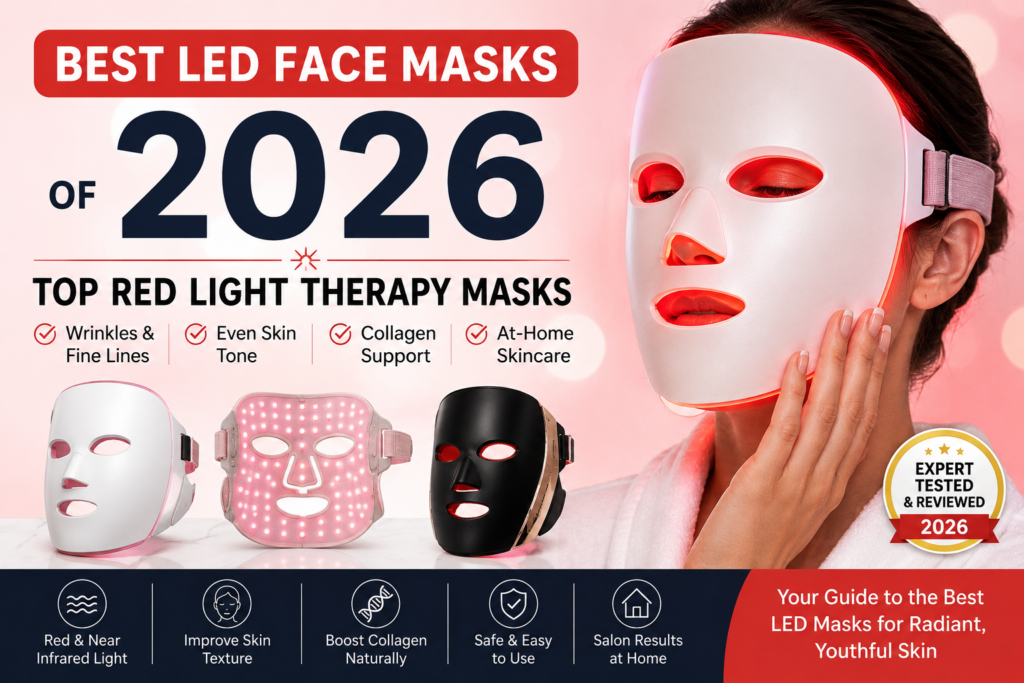
Discover the best LED face masks of 2026 for wrinkles, fine lines, uneven skin tone, and collagen support. Compare top red light therapy masks for at-home skincare.
LifeCareBalance.com is reader-supported. When you buy through links on our site, we may earn an affiliate commission at no extra cost to you. As an Amazon Associate, we earn from qualifying purchases.
LED face masks have gone from niche dermatology-office equipment to one of the most searched skincare categories in the country, and 2026 hasn’t slowed that down. Part of the appeal is real: a growing body of clinical research supports red and near-infrared light for skin quality, and red/blue light for mild-to-moderate acne. Part of the appeal is also marketing noise — dramatic before-and-afters, inflated claims, and specs that are hard to verify.
This guide is built to cut through that noise. Instead of another list ranked by affiliate commission size, we explain exactly what to look for — wavelength, irradiance, treatment time, fit, FDA status, and total cost of ownership — and we’re upfront about what’s independently verified versus what’s manufacturer-reported. If a brand doesn’t disclose a spec, we say so instead of guessing.
Quick Picks
- Best Overall: Omnilux Contour Face — the most clinically documented brand in the category, at a relatively accessible price for a medical-grade device.
- Best Flexible Fit / Even Coverage: CurrentBody Skin LED Face Mask Series 2 — fully flexible silicone with three wavelengths, including deep near-infrared.
- Best for Acne + Anti-Aging in One Device: Dr. Dennis Gross DRx SpectraLite FaceWare Pro — combines red and blue light with a fast 3-minute session.
- Best for Multi-Wavelength Coverage: Solawave Wrinkle Retreat Pro — four wavelengths and the highest disclosed irradiance on this list.
- Best for Beginners & Active Use: HigherDOSE Red Light Face Mask — open eye design, no separate goggles needed, easy to use while multitasking.
- Best for Multiple Concerns in One Mask: iRESTORE Illumina — red, near-infrared, and blue light in a single device with a notably comfortable fit.
How We Tested & Ranked the Best LED Face Masks
Because LifeCareBalance is an affiliate site and not an independent testing lab, we want to be transparent about our methodology rather than imply hands-on clinical testing we haven’t done. Our evaluation process combines:
- Specification verification. For every product listed, we cross-referenced manufacturer specifications (wavelength, irradiance, LED count, treatment time) against product pages, retailer listings, and independent reviews. Where sources conflicted or a spec wasn’t disclosed anywhere we could verify, we labeled it “Not clearly disclosed” rather than estimating.
- FDA status verification. We checked how each brand describes its regulatory status and distinguish FDA clearance (the pathway almost all of these masks use) from FDA approval (a different, higher bar reserved mostly for drugs and high-risk devices).
- Comfort and usability factors, drawn from a range of published reviews: mask material (rigid vs. flexible), weight, strap design, eye protection method, cordless operation, and how the mask handles different face shapes.
- Total value, including sticker price, warranty length, return/refund policy, and what’s included in the box (charger, storage bag, accessories).
- Evidence quality, prioritizing brands that reference peer-reviewed studies or third-party clinical testing over brands that only cite internal, unpublished user surveys.
We did not personally test these devices in a controlled setting, so we don’t claim head-to-head performance results. What we can responsibly tell you is which specs are verifiable, which claims are supported by outside research, and which questions you should ask before buying.
LED Face Mask Wavelengths Explained
Every LED mask works by exposing skin to specific wavelengths of light, measured in nanometers (nm). Different wavelengths penetrate to different depths and are associated with different effects:
- Red light (roughly 630–680nm): Absorbed by mitochondria in skin cells; associated in clinical research with support for collagen production, improved skin texture, and a smoother appearance of fine lines with consistent use.
- Near-infrared light (roughly 800–850nm and above, including “deep” NIR around 1000–1070nm on some masks): Penetrates deeper into tissue than red light. Often paired with red light for a broader anti-aging effect, and sometimes marketed for firmness and circulation support.
- Blue light (roughly 405–420nm): Works closer to the skin’s surface. A 2025 systematic review and meta-analysis published in JAMA Dermatology, led by researchers at Mass General Brigham, found that at-home red and/or blue LED devices produced meaningful reductions in both inflammatory and non-inflammatory acne lesions compared with control treatments, with red and blue light together performing better than either alone.
A mask that combines two or three of these wavelengths generally isn’t automatically “better” — it depends on what you’re treating. Someone focused purely on fine lines may do fine with a red/near-infrared-only mask, while someone managing both breakouts and early aging may prefer a device that includes blue light as well.
What Is Irradiance and Why Does It Matter?
Irradiance (often listed in mW/cm², or milliwatts per square centimeter) describes how much light power is delivered to a given area of skin at a given moment. Combined with treatment time, it determines your total light “dose” for a session, sometimes expressed as fluence (J/cm², or joules per square centimeter).
A few things worth understanding before you shop by the numbers on a spec sheet:
- Higher irradiance is not automatically better. More power delivered over less time can produce a similar dose to lower power delivered over more time. What matters most is the total dose reaching the skin, along with consistency of use.
- Distance and fit change effective irradiance. A flexible mask that sits directly against the skin delivers more effective light energy than a rigid mask with LEDs held slightly away from the face, even if the two devices have identical rated output.
- At-home devices are intentionally lower-powered than in-office equipment. FDA clearance for unsupervised home use generally caps output at levels considered safe without professional oversight, so at-home masks should be expected to produce more gradual results than a series of in-clinic treatments.
- Consistency beats intensity. Dermatologists interviewed by outlets covering this category have repeatedly emphasized that regular, sustained use over weeks to months matters more than chasing the highest irradiance number on a box.
If a brand doesn’t publish an irradiance figure, that’s not automatically disqualifying, but it does make it harder to compare devices on anything beyond marketing language — which is one reason our comparison table below marks it “Not clearly disclosed” where applicable.
Comparison Table
| Product | Best For | Wavelengths | Irradiance | Treatment Time | FDA Status | Cordless? | Price |
|---|---|---|---|---|---|---|---|
| Omnilux Contour Face | Best Overall | Red 633nm, NIR 830nm | Not clearly disclosed | 10 minutes | FDA-cleared | Yes | ~$395 |
| CurrentBody Skin LED Mask: Series 2 | Best Flexible Fit | Red 633nm, NIR 830nm, Deep NIR 1072nm | 30 mW/cm² | 10 minutes | FDA-cleared | Yes | ~$469.99 |
| Dr. Dennis Gross SpectraLite FaceWare Pro | Best Acne + Anti-Aging Combo | Red + Blue 415nm | Not clearly disclosed | 3 minutes | FDA-cleared | Yes | ~$455 |
| Solawave Wrinkle Retreat Pro | Best Multi-Wavelength Coverage | Red 630nm, Deep Red 660nm, Amber 605nm, NIR 830nm | 65 mW/cm² total | 3 minutes | FDA-cleared | Yes | ~$399 |
| HigherDOSE Red Light Face Mask | Best for Beginners | Red 630nm, NIR 830nm | 50 mW/cm² total | 10 or 20 minutes | FDA-cleared | Yes | ~$349 |
| iRESTORE Illumina | Best for Multiple Concerns | Red 635nm, NIR 830nm, Blue 415nm | Not clearly disclosed | 10 minutes | FDA-cleared (per manufacturer) | Yes | ~$399 |
Prices reflect standard list pricing at the time of writing and fluctuate with promotions; always confirm current pricing on the manufacturer’s site before buying.
Detailed Product Reviews
Omnilux Contour Face — Best Overall

- RED LIGHT THERAPY MASK: CryoGlow is an at-home LED face mask combining red, blue & deep infrared light with under-eye co…
- MOST AWARDED LED MASK IN THE U.S.*: Real people. Real results. Clinically tested on 119 participants by an independent t…
- EXPERTLY DEVELOPED: Developed by Shark Beauty alongside optical light experts and engineers, bringing MedSpa-inspired re…
Overview: Omnilux has manufactured medical-grade LED devices for clinical dermatology use since the early 2000s, and the Contour Face brings that same red (633nm) and near-infrared (830nm) wavelength pairing into a flexible, semi-rigid silicone mask for home use.
Key specifications: 132 medical-grade LEDs, two wavelengths, 10-minute sessions, cordless rechargeable controller, FDA-cleared.
Pros:
- Backed by one of the longest track records of published clinical research in this category
- Competitive price relative to other FDA-cleared masks
- Simple, low-fuss operation with no complicated mode-switching
Cons:
- Irradiance output is not published, making direct power comparisons difficult
- Semi-rigid design fits less adaptably to different face shapes than fully flexible silicone masks
- Omnilux devices are typically sold as final sale, with no returns once purchased
Best for: Shoppers who want the most clinically established brand name without paying for extra wavelengths they may not need.
Who should buy it: Anyone focused primarily on fine lines, firmness, and overall skin tone who wants a straightforward two-wavelength device.
Who may want to skip it: Buyers who want to try before committing, since the no-returns policy is firm; also those who specifically want blue light for acne.
Treatment experience: Reviewers consistently describe the 10-minute sessions as simple and low-maintenance, with no heat or discomfort reported at normal use.
Value for money: Strong relative to similarly credentialed competitors, though the final-sale policy adds risk.
CurrentBody Skin LED Face Mask: Series 2 — Best Flexible Fit / Even Coverage

- Enhanced collagen production capability significantly reduces fine lines, wrinkles and redness, for younger-looking skin…
- Upgraded light coverage provides our famous instant glow, for a healthier, brighter and smoother complexion.
- An all-new, exclusive layout of 236 LED bulbs emits three clinically recognised wavelengths: red (633nm), near-infrared …
Overview: CurrentBody’s second-generation mask adds a third wavelength — deep near-infrared at 1072nm — to the red and near-infrared combination used in its original model, aiming for broader tissue penetration in one session.
Key specifications: 236 LEDs, three wavelengths, 30 mW/cm² irradiance, 10-minute sessions, fully flexible silicone, FDA-cleared with CE and UKCA marking.
Pros:
- Published irradiance figure, which makes real comparisons possible
- Fully flexible silicone construction drapes closely to individual face shapes
- Third wavelength (deep NIR) is relatively uncommon in this price tier
Cons:
- Among the pricier options on this list
- 10-minute commitment is longer than some competitors’ 3-minute sessions
- The added wavelength’s incremental benefit over a two-wavelength mask isn’t independently quantified
Best for: Buyers who prioritize a close, adaptable fit and want documented irradiance data rather than vague marketing language.
Who should buy it: People with average-to-larger facial coverage needs who want maximum LED contact with skin.
Who may want to skip it: Anyone who wants the fastest possible session time — 3-minute masks exist at similar or lower prices.
Treatment experience: Independent reviewers report the flexible fit as one of the mask’s strongest features, closely following facial contours during wear.
Value for money: Reasonable given the added wavelength and documented specs, though it sits at the higher end of the category price range.
Dr. Dennis Gross DRx SpectraLite FaceWare Pro — Best for Acne + Anti-Aging Combo
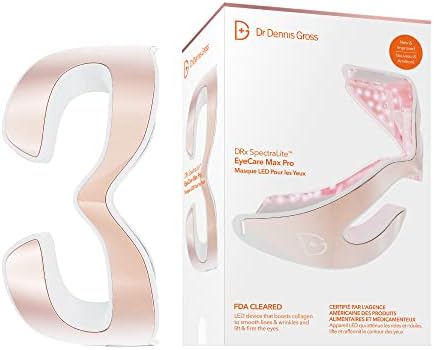
- WHAT IT IS: Dermatologist-developed and FDA-cleared, this LED eye device builds natural elasticity to firm skin, reduce …
- HOW IT WORKS: Four wavelengths of red light stimulate collagen production to treat wrinkles, firm skin & even tone aroun…
- HOW TO USE: On clean, dry skin, place device comfortably over eye area. (Strap included for comfort & hands-free use.) P…
Overview: This rigid polycarbonate mask pairs roughly 100 red LEDs with about 60 blue LEDs, letting users choose red-only, blue-only, or a combined mode depending on whether they’re targeting aging, acne, or both.
Key specifications: 162 total LEDs, red + blue wavelengths, 3-minute automatic shutoff, FDA-cleared, 1-year limited warranty.
Pros:
- One of the few masks in this list that meaningfully addresses both acne and aging in a single device
- Short 3-minute session supports daily consistency
- Comes with a full accessory kit (charging cord, adjustable strap, storage bag)
Cons:
- Rigid shell doesn’t adapt to face shape the way silicone masks do
- Irradiance is not published
- Optimal results are described as taking up to 10 weeks of consistent use
Best for: People managing both occasional breakouts and early signs of aging who don’t want two separate devices.
Who should buy it: Buyers who value convenience and a quick daily routine over maximum treatment dose per session.
Who may want to skip it: Anyone whose face shape doesn’t sit comfortably against a rigid mask, or who wants a longer per-session dose focused purely on anti-aging.
Treatment experience: Reviewers describe setup as straightforward, with a battery that reportedly lasts eight to ten uses per charge.
Value for money: Priced comparably to other premium masks; the dual acne/aging functionality is the main differentiator.
Solawave Wrinkle Retreat Pro — Best Multi-Wavelength Coverage
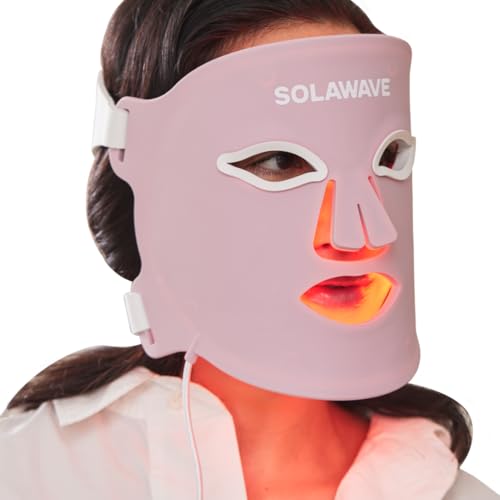
- 4 WAVELENGTHS. ZERO BLIND SPOTS: Red (630nm) softens fine lines. Deep Red (660nm) targets elasticity. Amber (605nm) revi…
- FASTER THAN BREWING YOUR MORNING COFFEE: 3 minutes. Hands-free. Automatic shut-off. While most LED masks demand 10-20 mi…
- 320 LEDS. BUILT FOR EFFICIENCY: One charge powers up to 20 full sessions – most competitor masks max out at six. Digital…
Overview: Solawave’s flagship mask combines four wavelengths — red, deep red, amber, and near-infrared — into 320 LEDs across a flexible silicone shell, with the highest disclosed total irradiance among the masks in this guide.
Key specifications: 320 LEDs, four wavelengths, 65 mW/cm² total irradiance, 3-minute sessions used 3–5 times weekly, FDA-cleared, 1-year warranty with a 60-day money-back guarantee.
Pros:
- Widest range of wavelengths on this list, including amber light for tone and redness
- Highest published irradiance figure, paired with a short session time
- Generous 60-day return window reduces purchase risk
Cons:
- Higher irradiance means it’s especially important to follow the manufacturer’s recommended frequency rather than overusing it
- Amber light has less independent clinical research behind it than red, blue, or near-infrared
- Frequent promotional pricing makes it hard to know the “real” price at any given moment
Best for: Buyers who want the broadest wavelength coverage and are comfortable with a brand that leans heavily into limited-time offers in its marketing.
Who should buy it: People targeting a combination of fine lines, dullness, and uneven tone who want a fast daily routine.
Who may want to skip it: Buyers who prefer a longer, more traditional 10-minute session, or who are skeptical of marketing-heavy sales pages and want more restrained brand messaging.
Treatment experience: The mask is marketed as fitting into a fast morning or evening routine, with an auto-shutoff after 3 minutes.
Value for money: Competitive, especially with the money-back guarantee, though frequent sales make it worth waiting for a promotion rather than paying full list price.
HigherDOSE Red Light Face Mask — Best for Beginners

- Red Light Therapy for Face & Skin Rejuvenation – This FDA cleared, FSA eligible red light therapy mask uses red (630nm) …
- Facial Light Therapy, Anywhere – Lightweight and wireless, this LED face mask with red light therapy delivers targeted w…
- Red Light Mask That Works Deep – Red and near-infrared light reach deep layers to improve tone, reduce puffiness, and vi…
Overview: HigherDOSE’s mask is built around open eye holes rather than blackout goggles, aiming to make hands-free, active use — think working out or doing chores — genuinely practical.
Key specifications: 66 dual-core LEDs (132 diodes), red (630nm) and near-infrared (830nm), 50 mW/cm² total irradiance, 10- or 20-minute programs, FDA-cleared, rechargeable battery.
Pros:
- Built-in eye openings mean no separate goggles are required for comfortable wear
- Flexible design suitable for wearing while doing other tasks
- Published irradiance and wavelength-specific output figures
Cons:
- Open-eye design means direct light exposure near the eyes is closer than with masks using full eye shields — proper eye protection habits still matter
- Lower total irradiance than the Solawave option, though paired with longer session times
- Shorter 1-year warranty compared with some panel-style competitors
Best for: First-time LED mask users who want an easy, low-commitment device that doesn’t require closing their eyes or sitting still.
Who should buy it: Busy people who want to multitask during treatment sessions.
Who may want to skip it: Anyone with light sensitivity or eye conditions who should prioritize masks with full eye shielding instead.
Treatment experience: The open-eye, cordless design is consistently highlighted as the mask’s main usability advantage.
Value for money: Mid-range pricing with clearly disclosed specs makes this an easy mask to evaluate against competitors.
iRESTORE Illumina — Best for Multiple Concerns

- Proven and Trusted: With over 20 years of research and trusted by 500,000+ happy users, our chest and neck LED light the…
- Experience the power of targeted LED light therapy with two modes: Red (635nm) and Near-Infrared (830nm). Each mode uses…
- Achieve visible skin improvements in just 10-minute sessions, 3-5 times per week. Our chest and neck red light therapy d…
Overview: iRESTORE’s Illumina combines red, near-infrared, and blue light into a single 360-LED mask that hovers slightly off the skin rather than pressing directly against it, which reviewers say improves breathability and comfort.
Key specifications: 360 LEDs, three wavelengths (red 635nm, NIR 830nm, blue 415nm), 10-minute sessions, described by the manufacturer as FDA-cleared and separately noted as IEC safety tested and ISO quality assured, 1-year warranty, 100-day return window.
Pros:
- Three wavelengths in one mask covers acne, aging, and tone concerns without switching devices
- Design elements (integrated eye shields, slight standoff from skin, ventilation) are aimed specifically at comfort
- Long 100-day return window is one of the most generous on this list
Cons:
- Irradiance is not published
- List pricing is frequently discounted, making the “true” price inconsistent
- As with several competitors, most of the supporting evidence cited is manufacturer-provided rather than independently published
Best for: People who want one mask to address multiple skin concerns and who have struggled with comfort or ventilation issues with other masks.
Who should buy it: Buyers who have tried and abandoned other LED masks specifically because of discomfort or overheating.
Who may want to skip it: Anyone who wants independently disclosed irradiance figures to compare against other devices.
Treatment experience: The slight standoff from the skin and integrated eye shields are the most frequently praised comfort features in independent reviews.
Value for money: Reasonable at typical sale pricing; less competitive at full list price given the lack of published irradiance data.
Red Light vs. Near-Infrared vs. Blue Light
There’s no single “best” wavelength — it depends on the concern:
- For fine lines, firmness, and overall tone: red light, often combined with near-infrared for deeper effect, has the most established research behind it.
- For active acne and breakouts: blue light, ideally combined with red light, has support from randomized clinical trials, including the 2025 JAMA Dermatology review referenced above.
- For deeper tissue support: near-infrared light penetrates further than red light and is commonly paired with red rather than used alone in consumer masks.
If your primary concern is aging and you rarely break out, a red/NIR-only mask may be all you need. If acne is a regular issue, a mask that includes blue light — like the Dr. Dennis Gross or iRESTORE options above — is worth prioritizing.
Hard vs. Flexible LED Face Masks
| Factor | Hard/Rigid Masks | Flexible Silicone Masks |
|---|---|---|
| Fit | Consistent distance from skin, less adaptable to face shape | Conforms closely to individual contours |
| Comfort | Can feel bulky; less “huggable” | Generally more comfortable for extended wear |
| Effective irradiance | Predictable but may sit slightly off skin | Closer skin contact can increase effective dose |
| Portability | Bulkier to store/travel with | Usually foldable or more compact |
| Examples in this guide | Dr. Dennis Gross SpectraLite | CurrentBody Series 2, Omnilux Contour, Solawave, HigherDOSE, iRESTORE |
Neither format is objectively superior — rigid masks can offer more consistent light geometry, while flexible masks generally win on comfort and fit across different face shapes.
How Often Should You Use an LED Face Mask?
Manufacturer-recommended frequency varies by device and wavelength, generally ranging from daily 3-minute sessions to every-other-day 10-to-20-minute sessions. As a general rule, follow the specific manufacturer’s instructions for your device rather than a one-size-fits-all schedule, since treatment time and irradiance are calibrated together for each product. Most brands recommend a consistent 6-to-12-week initial period before evaluating results, followed by an ongoing maintenance schedule of a few sessions per week.
How Long Does It Take to See Results?
Timelines vary by concern and device, but a reasonable general expectation based on manufacturer data and independent reviews is:
- Acne: Improvement often reported within 4 to 12 weeks of consistent use, consistent with findings from the JAMA Dermatology review.
- Fine lines and firmness: Most brands cite an initial 6-to-10-week window for early changes, with continued improvement over months of ongoing use.
- Tone and texture: Often the most gradual category, with visible changes typically reported after two months or more.
Results vary by person, skin type, consistency of use, and the specific device’s power output — no LED mask is going to produce dramatic, overnight change.
LED Face Mask Safety
LED face masks are generally considered low-risk when used as directed, but a few safety points deserve attention:
- Photosensitivity and medications: Certain medications (some antibiotics, retinoids, and other photosensitizing drugs) can increase sensitivity to light. If you take any medication known to cause photosensitivity, talk to your doctor or dermatologist before starting LED therapy.
- Eye protection: Even devices marketed as safe for open-eye use expose the eye area to light at close range. Follow the manufacturer’s specific guidance on whether to keep eyes closed, and consider protective eyewear if the device doesn’t include integrated eye shields.
- Skin conditions requiring extra caution: People with melasma, lupus, or other light-sensitive skin conditions should consult a dermatologist before using any light-based device, since certain wavelengths can potentially trigger flare-ups in sensitive individuals.
- Discomfort or heat: If a mask becomes uncomfortably warm or causes irritation, stop use and consult the manufacturer’s instructions or a healthcare professional. Properly functioning at-home LED masks should not produce a burning or painful sensation.
- Pregnancy and other conditions: As with most cosmetic devices, there isn’t extensive safety research specific to pregnancy; check with your doctor if you’re pregnant or have a condition you’re unsure about.
- Always follow manufacturer instructions, including recommended session length and frequency — more time or more sessions is not automatically better and may increase the risk of irritation.
Who Should Use an LED Face Mask — and Who Should Be Cautious?
LED masks may be a good fit for:
- Adults looking to support the appearance of fine lines, uneven tone, or mild-to-moderate acne as part of an ongoing skincare routine
- People who want a non-invasive, at-home complement to their existing skincare products
- Those comfortable committing to consistent, weeks-to-months-long use rather than expecting fast results
Speak with a healthcare professional or dermatologist first, or consider avoiding LED masks, if you:
- Take photosensitizing medications
- Have a history of light-triggered skin conditions such as melasma or certain autoimmune conditions like lupus
- Have a personal or family history of skin cancer, or are currently being treated for a skin condition
- Are pregnant
- Have active, severe, or cystic acne that may require prescription-strength treatment instead
LED Face Mask Buying Checklist
Before purchasing, confirm you can answer these questions about the device you’re considering:
- What wavelength(s) does it use, and do they match your primary skin concern?
- Is irradiance (mW/cm²) disclosed, or is it unclear/unverified?
- What’s the recommended treatment time and total light dose per session?
- Is the device FDA-cleared, and does the brand clearly state its regulatory status (vs. vague claims)?
- Does it include eye protection, either built-in shields or clear eye-safety guidance?
- How does the mask fit your face shape — rigid or flexible?
- What’s the warranty length, and what’s the return/refund window?
- Is it cordless, and how long does a charge last?
- Does the brand have independently referenced research, or only internal marketing claims?
- What’s the total cost, including any required accessories, replacement parts, or app requirements?
Are LED Face Masks Worth It?
For most people, LED face masks are a reasonable, low-risk addition to a skincare routine — not a replacement for proven treatments like sunscreen, retinoids, or in-office procedures for more significant concerns. The clinical evidence is genuinely stronger for acne (supported by randomized controlled trials) than for dramatic anti-aging transformation, where results tend to be modest and gradual. If your expectations are “support and maintain,” rather than “reverse years of aging,” a well-chosen, FDA-cleared mask used consistently can be a worthwhile investment for many users. If your budget is tight or you’re skeptical, starting with a lower-cost, well-reviewed device before committing to a premium multi-wavelength mask is a reasonable approach.
FAQ
Are LED face masks worth it? For many people, yes, particularly for supporting the appearance of fine lines or managing mild-to-moderate acne — but expectations should be realistic and gradual rather than dramatic.
Do LED masks really reduce wrinkles? Clinical research on red and near-infrared light supports gradual improvement in the appearance of fine lines with consistent use, though results vary by person and no device eliminates wrinkles entirely.
How often should you use an LED face mask? Follow your specific device’s instructions, since treatment time, wavelength, and irradiance are all calibrated together. Most protocols range from daily 3-minute sessions to a few 10-to-20-minute sessions per week.
Can LED masks help acne? Yes — a 2025 systematic review published in JAMA Dermatology found at-home red and/or blue LED devices produced meaningful reductions in acne lesions compared with control treatments, with red-blue combination devices performing best.
Is red light better than near-infrared light? Neither is universally “better” — red light works more on surface-level cellular activity, while near-infrared penetrates deeper. Many masks combine both for broader coverage.
Is 10 minutes enough for an LED face mask? For masks designed around a 10-minute protocol, yes — treatment time and irradiance are typically calibrated together by the manufacturer, so following the specific device’s recommended time matters more than the raw number of minutes.
Are LED face masks safe for your eyes? Most are designed with eye protection in mind, either through blackout goggles, integrated shields, or open-eye designs paired with safety guidance. Always follow the manufacturer’s specific eye-safety instructions.
How long does it take to see results? Typically 4 to 12 weeks of consistent use for most concerns, though this varies by individual and device.
Can you use skincare products before an LED mask? Most brands recommend cleansing and drying skin before use and applying serums or moisturizers afterward, since some ingredients and residues can interfere with light penetration. Check your specific device’s instructions.
What wavelength is best for red light therapy? Most red light therapy devices for skin use wavelengths in the 630–680nm range, often paired with near-infrared light in the 800–850nm range for combined surface and deeper-tissue effects.
Final Verdict
If you want the single most clinically credentialed option, the Omnilux Contour Face remains a strong starting point. If you want the broadest wavelength coverage and don’t mind a brand that leans hard into promotional pricing, the Solawave Wrinkle Retreat Pro stands out. For anyone managing both acne and aging, the Dr. Dennis Gross SpectraLite FaceWare Pro is the most purpose-built dual-concern option here, and the iRESTORE Illumina offers similar versatility with a notably comfortable fit. Whichever you choose, prioritize FDA clearance, a wavelength that matches your actual skin concern, and realistic expectations over chasing the highest number on a spec sheet.;https://lifecarebalance.com/