
LifeCareBalance.com is reader-supported. When you buy through links on our site, we may earn an affiliate commission at no extra cost to you. As an Amazon Associate, we earn from qualifying purchases.
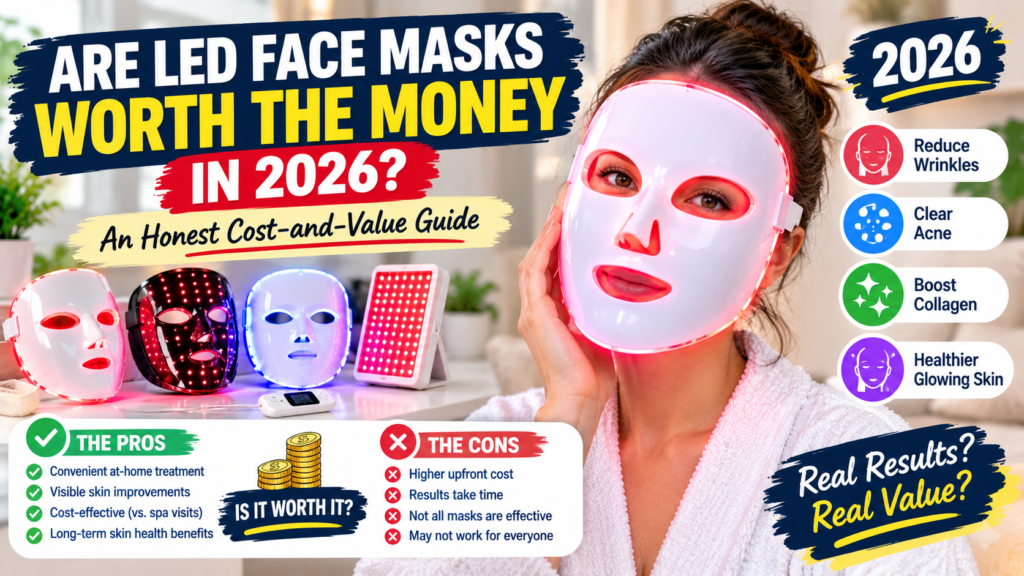
LED face masks have become a popular at-home skincare device, but popularity alone does not answer the most important question: are LED face masks actually worth the money?
The honest answer is that they can be worth considering for some people, but they are not a smart purchase for everyone. Their value depends on your skincare goal, the device you choose, how consistently you use it, and what else you could do with the same money.
An at-home LED mask may offer convenience and potentially gradual improvements for certain skin concerns. However, results vary, evidence differs by condition, and research on one device cannot automatically prove that another device will work equally well.
This guide takes a practical approach. Instead of simply repeating marketing claims, it explains how to judge the potential value of an LED mask, calculate its cost per use, compare it with alternatives, and decide whether to buy one or keep your money.
Quick Answer: Are LED Face Masks Worth It?
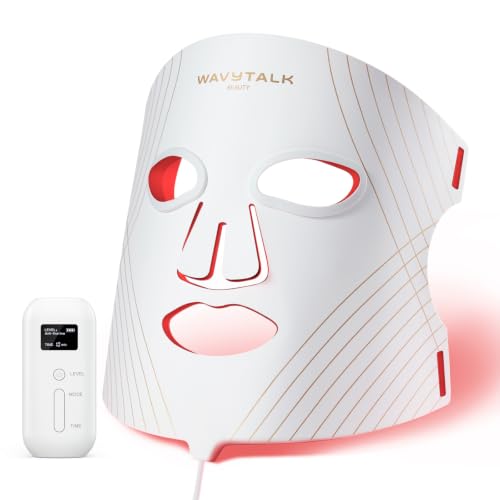
- Clinically Proven Results in 28 Days: Achieve visible improvements backed by lab data with Wavytalk’s LED face mask ligh…
- 3-in-1 Light Therapy for Targeted Care: Wavytalk’s Glow Time LED Mask features Anti-Fine Line (630nm red + 850nm near-in…
- Medical-Grade Power & Full-Face Coverage: With 456 high-purity LED Chips and 40mW/cm² power density, this red light face…
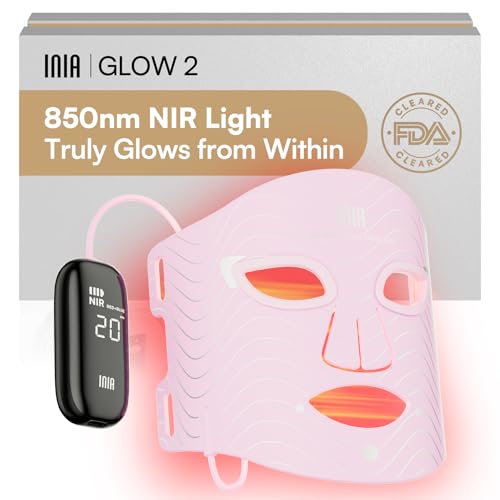
- Dual-Wavelength Revitalization: The INIA Red Light Mask combines 630nm red light for surface renewal with 850nm near-inf…
- 4 Light Modes, Fully Customizable Routines: Personalize your skincare journey with INIA Red Light Therapy Mask for Face …
- Visible Results with 220 High-Energy LED Chips: Step into the next level of skin renewal with LED Face Mask Light Therap…

- RED LIGHT THERAPY MASK: CryoGlow is an at-home LED face mask combining red, blue & deep infrared light with under-eye co…
- MOST AWARDED LED MASK IN THE U.S.*: Real people. Real results. Clinically tested on 119 participants by an independent t…
- EXPERTLY DEVELOPED: Developed by Shark Beauty alongside optical light experts and engineers, bringing MedSpa-inspired re…
LED face masks may be worth the money if you have a specific skincare goal, choose an appropriate device, can comfortably afford it, and are willing to use it consistently.
They may be less worthwhile if you expect dramatic results, cannot verify a product’s specifications, rarely maintain a skincare routine, or would benefit more from spending your budget elsewhere.
Before purchasing, consider these five factors:
- Goal: What skin concern are you trying to address?
- Evidence: Is there credible research supporting the intended use?
- Device quality: Are the specifications, instructions, and safety information clear?
- Realistic cost: How much will each session cost over the device’s useful life?
- Opportunity cost: Would the same money be more useful for sunscreen, established skincare products, or professional advice?
The goal is not to find the cheapest mask or the most expensive one. It is to determine whether a particular device makes sense for your needs and budget.
What Makes an LED Face Mask Worth Buying?
An LED mask is a wearable skincare device that delivers specific wavelengths of light to the skin. Red, blue, and near-infrared light are used in different devices, depending on their intended purpose.
Research has examined LED therapy for concerns including mild-to-moderate acne and the appearance of fine lines. However, the amount and quality of evidence vary by condition, device, and treatment protocol.
The American Academy of Dermatology explains that some red-light devices may produce subtle to noticeable improvements in certain signs of skin aging, but researchers still need to clarify which treatments work best and how results vary between devices.
You can read its guidance on red-light therapy before deciding whether the potential benefits justify the expense.
For a purchase to be worthwhile, the device needs to offer more than attractive packaging or impressive-sounding specifications. It should be suitable for your intended use, comfortable enough for repeated sessions, supported by transparent product information, and priced within your budget.
When an LED Mask May Be Worth It
An LED mask may be worth considering if:
- You have a clear, realistic skincare goal.
- You prefer a treatment you can use at home.
- You understand that results are not guaranteed.
- You are willing to follow the manufacturer’s treatment schedule.
- You have checked the device’s intended use and safety information.
- You can afford the purchase without neglecting more important expenses.
- You are looking for a complementary option rather than a complete replacement for skincare or medical treatment.
When an LED Mask May Not Be Worth It
Think carefully before buying if:
- You expect visible transformation within a few days.
- You are purchasing mainly because of influencer recommendations.
- You do not know which skin concern you want to address.
- You are unlikely to use the mask regularly.
- You cannot verify important product information.
- You have persistent or severe acne that needs professional assessment.
- The purchase would interfere with your budget for basic skincare or necessary healthcare.
A device can be technologically interesting and still be a poor personal investment.
What Results Are You Actually Paying For?
One of the biggest mistakes buyers make is treating all LED masks as interchangeable. Different devices can have different wavelengths, light output, treatment durations, coverage, and intended uses.
The relevant question is not simply whether LED therapy has been studied. It is whether evidence supports the particular benefit you want from the device you are considering.
Fine Lines and Visible Signs of Aging
Red-light therapy has been investigated for its potential to improve the appearance of fine lines, wrinkles, skin texture, and other visible signs of aging.
Some studies report improvements, but results are not uniform. A home device should not be expected to erase deep wrinkles, restore lost facial volume, or reproduce the results of every professional procedure.
If your goal is a modest cosmetic improvement and you understand the uncertainty, an LED mask may be worth considering as an addition to your routine.
If you expect a dramatic transformation, the likelihood of disappointment is much higher.
Acne and Breakouts
At-home red and blue LED devices have also been studied for acne.
A 2025 systematic review and meta-analysis published in JAMA Dermatology examined six studies involving 216 participants with mild-to-moderate acne. The researchers reported improvements in inflammatory and non-inflammatory acne lesions compared with control treatments. The studies used different devices and treatment schedules, so their findings cannot establish that every consumer mask works equally well.
Read the 2025 JAMA Dermatology systematic review and meta-analysis for the study details and limitations.
This evidence is encouraging, but it does not make an LED mask a universal acne treatment. Painful, cystic, persistent, or scarring acne may require professional care.
If acne is your primary concern, our Best LED Face Masks for Acne-Prone Skin in 2026 guide focuses on that specific buying decision.
Skin Texture and General Appearance
Some people consider LED masks because they want smoother-looking skin or a more consistent complexion.
These goals can be difficult to measure at home. Changes in hydration, lighting, sun exposure, acne, and other skincare products can influence how your skin looks from day to day.
For that reason, avoid attributing every improvement to an LED device. If you choose to try one, keep your routine reasonably consistent and assess your skin over time rather than relying on daily impressions.
How Much Does an LED Face Mask Really Cost?
The purchase price is only one part of the value equation.
An LED mask may require no recurring clinic appointment, but the device can still represent a significant upfront expense. Depending on the product, you may also need to consider replacement accessories, warranty coverage, shipping, and the possibility that the mask will not suit your needs.
Use the actual price of the model you are considering rather than relying on a general category average.
Here is a simple way to compare different budgets:
| Purchase price | Cost after 100 uses | Cost after 200 uses |
|---|---|---|
| $100 | $1.00 per use | $0.50 per use |
| $250 | $2.50 per use | $1.25 per use |
| $400 | $4.00 per use | $2.00 per use |
| $500 | $5.00 per use | $2.50 per use |
These are mathematical examples, not predictions of how long a device will last. They exclude maintenance, accessories, and replacement costs.
The Cost-Per-Use Formula
Use this calculation:
Cost per use = Total ownership cost ÷ Actual number of sessions
Suppose you buy a mask for $400 and complete three sessions per week for one year.
That would be approximately 156 sessions.
$400 ÷ 156 = approximately $2.56 per session.
Now consider the same mask if you use it only 20 times:
$400 ÷ 20 = $20 per session.
The purchase price has not changed, but the value you receive is very different.
This is why your likely usage matters more than an optimistic estimate of how often you might use the device.
Calculate Your Own Estimated Cost
Use the calculator below to estimate your cost per session.
Mask purchase price ($)
Expected sessions per week
Expected number of weeks
The result is only as useful as your estimate of actual use. If you expect to stop after a few weeks, calculate the cost using that shorter period instead.
Are Expensive LED Face Masks Worth More?
Not automatically.
A higher-priced mask may offer useful features such as a more comfortable fit, broader coverage, a rechargeable controller, clearer documentation, a longer warranty, or better customer support.
Those features can improve the ownership experience. However, they do not independently prove that the device will produce better skincare results.
A more expensive product may also include features that you do not need.
For example, if your main goal is to address one specific concern, paying extra for multiple light modes may not be useful unless the additional functions are appropriate for your needs and supported by relevant evidence.
Before paying a premium, compare:
- The intended use of the device.
- The wavelengths it provides.
- The treatment duration and frequency.
- The available evidence for the claimed benefit.
- Fit, comfort, and facial coverage.
- Eye-safety instructions.
- Warranty and return terms.
- The manufacturer’s transparency about specifications.
Our Best LED Face Masks of 2026 guide is the better place to compare individual devices and their features.
Are Cheap LED Face Masks Worth Buying?
A budget mask can reduce your initial spending, but a low price does not establish quality, effectiveness, or safety.
Likewise, a higher price does not automatically mean a device is better.
Before purchasing a budget model, look for clear instructions, a stated intended use, accessible manufacturer information, appropriate safety guidance, and realistic product claims.
Be cautious if a listing relies heavily on dramatic before-and-after photographs but provides little useful information about how the device should be used or what it is designed to do.
What If Your Budget Is Under $100?
Set your budget first, then evaluate the available products against the same criteria. Do not lower your safety standards simply because a device is inexpensive.
If no suitable product provides enough information to support a confident decision, waiting and saving for a better-documented device may be preferable to making an impulse purchase.
Our Best LED Face Masks Under $100 in 2026 guide focuses on the budget category.
Is an LED Mask Better Value Than Professional Treatment?
There is no universal winner. The best choice depends on the concern being treated, the specific equipment, professional guidance, and your budget.
| Factor | At-home LED mask | Professional treatment |
|---|---|---|
| Initial cost | Usually a device purchase | May involve a consultation and treatment fee |
| Repeat sessions | Convenient access at home | Requires appointments or visits |
| Personal guidance | Primarily self-directed | Can include professional assessment |
| Device and protocol | Varies by consumer model | Varies by provider and equipment |
| Results | Depend on the device and use | Depend on the treatment and individual |
| Best practical advantage | Convenience | Individualized assessment and care |
Professional systems may use different equipment and treatment protocols, but you should not assume every professional treatment is more effective than every home device.
Similarly, do not assume that buying a mask will reproduce a clinic treatment.
If you have a persistent skin condition or are unsure which treatment is appropriate, professional advice can help you avoid spending money on an unsuitable option.
For a more detailed comparison, read our Home LED Face Mask vs Professional Red Light Therapy guide.
Could Your Money Be Better Spent Elsewhere?
This is one of the most important questions in the buying decision.
An LED mask is an optional skincare device. It should not automatically take priority over the products and care that already meet your needs.
Depending on your situation, a limited skincare budget may be better directed toward:
- Broad-spectrum sunscreen and regular sun protection.
- A suitable moisturizer.
- Established acne treatments when appropriate.
- A simpler skincare routine you can maintain.
- A dermatologist appointment for a persistent or unexplained problem.
The best choice depends on your concern and circumstances. There is no universal spending order that applies to everyone.
For example, if you have persistent acne and have not yet identified an effective treatment plan, buying an expensive cosmetic device may not be the most useful first step.
If your routine is already established and you have a modest cosmetic goal, you may reasonably decide that an LED mask is worth trying.
How to Check Whether a Device Is Credible
Marketing language can make a mask sound more effective than the available evidence supports.
Terms such as “medical grade,” “professional results,” “500 LEDs,” or “seven colors” are not enough to establish that a product will deliver the results you want.
Instead, check the following.
1. Intended Use
Does the manufacturer clearly state what the device is designed to address? A device marketed for one concern should not automatically be assumed to treat another.
2. Technical Information
Look for available wavelength information and a clearly described treatment protocol. If important specifications are missing, you may have less information with which to compare the product.
3. Regulatory Claims
In the United States, medical-device clearance is specific to a device and its intended use. Do not treat the phrases “FDA registered,” “FDA-cleared,” and “FDA approved” as interchangeable.
You can investigate relevant records using the FDA’s 510(k) Premarket Notification database. Check the exact model and its documentation; a similar product name does not establish that the device you are considering has the same regulatory status.
Clearance also does not guarantee dramatic results or prove every marketing claim.
4. Return Policy and Warranty
An expensive purchase deserves careful review of the seller’s return terms, warranty, exclusions, and customer support arrangements.
Read these details before ordering, not after the mask arrives.
5. Evidence for the Actual Product
Research on LED therapy in general is not the same as clinical evidence for a specific consumer mask.
A credible buying decision considers the research, the intended use, the device’s documentation, and the limits of what is known.
Are LED Face Masks Safe Enough to Justify the Cost?
Safety is part of value. A device is not a worthwhile purchase if it is unsuitable for your circumstances or if you cannot follow its instructions.
LED devices are generally considered relatively low-risk when used appropriately, but suitability varies by device and individual. Possible issues include irritation, redness, or discomfort.
Before use:
- Follow the manufacturer’s treatment duration and frequency.
- Follow the exact eye-protection instructions.
- Ask a healthcare professional about use if you have a photosensitivity condition or take medication that may increase light sensitivity.
- Stop using the device if you develop significant or persistent irritation.
- Seek professional assessment for severe acne, suspicious skin changes, or persistent skin problems.
The Cleveland Clinic’s LED light therapy guide provides additional information about potential uses, limitations, and precautions.
Do not increase treatment time or frequency in the hope of getting faster results. More use does not automatically mean more benefit.
The Five-Question Test Before You Buy
Before spending $100, $300, $500, or more, answer these five questions honestly.
1. What specific result am I hoping for?
Choose a defined goal. “I want better skin” is too broad to evaluate a device against.
2. Is there relevant evidence for that goal?
Look for credible information about the particular concern and the intended use of the device. Do not assume that evidence for acne automatically proves effectiveness for wrinkles, or vice versa.
3. Will I actually use it?
Consider your existing habits. A device that does not fit your routine may end up unused, regardless of its features.
4. What is my realistic cost per use?
Calculate the price using a realistic number of sessions, not the maximum number you could complete in an ideal year.
5. Is this the best use of my skincare budget?
Compare the purchase with the alternatives available to you. If another expense better addresses your main concern, postpone the mask.
If you cannot answer these questions confidently, you do not need to buy immediately.
Final Verdict: Are LED Face Masks Worth It in 2026?
LED face masks can be worth the money for some people, but the decision should be based on value rather than hype.
Their potential value comes from convenient, repeated use and the possibility of gradual improvement in selected skin concerns. The evidence is encouraging for certain at-home red and blue LED devices used for mild-to-moderate acne, while cosmetic outcomes for aging skin can vary by device and treatment protocol.
They may be a reasonable purchase if you have a clear goal, choose an appropriate device, understand the limitations, and can comfortably afford it.
They may not be worthwhile if you expect dramatic results, will rarely use the device, cannot verify the product’s claims, or would benefit more from established skincare or professional advice.
Before you buy, calculate the realistic cost per session, review the device’s intended use and safety instructions, and compare it with other ways to spend your money.
The best-value LED mask is not necessarily the cheapest or the most expensive. It is the one that fits your needs, has credible product information, and offers a reasonable potential benefit for the money you spend.
Frequently Asked Questions
Are LED face masks really worth the money?
They may be worth considering for people with realistic expectations who want a convenient addition to their skincare routine. Results vary, and effectiveness depends on the concern, device, and treatment protocol.
How much should I spend on an LED face mask?
There is no single ideal budget. Set a limit you can comfortably afford, then compare intended use, specifications, evidence, fit, safety information, warranty, and return terms. A higher price does not guarantee better results.
Are expensive LED face masks more effective?
Not necessarily. Premium devices may offer better comfort, coverage, or support, but price alone does not demonstrate clinical effectiveness.
Are LED face masks worth it for wrinkles?
Some red-light devices have evidence suggesting potential improvements in the appearance of fine lines and other signs of aging. Results vary, and an LED mask should not be expected to erase deep wrinkles or reproduce the results of every professional procedure.
Are LED face masks worth it for acne?
Certain at-home red and blue LED devices have shown encouraging results for mild-to-moderate acne. However, not every device will produce the same results, and persistent, painful, or scarring acne deserves professional assessment.
How long does an LED mask take to work?
There is no guaranteed timeline for every device and skin concern. Some acne studies report improvements over four to 12 weeks, but this does not guarantee that every user will see changes within that period. Follow the manufacturer’s instructions.
Is a $100 LED mask worth buying?
It can be worth considering if the device is suitable for your goal and provides enough information to make an informed decision. A low price alone does not prove that it is effective, reliable, or safe.
Should I buy an LED mask or see a dermatologist?
For a modest cosmetic concern, an at-home device may be one option to consider. For severe acne, persistent symptoms, unexplained skin changes, or uncertainty about treatment, professional evaluation may be more appropriate.
Does FDA clearance guarantee that an LED mask will work?
No. Regulatory status applies to a specific device and intended use. It should not be interpreted as a guarantee of dramatic results or proof of every claim made in a product listing.
What is the biggest mistake when buying an LED mask?
Buying based on influencer popularity, LED count, premium pricing, or dramatic marketing claims without checking the intended use, product information, safety instructions, and realistic cost per use is a common mistake.