
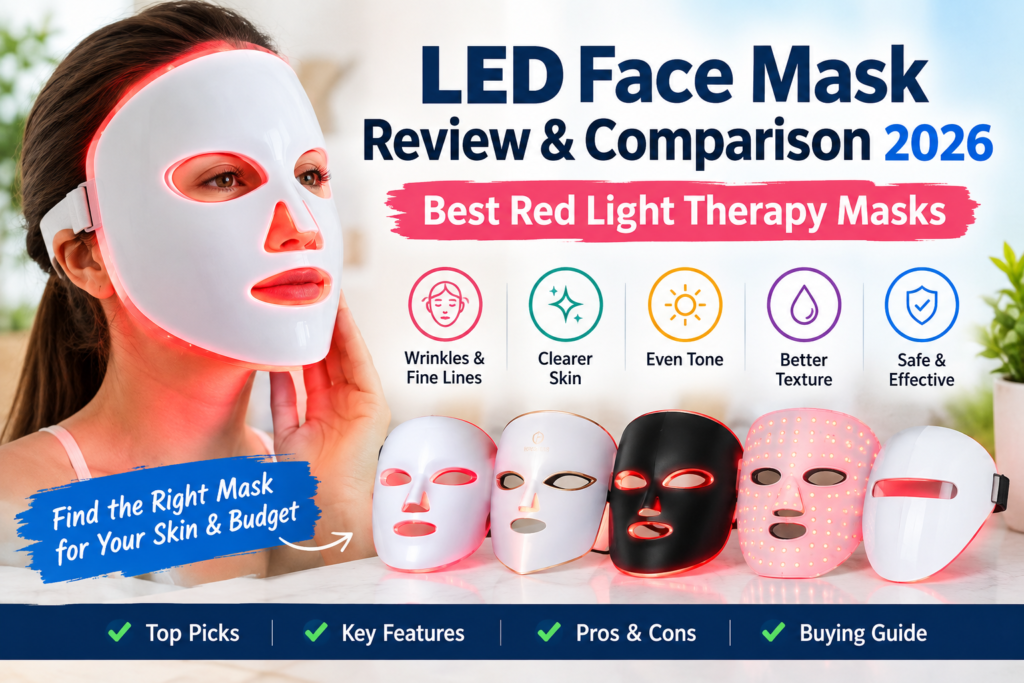
An honest, spec-by-spec LED face mask comparison for 2026 — best overall, best for wrinkles, best for acne, and best budget picks, with real FDA status and pricing.
LifeCareBalance.com is reader-supported. When you buy through links on our site, we may earn an affiliate commission at no extra cost to you. As an Amazon Associate, we earn from qualifying purchases.
If you’ve spent any time researching at-home skincare tech, you’ve noticed the LED face mask category has gotten crowded — and expensive. Prices range from under $100 to well over $500, LED counts range from 70 to nearly 700, and almost every brand claims to be “clinically proven.” That makes it genuinely hard to tell which mask is actually worth your money, and which one fits your specific skin goals.
This guide isn’t a “10 best masks” list. It’s a buying framework built around the questions that actually decide whether an LED mask earns its price tag: what wavelengths it uses, how much light it delivers (not just how many LEDs it has), whether its FDA status means what the marketing implies, and which device fits your skin concern and budget. We verified pricing, specifications, and regulatory status directly from manufacturer and retailer sources current as of September 2026. Where a manufacturer doesn’t disclose a spec, we say so rather than guess.
Quick Answer: Which LED Face Mask Is Best in 2026?
If you only read one section, here’s the short version:
- Best overall: Omnilux Contour Face — the most clinically documented device in the category at a comparatively reasonable price
- Best for wrinkles and fine lines: CurrentBody Skin LED Face Mask Series 2 — the only mask here with a dedicated deep near-infrared (1072nm) channel
- Best for acne-prone skin: iRestore Illumina — triple wavelength (red, blue, near-infrared) with a genuinely long 100-day return window
- Best budget option: RENPHO Artemis LED Light Therapy Mask — FDA-cleared and regularly available under $200
- Best premium option: Therabody TheraFace Mask — the highest LED count in this comparison, plus vibration massage
- Strongest raw specifications: Solawave Wrinkle Retreat Pro — four wavelengths, the highest disclosed irradiance figure of any mask reviewed here, and a three-minute session
None of these are guaranteed to erase wrinkles or cure acne. What they have in common is real FDA clearance, disclosed specifications, and wavelengths supported by published research — which is a meaningfully higher bar than most of what’s sold on Amazon.
Comparison Table
| Product | Price | Wavelengths | LEDs | Irradiance | Treatment Time | FDA Status | Best For |
|---|---|---|---|---|---|---|---|
| Omnilux Contour Face | $395 | 633nm red, 830nm NIR | 132 | Not clearly disclosed | 10 min | FDA-cleared | Best overall / dermatologist pick |
| CurrentBody Skin Series 2 | $469.99 | 633nm red, 830nm NIR, 1072nm deep NIR | 236 | Not clearly disclosed | 10 min | FDA-cleared (510(k) K250966) | Wrinkles & fine lines |
| Solawave Wrinkle Retreat Pro | $399 | 605, 630, 660, 830nm | 320 | 65 mW/cm² | 3 min | FDA-cleared (510(k) K252983) | Strongest published specs |
| Dr. Dennis Gross SpectraLite FaceWare Pro | $455 | 633nm red, 415nm blue | 162 | Not clearly disclosed | 3 min | FDA-cleared | Acne + aging combo |
| iRestore Illumina | $499 (often $399) | 635nm red, 830nm NIR, 415nm blue | 360 | Not clearly disclosed | 10 min | Not marketed as FDA-cleared; made in an FDA-listed facility | Acne-prone skin |
| Therabody TheraFace Mask | $549.95 | 415nm blue, 633nm red, 633/830nm combined | 648 | Not clearly disclosed | 3–9 min | FDA-cleared | Premium / added massage |
| RENPHO Artemis | $199.99 (often ~$150–170) | 630nm red, 415nm blue, 850nm NIR | 324 | Not clearly disclosed | 10, 20, or 30 min | FDA-cleared | Budget |
| BON CHARGE Red Light Face Mask | $349 | 630nm red, 850nm NIR | 240 | 40.8 mW/cm² | 10 min | FDA-registered (not FDA-cleared) | Value, but check regulatory status |
Prices and clearance status change; always confirm current figures on the brand’s own site before buying.
Best LED Face Masks Compared
Omnilux Contour Face — Best Overall
Best for: Anyone who wants the most clinically backed device without stepping into four-figure territory.
Why we picked it: Omnilux has manufactured medical-grade LED devices for dermatology clinics since 2003, and the Contour Face is the direct consumer version of that professional technology. It’s one of the more extensively studied light-therapy devices sold for home use, which matters if you’d rather trust a longer track record than a newer, flashier spec sheet.
Key specifications: 132 medical-grade LEDs, red (633nm) and near-infrared (830nm) wavelengths, 10-minute sessions, FDA-cleared, semi-rigid design.
Main features: No heat, no UV exposure, hands-free flexible-but-structured fit that holds a consistent distance from the skin.
Pros:
- Deep clinical research history behind the wavelengths used
- FDA-cleared for fine lines and wrinkles
- Semi-rigid shell delivers consistent LED-to-skin distance across users
Cons:
- Only two wavelengths — no dedicated acne (blue light) mode
- Final sale; Omnilux doesn’t accept returns on LED devices
- 132 LEDs is on the lower end for this price bracket
Who should buy it: Buyers who want the most research-backed option and don’t need acne-specific light.
Who should skip it: Anyone with active breakouts who wants a blue-light mode built in, or anyone who wants to try before committing (there are no returns).
Value assessment: At $395, it isn’t cheap, but the clinical pedigree and FDA clearance make it one of the more defensible prices in the category, according to our LED face mask review criteria.
CurrentBody Skin LED Face Mask Series 2 — Best for Wrinkles and Fine Lines

- Enhanced collagen production capability significantly reduces fine lines, wrinkles and redness, for younger-looking skin…
- Upgraded light coverage provides our famous instant glow, for a healthier, brighter and smoother complexion.
- An all-new, exclusive layout of 236 LED bulbs emits three clinically recognised wavelengths: red (633nm), near-infrared …
Best for: Mature or sun-damaged skin, particularly for jawline, chin, and deeper wrinkle concerns.
Why we picked it: Series 2 is the only mask in this roundup that adds a 1072nm deep near-infrared channel alongside standard red and near-infrared light. CurrentBody has also published independent dermatological study data (conducted by Eurofins) reporting a 37.1% reduction in wrinkle volume after 8 weeks of use — a more detailed evidence trail than most competitors disclose.
Key specifications: 236 LEDs, three wavelengths (633nm, 830nm, 1072nm), flexible silicone build, 10-minute sessions, FDA-cleared under 510(k) K250966.
Main features: Flexible silicone shape designed to conform closely to individual face contours, which can improve effective light contact compared with rigid designs.
Pros:
- Unique deep near-infrared wavelength not found on most competing masks
- Backed by an independent (not purely in-house) dermatological study
- Genuine FDA clearance with a verifiable 510(k) number
Cons:
- The highest price point of any mask in this comparison besides Therabody
- Irradiance is not clearly disclosed by the manufacturer
- Silicone build means fit varies more by face shape than a rigid mask
Who should buy it: Buyers specifically targeting deeper wrinkles and looking for the most detailed independent evidence trail.
Who should skip it: Budget-conscious buyers, or anyone whose primary concern is acne rather than aging.
Value assessment: Expensive, but the independent study data and unique wavelength combination make a reasonable case for the price if wrinkle reduction is your main goal. See our best LED face masks of 2026 roundup for how it stacks up across categories.
Solawave Wrinkle Retreat Pro — Strongest Published Specifications
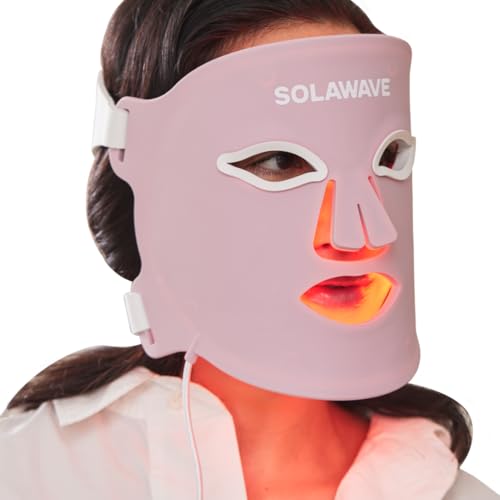
- 4 WAVELENGTHS. ZERO BLIND SPOTS: Red (630nm) softens fine lines. Deep Red (660nm) targets elasticity. Amber (605nm) revi…
- FASTER THAN BREWING YOUR MORNING COFFEE: 3 minutes. Hands-free. Automatic shut-off. While most LED masks demand 10-20 mi…
- 320 LEDS. BUILT FOR EFFICIENCY: One charge powers up to 20 full sessions – most competitor masks max out at six. Digital…
Best for: Buyers who want to compare devices on hard numbers rather than brand reputation.
Why we picked it: Solawave publishes more of its spec sheet than most competitors — four wavelengths, LED count, and a specific irradiance figure (65 mW/cm²), which is higher than any other irradiance value we could verify in this category. That transparency, combined with FDA clearance, makes it easy to evaluate on its own terms.
Key specifications: 320 LEDs, four wavelengths (amber 605nm, red 630nm, deep red 660nm, near-infrared 830nm), 65 mW/cm² irradiance, 3-minute sessions, FDA-cleared under 510(k) K252983.
Main features: Flexible medical-grade silicone, short treatment time, four-wavelength design intended to address wrinkles, tone, and redness in one session.
Pros:
- Highest disclosed irradiance of any mask in this comparison
- Shortest session time (3 minutes) among full-face masks with this level of coverage
- Full spec transparency: wavelengths, LED count, irradiance, and FDA number are all published
Cons:
- Amber (605nm) has less independent research behind it than red or near-infrared light
- Frequent discounting suggests the “list price” of $499 is rarely the real transaction price
- Newer to the category than Omnilux or Dr. Dennis Gross
Who should buy it: Buyers who want the most complete, verifiable spec sheet and the shortest daily time commitment.
Who should skip it: Anyone who prefers a longer track record over a newer brand with strong specs.
Value assessment: At $399 (often less with promotions), the disclosed irradiance and treatment dose make this one of the better-documented values in the mid-premium tier.
Dr. Dennis Gross DRx SpectraLite FaceWare Pro — Best for Combined Acne and Aging Concerns
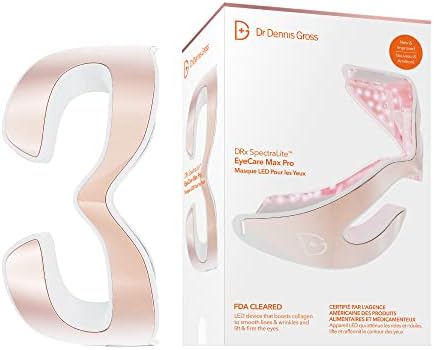
- WHAT IT IS: Dermatologist-developed and FDA-cleared, this LED eye device builds natural elasticity to firm skin, reduce …
- HOW IT WORKS: Four wavelengths of red light stimulate collagen production to treat wrinkles, firm skin & even tone aroun…
- HOW TO USE: On clean, dry skin, place device comfortably over eye area. (Strap included for comfort & hands-free use.) P…
Best for: Skin dealing with both breakouts and fine lines at the same time.
Why we picked it: Few masks in this price range let you run red and blue light simultaneously in one 3-minute session. This one does, which is useful if your skin doesn’t fit neatly into a single “wrinkles” or “acne” category.
Key specifications: 162 LEDs (100 red, 62 blue), red (633nm) and blue wavelengths, 3-minute sessions, FDA-cleared, 1-year warranty.
Main features: Fast session time, combined-mode option, USB rechargeable.
Pros:
- Combined red/blue mode addresses two concerns without owning two devices
- Fast 3-minute treatment time
- Long-standing brand with an established regulatory track record
Cons:
- 162 LEDs is comparatively modest against 300+ LED competitors
- Manufacturer doesn’t publish an irradiance figure
- Full results reportedly take a 10-week course of consistent use
Who should buy it: Anyone managing both acne and early signs of aging who wants one device instead of two.
Who should skip it: Buyers focused exclusively on deep wrinkles, who may get more benefit from a near-infrared-heavy mask like CurrentBody.
Value assessment: At $455 MSRP (frequently discounted), it’s a reasonable pick specifically because of the dual-concern mode, not because of raw LED count.
iRestore Illumina — Best for Acne-Prone Skin

- Proven and Trusted: With over 20 years of research and trusted by 500,000+ happy users, our chest and neck LED light the…
- Experience the power of targeted LED light therapy with two modes: Red (635nm) and Near-Infrared (830nm). Each mode uses…
- Achieve visible skin improvements in just 10-minute sessions, 3-5 times per week. Our chest and neck red light therapy d…
Best for: Oily, acne-prone, or combination skin that wants a triple-wavelength approach with a low-risk trial period.
Why we picked it: The Illumina combines red, near-infrared, and blue light in a single triple-wavelength mode, and the manufacturer backs it with a 100-day return window — one of the longer trial periods in this category, which matters for a purchase this size.
Key specifications: 360 LEDs, three wavelengths (red 635nm, near-infrared 830nm, blue 415nm), 10-minute sessions, cordless, built-in eye shields.
Main features: See-through adaptable shell that combines rigid durability with silicone flexibility, three individually selectable modes plus a combined mode.
Pros:
- Triple wavelength includes dedicated acne-fighting blue light, unlike Omnilux or CurrentBody
- 100-day return policy is unusually generous for the category
- Highest LED count relative to price among the masks reviewed here
Cons:
- iRestore markets manufacturing standards (GMP-certified, FDA-listed facility) rather than an FDA clearance for the device itself — a distinction worth understanding before you buy (see the FDA terminology section below)
- List price of $499 is rarely the actual sale price, which makes the “real” cost harder to pin down
- Some owners report the see-through shell fits less snugly than fully silicone designs
Who should buy it: Acne-prone users who want red, blue, and near-infrared light in one device and value a long return window.
Who should skip it: Buyers who specifically want a device with a documented FDA 510(k) clearance number, since iRestore’s own marketing doesn’t cite one for this mask.
Value assessment: At its common street price of roughly $399, the triple-wavelength design and return policy make it a reasonable pick — provided you’re comfortable with its regulatory positioning.
Therabody TheraFace Mask — Best Premium Option

- Replace Messy Ice Packs and Inconsistent Heating Pads: Introducing RecoveryTherm Cube, our portable, compact device that…
- Wearable Relief Whenever, Wherever: Its versatile design gives you a handheld and cordless treatment mechanism for almos…
- Professional Grade Treatments At-Home: With TheraCup’s digitized on-device controls and built-in safeguards, you can saf…
Best for: Buyers who want the most LEDs on the market and don’t mind paying for it, especially if facial tension relief is also a priority.
Why we picked it: With 648 LEDs, this is the highest LED count of any mask in this comparison by a wide margin, and it’s the only one that pairs light therapy with built-in vibration massage motors around the eyes, browline, and scalp.
Key specifications: 648 LEDs, three wavelengths (415nm blue, 633nm red, 633nm+830nm combined), 3–9 minute sessions, FDA-cleared, 1-year limited warranty, roughly 120 minutes of battery life in LED mode.
Main features: Rigid shell design, removable protective eye shields, 17 vibration motors for scalp and facial massage.
Pros:
- Highest LED count in this comparison
- Only mask reviewed here that combines light therapy with vibration massage
- FDA-cleared as a Class II device with published wavelength data
Cons:
- The most expensive mask in this comparison at $549.95
- Manufacturer does not publish an irradiance (mW/cm²) figure
- Rigid shell is heavier and less packable than flexible silicone alternatives
Who should buy it: Buyers who want the highest LED density available and appreciate the added massage function.
Who should skip it: Anyone shopping on a budget, or anyone who prioritizes irradiance data over LED count (see the “does more LEDs mean better performance” section below).
Value assessment: It’s a premium price for a premium spec sheet, but LED count alone doesn’t guarantee better results — read the wavelength and irradiance sections before assuming more is automatically better.
RENPHO Artemis LED Light Therapy Mask — Best Budget LED Face Mask
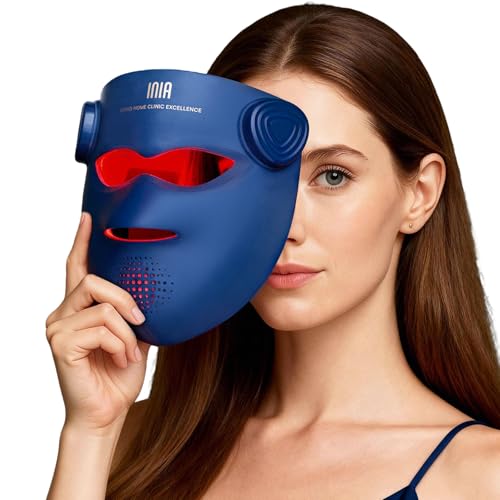
- 【Pro-Grade 4D Full Face Coverage】Experience advanced at-home skincare with 320 LEDs and flexible medical-grade flexible …
- 【Dual NIR Technology】Advanced dual near-infrared channels work at multiple skin levels to improve skin elasticity, and r…
- 【4 Targeted Light Modes】Red lgiht mode for a smoother-looking, more radiant appearance; Blue light mode to support clear…
Best for: First-time buyers who want genuine FDA clearance without spending $300+.
Why we picked it: At a list price of $199.99 — and regularly discounted into the $150–$170 range — the Artemis is one of the few masks under $200 that carries FDA clearance and discloses its wavelengths clearly.
Key specifications: 324 LEDs, three wavelengths (red 630nm, blue 415nm, near-infrared 850nm), adjustable 10-, 20-, or 30-minute sessions, cordless with magnetic detachable control units, FDA-cleared.
Main features: Removable eye cups, adjustable head strap, flexible session lengths.
Pros:
- Genuinely FDA-cleared at a price well below most cleared competitors
- Three wavelengths cover wrinkles, acne, and general skin tone in one device
- Flexible session-length options let you build up gradually
Cons:
- No published irradiance figure
- LED count is respectable but lower than iRestore or Therabody
- Frequent steep discounting makes the “real” price a little unpredictable
Who should buy it: Anyone testing whether an LED mask fits into their routine before committing to a $400+ device.
Who should skip it: Buyers specifically chasing the deep near-infrared (1072nm) wavelength found only on CurrentBody’s Series 2.
Value assessment: This is the strongest FDA-cleared value in the category once you catch it on sale, and it belongs on any best LED face masks under $100-adjacent shortlist even though its list price sits just above that threshold.
Under $100: A Word of Caution
Genuinely FDA-cleared LED masks with fully disclosed wavelengths and irradiance are uncommon below the $100 mark. Most sub-$100 masks sold on Amazon and similar marketplaces are generic imports that either don’t disclose their FDA status clearly, use vague marketing language like “clinical-grade” without a clearance number, or don’t publish real wavelength data at all. If your budget is firmly under $100, look specifically for a stated FDA 510(k) number you can verify yourself, disclosed wavelengths in nanometers, and a return policy — and treat the absence of any of those as a red flag rather than an oversight.
BON CHARGE Red Light Face Mask — Worth Understanding as a Regulatory Case Study
Best for: Buyers who want a straightforward dual-wavelength device and are comfortable with its FDA-registered (not cleared) status.
Why we picked it: BON CHARGE discloses a specific irradiance figure (40.8 mW/cm²) and a straightforward two-wavelength design, but it’s a useful example of why FDA terminology matters: the mask is FDA-registered, not FDA-cleared, which is a meaningfully different regulatory claim.
Key specifications: 240 LEDs, red (630nm) and near-infrared (850nm) wavelengths, 40.8 mW/cm² irradiance, 10-minute sessions.
Pros:
- Disclosed irradiance figure, which many competitors omit
- Reasonably high LED count for its price point
- Straightforward two-wavelength focus on the most-studied bands (red and near-infrared)
Cons:
- FDA-registered, not FDA-cleared — a real regulatory distinction, not just marketing semantics
- Fewer wavelength options than triple- or quad-wavelength competitors
- Frequent promotional pricing makes the “real” retail price hard to pin down
Who should buy it: Buyers who understand the registered-versus-cleared distinction and are comfortable with it, and who want a disclosed irradiance figure.
Who should skip it: Anyone who specifically wants FDA clearance as a purchasing requirement.
Value assessment: At around $349 (often discounted further), it’s competitively specced, but confirm you’re comfortable with its regulatory status before treating it as equivalent to a cleared device.
How We Evaluated LED Face Masks
We prioritized products with verifiable manufacturer specifications, a real FDA clearance or registration status we could confirm, at least one independently reported study or large volume of consumer reviews, and current U.S. availability. Where a brand didn’t disclose a specification such as irradiance, we noted that directly rather than estimating a number. We did not personally test these devices for this article; assessments are based on published specifications, manufacturer claims (clearly labeled as such), and independent testing or clinical data where available.
What Is an LED Face Mask?
An LED face mask is a wearable device lined with light-emitting diodes that expose the skin to specific wavelengths of visible or near-infrared light — a process sometimes called photobiomodulation. Unlike UV light, which damages skin over time, the wavelengths used in these masks are non-ionizing and don’t carry the same cancer risk associated with sun exposure or tanning beds.
How Does Red Light Therapy Work?
Red and near-infrared light are absorbed by mitochondria in skin cells, which can temporarily increase cellular energy production. Research suggests this process may support collagen synthesis, reduce inflammation, and improve circulation in the treated area. According to the American Academy of Dermatology, red-light devices have shown subtle to noticeable improvements in fine lines, rough texture, and redness in some studies — though the office-based devices dermatologists use are typically more powerful than at-home masks.
Which LED Wavelengths Matter?
Wavelength, measured in nanometers (nm), determines how deep light penetrates the skin and what it can realistically affect:
- Blue light (roughly 405–420nm): Targets acne-causing bacteria near the skin’s surface
- Red light (roughly 620–660nm): Penetrates the dermis and is most associated with collagen support and fine-line improvement
- Near-infrared light (roughly 800–850nm): Penetrates deeper than red light, associated with inflammation reduction and cellular repair
- Deep near-infrared (roughly 1000nm+): A less common wavelength, found on masks like CurrentBody Series 2, marketed for more pronounced signs of aging
- Amber/yellow light (roughly 570–605nm): Associated with redness reduction, though it has less independent research behind it than red or near-infrared light
A mask that discloses its wavelengths in nanometers is giving you more useful information than one that just lists color names.
Why Irradiance Matters
Irradiance is the intensity of light delivered to the skin, measured in milliwatts per square centimeter (mW/cm²). Two masks can use identical wavelengths and still produce very different results if their irradiance differs significantly, because irradiance — combined with session length — determines the total light dose (measured in joules per square centimeter) your skin actually receives. A mask with high irradiance can often deliver an equivalent dose in a shorter session than a low-irradiance mask running longer. Unfortunately, most brands in this category don’t publish irradiance figures, which makes side-by-side comparison harder than it should be. When a manufacturer does disclose it — as Solawave and BON CHARGE do — that transparency is worth factoring into your decision.
Does More LEDs Mean a Better LED Mask?
Not necessarily. LED count is the easiest spec for marketing teams to make sound impressive, but it doesn’t tell you how precisely each diode is calibrated, how evenly light is distributed across the face, or what irradiance the mask actually delivers. A mask with 130 well-calibrated LEDs at an effective wavelength and irradiance can outperform a 600-LED mask with imprecise output. Treat LED count as one input among several — alongside wavelength, irradiance, coverage, and FDA status — rather than the deciding factor. Our LED face mask review covers this trade-off in more depth if you want to dig further into spec-sheet comparisons.
LED Face Mask Results: What to Realistically Expect
Manufacturer marketing often promises visible results within days; the published evidence tells a more modest story. Clinical research on LED and red-light therapy generally points to a 4-to-12-week window for visible changes in fine lines, texture, or tone, with continued use needed to maintain results. A randomized controlled trial on photobiomodulation for periocular wrinkles found measurable improvement with consistent treatment over several weeks — meaningful, but not dramatic overnight transformation (PubMed). Individual results vary considerably based on skin type, consistency of use, and the specific device and wavelength combination.
How Often Should You Use an LED Face Mask?
This varies by device and should always follow the manufacturer’s specific instructions, but most FDA-cleared masks in this category recommend 3 to 5 sessions per week. Some — like Solawave and Dr. Dennis Gross — use short 3-minute sessions at higher frequency, while others, like Omnilux and iRestore, use longer 10-minute sessions at similar weekly frequency. More frequent use than instructed doesn’t necessarily accelerate results and may increase the risk of skin irritation.
How to Use an LED Face Mask Correctly
- Cleanse your skin and remove all makeup, sunscreen, and heavy creams before your session, since these can block light penetration.
- Wear any eye protection included with the device, even if your eyes are closed under the mask.
- Secure the mask according to the fit instructions so LEDs sit as close to the skin as the design allows.
- Run the session length specified by the manufacturer — don’t extend it in an attempt to speed up results.
- Apply serums or moisturizer after your session, not before, since some ingredients can interfere with light absorption during treatment.
- Stick to the manufacturer’s recommended weekly frequency consistently over several weeks rather than sporadic use.
LED Face Mask Safety and Possible Side Effects
LED masks are generally considered low-risk when used as directed, but a few considerations matter:
- Eye protection: Even brief, repeated light exposure to the eyes warrants the protective eyewear or shields included with your device — never substitute regular sunglasses.
- Photosensitivity and medications: Certain medications (some antibiotics, retinoids, and other photosensitizing drugs) can increase skin sensitivity to light. Talk to a doctor or pharmacist before using an LED mask if you take any of these.
- Active skin conditions: Conditions like active eczema flares, open wounds, or certain inflammatory skin diseases may warrant caution or avoidance.
- Recent cosmetic procedures: If you’ve recently had a chemical peel, laser treatment, or similar procedure, check with your provider before adding light therapy to your routine.
- History of skin cancer: Anyone with a personal or strong family history of skin cancer should consult a dermatologist before starting any light-based treatment, even non-UV light.
- Pregnancy and breastfeeding: Evidence specifically covering LED face masks during pregnancy or breastfeeding is limited; discuss this with your doctor.
- Darker skin tones: Research indicates that people with darker skin tones can be more sensitive to visible light, including red light, and may be more prone to temporary hyperpigmentation — another reason to check with a dermatologist first.
When in doubt, a board-certified dermatologist can tell you whether an at-home device makes sense for your specific skin and medical history — something no article, including this one, can substitute for.
LED Face Mask vs Red Light Therapy Panel
Both deliver similar wavelengths, but the format changes the experience considerably. A mask offers hands-free, full-face coverage that conforms closely to your features, which can mean more consistent light contact with curved areas like the nose and jawline. A red light therapy panel, on the other hand, typically covers a larger area — face, neck, and chest at once, or even the whole body with larger units — and can be used for other purposes beyond facial skin, but requires you to sit still in front of it rather than moving freely. Panels also tend to offer higher irradiance options at lower cost per treatment area, since you’re not paying for a contoured, wearable design. If your primary concern is facial skin specifically and you want to multitask during treatment, a mask makes more sense. If you want a device that can also treat your neck, chest, back, or joints, a panel — like the budget-friendly options covered in our budget red light therapy panels guide or our Hooga HG300 review — is more versatile per dollar.
Best LED Face Masks by Budget
- Under $100: Reliable, fully disclosed, FDA-cleared options are scarce at this price. Prioritize verifiable wavelengths and FDA status over price alone.
- $100–$250: RENPHO Artemis (frequently available in this range) is the strongest FDA-cleared option we found with disclosed wavelengths.
- $250–$400: Omnilux Contour Face, Solawave Wrinkle Retreat Pro, and BON CHARGE (FDA-registered, not cleared) all sit in this tier with different trade-offs.
- $400+: CurrentBody Skin Series 2, Dr. Dennis Gross SpectraLite FaceWare Pro, iRestore Illumina, and Therabody TheraFace Mask compete here on LED count, wavelength range, and added features like massage.
Is an LED Face Mask Worth It?
For most people with realistic expectations, an FDA-cleared LED mask used consistently for 8 to 12 weeks can provide a modest but genuine improvement in the appearance of fine lines, texture, or breakouts — not a replacement for professional dermatological treatment, but a reasonable complement to an existing skincare routine. The value equation improves considerably if you’d otherwise be paying for repeated in-office light therapy sessions, since an at-home device pays for itself over enough uses. It’s a weaker value if you’re expecting dramatic, fast, or permanent results, since the evidence doesn’t support that outcome for any device on this list.
Who Should Consider an LED Face Mask?
People with mild to moderate signs of aging, dullness, uneven tone, or mild-to-moderate acne who are looking for a low-risk, non-invasive addition to their skincare routine, and who can commit to consistent use over several weeks, are the best candidates.
Who Should Talk to a Dermatologist First?
Anyone with active skin disease, a history of skin cancer, photosensitizing medication use, pregnancy or breastfeeding questions, or severe/cystic acne that may need prescription treatment should check in with a board-certified dermatologist before relying on an LED mask alone. The American Academy of Dermatology’s guidance on light therapy for acne is a useful starting point for understanding where at-home devices fit relative to in-office treatment.
Final Verdict
If you want one mask that balances evidence, safety, and price without overthinking it, the Omnilux Contour Face is the most defensible all-around pick in 2026. If wrinkles specifically are your priority, CurrentBody Skin Series 2 offers a wavelength and evidence trail nothing else here matches. If acne is part of your concern, iRestore Illumina is the strongest triple-wavelength option with the safety net of a long return window. And if your budget is the deciding factor, the RENPHO Artemis is the rare sub-$200 mask that’s actually FDA-cleared. Whichever you choose, check the current price and FDA status directly on the manufacturer’s site before buying, since both change more often than review articles get updated — including this one.
For more detailed breakdowns by category, see our guides to the best LED face masks for women, best LED face masks for men, and our broader red light therapy buying guide.
FAQ
What is the best LED face mask in 2026? There’s no single “best” mask for everyone — it depends on your skin concern and budget. Omnilux Contour Face is the strongest all-around pick, CurrentBody Series 2 leads for wrinkles, and iRestore Illumina leads for acne-prone skin.
Are LED face masks actually worth it? For people with realistic expectations who use them consistently over 8–12 weeks, most FDA-cleared masks can provide modest improvements in fine lines, tone, or mild acne. They aren’t a replacement for professional dermatological care.
Do LED face masks really work for wrinkles? Research suggests red and near-infrared light may help support collagen production and reduce the appearance of fine lines with consistent use, though results vary and evidence is still evolving. Don’t expect dramatic or permanent changes from light alone.
What wavelength is best for red light therapy? Red light (roughly 620–660nm) is most associated with collagen support, while near-infrared light (roughly 800–850nm) penetrates deeper and is linked to inflammation reduction. Masks combining both tend to address a broader range of concerns than single-wavelength devices.
How often should you use an LED face mask? Most FDA-cleared masks recommend 3 to 5 sessions per week, but always follow the specific manufacturer’s instructions for your device.
How long does it take to see LED mask results? Published research generally points to a 4-to-12-week window of consistent use before visible changes appear, with continued use needed to maintain them.
Are LED face masks safe? Generally yes, when used as directed and with proper eye protection. People on photosensitizing medications, with active skin conditions, a skin cancer history, or who are pregnant or breastfeeding should consult a dermatologist first.
Is an LED face mask better than a red light therapy panel? Neither is universally “better” — masks offer hands-free, contoured full-face coverage, while panels typically cover a larger area (including neck and chest) and often at higher irradiance per dollar, but require you to sit in front of them.
Can LED masks help acne? Blue light (roughly 405–420nm) is associated with reducing acne-causing bacteria, and masks that combine blue with red or near-infrared light — like iRestore Illumina or Dr. Dennis Gross SpectraLite — are typically better suited to acne-prone skin than red-only devices.
Does more LEDs mean a better LED mask? Not necessarily. LED count matters less than wavelength accuracy, irradiance, and even coverage across the face. A mask with fewer, well-calibrated LEDs can outperform one with a much higher LED count but weaker specifications elsewhere.
This article discusses general information about LED light therapy devices and is not a substitute for professional medical advice. Always consult a board-certified dermatologist about your specific skin concerns, especially if you have an existing skin condition, take photosensitizing medication, or are pregnant or breastfeeding.