
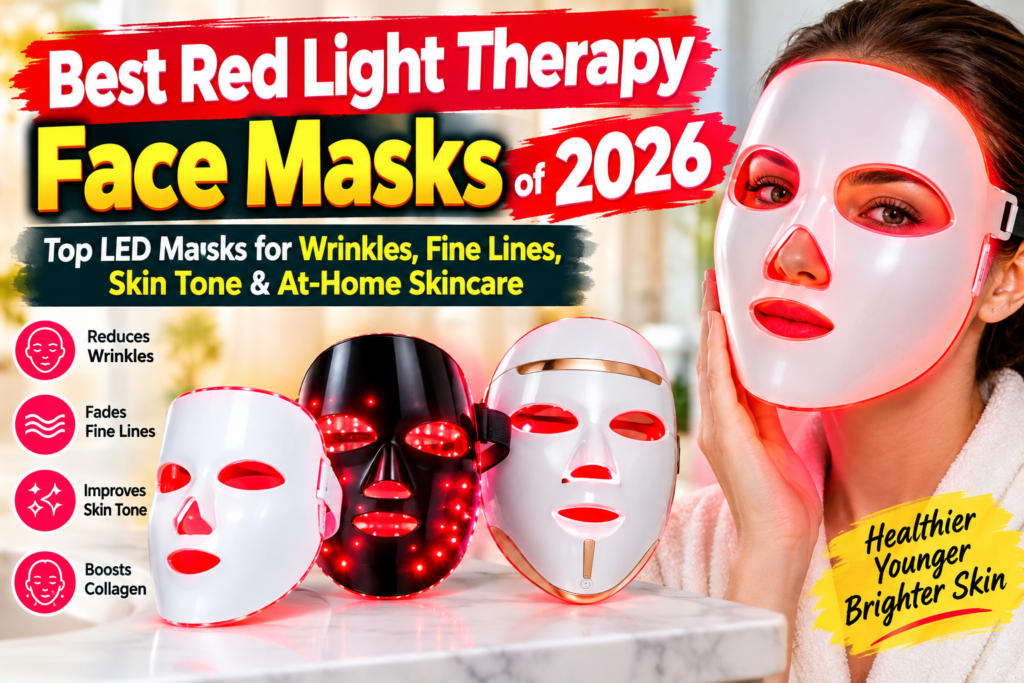
Discover the best red light therapy face masks of 2026 for anti-aging, collagen support, wrinkles, fine lines, skin tone, and convenient at-home LED skincare treatments.
LifeCareBalance.com is reader-supported. When you buy through links on our site, we may earn an affiliate commission at no extra cost to you. As an Amazon Associate, we earn from qualifying purchases.

- Enhanced collagen production capability significantly reduces fine lines, wrinkles and redness, for younger-looking skin…
- Upgraded light coverage provides our famous instant glow, for a healthier, brighter and smoother complexion.
- An all-new, exclusive layout of 236 LED bulbs emits three clinically recognised wavelengths: red (633nm), near-infrared …
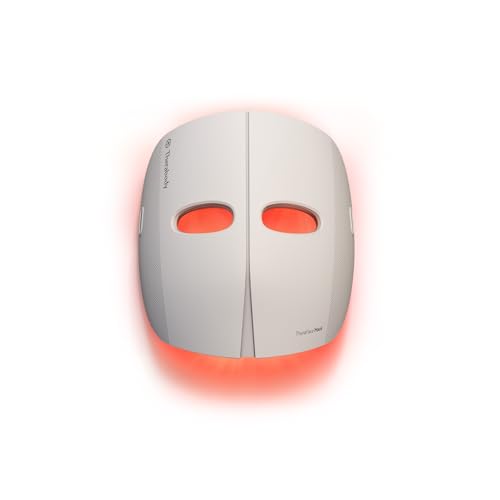
- Supercharged Face Care in 9 Minutes: A facial mask routine with 3 impressive LED light therapy technologies. Red light t…
- Vibrating Facial Massager, Too: TheraFace LED mask delivers a 15-minute vibration therapy treatment to key pressure poin…
- Powerful, Medical-Grade Lights: With 3x more LEDs than leading mask competitors for maximum efficacy and mask skincare r…
Red light therapy face masks have gone from dermatologist-office equipment to something you can strap on while scrolling your phone before bed. These flexible, LED-covered masks bathe your skin in red and near-infrared light with the goal of supporting collagen production, calming inflammation, and gradually improving the look of fine lines, texture, and tone.
Part of the appeal is simplicity. There are no needles, no downtime, and no chemical peels — you put the mask on, wait 3 to 10 minutes depending on the device, and go about your day. That convenience is a big reason LED masks have become one of the most searched skincare tools of the last few years.
That said, it’s worth setting realistic expectations before you spend anywhere from $300 to $600 on one of these devices. Red light therapy is not a face-lift in a mask, and results depend heavily on your skin, your consistency, the quality of the device, and how long you stick with it. Most manufacturers and the dermatologists who study this technology agree that visible changes take weeks of regular use, not days, and that an LED mask works best as one part of a broader skincare routine rather than a replacement for it.
Below, we break down the best red light therapy face masks available in 2026 for anti-aging, collagen support, and overall skin tone, based on verified manufacturer specifications, regulatory status, and how each one fits different skin goals and budgets.
Quick Comparison Table
| ProductBest ForLight Types / WavelengthsTreatment TimeKey FeaturePrice Range | |||||
|---|---|---|---|---|---|
| Omnilux Contour Face | Overall best, strongest clinical backing | Red (633nm) + Near-Infrared (830nm), 132 LEDs | 10 minutes | FDA-cleared for periorbital wrinkles; 40+ peer-reviewed studies behind the brand | ~$395 |
| CurrentBody Skin LED Mask: Series 2 | Most wavelengths, deeper penetration | Red (633nm), Near-Infrared (830nm), Deep NIR (1072nm), 236 LEDs | 10 minutes | Three-wavelength design with a 2-year warranty | ~$380–$470 |
| Dr. Dennis Gross DRx SpectraLite FaceWare Pro | Fastest sessions, dual acne + anti-aging | Red (630nm), Near-Infrared (880nm), Amber (605nm), Blue (415nm), up to 160 lights | 3 minutes | Only 3-minute treatment on this list; treats acne and aging in one device | ~$455 |
| Therabody TheraFace Mask | Most LEDs, added massage therapy | Red (633nm), Blue (415nm), Red+Infrared (830nm), 648 LEDs | 3–9 minutes | Vibration massage motors plus removable eye shields for open-eye use | ~$549–$599 |
| BON CHARGE Red Light Face Mask | Best value pick | Red (630nm) + Near-Infrared (850nm), 240 LEDs | 10 minutes | High LED density at a lower price point; FDA-registered general wellness device (not FDA-cleared) | ~$300–$349 |
Prices reflect manufacturer list pricing at the time of writing and fluctuate with sales; check official retailer pages for current pricing.
Best Red Light Therapy Face Masks of 2026
Omnilux Contour Face
- Enhanced collagen production capability significantly reduces fine lines, wrinkles and redness, for younger-looking skin…
- Upgraded light coverage provides our famous instant glow, for a healthier, brighter and smoother complexion.
- An all-new, exclusive layout of 236 LED bulbs emits three clinically recognised wavelengths: red (633nm), near-infrared …
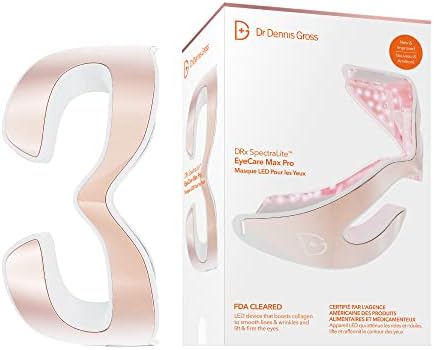
- WHAT IT IS: Dermatologist-developed and FDA-cleared, this LED eye device builds natural elasticity to firm skin, reduce …
- HOW IT WORKS: Four wavelengths of red light stimulate collagen production to treat wrinkles, firm skin & even tone aroun…
- HOW TO USE: On clean, dry skin, place device comfortably over eye area. (Strap included for comfort & hands-free use.) P…
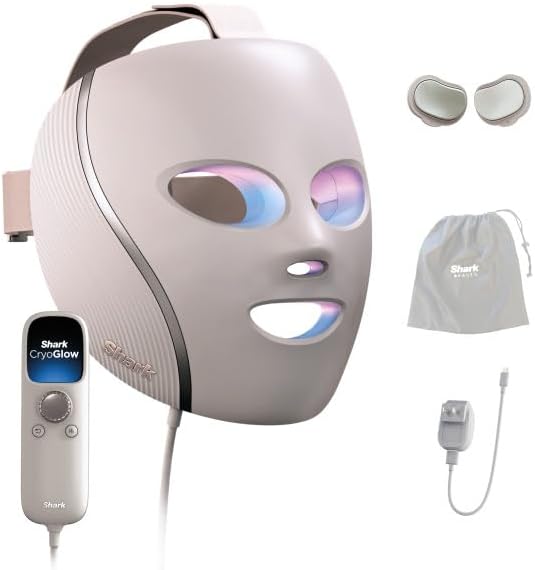
- RED LIGHT THERAPY MASK: CryoGlow is an at-home LED face mask combining red, blue & deep infrared light with under-eye co…
- MOST AWARDED LED MASK IN THE U.S.*: Real people. Real results. Clinically tested on 119 participants by an independent t…
- EXPERTLY DEVELOPED: Developed by Shark Beauty alongside optical light experts and engineers, bringing MedSpa-inspired re…
Best For: Anyone who wants the most clinically documented LED mask on the market and is focused on fine lines, firmness, and overall skin tone rather than active acne.
Key Features
- 132 medical-grade LEDs (66 dual-chip bulbs) emitting red (633nm) and near-infrared (830nm) light simultaneously
- FDA-cleared as a Class II device specifically for the treatment of periorbital wrinkles
- Flexible silicone construction that molds to different face shapes
- No heat, no UV output, and testing to the IEC/EN 62471 eye-safety standard so no separate eye protection is required
- 10-minute sessions, recommended 3–5 times per week for 4–6 weeks, then maintenance use
- 2-year warranty on the device and controller
What We Like
- Backed by more than 40 peer-reviewed clinical studies on the parent Omnilux Medical technology, more than most competitors can claim
- Straightforward two-wavelength design rather than a crowded spec sheet of colors that dilute red/near-infrared output
- Comfortable, lightweight silicone that most testers find easier to wear than rigid plastic masks
Potential Drawbacks
- Only two wavelengths, so it won’t appeal to people who specifically want a deep near-infrared setting
- Sessions are final sale in the US, so you can’t return it if it isn’t the right fit
- Not designed for active acne; Omnilux sells a separate blue-light device (Omnilux Clear) for that purpose
Who Should Buy It? People whose main concerns are fine lines, firmness, and overall tone, and who want the LED mask with the strongest independent research base behind its technology platform.
Who Should Skip It? Anyone dealing primarily with active breakouts, or who wants a mask with more than two light wavelengths for a multi-concern routine.
CurrentBody Skin LED Light Therapy Mask: Series 2
- Enhanced collagen production capability significantly reduces fine lines, wrinkles and redness, for younger-looking skin…
- Upgraded light coverage provides our famous instant glow, for a healthier, brighter and smoother complexion.
- An all-new, exclusive layout of 236 LED bulbs emits three clinically recognised wavelengths: red (633nm), near-infrared …
Best For: People who want the widest wavelength range in a single hands-free mask, including a deep near-infrared setting aimed at more visible signs of aging.
Key Features
- 236 LEDs delivering three wavelengths: red (633nm), near-infrared (830nm), and deep near-infrared (1072nm)
- FDA-cleared LED face mask
- Best-fit flexible silicone shape designed for full-face coverage
- 10-minute treatment time with a power density of roughly 30 mW/cm²
- 2-year warranty and a 30-day money-back guarantee (mask must be unused and in original packaging)
What We Like
- The added 1072nm deep near-infrared LEDs are marketed to reach areas where more pronounced lines tend to appear, giving this mask one more wavelength option than most two-light competitors
- Strong reported comfort and coverage from independent reviewers
- Long warranty period for the price point
Potential Drawbacks
- It’s one of the pricier masks on this list, particularly outside of sale periods
- According to third-party regulatory reporting, the FDA 510(k) filing for the Series 2 has not been confirmed to explicitly list the 1072nm wavelength as part of its cleared specification, so shoppers who care specifically about that wavelength’s regulatory status should factor that in
- More power and more wavelengths do not automatically mean dramatically better results; CurrentBody itself notes that consistency and wavelength precision matter more than raw output
Who Should Buy It? Shoppers who want the broadest wavelength coverage in a flexible, hands-free mask and don’t mind paying a premium for it.
Who Should Skip It? Budget-conscious buyers, or anyone who wants a mask with the simplest possible feature set.
Dr. Dennis Gross DRx SpectraLite FaceWare Pro
- WHAT IT IS: Dermatologist-developed and FDA-cleared, this LED eye device builds natural elasticity to firm skin, reduce …
- HOW IT WORKS: Four wavelengths of red light stimulate collagen production to treat wrinkles, firm skin & even tone aroun…
- HOW TO USE: On clean, dry skin, place device comfortably over eye area. (Strap included for comfort & hands-free use.) P…
Best For: People who want the shortest possible daily commitment and need a single device that addresses both acne and visible aging.
Key Features
- Up to 160 total lights: roughly 100 red lights and 60 blue lights, spanning four published wavelengths per the manufacturer — red (630nm), near-infrared (880nm), amber (605nm), and blue (415nm)
- FDA-cleared, Class II medical device
- Three treatment modes: red only (anti-aging), blue only (acne), or combined red + blue
- Automatic 3-minute shutoff — the shortest session time of any mask on this list
- Rigid, contoured design with an adjustable silicone head strap
- 1-year limited warranty
What We Like
- Genuinely useful for people managing both breakouts and early signs of aging, since it’s one of the few masks marketed and cleared for both concerns
- The 3-minute session is easy to fit into an existing nighttime routine
- Dermatologist-founded brand with a long track record in the LED category
Potential Drawbacks
- The rigid shell doesn’t contour to the face the way flexible silicone masks do, which some users find less comfortable
- Shorter sessions mean the total weekly light dose is lower than masks that run 10 minutes per day, even if used daily
- List price is high relative to some FDA-cleared competitors, though it’s frequently discounted
Who Should Buy It? Anyone who wants one device to address occasional breakouts and fine lines, and who values a fast, low-commitment routine.
Who Should Skip It? People who prefer a flexible, contoured fit, or who want to maximize near-infrared dose with a longer session.
Therabody TheraFace Mask
- Supercharged Face Care in 9 Minutes: A facial mask routine with 3 impressive LED light therapy technologies. Red light t…
- Vibrating Facial Massager, Too: TheraFace LED mask delivers a 15-minute vibration therapy treatment to key pressure poin…
- Powerful, Medical-Grade Lights: With 3x more LEDs than leading mask competitors for maximum efficacy and mask skincare r…
Best For: People who want the highest LED count available and are interested in added massage functionality, not just light therapy.
Key Features
- 648 medical-grade LEDs — the most of any mask reviewed here — delivering red (633nm), blue (415nm), and combined red + infrared (830nm) light
- FDA-cleared, Class II medical device
- 17 built-in vibration motors (Therabody’s “QX-Micro Motors”) that massage the browline, eye area, and scalp during treatment
- Removable protective eye shields, so eyes can stay open during sessions
- Treatment options ranging from 3-minute targeted sessions to a 9-minute preset routine, plus a 15-minute vibration-only mode with no lights
- Rigid shell design; approximately 120 minutes of LED-mode battery life per charge
- 1-year limited warranty
What We Like
- The combination of light therapy and facial massage is unique among masks on this list and may appeal to people who also want tension relief
- Highest LED density means more even light coverage across the face in a given session
- Therabody backs the mask with a 12-week, third-party clinical study (a relatively small sample of 31 participants) reporting improvements in texture, fine lines, and firmness after daily use
Potential Drawbacks
- It’s the most expensive mask on this list at full price
- The rigid design and added weight from the motors make it heavier and bulkier than flexible silicone alternatives
- The underlying clinical study, while third-party conducted, involved a modest sample size, so it should be read as supportive rather than definitive evidence
Who Should Buy It? Buyers who want the most powerful, feature-rich mask available and see value in the massage component as part of a relaxation routine.
Who Should Skip It? Anyone primarily focused on cost-efficiency, or who prefers a lightweight, flexible mask they can wear while moving around.
BON CHARGE Red Light Face Mask
- RED LIGHT THERAPY MASK: CryoGlow is an at-home LED face mask combining red, blue & deep infrared light with under-eye co…
- MOST AWARDED LED MASK IN THE U.S.*: Real people. Real results. Clinically tested on 119 participants by an independent t…
- EXPERTLY DEVELOPED: Developed by Shark Beauty alongside optical light experts and engineers, bringing MedSpa-inspired re…
Best For: Shoppers who want a legitimate red and near-infrared combination at a lower price point than the premium options above.
Key Features
- 240 LEDs delivering red (630nm) and near-infrared (850nm) light at a reported irradiance of roughly 40.8 mW/cm²
- Flexible A-grade silicone construction, cordless design
- 10-minute sessions with automatic shutoff, recommended 3–5 times per week
- FDA-registered as a general wellness device (this is different from FDA clearance — see the buyer’s guide below for what that distinction means)
What We Like
- High LED density for the price, undercutting several FDA-cleared competitors by $100 or more
- Uses the two most commonly studied wavelengths (red and near-infrared) rather than diluting output across many colors
- Lightweight and comfortable according to independent reviewers
Potential Drawbacks
- It is FDA-registered, not FDA-cleared — the company does not make specific medical claims tied to an FDA clearance, and the packaging includes standard general-wellness disclaimers
- Fewer built-in safety certifications and clinical studies compared to Omnilux or CurrentBody
- Reported irradiance figures come primarily from third-party reviews and the brand itself rather than an FDA submission, so treat them as manufacturer-reported rather than independently verified
Who Should Buy It? Buyers who want a solid entry point into red and near-infrared therapy without paying premium prices, and who understand the difference between FDA registration and FDA clearance.
Who Should Skip It? Anyone who wants the reassurance of a formal FDA 510(k) clearance backing the specific anti-aging claims on the box.
How Red Light Therapy Face Masks Work
Red light therapy face masks work through a process called photobiomodulation — using specific wavelengths of light to trigger biological responses in skin cells without generating heat or UV exposure.
Red light (typically in the 620–660nm range) penetrates the outer layers of skin and is absorbed by mitochondria, the energy-producing structures inside cells. According to the Cleveland Clinic, red light therapy is thought to work by giving mitochondria more energy to work with, which may help support processes like collagen production, circulation, and tissue repair.
Near-infrared light (roughly 800–900nm and up) penetrates more deeply into the skin than red light alone, reaching further into the dermis where fibroblasts — the cells responsible for producing collagen and elastin — are located. Many manufacturers pair red and near-infrared light in the same device for this reason.
It’s worth being clear-eyed about the state of the science. The Cleveland Clinic describes red light therapy as “an emerging treatment that’s showing promise,” while noting that many researchers believe more large-scale clinical trials are needed to confirm its effectiveness across all the uses it’s marketed for. A systematic review published in JAMA Dermatology by Mass General Brigham researchers found that at-home red and/or blue LED devices produced meaningful improvement in mild-to-moderate acne, but the researchers pooled a relatively modest six studies and called for continued research.
In short: the underlying mechanism is well understood at a basic science level, and there’s a reasonable body of evidence for certain uses, but individual results vary and the research base is still growing.
Potential Benefits of LED Face Masks
Based on current research and manufacturer clinical data, red light therapy masks may help with several skin concerns — though results are gradual and vary by person. It’s important to use cautious, evidence-based language here rather than guarantees.
- Appearance of fine lines and wrinkles: Research suggests red and near-infrared light may support collagen production, which can help soften the look of fine lines over weeks of consistent use.
- Skin texture: Some studies indicate improved texture and smoothness with regular LED treatment, likely tied to the same collagen-related mechanisms.
- Overall skin appearance and radiance: Users in manufacturer and independent studies often report brighter-looking, more even-toned skin after 4–6 weeks of consistent sessions.
- Skin tone: Red and near-infrared light may help calm redness and support a more even complexion over time, though this varies by skin type and underlying cause of discoloration.
- Collagen-related skin support: This is the most frequently cited benefit in the clinical literature on photobiomodulation, since near-infrared light is believed to stimulate fibroblast activity at a cellular level.
None of these outcomes are guaranteed, and none of the masks above are marketed or cleared to cure or prevent any medical skin condition. If you have a specific dermatological concern, it’s worth discussing options with a board-certified dermatologist alongside — or instead of — an at-home device.
What to Look for When Buying a Red Light Therapy Face Mask
1. Wavelengths
Most reputable masks use red light in the 620–660nm range and near-infrared light somewhere between 800–900nm+, since these are the ranges most commonly referenced in photobiomodulation research. Extra colors (blue, green, yellow) can be useful for specific concerns like acne, but adding many wavelengths to one device sometimes reduces the power dedicated to red and near-infrared. There’s no strong evidence that more colors automatically produce better anti-aging results.
2. Mask Coverage
Full-face coverage matters more than raw LED count. A mask with fewer LEDs but a design that sits flush against your entire face may deliver more even treatment than a mask with more LEDs that gaps around the jaw or forehead.
3. Comfort and Fit
Flexible silicone masks tend to contour better to different face shapes than rigid plastic shells, though rigid designs can offer more consistent LED-to-skin distance. Adjustable straps — ideally with both horizontal and vertical adjustment — help the mask sit securely without gaps.
4. Treatment Time
Sessions on the masks above range from 3 to 10 minutes. Shorter sessions are easier to fit into a routine, but they typically require a higher-intensity light source to deliver a comparable dose. Longer sessions at moderate intensity can achieve similar results with more flexibility on device design.
5. Eye Protection
Follow the manufacturer’s specific instructions on eye safety. Some masks (like Omnilux Contour Face) are tested to international eye-safety standards and don’t require additional protection; others include built-in eye shields, particularly for blue-light settings, since some people find blue light more irritating to look at directly. Never assume one brand’s eye-safety guidance applies to a different device.
6. Regulatory Status
“FDA-cleared” means the FDA reviewed a 510(k) submission and determined the device is substantially equivalent to an already legally marketed device for a specific, defined use — for example, the treatment of periorbital wrinkles. It is a real regulatory milestone, but it is not the same as “FDA-approved,” a higher bar generally reserved for higher-risk devices and drugs. “FDA-registered,” on the other hand, generally means a manufacturer has registered its facility and listed the device with the FDA — it does not necessarily mean the device has been reviewed or cleared for a specific therapeutic claim. Always check exactly what a clearance or registration covers, and don’t assume it guarantees a specific outcome for every claim on a product’s marketing page.
7. Price and Value
Prices for the masks above range from roughly $300 to $600. Higher price generally correlates with more LEDs, more wavelengths, added features (like massage), or a stronger clinical research base — but the “best” mask for you depends on your specific goals, not just the highest price tag. A well-fitted, FDA-cleared mask with two well-chosen wavelengths can outperform a cheaper mask with more colors and worse coverage.
8. Warranty and Return Policy
Warranties on the masks in this guide range from 1 to 2 years. Return policies vary significantly — some brands offer 30-day money-back guarantees, while others sell LED devices as final sale. Because policies change, always check the current warranty and return terms on the manufacturer’s official product page before buying.
Are Red Light Therapy Face Masks Safe?
For most healthy adults, red light therapy face masks are considered low-risk. LED light therapy does not use UV light, doesn’t generate meaningful heat, and multiple sources — including the Cleveland Clinic — note that it has a favorable safety profile compared to more invasive skin treatments.
That said, a few precautions are worth taking seriously:
- Follow the manufacturer’s specific instructions, including recommended session length and frequency. Using a device more often or longer than instructed hasn’t been shown to produce better results and could increase the chance of skin irritation.
- Photosensitizing medications matter. People taking medications that increase sensitivity to light — some antibiotics, certain blood pressure medications, and others — should talk to a healthcare provider before starting light therapy, since these medications can increase the risk of an adverse skin reaction.
- Consult a dermatologist if you have an active skin condition, are pregnant or breastfeeding (several manufacturers specifically advise against use during pregnancy due to a lack of safety testing in this population), or have a history of photosensitive conditions.
- This is not a diagnostic or curative tool. None of the masks in this guide are cleared to diagnose, treat, or cure any medical skin disease. If you notice a new or changing skin lesion, see a board-certified dermatologist rather than relying on an LED mask.
If you’re ever unsure whether red light therapy is appropriate for your specific skin history or medications, a quick conversation with a dermatologist or your regular healthcare provider is the safest way to find out.
How to Use a Red Light Therapy Face Mask
Exact instructions vary by device, so always default to what’s in your specific mask’s manual. As a general framework:
- Start with clean, dry skin unless your mask’s manufacturer specifically instructs otherwise. Most brands recommend a bare face with no serums or makeup underneath, since some skincare ingredients can interfere with light absorption or, in rare cases, react with light exposure.
- Follow the recommended treatment duration exactly. Whether that’s 3 minutes or 10 minutes, most masks include an automatic shutoff — don’t manually extend a session beyond what’s recommended.
- Use the mask consistently according to the schedule in your device’s instructions, typically 3–5 times per week for the first 4–6 weeks. Consistency matters more than intensity for most reported outcomes.
- Avoid exceeding recommended usage. More sessions per day or longer session times have not been shown to improve results and are outside what most devices have been tested for.
- Apply skincare products after your session, not before, unless your specific device says otherwise — this lets the light reach your skin directly and lets your serums and moisturizers absorb afterward.
- Keep expectations realistic and track progress with photos. Because changes are gradual, before-and-after photos taken in consistent lighting are often more useful than day-to-day mirror checks for noticing real progress.
Instructions can vary meaningfully between brands — always check your specific mask’s manual for session time, frequency, and any product restrictions before use.
Red Light Therapy Face Mask vs Other At-Home Skincare Devices
LED Masks vs Facial LED Panels
Panels sit further from the face and typically cover a larger area (face, neck, chest) in one session, but you have to sit or stand in front of them rather than moving around. Masks offer hands-free, portable treatment but only cover the face itself. If you want to treat your neck and décolletage as well, you may need a separate device or a panel.
LED Masks vs Handheld Red Light Devices
Handheld wands and devices are generally cheaper and useful for spot-treating specific areas (like under-eye lines or a stubborn blemish), but they require you to hold and move the device manually for the full session, which limits multitasking. Masks trade targeted precision for full-face, hands-free convenience.
LED Masks vs Traditional Skincare Products
Serums, retinoids, and other topical treatments work through different mechanisms (chemical exfoliation, active ingredient delivery) rather than light-based cellular stimulation. Many dermatologists recommend using LED therapy alongside — not instead of — a solid topical routine, including daily sunscreen, since neither approach replaces the other. If you’re deciding between building out a topical routine or investing in an LED device first, our complete LED face mask comparison breaks down more options across price points.
FAQ
1. Do red light therapy face masks really work?
There’s reasonable scientific support for red and near-infrared light producing measurable effects at the cellular level, and several manufacturer and third-party studies report visible improvements in texture, tone, and fine lines after weeks of consistent use. However, most experts agree more large-scale, independent research is still needed, and individual results vary based on skin type, consistency, and device quality.
2. How often should I use a red light therapy mask?
Most manufacturers recommend 3–5 sessions per week for the first 4–6 weeks, followed by less frequent maintenance sessions. Always follow the specific frequency listed in your device’s instructions, since recommendations vary by wavelength and intensity.
3. How long does it take to see results?
Based on manufacturer guidance across the devices in this guide, most people are advised to expect initial changes around 4 weeks of consistent use, with fuller results typically assessed at 6–10 weeks. Results are gradual, not immediate.
4. Can red light therapy help with wrinkles?
Research suggests red and near-infrared light may support collagen production, which can help soften the appearance of fine lines and wrinkles over time. It’s not a substitute for more intensive treatments like retinoids, microneedling, or injectables for more pronounced wrinkles.
5. What is the best wavelength for an LED face mask?
Red light in the 620–660nm range and near-infrared light around 800–900nm are the most commonly studied wavelengths for skin rejuvenation. A device using well-calibrated red and near-infrared light is generally considered more useful for anti-aging goals than one that spreads its power across many additional colors.
6. Are red light therapy masks safe for the eyes?
This varies by device and wavelength. Some masks are tested to international photobiological eye-safety standards and don’t require additional protection; others include built-in eye shields, especially for blue-light modes. Always follow your specific mask’s eye-safety guidance rather than assuming one brand’s rules apply universally.
7. Can I use skincare products with an LED face mask?
Most manufacturers recommend applying serums and moisturizers after your LED session rather than before, since a barrier between the light and your skin can reduce effectiveness, and certain ingredients (like retinoids) are sometimes advised against combining with light therapy — check with your dermatologist if you use active ingredients regularly.
8. Are expensive LED masks worth it?
Not necessarily. Price often reflects LED count, wavelength range, added features, and clinical research investment, but a well-fitted, appropriately wavelength-calibrated mask at a mid-range price can be just as effective for many users as a premium option. Match the device to your specific goals rather than assuming higher cost equals better results.
9. What is the difference between red light and near-infrared light?
Red light penetrates the outer layers of skin and is commonly associated with surface-level benefits like tone and mild collagen support. Near-infrared light penetrates more deeply, reaching further into the dermis where collagen-producing fibroblasts are located. Many masks combine both for a broader effect.
10. Is an LED face mask better than visiting a clinic?
In-office LED treatments typically use higher-powered, professional-grade equipment and are administered under supervision, which can produce faster or more pronounced results for some concerns. At-home masks trade some power for convenience and lower long-term cost. Many dermatologists view at-home masks as a way to maintain results between professional treatments, or as a lower-intensity option for people who can’t access in-office care regularly.
A note on mental and emotional wellbeing: skincare concerns are common and it’s completely normal to want to feel good in your skin. If skin concerns are affecting your day-to-day wellbeing significantly, it can help to talk with a dermatologist or another healthcare professional who can offer personalized guidance.
Final Verdict
If you want the single most evidence-backed option on this list, the Omnilux Contour Face is hard to beat — its two-wavelength design is straightforward, it’s FDA-cleared for a specific indication, and it’s supported by the largest body of independent research of any mask here. It’s a strong pick for anyone whose primary goals are fine lines, firmness, and overall tone.
If you want the broadest wavelength range in a single hands-free device and don’t mind the higher price tag, the CurrentBody Skin LED Mask: Series 2 offers the most comprehensive spec sheet, including a deep near-infrared setting most competitors don’t have.
For anyone juggling both breakouts and anti-aging goals who wants the fastest possible daily routine, the Dr. Dennis Gross DRx SpectraLite FaceWare Pro is the most efficient option at just 3 minutes per session.
If added massage functionality and the highest LED density matter to you, and budget is less of a concern, the Therabody TheraFace Mask delivers the most hardware and the most features — at the highest price point on this list.
And if you’re simply looking for a legitimate entry point into red and near-infrared therapy without spending $400+, the BON CHARGE Red Light Face Mask offers a reasonable middle ground, provided you understand that it’s FDA-registered rather than FDA-cleared.
Whichever mask you choose, the deciding factor in your results will likely be consistency and realistic expectations more than any single spec on the box. A comfortable mask you’ll actually use three to five times a week for a couple of months will almost always outperform a more powerful mask that ends up in a drawer after two weeks. For a deeper dive into how these masks perform over longer-term use, our detailed LED face mask review covers extended testing notes worth reading before you buy.