
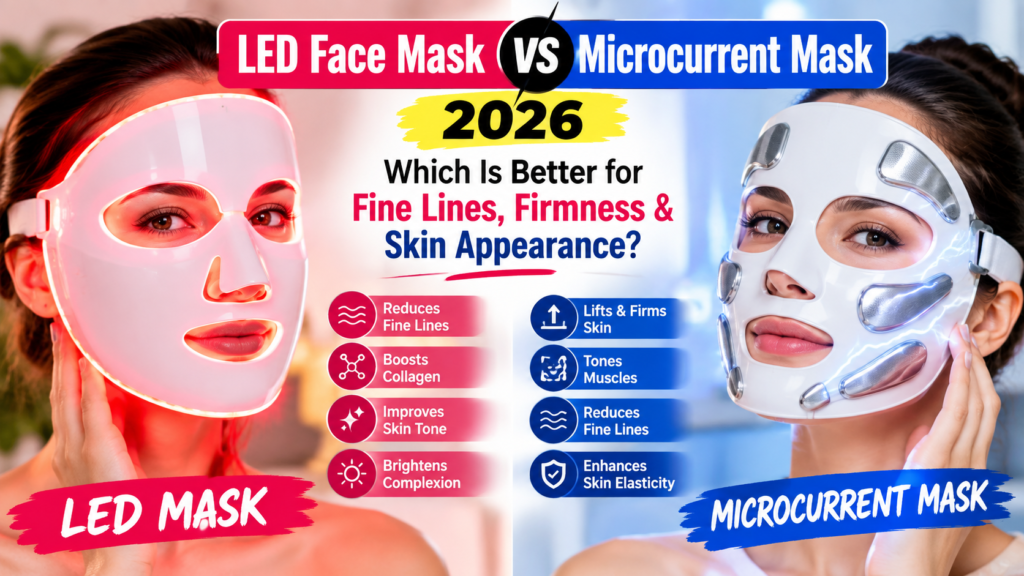
Compare LED face masks vs microcurrent masks in 2026 to see which is better for fine lines, skin firmness, texture, and overall skin appearance.
LifeCareBalance.com is reader-supported. When you buy through links on our site, we may earn an affiliate commission at no extra cost to you. As an Amazon Associate, we earn from qualifying purchases.

- RED LIGHT THERAPY MASK: CryoGlow is an at-home LED face mask combining red, blue & deep infrared light with under-eye co…
- MOST AWARDED LED MASK IN THE U.S.*: Real people. Real results. Clinically tested on 119 participants by an independent t…
- EXPERTLY DEVELOPED: Developed by Shark Beauty alongside optical light experts and engineers, bringing MedSpa-inspired re…

- 4 REVOLUTIONARY MICROCURRENTS The only device with Advanced Microcurrent and 3 more microcurrent modes Tapping & Sculpti…
- ANTI-SHOCK SYSTEM 2.0 A new & improved version of FOREO’s patented Anti-Shock System now measures your skin at a rate of…
- 5 T-SONIC MASSAGE PATTERNS Body sculpting massager with Targeted and Soothing Massages, Shiatsu, and more, to relax musc…
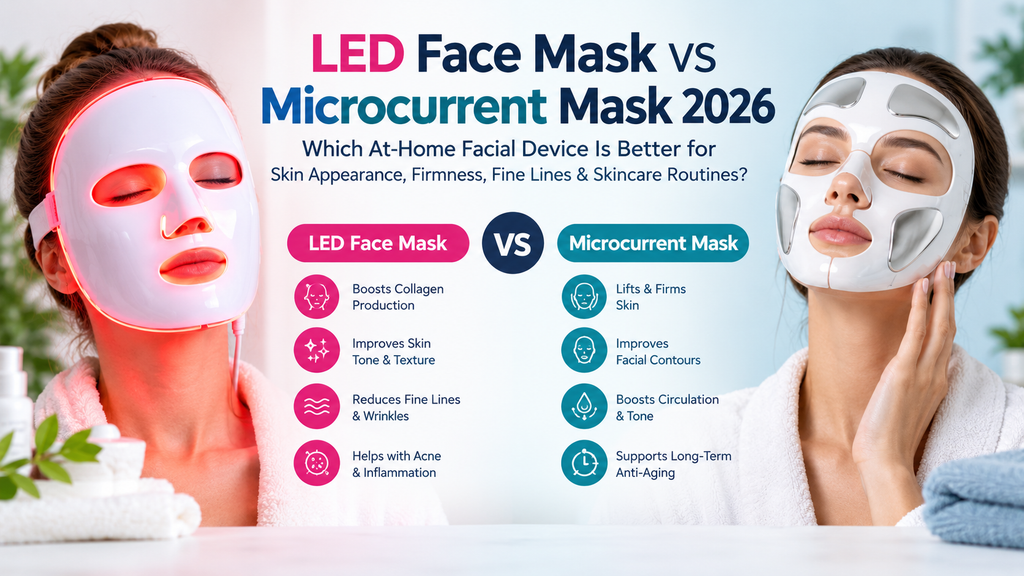
LED face masks and microcurrent devices solve different problems, even though they often sit side by side on the same “best anti-aging tools” list. An LED mask is a light-based tool aimed primarily at the skin itself — its tone, texture, and the visible signs of aging. A microcurrent device is an electrical tool marketed mainly for facial toning, temporary lifting, and definition, especially around the jawline and cheeks.
Neither one is universally “better.” The right pick depends on what you’re actually trying to fix: skin appearance, or the look of tone and contour. Below, we break down exactly which technology fits which goal, what the evidence realistically supports, and when it makes sense to use both.
Quick Verdict: Which One Should You Choose?
If you only read one section, read this one.
Choose an LED face mask if your main concerns are:
- Fine lines and the early signs of aging
- Overall skin texture and smoothness
- Redness or a blotchy, uneven-looking tone
- Occasional breakouts (with a mask designed for acne, typically using blue light)
- General skin appearance and a gradual, skin-focused routine
Consider a microcurrent device if your main concerns are:
- A temporarily more “lifted” or sculpted look before an event
- Jawline and cheek definition
- Facial contour as part of a toning-focused routine
- Immediate, in-the-moment changes in how your face appears
Consider using both if:
You want skin-focused improvement and a temporary contouring boost, and both devices are appropriate for your skin and health situation. They target different things, so they can complement each other rather than compete.
One important caveat up front: no home device — LED or microcurrent — produces a permanent lift or permanently erases wrinkles. Any visible change depends on consistent use, realistic expectations, and (for microcurrent) ongoing maintenance sessions.
LED Face Mask vs Microcurrent Device: Comparison Table
| Feature | LED Face Mask | Microcurrent Device/Mask |
|---|---|---|
| Main technology | LED light therapy | Low-level electrical current |
| Primary focus | Skin | Facial toning and appearance |
| Fine lines & wrinkles | Stronger fit | Secondary, limited role |
| Skin texture | Stronger fit | Limited |
| Redness/inflammation | Potential benefit, depending on wavelength and device | Not a primary purpose |
| Acne | Some devices include blue light | Not a primary purpose |
| Facial lifting appearance | Limited | Stronger fit |
| Jawline definition | Limited | Stronger fit |
| Speed of visible effect | Usually gradual | Often more immediate in appearance |
| Maintenance | Consistent use generally needed | Consistent sessions generally needed |
| Hands-free use | Often yes | Usually requires more hands-on technique |
| Conductive gel | Usually not required | Often required |
| Best for | Skin-focused concerns | Toning and contouring-focused concerns |
Keep in mind that both categories include a wide range of products. A budget blue-light-only mask and a full-face red/near-infrared mask are not interchangeable, and a simple handheld microcurrent wand behaves differently than a full facial device with multiple settings. Where a feature genuinely depends on the specific product, we’ve noted that above rather than generalizing.
How LED Face Masks Work
LED (light-emitting diode) masks expose the skin to specific wavelengths of visible or near-infrared light, a process often called photobiomodulation. Different colors are used for different purposes:
- Red light (roughly in the 630–660 nm range) is the wavelength most associated with skin-focused benefits like fine lines, texture, and overall appearance.
- Near-infrared light penetrates a bit further into the skin and is often paired with red light in combination masks.
- Blue light is generally associated with acne-focused devices rather than anti-aging use.
The general idea is that these wavelengths interact with skin cells in ways that may support the skin’s natural repair and renewal processes over time. Research in this area is genuinely encouraging for photoaging-related concerns, but it’s not a guarantee: results are typically gradual, appear after weeks of consistent use, and vary from person to person and device to device.
Because LED masks differ in wavelength, power output, and facial coverage, one mask’s clinical backing doesn’t automatically apply to every mask on the market. If you’re weighing an LED mask against a full-size panel rather than a microcurrent device, our LED face masks vs red light therapy panels comparison walks through that specific decision in more detail.
How Microcurrent Masks and Devices Work
Microcurrent devices deliver a very low-level electrical current to the skin, typically through metal probes, rollers, or built-in electrodes in a mask-style device. The current is meant to be sub-sensory or barely felt, and it’s often described as gently stimulating facial muscles and skin cells.
Most microcurrent devices require a conductive gel or serum. This isn’t optional styling — the gel helps the current transfer evenly across the skin and is part of how these devices are designed to be used safely and effectively.
Facial toning, contour, and a temporarily “lifted” appearance are the main selling points of microcurrent technology, and this is often where users report noticing a difference the same day, right after a session. That said, this is a temporary appearance change, not a permanent restructuring of facial muscle or tissue. The visible effect tends to fade, which is why manufacturers and estheticians typically recommend ongoing maintenance sessions rather than a one-and-done treatment.
LED vs Microcurrent for Fine Lines and Wrinkles
For fine lines and wrinkles specifically, LED is generally the more directly relevant technology. Red and near-infrared light are studied primarily for their effects on the skin itself — collagen-related activity, skin texture, and the visible depth of fine lines — which is exactly the category fine lines and wrinkles fall into.
Microcurrent isn’t irrelevant here, but its role is more indirect. By affecting the appearance of muscle tone and contour, some users feel their skin looks smoother or less creased in certain areas immediately after use. However, microcurrent is not primarily designed or marketed as a wrinkle-reduction treatment — its core claim is about facial definition and lift, not directly targeting the skin changes that cause fine lines. If fine lines and overall skin aging are your top priority, LED is the more logical starting point.
LED vs Microcurrent for Skin Firmness and Tightening
This is where it’s most important to separate two different ideas: skin-focused improvement and temporary lifting or toning appearance.
LED light therapy is generally discussed in terms of supporting the skin’s own structure over time — the kind of firmness that relates to skin quality itself. Microcurrent is generally discussed in terms of the appearance of muscle tone and contour immediately after use — a look of “tightness” that comes from a temporary effect on how the face appears, not a structural change to the skin.
Neither should be described as equivalent to a surgical facelift or a clinical skin-tightening procedure. Realistically:
- If you want your skin to look firmer and healthier over weeks of consistent use, LED is the more relevant tool.
- If you want a temporary, in-the-moment tightened or toned appearance, microcurrent is the more relevant tool.
- If you want both, they can be used as part of the same routine, addressing different layers of “firmness.”
LED vs Microcurrent for Jawline and Facial Lifting
If your main goal is jawline definition, cheek contour, or a temporarily more lifted look, microcurrent is generally the more appealing option. It’s specifically marketed around facial toning and contour, and many users report an immediate difference in how their jawline or cheekbones appear right after a session — even though that effect is temporary and depends on ongoing use.
LED masks are not designed as facial-muscle contouring tools. Their focus is the skin’s surface and structure, not the underlying muscle appearance that drives a “lifted” look. That doesn’t mean LED has zero relationship to how firm or refreshed skin looks overall — it just isn’t the technology built around contour and lift the way microcurrent is.
It’s worth repeating: microcurrent does not permanently reshape the face. Any lifted appearance is temporary and maintenance-dependent, similar to how a workout can temporarily change how muscles look without permanently altering bone or tissue structure.
LED vs Microcurrent for Acne, Redness, Tone & Texture
Acne
Some LED devices include blue light, which is generally marketed toward mild to moderate breakouts rather than anti-aging concerns. If acne is a priority, look specifically for a mask that includes blue light and is described by the manufacturer as appropriate for that use — not every red/near-infrared anti-aging mask is designed with acne in mind. Microcurrent is not typically positioned as an acne treatment.
Redness
Certain LED wavelengths are discussed in the context of skin appearance and inflammation-related concerns, which is why some people use red light–based masks alongside a broader routine for redness-prone skin. This isn’t a treatment for a diagnosed medical skin condition — if you have persistent redness, rosacea, or another diagnosed condition, that’s a conversation for a dermatologist. Microcurrent doesn’t have a meaningful role here.
Uneven Skin Tone
LED is generally the more relevant option for people focused on the appearance of tone and clarity, since it’s working directly on skin cells rather than muscle appearance. Microcurrent doesn’t target tone directly.
Skin Texture
Texture-related concerns line up with LED’s skin-focused mechanism far more than microcurrent’s toning-focused mechanism. If smoother-looking skin texture is the goal, LED is the more logical fit.
Which Gives Faster Results?
Microcurrent: Some users notice a temporary change in facial definition or a “tighter” appearance right after a single session. This effect is generally short-lived and maintenance-dependent — it’s not a lasting transformation from one use. Individual results vary quite a bit based on technique, device, and skin.
LED: Visible changes in skin appearance are generally gradual and build with repeated, consistent use over weeks rather than a single session. Consistency matters more here than any one treatment.
Neither timeline should be reduced to an exact number of days — how quickly (or whether) you notice a difference depends on the specific device, your skin, and how consistently you use it.
Which One Lasts Longer?
This depends on what “lasts” means for each technology:
- Microcurrent’s visible effect is generally an immediate, temporary appearance change that fades over time, which is why ongoing sessions are typically recommended to maintain the look.
- LED’s benefits are framed more as a gradual skin-appearance improvement built through consistent use, rather than a single visible “before and after” that appears overnight.
Neither technology should be assumed to produce permanent results. LED benefits are generally tied to continued use over time, and microcurrent’s toning appearance typically requires maintenance sessions to sustain. Individual variation is significant with both.
Can You Use LED and Microcurrent Together?
Many people do incorporate both into a skincare routine, but a few practical points matter:
- Follow manufacturer instructions for both devices, including any guidance on how close together they should be used.
- Check product compatibility. Some brands offer specific guidance on sequencing LED and microcurrent, while others don’t address it at all.
- Conductive gel matters. If you’re using a microcurrent device that requires gel, that step is separate from an LED session and typically shouldn’t be skipped or substituted.
- Start with clean skin for both devices, and consider which one you use first based on the specific products you own — when in doubt, check what each manufacturer recommends.
- Don’t assume combining devices automatically means better or faster results. Using both can address two different goals (skin appearance and toning appearance), but stacking devices isn’t a shortcut to more dramatic outcomes than either one delivers on its own.
If you have a pacemaker, are pregnant, have epilepsy, or have another medical condition, talk to a healthcare professional before adding an electrical device like microcurrent to your routine, and check the specific contraindications listed by the device manufacturer for both LED and microcurrent tools.
Pros and Cons
LED Face Mask
Pros:
- Skin-focused, with potential relevance to fine lines, texture, tone, and (for some devices) acne
- Many models are hands-free, so you can multitask during a session
- Fits fairly easily into a simple, low-effort routine
Cons:
- Results are gradual and require patience
- Device quality, wavelength, and coverage vary significantly between products
- Consistent use over weeks is generally necessary to notice a difference
- Not designed for facial lifting or contouring
Microcurrent Device
Pros:
- May provide a more immediate, visible change in facial definition or “lift”
- Well suited to contour-focused routines, especially around the jawline and cheeks
- Can complement other skincare technologies, including LED
Cons:
- Requires correct technique to use effectively
- Often requires a conductive gel or serum, adding a step (and cost) to the routine
- Maintenance sessions are typically needed to sustain the appearance
- Not designed for acne, redness, or texture-related concerns
Common Mistakes to Avoid
- Expecting overnight results from an LED mask
- Expecting a microcurrent device to produce a permanent lift
- Using a microcurrent device without the recommended conductive gel or serum
- Skipping the manufacturer’s instructions for either device
- Buying an LED mask without checking its wavelengths and other published specifications
- Using either device inconsistently and then judging it as “not working”
- Assuming more frequent sessions automatically mean better results
- Ignoring safety notes or contraindications listed by the manufacturer
- Comparing devices on price alone, without considering wavelength, coverage, or build quality
Buying Guide
What to Look for in an LED Face Mask
- Wavelengths used — check whether the mask includes red, near-infrared, blue light, or a combination, and whether that matches your main goal
- Coverage — how much of the face and neck the mask actually reaches
- Comfort and fit — masks that sit awkwardly are less likely to get used consistently
- Session time — shorter, clearly stated session lengths are easier to stick with
- Manufacturer transparency — look for brands that publish real wavelength and power specifications rather than vague marketing language
- Eye protection — many LED masks include built-in eye protection or recommend goggles; check the product details
- Regulatory information — some devices reference FDA clearance for specific uses; verify this directly with the manufacturer rather than assuming
- Warranty and return policy — useful given the price range of many masks
For a closer look at how specific masks perform in practice, our LED face mask review covers real-world usage considerations, and our roundup of the best LED face masks is a good next step once you know which wavelengths you’re looking for.
What to Look for in a Microcurrent Device
- Current settings — adjustable intensity can make a device more comfortable and versatile
- Electrode or contact design — probes, rollers, and mask-style contacts all deliver current differently
- Conductive gel requirements — check whether gel is included, required, or optional
- Ease of use — some devices require more technique and time than others
- Treatment areas — confirm the device is designed for the areas you care about (jawline, cheeks, under-eyes, etc.)
- Safety information — read the manufacturer’s contraindications carefully before purchasing
- Warranty and instructions — look for clear, detailed manufacturer guidance rather than a bare-bones manual
Avoid assuming a device is “medical grade” or clinically equivalent to an in-office treatment unless the manufacturer specifically documents that.
Frequently Asked Questions
Is LED or microcurrent better for fine lines? LED is generally the more relevant option, since it works directly on the skin rather than on the appearance of muscle tone.
Is microcurrent better than LED for skin tightening? It depends on what you mean by “tightening.” Microcurrent is associated with a temporary, immediate toned appearance, while LED is associated with gradual skin-appearance improvement over time. Neither is equivalent to clinical skin tightening.
Does microcurrent really lift the face? Some users notice a temporary, visible change in facial definition after a session, but this is not a permanent lift, and results depend heavily on consistent maintenance use.
Does LED help with wrinkles? LED light therapy, particularly red and near-infrared light, is studied for its potential role in supporting skin appearance related to fine lines and wrinkles, though results are gradual and vary by device and person.
Can you use LED and microcurrent together? Often yes, as long as you follow each manufacturer’s instructions and don’t assume that combining devices guarantees faster or better results.
Which is better for jawline definition? Microcurrent is generally the more relevant choice, since facial contour and definition are its main focus.
Which is better for acne? LED masks that specifically include blue light are the more relevant option; microcurrent is not typically designed for acne.
How often should you use an LED face mask? This varies by device, so check the manufacturer’s recommended frequency — most at-home routines involve regular, consistent sessions per week rather than daily extended use.
How often should you use a microcurrent device? Frequency recommendations vary by device and brand; many suggest a few sessions per week to help maintain the visible effect, based on the manufacturer’s specific instructions.
Which is better for overall anti-aging? For most people, LED is the more logical starting point because it addresses a broader range of skin-focused concerns. Microcurrent can be a useful addition if temporary toning and contour are also priorities.
Final Verdict
There isn’t one universally “better” device here — the right answer depends on your goal.
- LED is generally the better starting point if your main concerns are fine lines, wrinkles, skin texture, tone, redness, or general skin appearance.
- Microcurrent is a stronger fit if your priority is a temporary lifted look, jawline definition, or facial contour as part of a toning routine.
- Both can be complementary if you want skin-focused care and a temporary contouring boost, and both devices are appropriate for your skin and health situation.
Whichever you choose (or if you choose both), realistic expectations and consistent use matter more than any single session. Match the technology to your actual goal, follow the manufacturer’s instructions, and give it enough time to judge whether it’s working for your skin