
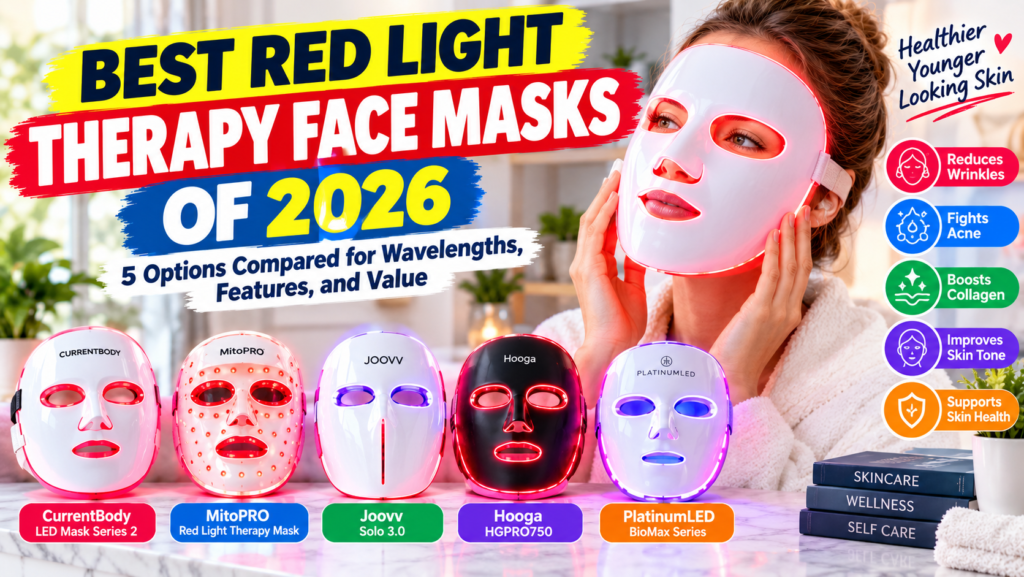
LifeCareBalance.com is reader-supported. When you buy through links on our site, we may earn an affiliate commission at no extra cost to you. As an Amazon Associate, we earn from qualifying purchases.
Red light therapy face masks offer a convenient way to add light-based skincare to an at-home routine. These wearable devices use light-emitting diodes (LEDs) to deliver specific wavelengths to the facial skin, generally through short, repeated sessions.
Most red-light-focused masks use red light and may combine it with near-infrared (NIR) light. Researchers are studying these wavelengths for their potential effects on skin appearance, cellular signaling, and processes associated with visible skin aging. However, results vary, and research on one device cannot automatically establish the effectiveness of every consumer mask.
For shoppers in 2026, five notable options are the Omnilux Contour Face, CurrentBody Skin LED Mask Series 2, Dr. Dennis Gross DRx SpectraLite FaceWare Pro, Therabody TheraFace Mask, and BON CHARGE Red Light Face Mask.
These devices differ in wavelength configuration, construction, treatment duration, and additional features. This guide compares their published specifications and practical trade-offs rather than assuming that the most expensive mask or the one with the most LEDs must be the best.
Quick answer: Omnilux is worth comparing if you prefer a straightforward red/NIR mask. CurrentBody Series 2 offers three red and near-infrared wavelengths. Dr. Dennis Gross adds blue-light functionality and a short session, while Therabody combines LED treatment with vibration. BON CHARGE offers a flexible red/NIR-focused design. Your best fit depends on your priorities, budget, and the evidence supporting the device’s intended use.
Quick Comparison: Red Light Therapy Face Masks
| Product | Published light configuration | Approximate treatment time | Main distinction |
|---|---|---|---|
| Omnilux Contour Face | 633nm red + 830nm NIR | 10 minutes | Flexible, two-wavelength design |
| CurrentBody Skin Series 2 | 633nm red + 830nm NIR + 1072nm deep NIR | About 10 minutes | Three-wavelength configuration |
| Dr. Dennis Gross SpectraLite FaceWare Pro | 630nm red, 880nm NIR, 605nm amber, 415nm blue | About 3 minutes | Multiple light modes |
| Therabody TheraFace Mask | Red, red + infrared, and blue modes | About 3–9 minutes | LED therapy plus vibration |
| BON CHARGE Red Light Face Mask | 630nm red + 850nm NIR | Follow the current model’s instructions | Flexible, cordless design |
Specifications above are based on manufacturer-published information where available. Models, treatment instructions, regulatory status, and prices may change. Verify the exact version before buying.
1. Omnilux Contour Face: A Straightforward Red/NIR Option
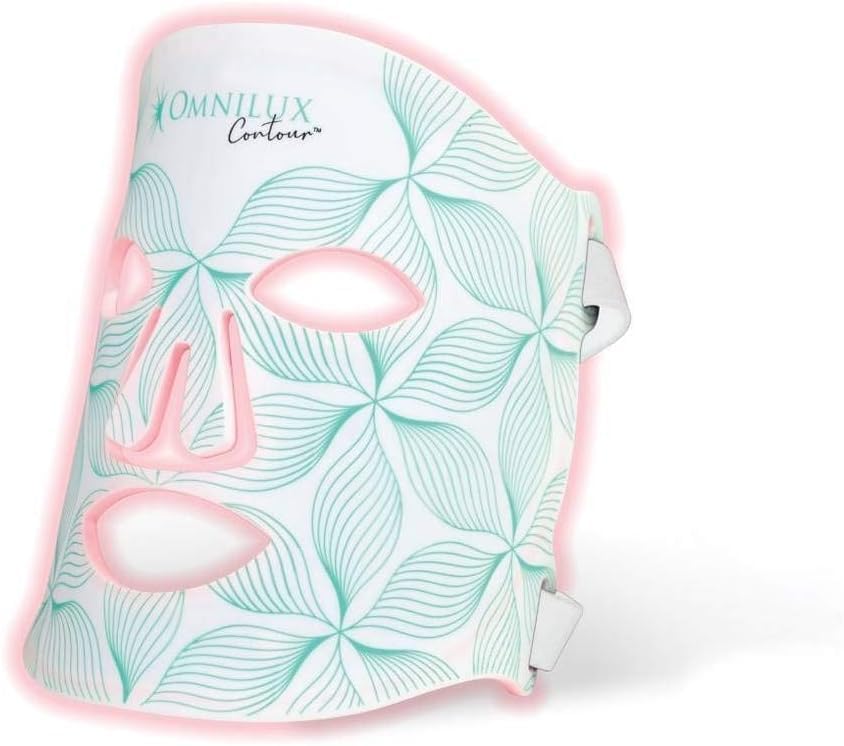
The Omnilux Contour Face is designed around two wavelengths commonly used in red-light skincare devices: 633nm red light and 830nm near-infrared light.
Its relatively simple configuration may appeal to shoppers who want a mask focused on facial skin appearance rather than a device with several colors and additional functions.
Key features
- 633nm red light
- 830nm near-infrared light
- 132 LEDs arranged across 66 dual-LED bulbs
- Flexible silicone construction
- Approximately 10-minute sessions
- Manufacturer-recommended use of three to five sessions weekly for four to six weeks, followed by maintenance as directed
- Manufacturer-stated FDA clearance for its specified wrinkle-treatment indication
- Published warranty information for the device and controller
For current details, consult the official Omnilux Contour Face product page.
What makes it worth considering?
The main appeal is simplicity. Instead of switching among multiple treatment colors, the mask focuses on red and near-infrared light.
The flexible design is also intended to conform to the face. Fit and comfort matter because a device needs to be used consistently according to its instructions to follow the treatment protocol.
What are the limitations?
The Contour Face does not provide a dedicated blue-light mode. If acne is your primary concern, you may prefer to compare devices specifically designed to include blue light.
It is also a premium-priced product. Consider whether its design, warranty, treatment protocol, and intended use justify the expense for your skincare goals.
Consider this mask if: You prefer a focused red/NIR device with a flexible design.
Look elsewhere if: You want blue-light functionality, vibration massage, or a wider range of treatment modes.
2. CurrentBody Skin LED Mask Series 2: Three Wavelengths

- Enhanced collagen production capability significantly reduces fine lines, wrinkles and redness, for younger-looking skin…
- Upgraded light coverage provides our famous instant glow, for a healthier, brighter and smoother complexion.
- An all-new, exclusive layout of 236 LED bulbs emits three clinically recognised wavelengths: red (633nm), near-infrared …
The CurrentBody Skin LED Mask Series 2 adds a third wavelength to the more common red-plus-near-infrared configuration.
Its published specifications list 633nm red light, 830nm near-infrared light, and 1072nm deep near-infrared light.
Key features
- 633nm red light
- 830nm near-infrared light
- 1072nm deep near-infrared light
- 236 LED bulbs
- Published power density of approximately 30mW/cm²
- Flexible silicone design
- Approximately 10-minute treatment sessions
- Manufacturer guidance covering repeated weekly use over an initial treatment period
The manufacturer’s specifications describe 110 red-light bulbs, 110 near-infrared bulbs, and 16 deep near-infrared bulbs.
Check the official CurrentBody Skin LED Mask Series 2 page for the current product information and availability in your region.
What makes it different?
The most obvious distinction is the additional 1072nm wavelength.
However, the presence of another wavelength does not establish that a mask will produce better results than a two-wavelength competitor. The delivered dose, device design, treatment protocol, and supporting evidence all matter.
Likewise, the published power-density figure should not be compared with another brand’s figure without understanding how and where each measurement was taken.
What are the limitations?
The Series 2 is positioned as a premium skincare device. Its extra wavelength may interest technically minded shoppers, but the specifications alone cannot establish a clinical advantage over every competing mask.
Buyers should also distinguish the regulatory status of the exact product from general claims about LED technology.
Consider this mask if: You specifically want a three-wavelength red/NIR configuration.
Look elsewhere if: You prefer a simpler setup or want blue-light functionality for an acne-focused routine.
3. Dr. Dennis Gross DRx SpectraLite FaceWare Pro: Multiple Light Modes
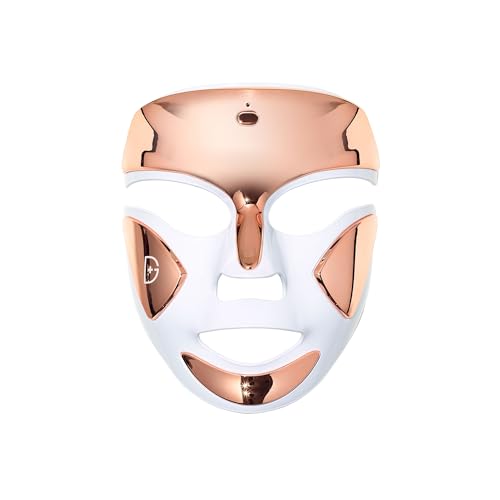
- WHAT IT IS: This LED device for the face targets wrinkles and acne for visibly smoother, clearer skin in just 3 minutes….
- HOW IT WORKS: Treat acne and breakouts with blue light, smooth wrinkles and build collagen with red light, or address bo…
- HOW TO USE: After cleansing, place the mask over your face, securing the strap around your head. Press & hold the power …
The Dr. Dennis Gross DRx SpectraLite FaceWare Pro differs from red/NIR-only masks because it combines multiple light types in a rigid facial device.
Its published wavelengths include red light around 630nm, near-infrared light around 880nm, amber light around 605nm, and blue light around 415nm.
Key features
- Red, near-infrared, amber, and blue light
- Multiple treatment modes
- Approximately three-minute sessions
- Rigid molded design
- Hands-free treatment
- Manufacturer-stated FDA clearance for its specified intended use
For the manufacturer’s current product details, visit the official DRx SpectraLite FaceWare Pro page.
What makes it worth considering?
Convenience is its biggest practical advantage. A short session may be easier to fit into a busy skincare routine.
The blue-light mode also gives it a different use case from masks focused exclusively on red and near-infrared light. Blue light is used in some devices designed for acne-related concerns, although it should not be treated as a universal solution for every type of acne.
What are the limitations?
A rigid design may feel different from flexible silicone. Comfort, facial fit, and ease of use are personal considerations.
A short treatment time also does not automatically mean a stronger or more effective treatment. Session duration must be interpreted alongside the device’s output, intended use, and treatment protocol.
Consider this mask if: You value short sessions and want multiple light modes.
Look elsewhere if: You prefer a flexible mask focused primarily on red and near-infrared wavelengths.
4. Therabody TheraFace Mask: LED Therapy Plus Vibration
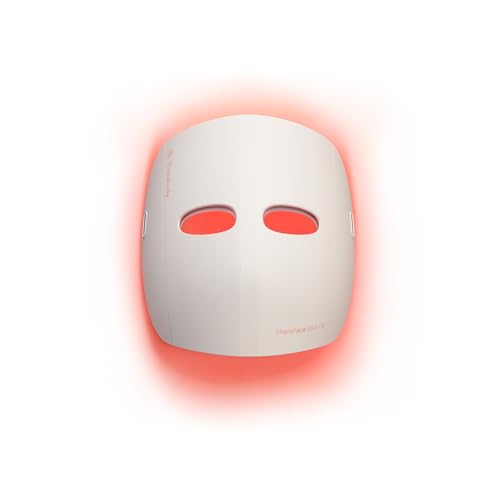
- CLINICALLY-PROVEN LED LIGHT THERAPY: 3 types of science-backed LED light therapy address specific skin concerns for clin…
- FULL-COVERAGE FACE MASK: 504 medical-grade LEDs, enhanced by Therabody's proprietary PrecisionLED technology, deliver op…
- CUSTOMIZABLE TREATMENT OPTIONS: The preset 12-minute treatment cycles through 4 minutes of each light therapy to boost c…
The Therabody TheraFace Mask combines LED treatment with built-in vibration features. Its manufacturer describes 648 LED light sources and red, red-plus-infrared, and blue treatment modes.
Key features
- Red-light mode
- Red-plus-infrared mode
- Blue-light mode
- 648 LED light sources
- Built-in vibration motors
- Removable protective eye shields
- Individual three-minute modes and a programmed sequence lasting approximately nine minutes
- Manufacturer-stated FDA clearance for its specified intended use
The current product page provides the latest specifications and pricing: Therabody TheraFace Mask.
What makes it different?
The device combines light-based skincare with facial and head vibration features. This makes it a more feature-rich option than a mask designed only to deliver red and near-infrared light.
If you enjoy facial massage as part of your routine, the additional functionality may be appealing.
What are the limitations?
More features can mean a higher purchase price and a more substantial device. If your priority is simply red/NIR exposure, you may not need the added vibration functions.
The advertised LED count is also not a stand-alone measure of effectiveness. A higher count does not prove that a device delivers a superior treatment dose or produces better clinical outcomes.
Consider this mask if: You want LED treatment combined with vibration features and multiple modes.
Look elsewhere if: You prefer a simpler, potentially less expensive red/NIR-focused device.
5. BON CHARGE Red Light Face Mask: Flexible Red/NIR Design
The BON CHARGE Red Light Face Mask uses a red-plus-near-infrared configuration in a flexible, cordless design.
The manufacturer’s published specifications list 630nm red light, 850nm near-infrared light, 240 LEDs, and an irradiance figure of approximately 40.8mW/cm² for the referenced model.
Key features
- 630nm red light
- 850nm near-infrared light
- 240 LEDs
- Published irradiance of approximately 40.8mW/cm²
- Flexible silicone construction
- Cordless operation
- Manufacturer guidance for repeated sessions
Read the official BON CHARGE Red Light Face Mask product page to confirm the current model’s specifications, treatment instructions, and warranty.
What makes it worth considering?
Its appeal is a relatively straightforward red/NIR configuration without the additional vibration features found in the Therabody mask.
The flexible, cordless design may also suit shoppers who want a wearable device that can be stored easily and incorporated into a regular routine.
What are the limitations?
The published irradiance number should not be treated as proof that the mask is more effective than competitors with lower or undisclosed figures. Measurements can differ by method and location, making direct comparisons difficult.
Pay close attention to regulatory wording, too. A claim that a device is “FDA registered” does not by itself establish FDA clearance for a particular medical indication.
Consider this mask if: You want a flexible red/NIR-focused device and value cordless operation.
Look elsewhere if: You need a specific verified regulatory indication or want multiple light-treatment modes.
Red Light vs. Near-Infrared Light: What’s the Difference?
Red and near-infrared light are related but distinct wavelength ranges.
Red light
Consumer skincare devices commonly use red wavelengths around 630–660nm. Research has explored red light for skin appearance, including fine lines, texture, and signs of aging.
Some studies report improvements, but the magnitude of those improvements varies. Research involving one device cannot be assumed to prove that every red-light mask produces equivalent outcomes.
Near-infrared light
Near-infrared light uses longer wavelengths. Masks commonly combine red light with NIR wavelengths such as 830nm or 850nm, while some devices include additional wavelengths.
Different wavelengths interact with tissue differently, but adding a longer wavelength does not automatically make a device superior.
Does one wavelength work best?
There is no single wavelength that guarantees the best result for every person and concern.
The complete treatment protocol matters, including wavelength, delivered light dose, session duration, device design, and consistency of use.
For shoppers, transparent specifications and realistic claims are more useful than marketing language about “maximum power” or “advanced technology.”
What Is Irradiance, and Why Does It Matter?
Irradiance describes optical power delivered over an area. It is commonly expressed in milliwatts per square centimeter (mW/cm²).
Treatment time also matters because it affects the total energy delivered during a session.
The basic relationship is:
Energy dose (J/cm²) = Irradiance (W/cm²) × Time (seconds)
For example, if a device delivered 30mW/cm² continuously for 600 seconds, the calculated dose would be 18J/cm². This is a mathematical example, not a recommended dose for facial treatment.
When comparing masks, ask:
- Is irradiance disclosed by the manufacturer?
- Where and how was it measured?
- Does the figure apply to all wavelengths or only one?
- What session length is recommended?
- Is there evidence supporting the complete treatment protocol?
Do not assume that the highest irradiance number or LED count means the best clinical outcome. More light is not automatically better, and manufacturer figures may not be directly comparable.
How to Choose the Right Red Light Therapy Face Mask
1. Start with your main skincare goal
If your main interest is the appearance of fine lines and general skin aging, a red/NIR-focused mask may be a reasonable option to investigate.
If acne is your main concern, look specifically at devices intended for acne-related treatment and whether they include blue light.
An LED mask should not be expected to treat every skin condition equally well.
2. Compare the complete specifications
Look beyond the LED count. Check wavelengths, irradiance, treatment time, coverage, fit, and the manufacturer’s recommended schedule.
A device with a transparent treatment protocol may be easier to evaluate than one that relies on broad marketing claims.
3. Choose a comfortable design
Flexible silicone and rigid-shell masks feel different. Neither construction is automatically superior for every face.
Consider weight, straps, eye-area comfort, storage, charging, and whether the device is practical for repeated use.
4. Check regulatory status carefully
For US shoppers, FDA clearance should be verified for the exact model and intended use.
The terms “FDA registered,” “FDA listed,” and “FDA cleared” are not interchangeable. Registration or listing alone does not establish that the FDA has cleared or approved a product for a specific indication.
5. Review the warranty and return policy
These devices can cost several hundred dollars. Before buying, confirm the current price, warranty period, return window, and any restrictions that apply after opening or using the device.
Are Red Light Therapy Face Masks Effective?
Research suggests that red-light therapy may produce subtle to noticeable improvements in certain signs of skin aging for some people. However, researchers use different devices, treatment durations, wavelengths, and outcome measurements, so results cannot be transferred directly between products.
The American Academy of Dermatology describes red-light therapy as a potentially useful complementary treatment for selected skin concerns while noting that more research is needed to understand the best protocols and long-term effects.
The practical takeaway is to treat an LED mask as a possible addition to an appropriate skincare routine, not a replacement for sunscreen, established topical treatments, or professional dermatological care when needed.
Safety Considerations Before Use
LED masks are generally considered relatively low-risk when used according to the manufacturer’s instructions, but they are not suitable for everyone.
Before using one:
- Follow the exact treatment schedule and eye-safety instructions.
- Do not extend sessions in an attempt to speed up results.
- Ask a healthcare professional about use if you have a photosensitivity condition or take medication that increases light sensitivity.
- Stop using the device if you develop persistent irritation, pain, or unexpected symptoms.
- Seek professional evaluation for severe acne, persistent skin problems, or suspicious skin changes.
People with darker skin tones may also wish to consult a dermatologist before using visible-light devices because visible light can contribute to pigmentation concerns in susceptible individuals.
Red Light Therapy Face Mask vs. Red Light Panel
A face mask is designed specifically for facial treatment. It is wearable, compact, and usually provides a fixed treatment distance.
A red-light panel can cover larger areas, depending on its size and positioning, but requires you to maintain the recommended distance and angle.
Neither format is universally better. A mask may be more convenient for facial skincare, while a panel may be more versatile if you want to treat areas beyond the face.
For a detailed format comparison, see our LED Face Mask vs. Red Light Therapy Panel guide.
Frequently Asked Questions
Are red light therapy face masks worth buying?
They may be worth considering if your goals match the device’s intended use, the specifications are transparent, and you have realistic expectations. Results vary, and not every device has the same supporting evidence.
Is a mask with more LEDs more effective?
Not necessarily. LED count does not establish wavelength, delivered dose, coverage uniformity, or clinical effectiveness.
Is near-infrared light better than red light?
Not automatically. They use different wavelengths, and many masks combine them. The best choice depends on the complete device and its intended use.
Can red light therapy replace my skincare routine?
No. It should not replace sunscreen, moisturizers, or evidence-based treatments when those are appropriate for your skin.
How often should I use a red light therapy mask?
Follow the instructions for your exact model. Treatment schedules differ between devices, so do not copy another manufacturer’s routine.
Are FDA-registered masks the same as FDA-cleared masks?
No. Registration or listing does not by itself mean that a device has FDA clearance or approval. Verify the exact model and regulatory claim.
Should I choose a red/NIR-only mask or one with blue light?
Choose based on your main concern and the device’s intended use. Red/NIR-focused masks emphasize that light configuration, while blue-light options may be relevant to certain acne-focused routines.
Final Verdict
The five masks in this guide offer different approaches to at-home LED skincare.
- Omnilux Contour Face: A straightforward red/NIR configuration in a flexible design.
- CurrentBody Skin Series 2: A three-wavelength option for shoppers interested in additional near-infrared wavelengths.
- Dr. Dennis Gross SpectraLite FaceWare Pro: Multiple light modes and a short treatment session.
- Therabody TheraFace Mask: LED treatment combined with vibration features.
- BON CHARGE Red Light Face Mask: A flexible, cordless red/NIR-focused option.
No single specification determines which mask is best for every user. Compare wavelengths, irradiance, treatment time, fit, safety instructions, regulatory status, warranty, and current price together.
If you want a broader roundup of different LED mask categories, read our Best LED Face Masks of 2026. For a specification-focused side-by-side overview, see our LED Face Mask Review and Comparison 2026. If acne is your main concern, our Best LED Face Masks for Acne in 2026 covers that separate use case.
Bottom line: Choose the mask that best matches your needs and offers transparent, verifiable specifications. A higher price, extra wavelength, or larger LED count is not a guarantee of better results.