
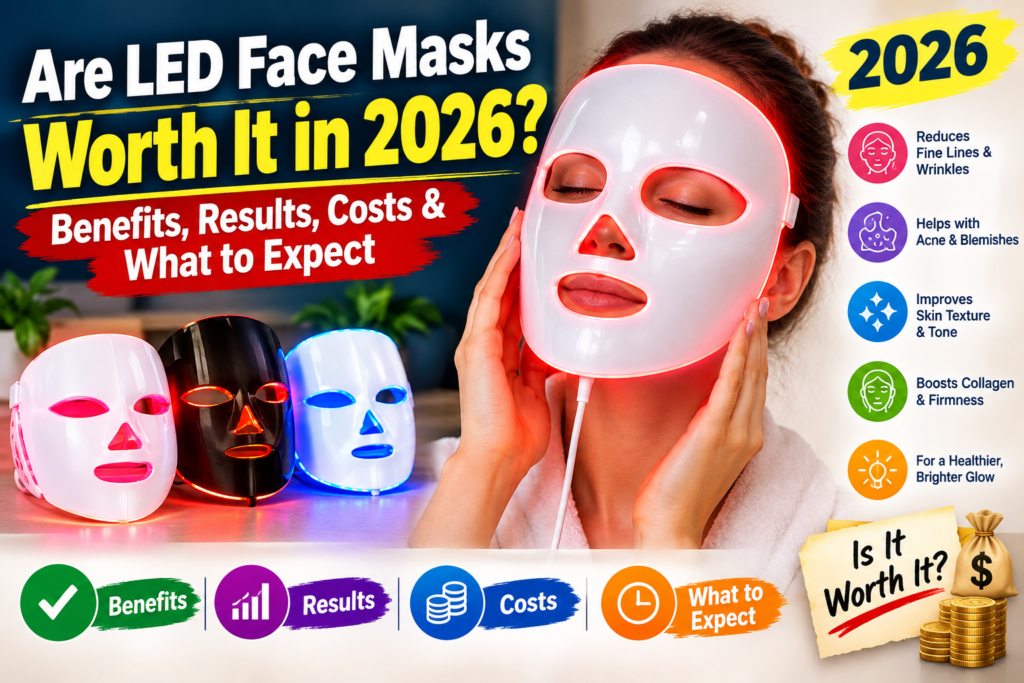
Are LED face masks worth it in 2026? Discover LED mask benefits, expected results, costs, safety, and what to expect from at-home red light therapy.
LifeCareBalance.com is reader-supported. When you buy through links on our site, we may earn an affiliate commission at no extra cost to you. As an Amazon Associate, we earn from qualifying purchases.
LED face masks are one of the most searched-for skincare devices right now. The honest answer to “are LED face masks worth it” is: it depends on the device, your expectations, and whether you’ll use it consistently. A well-specified mask can deliver gradual, real improvements in skin tone and texture — but if you’re expecting dramatic, fast transformation, it will likely disappoint. Here’s the evidence, the real costs, and who should (and shouldn’t) buy one in 2026.
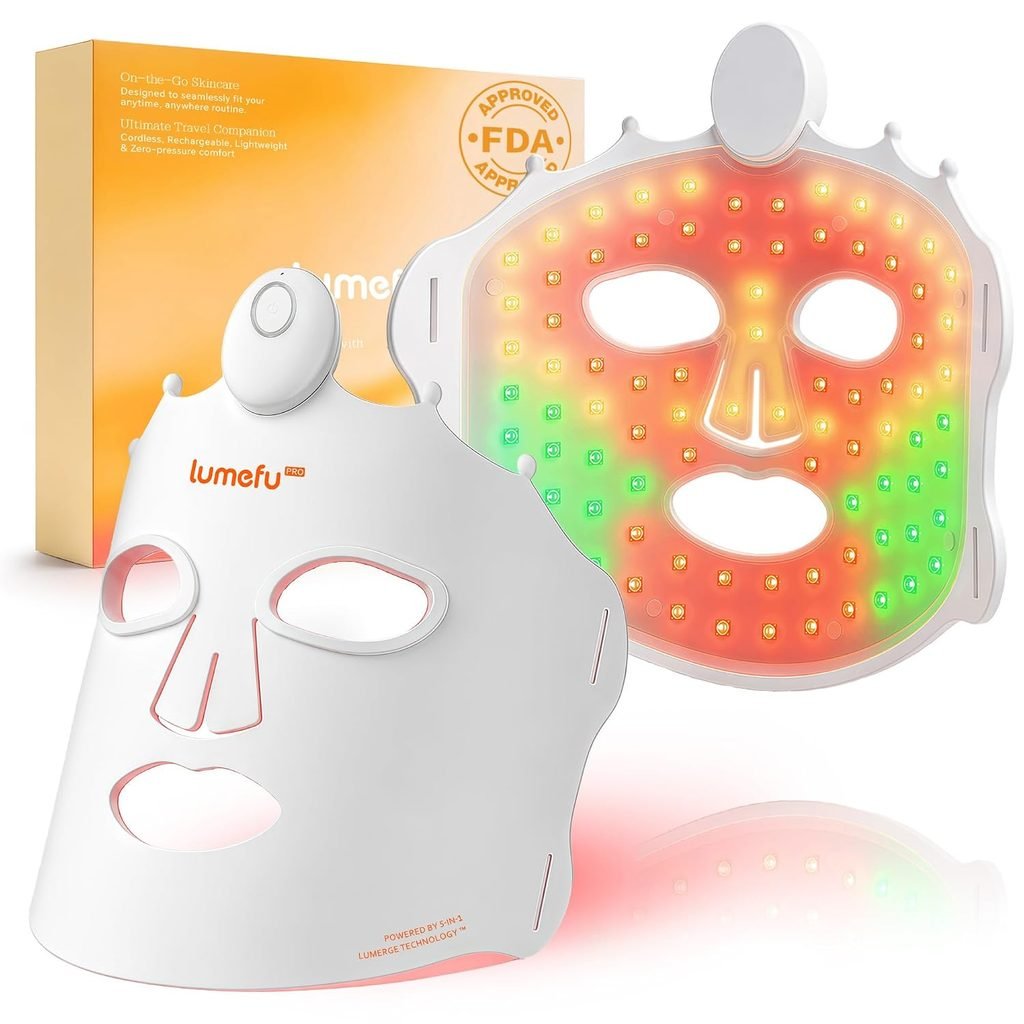
- FDA-CLEARED RED LIGHT THERAPY FOR FACE: Bring professional results home with our premium red light therapy mask. Safe fo…
- 6-IN-1 TARGETED MULTI-ZONE SKINCARE: Experience the versatility of our red light mask, which combines Red, Blue, Yellow,…
- UNMATCHED COMFORT & SOFT SILICONE DESIGN: Glow on the go with the most comfortable red light mask on the market. Crafted…
Quick Answer: Are LED Face Masks Worth It in 2026?
It comes down to fit-for-purpose. If you buy a mask with disclosed wavelengths in the red (roughly 630–660 nm) and/or near-infrared (roughly 800–870 nm) range, use it consistently for 8–12 weeks or longer, and have realistic goals — smoother texture, slightly reduced fine lines, calmer-looking skin — it’s a reasonable investment. If you’re hoping for wrinkle-erasing or acne-curing results comparable to prescription treatment or in-office procedures, it’s not that, and you may be better off seeing a dermatologist.
How LED Face Masks Work
LED masks use non-UV light in specific wavelengths to interact with skin cells, a process called photobiomodulation. Certain wavelengths are believed to be absorbed by mitochondria and other cellular structures, prompting modestly increased collagen-related activity, reduced inflammation, and changes in local blood flow. Unlike lasers or intense pulsed light, LEDs don’t generate heat or damage the skin’s surface, which is part of why they’re considered low-risk for home use.
It helps to separate three things: general evidence for red/near-infrared light on skin cells, evidence for a specific consumer mask, and marketing claims. A lot of confusion comes from blurring those together. Cleveland Clinic’s overview of LED light therapy notes that in-office equipment is generally more powerful than at-home versions, and in a Mayo Clinic Minute segment, a Mayo Clinic dermatologist recommended talking with a dermatologist before buying an at-home device, since products on the market aren’t equally effective or well-tested.
What Benefits Can You Realistically Expect?
Based on available research and clinical commentary, here’s a grounded look at what LED masks may help with — and what they won’t do.
- Fine lines and wrinkles: Plausible, modest improvement with consistent red/NIR use over weeks to months — not elimination.
- Skin texture and tone: Among the more commonly reported improvements; smoother, more even-looking skin, though this is subjective.
- Redness/inflammation: Red light is associated with calming visible redness in some users, though results vary by skin type.
- Collagen support: Research suggests red/NIR light can support collagen-related cellular activity — the mechanism behind anti-aging claims — but “support” is different from “restore.”
- Acne: This is actually one of the better-evidenced use cases. A 2025 systematic review and meta-analysis in JAMA Dermatology, led by researchers at Brigham and Women’s Hospital, found that at-home red and/or blue LED devices produced meaningful reductions in both inflammatory and non-inflammatory acne lesions compared with control groups, with the biggest improvements seen when red and blue light were combined. If acne is your main concern, our best LED face masks for acne-prone skin guide goes deeper on device selection.
Nowhere in credible research does LED light “cure” acne, permanently erase wrinkles, or reverse skin aging. Treat any product claiming otherwise with skepticism.
How Long Does It Take to See LED Face Mask Results?
Timelines vary, but a realistic general pattern looks like this:
- First 1–2 weeks: Little to no visible change; any post-session glow is short-lived.
- Around 4–8 weeks: Early, subtle changes in texture or tone with regular use.
- Around 8–12+ weeks: More consistent improvements, particularly for fine lines, texture, and acne, assuming consistent use per the manufacturer’s protocol.
- Long-term maintenance: These are cumulative effects, so most manufacturers and dermatologists suggest ongoing use rather than a fixed “course” after which you stop.
Individual results vary, so always follow your device’s specific instructions rather than a generic timeline.
How Much Do LED Face Masks Cost in 2026?
Pricing spans a wide range, and prices change often, so treat any figures as a snapshot:
- Budget devices sit in the two-figure range and often use fewer LEDs, a single wavelength, or undisclosed specs.
- Mid-range masks cost more and are more likely to disclose wavelength and FDA clearance status.
- Premium devices can run several hundred dollars, often with multiple wavelengths and more rigid, better-fitted designs.
Price alone doesn’t tell you much — our LED face mask review and evidence breakdown looks at how specific models stack up on disclosed specs rather than price tier alone.
Are LED Face Masks Worth the Money? Cost Per Use Explained
This is where “worth it” gets concrete. An LED mask is a one-time purchase, unlike professional sessions billed per visit. To evaluate value, calculate cost per use:
Example (simple purchase-cost calculation only — this does not include electricity or maintenance):
- $400 mask ÷ 100 sessions = $4 per session
- $400 mask ÷ 200 sessions = $2 per session
Use a mask three times a week for a year and that’s roughly 150 sessions — a $400 device could work out to under $3 per session in year one alone. Compare that to professional sessions, which commonly run $25–$100+ per visit.
A cheaper mask can be better value if it has appropriate wavelengths and you’ll actually use it — an unused $500 mask is worth $0. A premium mask may justify its price with better-documented specs or a design that makes consistent use easier. But price alone isn’t proof of effectiveness.
Which LED Mask Features Actually Matter?
Wavelength is only one factor in effectiveness:
- Wavelength: Red (roughly 630–660 nm) is linked to collagen-related, anti-aging benefits; near-infrared (roughly 800–870 nm) penetrates deeper; blue (roughly 405–420 nm) targets acne-causing bacteria.
- Irradiance: How much light energy reaches the skin. A mask can have the “right” wavelength but too little power to be effective.
- Treatment time and dose/fluence: Together these determine total energy delivered per session (fluence is measured in J/cm², though many brands don’t disclose it).
- Coverage and fit: A rigid, well-contoured mask delivers more consistent exposure than a loose one.
- Treatment frequency: Most protocols call for 3–5 sessions per week; sporadic use won’t produce visible results.
- FDA clearance where applicable: Some LED masks hold FDA clearance for specific indications like wrinkle reduction or mild-to-moderate acne, granted through the agency’s 510(k) premarket notification pathway. You can check a device’s clearance status directly through the FDA’s own 510(k) database by searching the device or applicant name.
The American Academy of Dermatology notes that most at-home red-light devices use LEDs considered safe for home use, and that some studies show subtle to noticeable improvements in fine lines, dark spots, and texture with regular use — while also noting results and device quality vary widely.
Are More LEDs Better?
Not necessarily. LED count is one of the most misleading numbers in this category — a mask with 200 low-power LEDs at the wrong wavelength can underperform one with fewer, well-calibrated LEDs at appropriate wavelength and irradiance. It says nothing about power output or dose. Treat LED count as a marketing number, not a performance guarantee, and look for disclosed wavelength and output data instead.
Are Expensive LED Face Masks Better?
Sometimes, but not automatically. Higher price can reflect better engineering, broader coverage, or FDA clearance — or it can simply reflect marketing and retail markup. Compare disclosed specs (wavelength, irradiance, treatment time, clearance) across price points rather than assuming the priciest option performs best. Our best LED face masks of 2026 guide compares devices this way.
LED Face Mask vs Professional Red Light Therapy
| Factor | Home LED Mask | Professional Red Light Therapy |
|---|---|---|
| Cost structure | One-time purchase | Recurring per-session fees |
| Convenience | Use anytime at home | Requires appointments/travel |
| Treatment intensity | Generally lower irradiance | Often higher-powered equipment |
| Supervision | None (self-administered) | Supervised by a trained provider |
| Frequency | Flexible, self-directed | Limited by scheduling and cost |
| Coverage | Full face in one session | May target specific areas more precisely |
| Best use case | Ongoing maintenance, mild concerns | More intensive treatment, professional oversight |
Home devices and in-office treatments aren’t automatically interchangeable — a dermatologist’s office may use higher-powered equipment and can monitor for conditions needing different care. See LED face mask vs professional red light therapy for more, or our LED face mask vs red light therapy panel guide if you’re weighing a standalone panel.
Who Should Buy an LED Face Mask?
- People with mild-to-moderate concerns (early fine lines, occasional redness, mild acne) looking for a low-risk, non-invasive addition to their routine.
- People willing to commit to 3–5 sessions a week for at least 8–12 weeks before judging results.
- People who want an at-home maintenance tool alongside — not instead of — a broader skincare routine.
- People comfortable evaluating specifications rather than relying purely on marketing claims.
Who Should Skip an LED Face Mask?
- Anyone expecting fast, dramatic transformation.
- Anyone with significant skin concerns (moderate-to-severe acne, notable sagging, deep wrinkles) who would be better served starting with a dermatologist.
- Anyone unlikely to use a device consistently — inconsistent use is one of the most common reasons people feel a mask “didn’t work.”
- Anyone on a tight budget who would rather spend on proven basics like sunscreen, retinoids, or a dermatologist consultation first.
LED Face Mask Safety: What to Know Before Using One
LED masks are generally low-risk for the general population when used as directed, since they don’t use UV light or generate significant heat. That said, talk to a doctor or dermatologist before use if you have photosensitivity, take photosensitizing medications, have relevant eye conditions, a significant skin condition, or persistent/severe acne. Follow the manufacturer’s instructions, including eye protection guidance, and stop use if you notice unusual irritation. This is general guidance, not personalized medical advice.
Pros and Cons of LED Face Masks
Pros
- Non-invasive with minimal downtime or discomfort
- One-time purchase versus recurring professional treatment costs
- Reasonable evidence base for photobiomodulation, particularly for acne
- Can be used alongside most other skincare routines
- Low risk of side effects for most users when directions are followed
Cons
- Results are gradual and modest, not dramatic
- Home devices are generally lower-powered than in-office equipment
- Requires real consistency to see benefit
- Wide variability in device quality and specification transparency
- Upfront cost can be significant relative to unclear individual results
LED Face Mask Buying Checklist for 2026
- Exact wavelength disclosed (not just “red light” — look for a specific nanometer range)
- Irradiance or output information provided
- Stated treatment time per session
- FDA clearance noted, where applicable, and verifiable
- Good fit and full-face coverage
- Comfortable to wear for the recommended session length
- Eye protection included or addressed in instructions
- Warranty coverage
- Clear return policy
- Transparent pricing (remember prices can change)
- Manufacturer transparency about specs and testing
- Some independent evidence beyond in-house marketing claims
Our best LED face masks for women and best LED face masks for men guides apply this checklist to specific device shortlists if you want a starting point.
Final Verdict: Are LED Face Masks Worth It?
For the right buyer, yes — with caveats. An LED face mask is worth it if you choose a device with disclosed, appropriate wavelengths, understand results are gradual and modest rather than dramatic, and commit to consistent use over months, not weeks. It’s most likely to pay off for mild acne, early fine lines, or general maintenance. It’s least likely to be worth it for anyone expecting fast, clinical-grade transformation, anyone with concerns better addressed by a dermatologist, or anyone unlikely to use it regularly. If you’d rather compare a broader device category first, see our best red light therapy panels guide.
FAQ
Are LED face masks really worth it? For some people, yes. If the device has disclosed, appropriate wavelengths and you use it consistently for 8–12+ weeks, modest but real improvements in texture, tone, and mild acne are realistic. They aren’t worth it for people expecting fast or dramatic transformation.
How long does it take for an LED face mask to work? Most users report early subtle changes around 4–8 weeks, with more noticeable results by 8–12+ weeks of consistent use, several sessions per week. Individual results vary.
How often should you use an LED face mask? Most manufacturer protocols recommend 3–5 sessions per week, though this varies by device — always follow the specific instructions for your mask.
Are expensive LED masks worth it? Sometimes. Higher price can reflect better specifications or FDA clearance, but it isn’t a guarantee. Compare disclosed wavelength, irradiance, and clearance status rather than assuming price equals performance.
Are LED face masks good for wrinkles? Research suggests red and near-infrared LED light can modestly reduce the appearance of fine lines and wrinkles with consistent use, though it won’t eliminate them or replace professional treatments for more significant aging concerns.
Are LED face masks good for acne? This is one of the better-supported uses. A 2025 systematic review found at-home red and/or blue LED devices meaningfully reduced acne lesions compared with control groups, especially when both colors were combined.
Is red or blue light better for acne? Both have evidence behind them individually, but combining red and blue light has shown better results than either alone in recent research, likely because blue light targets acne-causing bacteria while red light helps calm inflammation.
What wavelength is best for an LED face mask? It depends on the goal: roughly 630–660 nm (red) is associated with anti-aging and general skin benefits, roughly 800–870 nm (near-infrared) for deeper tissue effects, and roughly 405–420 nm (blue) for acne-focused use. Many masks combine multiple wavelengths.
Can an LED face mask replace professional red light therapy? Not automatically. Professional treatments typically use higher-powered equipment and involve provider supervision, which can matter for more significant concerns. Home masks are better suited to maintenance and mild concerns.
Can you use an LED face mask every day? Some devices are designed for daily use, while others recommend 3–5 sessions per week. Follow your specific manufacturer’s guidance rather than a general rule, since output and protocols vary by device.;https://lifecarebalance.com/
This article is for informational purposes and reflects publicly available research and manufacturer/regulatory information as of 2026. It is not medical advice. Consult a dermatologist or healthcare provider for guidance specific to your skin. Product prices mentioned are illustrative and can change; always confirm current pricing before purchasing.