
LifeCareBalance.com is reader-supported. When you buy through links on our site, we may earn an affiliate commission at no extra cost to you. As an Amazon Associate, we earn from qualifying purchases.
Rowing machines have quietly become one of the smartest buys in home fitness. They deliver a low-impact, full-body workout that hits your legs, back, core, and arms in a single motion — something a treadmill or exercise bike simply can’t match. The catch is that the “good” rowers have historically lived in $1,500–$3,000 territory.
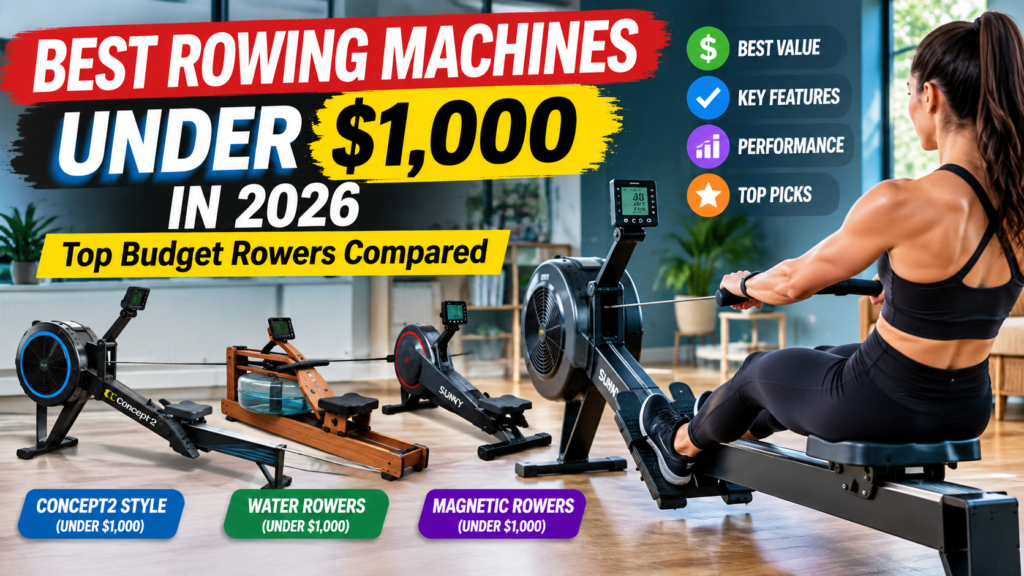
That’s changing. In 2026, the best rowing machines under $1000 cover a surprisingly wide range: from the Concept2 RowErg, the machine used in gyms and rowing clubs worldwide, down to sub-$300 magnetic rowers that are perfectly capable of getting you through a daily cardio session.
This guide is built around real, verifiable specs — not gut feelings or affiliate rankings copied from other sites. We looked at resistance type, weight capacity, dimensions, warranty coverage, and (importantly) which machines quietly require a monthly subscription to unlock their full feature set. Below, you’ll find honest pros, cons, and “who should skip this one” guidance for each pick, plus a full buying guide so you can match a rower to your space, budget, and training goals.
Prices for fitness equipment shift often due to sales, restocks, and supply changes. Treat every price below as approximate and double-check the current price before buying.
Quick Comparison Table
| Rowing Machine | Approx. Price | Resistance Type | Weight Capacity | Dimensions (in use) | Foldable/Separable | Display | App/Bluetooth | Subscription | Best For |
|---|---|---|---|---|---|---|---|---|---|
| Concept2 RowErg | ~$990 | Air | 500 lb (mfr. tested) | 96″ L x 24″ W | Separates into 2 pieces | PM5 performance monitor | ErgData app (free), 40+ compatible apps | Optional | Best overall / serious training |
| NordicTrack RW600 | ~$999 | Magnetic + Air (hybrid) | 250 lb | 87″ L x 22″ W x 47″ H | Folds vertically | 7–10″ touchscreen | Wi-Fi, Bluetooth, iFit | Required for full library ($39/mo after 30-day trial) | Best smart/connected rower |
| Bells of Steel Blitz Air Rower | ~$850–900 | Air | 320 lb | 95″ L x 24.25″ W x 37.5″ H | Separates into 2 pieces | Battery-powered LCD | None | Not required | Best air rower alternative to Concept2 |
| WaterRower A1 Home | ~$949–1,290 (varies by retailer) | Water | ~275–300 lb (varies by finish) | ~83.5″ L x 22″ W | Stores upright | A1 Quick-Start LCD | No Bluetooth on base model | Not required | Best water rower |
| YOSUDA Magnetic Rowing Machine | ~$190–250 | Magnetic | 350 lb | ~78″ L x 19″ W | Folds vertically | LCD | Bluetooth, companion app | Not required | Best budget/value pick |
| Sunny Health & Fitness SF-RW5801 | ~$270–320 | Magnetic | 250–285 lb | 77″ L x 23″ W (short 43″ rail) | Folds vertically | Basic LCD | None | Not required | Best for beginners |
| Sunny Health & Fitness SF-RW5515 | ~$190–250 | Magnetic | 250 lb | 89″ L x 18.9″ W x 23.6″ H | Folds | LCD | None (SunnyFit app optional, non-connected) | Not required | Best compact/quiet rower |
Best Rowing Machines Under $1,000
Best Overall: Concept2 RowErg
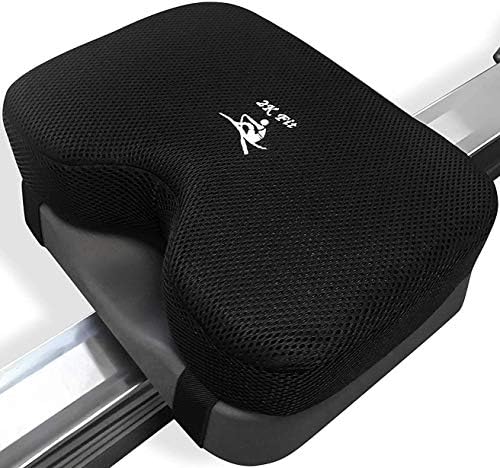
- MOST COMFORTABLE ROWING MACHINE PAD: Perfectly fits the concept 2 rowing machine. Works great with Model D, Model E, Sta…
- HIGHEST QUALITY CUSTOM MEMORY FOAM: This Concept 2 seat cushion has 3 inches of CUSTOM memory foam with the PERFECT DENS…
- SUPER NON-SLIP SURFACE WITH STRAPS: This rower seat pad has a high friction rubberized material that prevents the seat c…
Price: $990 with standard legs (as listed directly on Concept2’s site); $1,155 with tall legs, which pushes past the $1,000 mark.
Resistance type: Air, via a flywheel with an adjustable damper.
Key specs: 500-lb maximum user weight as tested by Concept2 (300 lb per the stricter European EN 20957-7 standard); 96″ long by 24″ wide when assembled; separates into two pieces without tools for storage; aluminum frame; comes standard with the PM5 performance monitor.
Main advantages: This is the machine competitive rowers train on, and that pedigree matters. The PM5 monitor is precise and comparable across machines worldwide, which is why CrossFit boxes, rowing clubs, and Olympic training centers standardized on it. It’s also remarkably low-maintenance for how much abuse it can take.
Main drawbacks: Air resistance means the RowErg gets louder as you row harder — it’s not a “quiet corner of the apartment” machine. There’s also no touchscreen or streaming classes built in; you get raw data, not entertainment.
Who it’s best for: Anyone serious about tracking progress, training for an event, or who wants a machine they won’t outgrow in a year.
Who should avoid it: Apartment dwellers sensitive to noise, or buyers who want guided video classes out of the box.
Subscription requirements: None. The free ErgData app covers logging, and Concept2’s Online Logbook is also free.
Warranty: A limited two-year warranty on moving parts and the monitor, and a five-year warranty on frame parts, backed by a 30-day money-back guarantee on factory-direct US and Canada orders.
Storage considerations: The RowErg can be separated into two pieces for storage without tools and has caster wheels for moving it around, though it doesn’t stand vertically like a water rower.
Honest value assessment: At $990, this is widely considered one of the best value purchases in home fitness — you’re paying gym-grade durability at a home-user price.
Best Budget/Value: YOSUDA Magnetic Rowing Machine

- Super Quiet Rowers: This Rower features ultra-quiet non-touching magnetic control system, which won’t disturb your famil…
- Ergonomic & Steady Rowers: Aluminum slid rail ensures your rowing movement more smoothly, quietly and stability than Nor…
- Extra Long Track & Support 400lb: The main frame is made of the 4MM extra-thicken commercial steel pipe with two heavy-d…
Price: Roughly $190–$250 depending on the exact model variant and current sale.
Resistance type: Magnetic, with 16 adjustable levels.
Key specs: 350-lb listed weight capacity; folds vertically for storage; Bluetooth connectivity with a companion app on higher-tier variants.
Main advantages: For the price, you get a legitimately quiet, low-maintenance rower with real weight capacity headroom and app connectivity — features that used to be reserved for $500+ machines.
Main drawbacks: Build quality involves more plastic components than the pricier picks on this list, and the flywheel is smaller, so the resistance feel is less realistic than air or water rowers.
Who it’s best for: First-time rowers, small apartments, or anyone who wants to “try rowing” before committing serious money.
Who should avoid it: Taller users or anyone planning high-volume, high-intensity daily training — this is a starter machine, not a long-term training tool.
Subscription requirements: None; the companion app is free to use.
Warranty: Typically a 1-year limited manufacturer warranty on this class of machine — noticeably shorter than the premium picks, so factor that into the “cost per year of ownership.”
Storage considerations: Folds and stores vertically, one of the smaller footprints on this list when not in use.
Honest value assessment: This is the pick if budget is the deciding factor. It won’t replicate a Concept2’s feel, but it will absolutely get you moving.
Best Air Rower (Alternative to Concept2): Bells of Steel Blitz Air Rower

- ROWING MACHINE COVER SIZE: The rowing machine cover is 95″L×24″W×40″H. Compatible with Concept 2 Rowing Machine.Please c…
- DURABLE MATERIAL: Rower machine cover is made of quality Durable oxford fabric with sliver PU caotaing. Tear-resistant m…
- WINDPROOF TELESCOPIC ROPE: An adjustable cord around the bottom ensures cover remains secure over rowing machine, flexib…
Price: $899.99, though it has also been listed around $849.99 depending on promotions.
Resistance type: Air-powered flywheel.
Key specs: Weighs about 90.4 lb, measures 95″ L x 34.35″ W x 37.5″ H, and has a 320-lb weight capacity.
Main advantages: It comes with an ergonomic molded seat, front-mounted wheels for easy moving, and breaks into two pieces for storage. Reviewers who’ve used both this and the Concept2 note the workout metrics feel comparable stroke-for-stroke.
Main drawbacks: It can’t be stored vertically, the air flywheel is loud in use, and there are no built-in workout programs. Given the Blitz sits only around $100–150 below the Concept2, some reviewers question whether the savings are worth giving up Concept2’s brand ecosystem and resale value.
Who it’s best for: Buyers who want an air-rowing feel similar to the Concept2 but at a slightly lower price point, or who value the higher 320-lb capacity for a heavier household.
Who should avoid it: Anyone deciding purely on price who could stretch to the Concept2 — the gap is smaller than it looks once you account for community, resale value, and third-party parts availability.
Subscription requirements: None.
Warranty: Five-year frame warranty and two-year parts warranty.
Storage considerations: Breaks into two pieces but doesn’t stand upright, so it needs more floor space than a folding magnetic or water rower.
Honest value assessment: A solid, well-built air rower — just make sure you’re not paying nearly Concept2 money for a non-Concept2 machine without doing the math first.
Best Magnetic/Smart Rower: NordicTrack RW600

- [Powered by iFIT] – Access over 10,000 workouts and features for a personalized experience. Get coaching by expert iFIT …
- [10″ HD Smart Touchscreen] – Pivot your touchscreen to follow along with iFIT Trainers through off-equipment workouts, o…
- [26 Levels of Trainer-Controlled Resistance] – With iFIT, your trainers will automatically adjust your resistance to mat…
Price: Listed at $999, though it has also been seen around $998.99 during sales and considerably higher at some third-party retailers.
Resistance type: A hybrid system combining 26 levels of Silent Magnetic Resistance (SMR) with dual air resistance.
Key specs: Dimensions of about 87″ L x 22″ W x 47″ H, and a 250-lb weight capacity — notably lower than the air and water rowers on this list.
Main advantages: It includes a smart HD touchscreen, built-in speakers, Bluetooth audio, and iFit compatibility with a 30-day free family membership, plus it’s the only NordicTrack rower with a folding mechanism, along with transport wheels. That makes it the most “streaming-class-ready” pick under $1,000.
Main drawbacks: The 250-lb weight capacity is relatively low for this category, and the iFit subscription is effectively required to unlock the machine’s full value — auto-adjusting resistance, global workout routes, and studio classes all live behind that paywall.
Who it’s best for: People who want guided, trainer-led rowing classes and don’t mind an ongoing subscription cost.
Who should avoid it: Heavier users near or above 250 lb, and anyone who specifically wants to avoid recurring software costs.
Subscription requirements: iFIT membership auto-renews at $39 per month plus tax unless canceled, after the included 30-day trial.
Warranty: A 10-year frame warranty, 2-year parts warranty, and 1-year labor warranty.
Storage considerations: Folds vertically and includes transport wheels, making it one of the easier “big screen” rowers to tuck away.
Honest value assessment: Fair value if you’ll actually use iFit consistently; a weaker deal if you just want a quiet, subscription-free machine.
Best Water Rower: WaterRower A1 Home
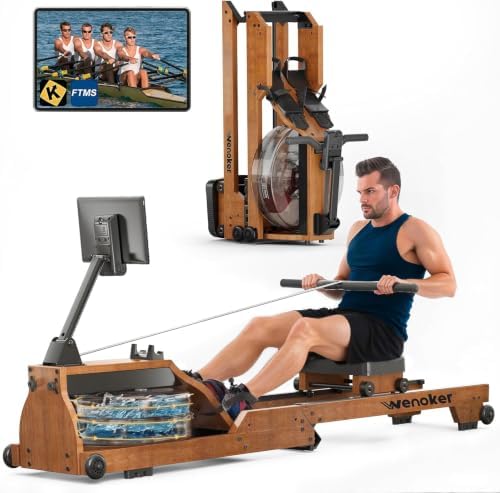
- [Total Body Exercise Rowing] According to scientific reports, rowing machines can work 90% of muscle groups. Combines ca…
- [Dynamic Water Resistance] WENOKER water rower features a large water tank with 6 water levels. You can adjust the resis…
- [Adjustable Long Monitor & Bluetooth APP] The foldable rowing machine monitor shows key metrics such as distance, time, …
Price: This one varies more than most — the WaterRower A1 Home has been listed at $949 directly through the brand as its least expensive model, while other authorized retailers list the same A1 line anywhere from roughly $895 up to $1,290–$1,399 depending on wood finish (ash, oak, beech) and included accessories. Shop around and confirm current pricing before buying, since this model can land on either side of the $1,000 line.
Resistance type: Water, via a paddle spinning inside a water tank — the resistance increases the harder and faster you pull, closely mimicking the feel of rowing on open water.
Key specs: Weight capacity varies by exact SKU and market but generally falls between roughly 275–330 lb; the machine typically weighs 28–30 lb dry frame weight before water is added, with overall footprint around 83–85″ long.
Main advantages: The A1 is handcrafted from real hardwood (ash or oak, depending on finish), and it can be stood upright for storage — three A1 units stored vertically take up about the same floor space as one indoor exercise bike. The water resistance produces a genuinely smooth stroke with no “dead spot,” and the ambient water sound is a feature many owners specifically cite as a reason they row more consistently.
Main drawbacks: The basic A1 Quick-Start monitor is simple — no heart rate pairing or Bluetooth on the entry model — and the water tank requires periodic purification tablets and occasional water changes, which is genuine ongoing maintenance the other rowers on this list don’t require.
Who it’s best for: Buyers who prioritize aesthetics (this is the rower that looks like furniture, not gym equipment) and a realistic on-water feel.
Who should avoid it: Anyone who wants zero maintenance, needs Bluetooth data syncing out of the box, or has a strict sub-$950 budget, since pricing on this model frequently crosses $1,000.
Subscription requirements: None.
Warranty: Warranty terms differ by retailer, but WaterRower’s direct sales typically include a 1-year warranty on frame and components, extendable to 5-year frame / 3-year component coverage with product registration.
Storage considerations: Stores vertically thanks to integrated transport wheels — a genuine space-saver compared to air rowers that only separate into two horizontal pieces.
Honest value assessment: A premium feel at a near-budget price, but only if you catch it near the lower end of its price range and are comfortable with light tank maintenance.
Best for Beginners: Sunny Health & Fitness SF-RW5801
Price: Under $300, commonly seen between roughly $270 and $320.
Resistance type: Magnetic, with 16 adjustable resistance levels.
Key specs: Weighs just 50 lb and has a shorter 43-inch slide rail, with a total footprint of about 77 inches (most rowers run 86–90 inches). Frame and rail support up to 285 lb.
Main advantages: It’s inexpensive, easy to store, and a low-risk way to find out whether you actually enjoy rowing before spending more. It also doesn’t shake during use and includes a tablet holder.
Main drawbacks: The short seat rail means taller users won’t achieve full leg extension, and the machine uses more plastic than pricier options, with no preset workout programs.
Who it’s best for: People on a tight budget, those using it in an apartment or small space, and shorter-statured users.
Who should avoid it: Taller individuals and anyone who wants tech-forward features like onboard workout programming.
Subscription requirements: None.
Warranty: Reviewers note the warranty coverage is on the thinner side compared to premium rowers — check current terms at purchase.
Storage considerations: Folds vertically and has a compact footprint, one of the easiest machines on this list to tuck into a closet.
Honest value assessment: A genuinely good “starter rower” — just go in expecting entry-level materials at an entry-level price.
Best Compact/Quiet Rower: Sunny Health & Fitness SF-RW5515

- ROWING MACHINE: With a simple twist, you can increase or decrease the 8 levels of magnetic resistance, so your workout c…
- ADJUSTABLE MAGNETIC RESISTANCE: With a simple twist, you can increase or decrease the 8 levels of magnetic resistance, s…
- DIGITAL MONITOR: The large LCD console displays time, count, calories, total count, and scan. The convenient scan mode d…
Price: Roughly $190–$250, occasionally listed higher at big-box retailers.
Resistance type: Magnetic tension system with 8 levels of adjustable resistance.
Key specs: 250-lb maximum user weight, assembled weight of about 60.9 lb, and assembled dimensions of roughly 89″ x 18.9″ x 23.6″, with an extended slide rail said to accommodate users up to about 6’8″.
Main advantages: The magnetic tension system runs smooth and quiet, and the machine folds and includes built-in transportation wheels for portability. The seat is fully padded and the foot pedals are large with adjustable straps.
Main drawbacks: Only 8 resistance levels is fewer than most competitors in this price range, and the basic LCD console offers only fundamental metrics (time, count, calories) with no Bluetooth syncing.
Who it’s best for: Apartment or shared-space households that specifically need a quiet machine and don’t need app connectivity.
Who should avoid it: Anyone who wants granular resistance control or data logging through a phone app.
Subscription requirements: None; the optional SunnyFit app works independently of the machine (no Bluetooth pairing).
Warranty: 3-year structural frame warranty, with just 90 days of coverage on other parts and components — worth noting, since non-frame parts are what typically fail first on budget machines.
Storage considerations: Foldable with built-in transport wheels.
Honest value assessment: A reasonable, quiet, no-frills option — but the short 90-day parts warranty is a real limitation to weigh against the low price.
Resistance Types Explained
Air resistance works by spinning a flywheel with fan blades. The harder and faster you pull, the more air resistance builds — it scales naturally with effort, which rowers who’ve trained on-water tend to prefer. The tradeoff is noise: air rowers get audibly louder as intensity increases, and the Concept2 RowErg and Bells of Steel Blitz Air Rower both fall into this category.
Magnetic resistance uses magnets positioned near a flywheel to create adjustable drag, usually through discrete levels (commonly 8–16, sometimes more) rather than a continuous curve. It’s the quietest resistance type by a wide margin, requires almost no maintenance, and is why nearly every budget rower under $500 uses it — the YOSUDA, both Sunny Health & Fitness models, and the NordicTrack RW600’s secondary system all use magnetic resistance.
Water resistance relies on paddles spinning through an enclosed water tank, and it’s widely considered the closest simulation of actual on-water rowing feel and sound. It requires occasional tank maintenance (adding purification tablets, periodically changing the water) that the other two resistance types don’t need, and it’s usually the heaviest and largest footprint option, though most water rowers — including the WaterRower A1 — store vertically to offset that.
| Factor | Air | Magnetic | Water |
|---|---|---|---|
| Noise | Moderate to loud, scales with effort | Very quiet | Moderate (ambient “whoosh”) |
| Resistance feel | Naturally increases with effort | Fixed levels, consistent | Naturally increases with effort |
| Maintenance | Low | Very low | Periodic tank/water care |
| Typical price at this budget | $850–$990 | $190–$500 | $895–$1,300+ |
| Best suited for | HIIT, competitive training | Steady-state cardio, beginners | Realistic feel, low-noise steady rowing |
What Can You Get for $300, $500, $750, and $1,000?
Around $300: Entry-level magnetic rowers like the Sunny Health & Fitness SF-RW5801 or SF-RW5515. Expect a basic LCD console, 8–16 resistance levels, plastic-heavy construction, no app connectivity, and shorter parts warranties (often 90 days to 1 year on non-frame components). These are legitimate “try rowing” machines, not long-term training tools.
Around $500: More capable magnetic and hybrid air-magnetic rowers with Bluetooth connectivity, companion apps, and generally higher weight capacities (up to 350 lb). Build quality steps up noticeably, though seat rail length and monitor sophistication still trail the premium tier.
Around $750: This is where genuine air rowers like the Bells of Steel Blitz enter the picture, along with the lower end of the WaterRower A1 line at retailers running promotions. You start seeing multi-year frame warranties (5 years is common) and metal, gym-grade construction.
Around $1,000: The Concept2 RowErg and NordicTrack RW600 both sit right at this ceiling. This tier is where you get either gold-standard performance tracking (Concept2) or a full smart-screen, subscription-powered training experience (NordicTrack). It’s also where the WaterRower A1’s premium hardwood finishes tend to land.
Rower Buying Guide
Resistance type: Match it to your priorities — air for realistic, effort-scaling resistance and durability; magnetic for quiet, low-maintenance simplicity; water for the closest on-water feel and ambient sound.
Frame/build quality: Steel and aluminum frames (Concept2, Bells of Steel, NordicTrack) generally outlast heavier-plastic budget frames. Check the material specs, not just the marketing copy.
Weight capacity: Ranges from 250 lb (NordicTrack RW600, several Sunny models) up to 500 lb (Concept2, as tested by the manufacturer). If more than one household member will use the rower, size up.
Rail length and user height: Short rails (like the SF-RW5801’s 43-inch rail) can prevent taller users from reaching full leg extension, which both limits workout quality and increases strain risk. Taller users (roughly 6’2″+) should look for rail lengths at or above the Concept2’s 54-inch monorail.
Footprint: Most rowers run 77–96 inches long when in use. Measure your space including a few feet of clearance at both ends for full extension and safe entry/exit.
Storage: Water rowers and most magnetic rowers store vertically; air rowers like the Concept2 and Blitz typically separate into two horizontal pieces instead. Decide which storage style actually fits your space before buying.
Seat comfort: Padding quality varies significantly at the budget end. If possible, check owner reviews specifically for long-session seat comfort, since this is a common complaint on entry-level machines.
Handle/ergonomics: Wider, contoured handles reduce grip fatigue on longer sessions — a small detail that matters more than it seems once you’re past 20 minutes.
Monitor: Ranges from bare-bones LCDs (time, calories, stroke count) up to full touchscreens with streaming classes. Decide whether you want data or entertainment, since few budget machines do both well.
Bluetooth: Present on the YOSUDA and NordicTrack RW600; absent on the base Concept2, Blitz Air Rower, WaterRower A1, and both Sunny Health & Fitness models reviewed here (though Concept2’s PM5 does support Bluetooth-based app connections via ErgData).
Apps: Free apps (ErgData, SunnyFit, YOSUDA’s companion app) versus subscription apps (iFit) is one of the biggest hidden cost differences on this list.
Subscription costs: Only the NordicTrack RW600 in this roundup effectively requires an ongoing subscription ($39/month after the trial) to access its full feature set. Everyone else is subscription-free.
Warranty: Ranges dramatically — from a 90-day parts warranty on the SF-RW5515 up to a 10-year frame warranty on the NordicTrack RW600 and a 5-year frame warranty on the Concept2 and Blitz. Warranty length is one of the clearest signals of how confident a manufacturer is in long-term durability.
Noise: Magnetic < water < air, roughly speaking. If you live in an apartment or plan to row while others sleep nearby, weight this factor heavily.
Maintenance: Air and magnetic rowers are largely maintenance-free; water rowers need occasional purification tablets and water top-offs or changes.
Return policy: Concept2 offers a 30-day money-back guarantee on direct factory orders; return windows on other machines vary by retailer (Amazon, Walmart, and direct manufacturer sites often differ even for the same product).
Long-term ownership cost: Factor in not just the purchase price but subscription fees (NordicTrack), replacement parts availability (better for established brands like Concept2 and WaterRower), and warranty coverage when comparing true five-year cost.
Rowing Machine for Weight Loss
Rowing is an effective way to burn calories and build cardiovascular fitness, and it engages more total muscle mass per stroke than many other cardio machines. That said, no single piece of equipment — a rower included — guarantees weight loss on its own. Weight management depends on the full picture: total physical activity, nutrition, sleep, and consistency over time, which varies significantly from person to person.
The CDC recommends that adults get at least 150 minutes of moderate-intensity aerobic activity per week, or 75 minutes of vigorous-intensity activity, along with muscle-strengthening activity on two or more days a week. Rowing can count toward either category depending on your intensity, and it has the added benefit of working your back, legs, and core simultaneously — making it a reasonably efficient way to combine cardio and light resistance training in one session. For guidance specific to weight management, the CDC’s page on physical activity and weight is a useful starting point (see CDC’s physical activity and weight guidance, linked in the sources at the end of this article).
The CDC also notes that some activity is better than none, and that adults who sit less and do any amount of moderate-to-vigorous physical activity gain some health benefits — so a rowing habit, even a modest one, is a reasonable place to start.
If you’re looking for research specifically on rowing’s fitness effects, the American Council on Exercise has published sponsored study findings on cardiovascular and muscular health outcomes from rowing-based training; we link to it in the sources section below rather than restating findings we haven’t independently verified.
Rowing Machine vs. Other Cardio Equipment
Full-body involvement: Rowing engages legs, back, arms, and core in a single stroke. Walking pads and treadmills are primarily lower-body, though incline walking adds some additional engagement.
Impact: Rowing is low-impact and joint-friendly, similar to walking, and generally gentler than running on a treadmill.
Space: Most rowers, even folded, need more floor length than a compact under-desk walking pad — if space is your top constraint, our guide to compact cardio machines for home covers smaller-footprint alternatives.
Noise: Magnetic-resistance rowers and walking pads are both reasonably quiet; air rowers are the loudest option in either category.
Workout variety: Rowers naturally support both steady-state and interval-style training; walking pads are better suited to steady, low-intensity movement, including work-from-home use. If you’re weighing the two directly, our roundup of the best walking pads for home cardio is a useful side-by-side.
Weight-loss goals: Both are legitimate tools for building consistent activity, which matters more for long-term results than the specific machine. See our broader look at best home cardio machines for weight loss for a wider equipment comparison.
Home-gym use: Rowers tend to double as a strength-adjacent tool given the pulling motion involved, while walking pads pair well with a standing desk setup for daily step counts. If you’re building out a fuller home gym around either machine, our guide to best adjustable dumbbells for home gyms is worth a look, and post-workout, our recovery tools for athletes guide covers options for sore legs after longer rowing sessions.
Common Buying Mistakes
- Buying only based on price. The cheapest rower on this list and the priciest one serve very different purposes — decide what you actually need before sorting by price.
- Ignoring machine dimensions. A rower’s footprint (often 77–96 inches) needs to fit in your space with clearance on both ends, not just the length of the machine itself.
- Ignoring user height/inseam. Short slide rails (like the SF-RW5801’s 43 inches) can prevent taller users from achieving proper form.
- Ignoring weight capacity. Capacities on this list range from 250 lb to 500 lb — check this against every household member who might use the machine, not just yourself.
- Forgetting subscription costs. The NordicTrack RW600’s $39/month iFit fee after the trial period can add up to hundreds of dollars a year if you don’t account for it upfront.
- Confusing air resistance with fixed resistance levels. Air resistance scales continuously with effort; it isn’t the same as selecting a numbered level like on a magnetic rower.
- Ignoring noise. If you live in an apartment or share walls, an air rower’s sound profile may genuinely bother neighbors during high-intensity sessions.
- Buying a screen-heavy machine without checking membership requirements. Touchscreens look appealing in photos, but check whether the screen is functionally useless without a paid subscription.
- Not checking warranty. Warranty terms on this list range from 90 days to 10 years — that’s a massive difference in manufacturer confidence and your own risk exposure.
- Assuming every rower provides the same stroke feel. Air, magnetic, and water resistance genuinely feel different under the hands; if possible, try before you commit to a full price-tier jump.
FAQs
What is the best rowing machine under $1,000? For most buyers, the Concept2 RowErg is the strongest overall pick thanks to its durability, accurate tracking, and gym-grade reputation — though “best” ultimately depends on whether you prioritize training precision (Concept2), guided classes (NordicTrack RW600), or realistic feel (WaterRower A1).
Is a rowing machine under $1,000 worth it? Yes, for most home users. You don’t need to spend $1,500+ to get a durable, effective rower — several machines on this list, including the Concept2 at $990, deliver genuinely gym-quality performance well under that price ceiling.
Is Concept2 worth the money? Concept2 built its reputation as the standard for training, testing, and racing across a wide range of users, from home exercisers to Olympic athletes, and its combination of price, durability, and accurate tracking is widely regarded as one of the better values in home fitness equipment.
What is the best cheap rowing machine? The YOSUDA Magnetic Rowing Machine, typically priced around $190–$250, offers a reasonable balance of resistance levels, weight capacity, and app connectivity for buyers on a tight budget.
Which is better: air, magnetic, or water resistance? There’s no single “better” option — air suits buyers who want realistic, effort-based resistance and don’t mind noise; magnetic suits those who prioritize quiet, low-maintenance operation; water suits those who want the most realistic on-water feel and are comfortable with light tank maintenance.
What is the quietest rowing machine under $1,000? Magnetic-resistance rowers are the quietest category overall. Among the machines reviewed here, the Sunny Health & Fitness SF-RW5515 and YOSUDA Magnetic Rowing Machine are both built specifically around low-noise operation.
What is the best rowing machine for beginners? The Sunny Health & Fitness SF-RW5801 is a sensible starting point — it’s an inexpensive, good “starter” rowing machine to find out if you enjoy it for exercise before committing to a pricier model.
Can rowing help with weight loss? Rowing can contribute to the physical activity and calorie expenditure that support weight management, but it works best as one part of a broader approach that includes nutrition and consistent activity over time — no single machine guarantees weight-loss results on its own.
Do rowing machines need a subscription? No, not universally. Of the machines in this guide, only the NordicTrack RW600 effectively requires a paid subscription (iFit, $39/month after a 30-day trial) to access its full feature set; every other machine reviewed here works fully without any ongoing membership fee.
How much space does a rowing machine need? Most rowers measure 77–96 inches long when assembled for use, and manufacturers like Concept2 recommend roughly 9 feet by 4 feet of clearance for comfortable use, even though the machine itself is narrower. Folding and vertical-storage models reduce the footprint significantly when not in use.
Buyer Decision Guide
- Choose the Concept2 RowErg if you want the most accurate, comparable performance tracking and a machine built to last for years of serious training.
- Choose the NordicTrack RW600 if you want guided, trainer-led workouts and don’t mind a monthly subscription fee.
- Choose the Bells of Steel Blitz Air Rower if you want an air-resistance feel similar to the Concept2 with a slightly higher weight capacity.
- Choose the WaterRower A1 if you want the most realistic on-water feel and don’t mind occasional tank maintenance — just watch the price, since it can land above or below $1,000 depending on retailer and finish.
- Choose the YOSUDA Magnetic Rowing Machine if budget is your top priority and you want app connectivity without spending $500+.
- Choose the Sunny Health & Fitness SF-RW5801 if you’re brand new to rowing and want the lowest-risk way to find out if it’s for you.
- Choose the Sunny Health & Fitness SF-RW5515 if quiet operation and a compact folding footprint matter more than resistance levels or app features.
Conclusion
The under-$1,000 rowing machine category has genuinely matured — you no longer have to choose between “cheap and flimsy” or “expensive and excellent.” Whether you land on the Concept2’s proven reliability, the NordicTrack’s connected-fitness experience, the WaterRower’s realistic feel, or one of the budget-friendly magnetic options, the key is matching the machine’s resistance type, footprint, and subscription requirements to how you’ll actually use it — not just chasing the lowest sticker price.
Sources referenced: Concept2 RowErg specifications · Concept2 RowErg warranty · CDC adult physical activity guidance · CDC physical activity and weight · ACE-sponsored rowing research