
LifeCareBalance.com is reader-supported. When you buy through links on our site, we may earn an affiliate commission at no extra cost to you. As an Amazon Associate, we earn from qualifying purchases.
If you’ve ever finished a demanding training block and wondered why you feel flat instead of fit, your sleep habits may be part of the picture. Training creates a physical demand; recovery depends on what happens afterward, including adequate sleep, nutrition, rest, and time for your body to adapt.
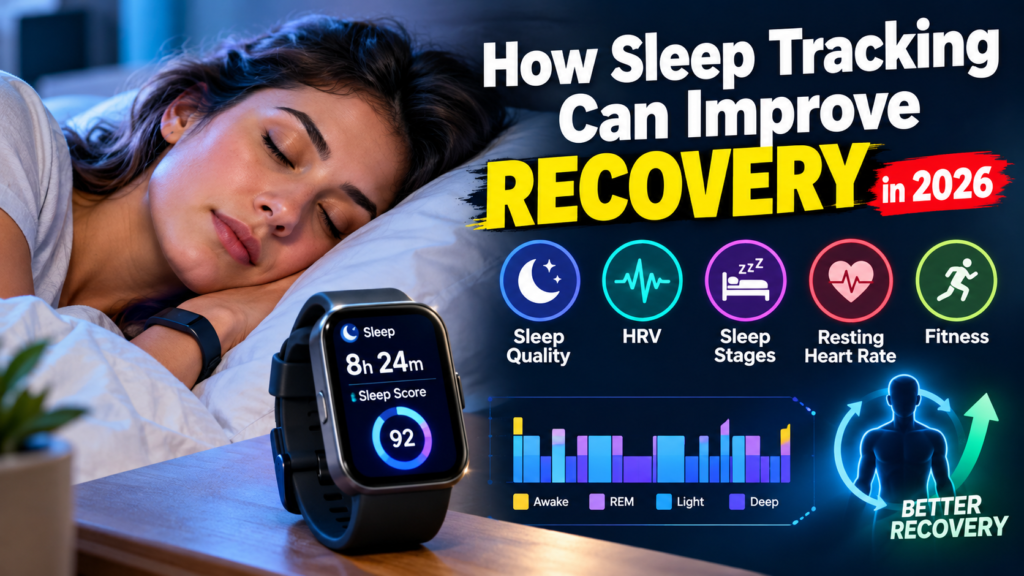
Sleep tracking cannot make your body recover faster by itself. What it can do is help you notice patterns in your sleep duration, schedule, overnight heart rate, and heart rate variability (HRV) that might otherwise be difficult to recognize.
For athletes and regular exercisers, this information can support more informed decisions about training intensity, rest days, and sleep habits.
Quick answer: Sleep tracking may support recovery indirectly by helping you monitor sleep duration and consistency, understand your personal HRV and resting heart rate trends, and notice repeated changes over time. These measurements are useful context—not a diagnosis, a guarantee of readiness, or a replacement for how you feel.
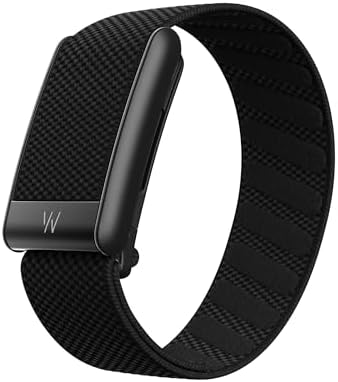
- What You Get – A 12-month membership, WHOOP 5.0 device, a SuperKnit band, and a waterproof* Wireless PowerPack. Choose f…
- HSA/FSA Eligible – All 12-month WHOOP memberships and battery packs qualify for HSA/FSA reimbursement.
- Screenless, Distraction-Free – No screen, no buzzing notifications. WHOOP focuses entirely on your health and performanc…

- ACCURACY – SMART SENSING – Oura tracks over 50 health metrics, including sleep, activity, stress, heart health, and wome…
- ACCURATE SIZING ESSENTIAL – Oura Ring 4 uses unique sizing different from standard jewelry rings; use the Oura Ring 4 Si…
- LONG LASTING BATTERY – With up to 8 days of battery life, no screens and no vibrations, Oura Ring 4 allows you to focus …

- Fitbit Charge 6 tracks key metrics from calories and Active Zone Minutes to Daily Readiness and sleep; move more with 40…
- See your heart rate in real time: Just link your Charge 6 to compatible exercise machines, like treadmills, ellipticals,…
- Tune into your body: Track your response to stress with a stress management score; learn about the quality of your sleep…
How Sleep Tracking Can Support Recovery
A sleep tracker’s value is not necessarily its nightly score. It is the longer-term pattern behind the score.
You might already know when you have slept poorly. However, it can be harder to recognize that your bedtime has gradually shifted, your average sleep duration has declined, or your overnight resting heart rate has stayed above its usual range for several days.
Tracking can help you review these changes and compare them with your training schedule and how you feel.
Used thoughtfully, sleep tracking can help you:
- Notice when your sleep duration or schedule becomes inconsistent.
- Review recovery-related trends across several days rather than reacting to one reading.
- Establish a personal baseline for HRV and resting heart rate.
- Identify possible relationships between training load, sleep habits, and perceived fatigue.
- Make more informed decisions about whether to maintain, modify, or postpone a demanding workout.
These benefits depend on using the data appropriately. A wearable cannot establish why a metric has changed, and a better sleep score does not automatically mean your body has recovered.
Research supports the broader importance of sleep for physical performance and recovery. A 2026 review published in L’Encéphale discusses the relationships between sleep, athletic performance, and recovery, including the potential consequences of insufficient sleep. Read the review on PubMed: Physical Activity, Athletic Performance, and Recovery—The Role of Sleep.
For practical advice on choosing a device, see our Sleep Tracker Buying Guide 2026.
Why Sleep Matters for Physical Recovery
Sleep is an important part of normal physical and mental functioning. It supports processes involved in tissue maintenance, immune function, and the regulation of systems affected by daily activity and stress.
Exercise places demands on the body. Adequate sleep, nutrition, and appropriate rest help support the adaptation that follows training.
The amount of sleep a person needs varies. The CDC recommends that adults ages 18–60 generally get at least seven hours per night. Individual requirements may be higher depending on circumstances, including training demands.
The CDC’s About Sleep guidance explains why sufficient, good-quality sleep matters for health and well-being.
For athletes, the practical lesson is not that every workout requires a perfect sleep score. It is that repeatedly sacrificing sleep while increasing training demands can make it harder to maintain performance and well-being.
Sleep tracking can help you see whether your sleep routine supports your broader recovery plan. It cannot replace adequate sleep or compensate for a training program that consistently exceeds your ability to recover.
The Sleep Metrics That Matter Most for Recovery
Not every number in a sleep app is equally useful. The best metrics to follow depend on your goals, the device you use, and how consistently it measures them.
| Metric | What It Can Help You Monitor | Important Limitation |
|---|---|---|
| Sleep duration | Whether you regularly get enough sleep | Consumer measurements are estimates |
| Sleep consistency | Changes in bedtime and wake time | Does not prove sleep quality |
| Sleep efficiency | Estimated proportion of time in bed spent asleep | Can be affected by algorithm limitations |
| HRV | Changes relative to your personal baseline | Influenced by many factors beyond training |
| Resting heart rate | Changes in your usual overnight or resting heart rate | Can rise for several reasons |
| Sleep disturbances | Possible changes in nighttime restlessness or awakenings | Brief awakenings may be missed |
| Sleep stages | Estimated light, deep, and REM sleep | Stage estimates are not equivalent to clinical sleep staging |
| Recovery/readiness score | A simplified summary of selected signals | Proprietary and not standardized |
For most people, sleep duration and consistency are sensible starting points. HRV and resting heart rate can provide additional context, especially when viewed alongside training load and subjective fatigue.
Avoid choosing a device simply because it reports the largest number of metrics. A smaller set of understandable, consistently collected measurements may be more useful than a complicated dashboard you rarely consult.
How HRV Can Help You Understand Recovery
Heart rate variability (HRV) describes variation in the time intervals between consecutive heartbeats. Some wearables use HRV measurements as one input in their recovery or readiness calculations.
HRV is influenced by the autonomic nervous system, which helps regulate involuntary functions such as heart rate. However, HRV is also affected by individual characteristics and everyday conditions.
Why Your Personal Baseline Matters
There is no single HRV value that means every person is well recovered.
Your usual readings may differ from those of another athlete because of age, fitness, measurement method, genetics, and other factors.
For that reason, it is generally more useful to compare your readings with your own established baseline than to compare them with a friend’s number or a target posted online.
A sustained change from your usual pattern may be worth reviewing alongside other information, but it does not establish a specific cause.
What a Lower HRV Might Mean
A lower-than-usual reading can occur for several reasons, including:
- A demanding training session or accumulated training load.
- Insufficient or disrupted sleep.
- Psychological stress.
- Alcohol consumption.
- Travel or changes in routine.
- Illness or other physiological stressors.
- Differences in measurement conditions.
A single low reading is not proof of overtraining or inadequate recovery. It is a data point that needs context.
How to Use HRV Practically
- Establish a baseline over a period of consistent measurements.
- Compare trends rather than interpreting one reading in isolation.
- Consider sleep, recent exercise, stress, and how you feel.
- Look for persistent changes rather than reacting to every fluctuation.
- Avoid treating a proprietary recovery score as a medical assessment.
HRV can contribute useful information, but it should not be the sole basis for making training decisions.
How Resting Heart Rate Can Reveal Changes in Recovery
Resting heart rate (RHR) is another commonly tracked measurement.
Some people notice that their resting or overnight heart rate changes in response to training load, sleep disruption, stress, illness, or other conditions.
If your readings usually fall within a relatively stable personal range, a sustained increase may be worth examining—especially if it coincides with poor sleep or unusual fatigue.
However, there is no universal number of beats above baseline that proves poor recovery. The significance of a change depends on your circumstances and measurement method.
What to Look For
Consider reviewing:
- Whether the change lasts for several days.
- Whether your sleep duration has also changed.
- Whether you recently completed a demanding training block.
- Whether you feel unusually tired or perform worse than expected.
- Whether you may be ill or experiencing unusual stress.
An isolated increase after a late night or difficult workout is not necessarily a problem. Persistent changes combined with concerning symptoms deserve more attention than one unusual reading.
If your resting heart rate remains unusually elevated or you experience symptoms such as chest pain, fainting, or unexplained shortness of breath, seek appropriate medical advice rather than relying on a wearable to explain the change.
How Sleep Duration and Consistency Affect Recovery
Sleep duration is one of the simplest measurements to interpret.
If your tracker repeatedly estimates that you sleep less than you intend to, review your schedule before focusing on advanced recovery scores.
For most adults ages 18–60, the CDC’s general recommendation is at least seven hours per night. Some people, including those with substantial training demands, may need more.
Look Beyond One Night
A single short night does not automatically mean you must cancel your next workout. What matters is the wider context.
Ask yourself:
- Have I been getting enough sleep across the past week?
- Is my bedtime shifting substantially?
- Am I waking earlier than planned?
- Do I feel unusually sleepy or fatigued during the day?
- Has my training load increased without a corresponding change in rest?
Why Consistency Helps
A regular sleep and wake schedule can make it easier to maintain a predictable routine. Sleep tracking may help you notice when work, travel, late-night screen use, or training schedules repeatedly push your bedtime later.
The goal is not to achieve identical sleep every night. It is to recognize patterns that make adequate rest more difficult.
How Important Are Sleep Stages for Recovery?
Many consumer trackers estimate the amount of time you spend in light, deep, and REM sleep.
These stages are part of normal sleep architecture, but wearable estimates have important limitations.
Deep sleep is associated with physiological processes involved in restoration, while REM sleep plays important roles in memory and other aspects of brain function. However, a consumer tracker generally estimates these stages using indirect signals rather than directly measuring brain activity.
This means that a displayed number should not be treated as a precise measurement of your physical recovery.
Why You Should Not Chase a Specific Deep-Sleep Number
Suppose your tracker reports less deep sleep than usual after a difficult training session. That result alone cannot establish that your muscles have not recovered.
The reading may reflect normal variation, device limitations, or a change in the signals used by the algorithm.
Instead of trying to maximize a particular stage every night, prioritize adequate sleep opportunity, a consistent routine, and how you feel over time.
If you regularly experience unrefreshing sleep or significant daytime fatigue despite spending enough time in bed, consider discussing the problem with a healthcare professional.
How to Use Sleep Data Before a Workout
Sleep data can support training decisions, but it should inform rather than dictate your effort.
Before a demanding session, use a simple process.
Step 1: Review More Than Last Night
Look at recent sleep duration, consistency, and your recovery-related measurements.
A single unusual reading may be less informative than several days of declining sleep or a sustained change from your baseline.
Step 2: Compare HRV and Resting Heart Rate
Consider whether the measurements are broadly consistent with your usual pattern.
For example, a lower-than-usual HRV and higher-than-usual resting heart rate may add context when you also feel unusually fatigued. Neither measurement can independently establish the cause.
Step 3: Consider How You Feel
Assess your energy, soreness, motivation, perceived effort, and any symptoms of illness.
Your subjective experience is an important part of the decision. Do not ignore persistent fatigue just because your tracker reports a favorable score.
Step 4: Adjust the Session When Appropriate
Depending on the combined picture, you might:
- Follow your planned workout if you feel well and no other concern is present.
- Reduce intensity or volume if you feel unusually fatigued.
- Choose an easier session when several indicators suggest that your usual workload may be excessive.
- Rest and seek medical advice when symptoms indicate a potential health issue.
There is no universal formula that converts an HRV reading or sleep score into the correct workout. Use your training plan, experience, symptoms, and relevant professional guidance together.
If you’re comparing devices that summarize recovery differently, our Oura Ring vs. WHOOP comparison explores how these types of wearables approach sleep and recovery information.
What to Do When Your Sleep Data Looks Poor
A poor score can be frustrating, especially when you have a demanding workout planned. The important thing is to avoid overreacting to a single result.
The following table provides general fitness guidance, not a diagnostic or personalized training prescription.
| Situation | Possible Interpretation | Reasonable Next Step |
|---|---|---|
| Sleep looks typical and you feel well | No obvious new concern from the available data | Follow your plan if otherwise appropriate |
| One poor night, but you feel normal | Temporary variation or an imperfect estimate | Monitor how you feel and avoid overreacting |
| Poor sleep plus lower-than-usual HRV | Possible stress or fatigue; cause is uncertain | Review recent training and consider adjusting intensity if needed |
| Poor sleep plus higher-than-usual resting heart rate | Several possible explanations, including stress, illness, or sleep disruption | Check symptoms and recent circumstances; take extra rest if appropriate |
| Several days of disrupted sleep and unusual fatigue | A more persistent pattern worth addressing | Review sleep habits and training load; consider professional advice if it continues |
| Low tracker score but you feel well | Measurement variation or a result that may not reflect your whole condition | Consider the wider trend and avoid treating the score as definitive |
| Favorable tracker score but you feel unwell | The device may not capture the issue affecting you | Prioritize symptoms over the score and seek appropriate care |
If poor sleep or unusual fatigue continues, do not assume the cause is training alone. Persistent symptoms may warrant professional assessment.
How Accurate Are Sleep Trackers for Recovery?
Sleep trackers can help you monitor patterns, but their measurements have limitations that matter when interpreting recovery.
A 2026 systematic review and meta-analysis comparing consumer wearable devices with polysomnography found variation between devices and limitations in detailed sleep-stage estimation. The authors concluded that wearables may be useful for longitudinal tracking but should not be treated as stand-alone diagnostic tools. Read the research on PubMed: Are Wearable Sleep-Tracking Devices Reliable Alternatives to Polysomnography?.
Sleep and Wake Detection
Many consumer trackers use movement and physiological signals to estimate whether you are asleep or awake.
However, lying still while awake can sometimes be interpreted as sleep, and brief awakenings may be missed. As a result, estimated total sleep time may not perfectly match actual sleep.
Sleep-Stage Estimates
Classifying light, deep, and REM sleep is more complex than estimating general sleep duration.
Clinical polysomnography uses measurements including brain activity to evaluate sleep stages. Most consumer wearables use indirect signals and proprietary algorithms.
Two devices may therefore report different sleep-stage estimates for the same night.
Recovery Scores Are Not Standardized
A readiness or recovery score usually combines selected signals according to the manufacturer’s own method.
Different brands may use different inputs, calculations, scales, and recommendations. A score of 80 on one platform should not be assumed equivalent to a score of 80 on another.
The score can be convenient for reviewing your data, but it does not independently establish whether your body is ready for intense exercise.
Use Data as Context, Not a Verdict
The most sensible approach is to use a tracker as one source of information alongside your training history, sleep habits, and subjective experience.
If a number changes, ask what else has changed. Avoid assuming that the tracker has identified the cause or that changing your workout will solve an underlying health problem.
How to Get More Recovery Value From Sleep Data
Data is most useful when it helps you make practical changes.
Build a Consistent Sleep Routine
Choose a realistic bedtime and wake time that allow adequate sleep opportunity. Try to maintain a broadly consistent schedule, including on weekends when possible.
Track Trends Over Time
Review weekly patterns instead of reacting to every daily score. Longer histories can help you understand your normal range, although they do not eliminate device inaccuracies.
Pair Sleep Data With Training Load
Keep a simple record of demanding workouts, rest days, perceived exertion, and unusual fatigue. This can help you see whether sleep changes tend to coincide with changes in training.
It still cannot prove that one factor caused another, but it provides useful context.
Adjust One Habit at a Time
If your sleep duration is consistently short, start by protecting more time for sleep. If your schedule is highly irregular, work toward a more predictable routine.
Changing several habits simultaneously can make it harder to understand which changes are helping.
Avoid Obsessing Over Scores
Sleep tracking should support healthier decisions, not make bedtime more stressful.
If checking your score increases anxiety or encourages you to distrust how you feel, consider checking less frequently or simplifying the metrics you follow.
Who Can Benefit Most From Sleep Tracking?
Sleep tracking may be particularly useful for people who want to observe patterns across a demanding schedule.
Athletes and regular exercisers: Tracking may help them review sleep consistency and recovery-related trends alongside training load.
People with inconsistent schedules: Shift workers, frequent travelers, and people with changing work hours may benefit from seeing how their sleep timing varies.
People building healthier habits: A tracker can provide feedback about sleep duration and bedtime patterns while they establish a routine.
Data-oriented wellness users: People who enjoy reviewing long-term trends may find the additional information useful.
However, a tracker is not essential for everyone. Someone who already sleeps well and does not find the data useful may gain little from purchasing an expensive device.
Choosing a Sleep Tracker for Recovery
If recovery is your main reason for buying a tracker, focus on the measurements and features you will actually use.
Consider:
- Consistent overnight heart-rate measurements.
- HRV trends compared with your personal baseline.
- Estimated sleep duration and schedule consistency.
- Clear explanations of recovery or readiness scores.
- Comfortable overnight wear.
- Battery life that suits your routine.
- Subscription costs and access to historical data.
- Independent validation relevant to the metrics you care about.
Do not choose solely on the number of sensors, the length of the feature list, or a manufacturer’s claim that its score measures readiness perfectly.
For device-specific information, see our Oura Ring Review 2026 and WHOOP 5.0 Review 2026. These guides can help you evaluate how different devices present sleep and recovery data. Check current model specifications, pricing, and membership terms before purchasing.
Common Sleep Tracking Mistakes
Avoid these common mistakes when using a sleep tracker to support recovery:
- Treating one poor night as a crisis. A single reading may reflect normal variation or measurement error.
- Comparing your HRV directly with someone else’s. Personal baselines differ.
- Assuming low HRV proves overtraining. Many factors can affect HRV.
- Assuming elevated resting heart rate has one specific cause. Training, illness, stress, and other circumstances can contribute.
- Chasing deep-sleep minutes. Consumer sleep-stage estimates are not precise clinical measurements.
- Letting a readiness score make every training decision. Use the score alongside symptoms, training history, and how you feel.
- Ignoring persistent fatigue because the app looks reassuring. A tracker cannot rule out every health problem.
- Changing several habits at once. This makes it harder to understand what is helping.
- Assuming correlation proves cause. A change in sleep data alongside a change in training does not establish why either occurred.
- Using consumer data to diagnose a sleep disorder. Seek clinical evaluation when symptoms warrant it.
Frequently Asked Questions
Can sleep tracking improve recovery?
Not directly. Your body recovers through biological processes supported by adequate sleep, nutrition, rest, and appropriate training. Tracking can help you notice patterns that support better-informed decisions about those factors.
What sleep metric is most important for recovery?
There is no single metric that works for everyone. Sleep duration and consistency are useful starting points. HRV and resting heart rate can provide additional context when compared with your personal baseline.
Does HRV show how well I have recovered?
HRV can contribute information about changes in your physiological state, but it is not a complete measure of recovery. Interpret it alongside sleep, training load, stress, symptoms, and your usual pattern.
Is a low HRV always a warning sign?
No. HRV naturally varies and can change for many reasons. A single low reading does not establish overtraining or illness. Persistent changes combined with other symptoms deserve more attention.
What does resting heart rate tell me about recovery?
A sustained change from your usual resting heart rate may provide useful context, particularly when it coincides with poor sleep or unusual fatigue. It cannot independently identify the cause.
Is deep sleep the most important stage for muscle recovery?
Deep sleep is associated with physiological restoration, but no consumer tracker can establish your muscle recovery by reporting a particular number of deep-sleep minutes. Focus on adequate overall sleep and your broader recovery pattern.
Should I train if my sleep score is low?
A low score alone does not determine whether you should train. Consider how you feel, recent sleep patterns, training demands, and any symptoms. If several indicators suggest unusual fatigue, reducing intensity or resting may be reasonable.
Can sleep trackers diagnose overtraining?
No. Consumer sleep trackers cannot independently diagnose overtraining. Recovery is influenced by multiple factors and should be evaluated using broader training history, performance, symptoms, and professional advice when needed.
How many hours should athletes sleep?
The general CDC recommendation for adults ages 18–60 is at least seven hours per night. Individual needs vary, and people with demanding training schedules may need more. Consistently getting enough sleep is more useful than chasing a perfect nightly score.
When should I seek professional help?
Seek advice if sleep problems, excessive daytime sleepiness, unusual fatigue, or other concerning symptoms persist. Loud snoring, gasping during sleep, and repeated breathing interruptions may warrant evaluation for a sleep disorder.
Final Takeaway
Sleep tracking does not recover your body for you—sleep and appropriate recovery practices do that. Tracking offers visibility into patterns you might otherwise overlook, including sleep duration, schedule consistency, HRV, and resting heart rate.
Used thoughtfully, this information can support better-informed training and sleep decisions. Used to chase a perfect score or diagnose yourself, it can become misleading.
Start with a consistent sleep routine, learn your own baseline, review trends over time, and combine device data with how you feel. The goal is not a perfect number. It is a clearer understanding of your habits and a more sustainable approach to training and recovery.