
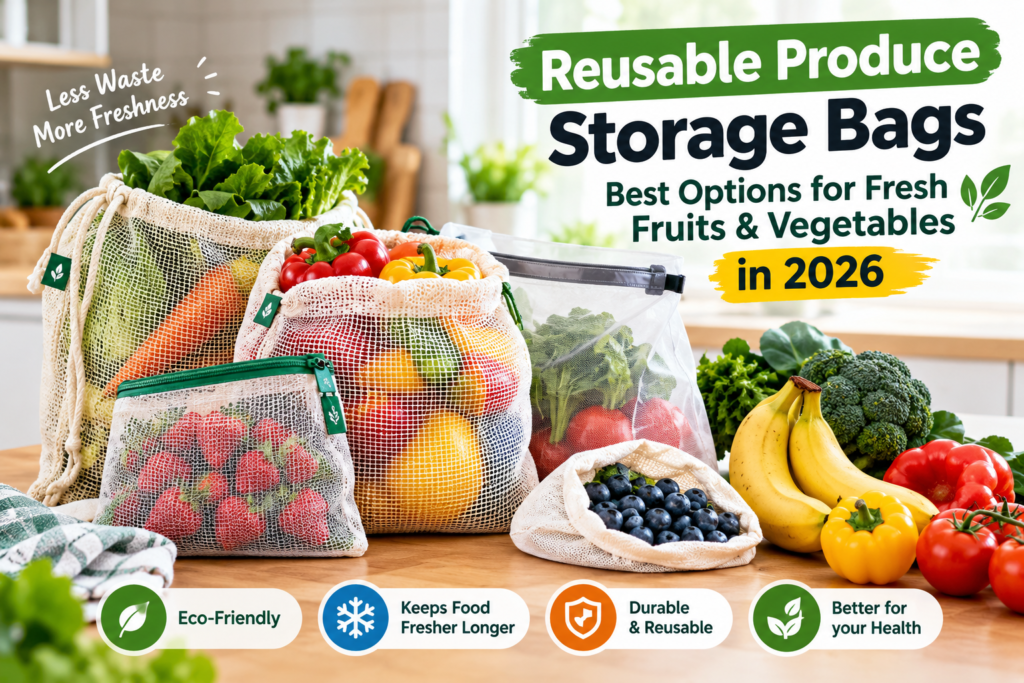
Learn how reusable produce storage bags work, compare mesh, cotton, and silicone options, and discover how to choose the right bags for fresh fruits and vegetables in 2026.
LifeCareBalance.com is reader-supported. When you buy through links on our site, we may earn an affiliate commission at no extra cost to you. As an Amazon Associate, we earn from qualifying purchases.
Reusable produce storage bags can make grocery shopping, refrigerator organization, and everyday food storage more convenient while reducing reliance on disposable produce bags. But not every reusable bag is designed for the same job.
A lightweight mesh bag may be excellent for carrying apples, onions, greens, or peppers home from the grocery store. A washable silicone bag may be more useful for smaller portions, cut produce, leftovers, or freezer storage. Cotton bags can be practical for shopping and dry produce, while storage-focused produce bags may use different materials and moisture-control features.
The important question is not simply, “Are reusable produce bags worth buying?” It is:
Which type of reusable produce bag fits the food you buy, how you shop, and how you store produce at home?
This guide explains the major types, what they are best for, how to use them safely, what produce should not be sealed tightly, and what to look for before buying.
Quick answer: For grocery shopping, lightweight washable mesh bags are usually the most practical choice because they are breathable, visible, and easy to carry. For cut produce or foods that benefit from a more secure seal, reusable silicone bags can be more versatile. The best option depends on the produce and storage conditions rather than the bag material alone.
What Are Reusable Produce Storage Bags?
Reusable produce storage bags are washable bags designed to carry, organize, or store fruits and vegetables instead of relying on disposable plastic produce bags.
Depending on the design, they may be made from:
- Cotton mesh
- Polyester or nylon mesh
- Food-grade silicone
- Other washable food-storage materials
Some bags are primarily intended for grocery shopping, while others are designed for refrigerator or freezer storage.
That distinction matters.
A breathable produce bag used to carry a bunch of lettuce home is solving a different problem from an airtight silicone bag used to store cut vegetables.
Before buying, determine whether you want the bag mainly for:
- Grocery shopping
- Refrigerator organization
- Cut produce
- Freezer storage
- Bulk foods
- A combination of these uses
This simple decision can prevent you from buying a large set of bags that does not match your actual routine.
Why Use Reusable Produce Bags?
Reusable produce bags have several practical advantages, but their benefits should be described realistically.
1. They Reduce Dependence on Disposable Produce Bags
Reusable bags can replace many of the thin disposable bags commonly available in produce sections.
The environmental benefit depends on how long the reusable bag lasts, how frequently it is used, how it is washed, and what material it contains. The biggest practical advantage is simple: one durable bag can be used repeatedly instead of being discarded after one shopping trip.
2. They Make Produce Easier to Organize
Reusable bags can group similar foods together.
For example, you might use one bag for:
- Leafy greens
- Apples
- Citrus
- Carrots
- Peppers
- Herbs
This can make your refrigerator and grocery routine easier to manage.
3. Lightweight Mesh Bags Are Convenient for Grocery Shopping
Mesh bags are particularly useful when buying loose produce because you can usually see the contents without opening the bag.
Food Network’s 2026 testing guide highlights lightweight fabric bags, multiple sizes, secure drawstrings, washability, and tare-weight labels as important shopping considerations.
4. Some Reusable Bags Have Multiple Uses
A good reusable bag may work for more than produce.
Depending on the manufacturer’s instructions, it may also be useful for:
- Bulk foods
- Snacks
- Sandwiches
- Herbs
- Meal-prep ingredients
- Freezer storage
However, never assume that a grocery mesh bag is suitable for freezer or wet-food storage. Check the manufacturer’s care and use instructions.
Mesh vs. Silicone vs. Cotton Produce Bags
The material is one of the most important buying decisions.
| Type | Best Use | Main Advantage | Main Limitation |
|---|---|---|---|
| Mesh polyester/nylon | Grocery shopping | Lightweight and easy to see through | Not ideal for all wet foods |
| Organic cotton mesh | Grocery shopping and dry produce | Natural-fiber option and breathable | Can be heavier and may shrink |
| Silicone | Cut produce, leftovers, freezer storage | Secure seal and versatile storage | Heavier and usually more expensive |
| Solid storage bags | Refrigerator/freezer use | Better containment | May not provide the airflow some produce needs |
Mesh Produce Bags
Mesh bags are often the best starting point for someone who wants reusable bags primarily for grocery shopping.
They are:
- Lightweight
- Breathable
- Easy to see through
- Easy to fold
- Available in multiple sizes
- Usually washable
A breathable bag can also be useful for produce that benefits from airflow.
However, breathable does not automatically mean that every fruit or vegetable will stay fresh longer. Produce freshness depends on temperature, humidity, maturity, airflow, ethylene exposure, and the condition of the food.
Silicone Produce Storage Bags
Silicone bags are more appropriate when you need a secure seal.
They can be useful for:
- Cut vegetables
- Small portions of fruit
- Berries
- Prepared ingredients
- Leftovers
- Freezer storage
For example, Stasher’s current product information describes its bags as made from food-grade platinum silicone and lists dishwasher, freezer, microwave, and oven use according to its stated instructions.
That does not mean silicone is automatically better for every fruit or vegetable. An airtight environment can be counterproductive for produce that benefits from ventilation.
Organic Cotton Produce Bags
Organic cotton mesh bags appeal to shoppers who prefer natural-fiber materials.
They can work particularly well for:
- Apples
- Oranges
- Lemons
- Limes
- Onions
- Dry vegetables
- Grocery shopping
Look for strong stitching, practical drawstrings, washable construction, and clearly stated material information.
Cotton bags can absorb moisture and may take longer to dry than synthetic mesh, so proper drying is important.
What Produce Should You Store in Reusable Produce Bags?
There is no universal “best bag” for all produce.
Leafy Greens
Lettuce, spinach, kale, and similar greens are sensitive to moisture and handling.
The goal is to prevent excessive moisture accumulation while keeping the leaves from drying out too quickly.
A breathable storage solution may be more appropriate than sealing wet greens inside an airtight bag.
If you wash greens before storage, dry them thoroughly first.
FDA recommends washing fresh produce under running water before preparation or eating and drying it afterward. FDA also advises against washing produce with soap or household detergent.
Berries
Strawberries, raspberries, and blueberries can deteriorate quickly when excess moisture remains around the fruit.
For delicate berries, a vented produce container may sometimes be more suitable than a conventional reusable bag.
This is an important buying distinction: a reusable produce bag is not automatically the best storage solution for every type of produce.
Apples
Apples can be convenient to store in reusable bags, but remember that apples produce ethylene.
USDA explains that ethylene-producing fruits can accelerate deterioration in sensitive vegetables and some other fruits.
If you store apples near sensitive produce, consider keeping them separated.
Carrots
Carrots generally benefit from cool storage and appropriate moisture control.
A reusable storage bag can help organize them, but avoid creating unnecessary condensation.
Herbs
Fresh herbs can be challenging because they are delicate and can deteriorate quickly.
Depending on the herb, a breathable bag or another purpose-built storage method may work better than a tightly sealed bag.
Broccoli and Cauliflower
These vegetables can be organized in reusable produce bags, but they still require appropriate refrigeration and airflow.
The bag should support storage rather than completely replacing proper refrigeration.
Produce You Should Not Automatically Put in an Airtight Bag
One of the biggest mistakes in reusable produce storage is assuming that airtight always means fresher.
It does not.
Some produce benefits from ventilation, while others are more sensitive to moisture accumulation.
Also, certain foods are better stored outside the refrigerator.
USDA specifically lists bananas, sweet potatoes, potatoes, and dry onions among produce that should not be refrigerated and instead stored in dry storage around 60–70°F.
This means a reusable produce bag should never be treated as a substitute for understanding the storage requirements of the food itself.
Grocery Shopping vs. Refrigerator Storage
This is one of the most useful distinctions when choosing reusable produce bags.
For Grocery Shopping
Prioritize:
- Lightweight construction
- Breathable mesh
- Clear visibility
- Easy drawstrings
- Multiple sizes
- Washability
- Tare-weight labeling
A lightweight mesh bag is usually the practical choice.
For Refrigerator Storage
Prioritize:
- Appropriate airflow
- Moisture management
- Easy cleaning
- Food-contact suitability
- Appropriate size
- Secure closure when needed
For Freezer Storage
Choose only products specifically rated for freezer use.
Silicone storage bags are often more suitable for this purpose than ordinary mesh produce bags.
Why Tare Weight Matters
If you buy produce by weight, the weight of the reusable bag can matter.
A heavy bag technically adds weight to the scale unless the retailer subtracts the bag’s tare weight.
Food Network specifically recommends looking for reusable produce bags with clearly labeled tare weights.
This is especially useful for shoppers who frequently buy:
- Apples
- Oranges
- Potatoes
- Tomatoes
- Onions
- Bulk produce
A lightweight bag can be more convenient than a heavy fabric alternative.
What to Look for When Buying Reusable Produce Bags
1. Material
Choose the material according to the job.
For shopping, lightweight mesh is often practical.
For cut produce or freezer storage, silicone can be more versatile.
For shoppers who prefer natural fibers, organic cotton mesh is worth considering.
2. Size Variety
A set containing multiple sizes is usually more useful than buying several identical bags.
Small bags can handle:
- Herbs
- Limes
- Garlic
- Small quantities of produce
Medium bags work well for:
- Peppers
- Carrots
- Apples
- Citrus
Large bags are better for:
- Leafy greens
- Broccoli
- Larger quantities of produce
3. Closure
Look for:
- Smooth drawstrings
- Secure toggles
- Pinch seals
- Reliable closures
The closure should be easy enough to use regularly.
A complicated bag will eventually stay at home.
4. Washability
A reusable bag only makes sense as a daily solution if you can realistically clean it.
Check whether the manufacturer recommends:
- Hand washing
- Machine washing
- Dishwasher cleaning
- Air drying
- A specific temperature
Always follow the product’s own care instructions.
5. Seams and Construction
For mesh bags, inspect the stitching.
Double-stitched or reinforced seams can be preferable for shoppers who regularly carry heavier produce.
6. Transparency
Transparent or semi-transparent bags make grocery checkout and refrigerator organization easier.
You should be able to identify the contents without opening every bag.
7. Tare Weight
If you regularly purchase produce by weight, look for bags with clearly marked tare weights.
This is a small feature that can make a noticeable difference during frequent grocery trips.
Best Reusable Produce Bag Picks for Different Needs
The following products are included because they represent different use cases rather than because one product is universally “best.”
Best for Natural-Fiber Grocery Shopping: Cottify Reusable Organic Cotton Mesh Produce Bags

- 🍏 LIGHTWEIGHT AND STRONG: The weight of these reusable vegetable bags for refrigerator is among the lowest on the market…
- 🍏 ECO-FRIENDLY AND REUSABLE: These kitchen reusable grocery bags are zero waste and fully biodegradable. Forget about an…
- 🍏 FUNCTIONAL, PORTABLE AND COLOR CODED: These organic bags are SUPER LIGHT considering they are made from cotton. There …
This verified Cottify variant is a 13-piece set containing multiple sizes plus a carry bag. Product records identify it as an organic cotton mesh set with small, medium, and large bags.
Best for: shoppers who prefer cotton mesh and want multiple sizes.
Why consider it:
- Multiple sizes
- Organic cotton mesh
- Drawstring closure
- Tare-weight labeling
- Reusable construction
Potential downside: cotton can be heavier and slower to dry than very lightweight synthetic mesh.
Best for Heavy-Duty Mesh Shopping: Purifyou Reusable Produce Bags
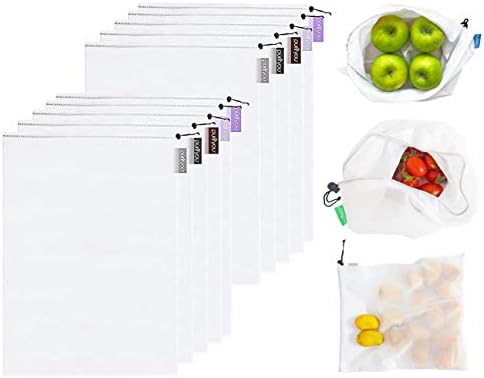
- Stronger than any other reusable produce bags: Crafted with heavy-duty, double-stitched mesh for lasting durability. An …
- Convenient: Includes tare weight in vibrant pastel-colored tags for easy checkout.
- Reusable: features a hand & machine washable design, allowing effortless cleaning for repeated use.
The verified product record identifies this variant as the Set of 10 Extra Large, with polyester mesh, drawstring closure, and a stated 16-pound capacity.
Best for: shoppers who routinely buy larger quantities of produce.
Why consider it:
- Large capacity
- Polyester mesh
- Drawstring closure
- Reusable construction
- Suitable for grocery organization
Potential downside: it is primarily a shopping/mesh solution rather than an airtight food-storage bag.
Best Premium Silicone Option: Stasher Reusable Silicone Storage Bag

- BETTER SILICONE BAGS & BOWLS: Made with platinum food-grade silicone and a leak-free Pinch-Loc seal, these reusable food…
- REUSABLE, REWASHABLE CONTAINERS: Stasher silicone reusable storage bags make it easy to ditch single-use plastic and mee…
- TONS OF ROOM: From bulk shopping to freezer storage to crayon organization for the kiddos, our big Stand-Up bag is meant…
Amazon’s Whole Foods product record identifies this as the Stasher Clear Mega Stand Up Reusable Bag.
Stasher’s current product information also identifies its reusable bags as food-grade platinum silicone and provides care/use specifications.
Best for: shoppers who want a reusable silicone bag for food storage rather than a lightweight grocery mesh bag.
Potential downside: silicone bags are heavier and generally more expensive than simple mesh produce bags.
Reusable Produce Bags: Quick Comparison
| Feature | Mesh | Organic Cotton | Silicone |
|---|---|---|---|
| Grocery shopping | Excellent | Excellent | Fair |
| Airflow | Excellent | Excellent | Low |
| Lightweight | Excellent | Good | Poor |
| Cut produce | Limited | Limited | Excellent |
| Freezer use | Usually no | Usually no | Often yes if rated |
| Tare-weight shopping | Excellent | Good | Poor |
| Easy visibility | Excellent | Good | Excellent |
| Natural-fiber option | No | Yes | No |
| Multi-purpose storage | Good | Good | Excellent |
| Typical cost | Low–medium | Medium | Medium–high |
How to Use Reusable Produce Bags Correctly
Buying a good bag is only half the solution.
Wash New Bags Before First Use
Follow the manufacturer’s cleaning instructions before using a new bag for food.
Keep Produce Appropriate for the Bag
Do not place every type of fruit and vegetable into the same airtight environment.
Control Excess Moisture
Excess water can encourage quality deterioration and mold.
If produce has been washed, dry it thoroughly before storage unless the product and storage method specifically call for another approach.
Avoid Overfilling
Overfilled bags restrict airflow and can crush delicate produce.
Give food enough room to avoid unnecessary pressure.
Keep Different Produce Separate When Appropriate
This is particularly important for produce affected by ethylene.
USDA recommends keeping ethylene-producing fruits away from ethylene-sensitive fruits and vegetables when possible.
Clean the Bags Regularly
A reusable bag should not become a hidden source of contamination.
Wash it according to its care instructions and allow it to dry completely before storing it.
A Better Refrigerator Strategy
Reusable produce bags work best as part of a broader refrigerator system.
A practical setup is:
Top shelves: ready-to-eat foods and prepared items
Middle shelves: leftovers and other prepared foods
Crisper drawers: fruits and vegetables according to their storage needs
Separate areas: produce that should not be stored beside ethylene-sensitive foods
USDA guidance emphasizes appropriate refrigerator temperatures and storage locations, while FDA recommends keeping perishable produce refrigerated at 40°F or below.
For general food safety, USDA recommends keeping the refrigerator at 40°F or below.
Do Reusable Produce Bags Really Keep Food Fresh Longer?
Sometimes, but the answer depends on the produce and the bag.
A bag cannot compensate for:
- Poor refrigeration
- Excess moisture
- Damaged produce
- Incorrect storage temperature
- Ethylene exposure
- Overcrowding
- Poor hygiene
A breathable bag may help create a more suitable environment for some produce, while a silicone bag may be better for another food or storage situation.
This is why claims such as “keeps all fruits and vegetables fresh for weeks” should be treated cautiously.
Fresh fruits and vegetables have very different storage lives. USDA notes that storage times can range from a few days to several weeks depending on the food.
Common Mistakes to Avoid
Mistake 1: Putting Wet Produce Into a Sealed Bag
Excess moisture can create an environment that encourages deterioration.
Mistake 2: Using Airtight Bags for Everything
Not all produce benefits from airtight storage.
Mistake 3: Ignoring Refrigerator Temperature
A good storage bag cannot replace proper refrigeration.
Mistake 4: Mixing All Produce Together
Ethylene-producing foods can affect sensitive produce.
Mistake 5: Buying Too Many Bags
A huge set may look like a bargain but can become unnecessary clutter.
Buy based on your actual grocery routine.
Mistake 6: Ignoring Tare Weight
Heavy reusable bags can add unnecessary weight when produce is sold by the pound.
Mistake 7: Assuming “Reusable” Means Maintenance-Free
Reusable products require regular cleaning and drying.
Are Reusable Produce Storage Bags Worth It?
For many households, yes—but only when the bag matches the intended use.
If you mainly want to stop using disposable produce bags at the grocery store, a lightweight mesh set is probably the most sensible starting point.
If you frequently store cut fruits, vegetables, leftovers, or freezer foods, a reusable silicone bag may offer more versatility.
If you prefer natural fibers, organic cotton mesh can be a good compromise for shopping and dry produce.
The key is not to buy a product simply because it is marketed as “eco-friendly.” Look at the material, weight, size, closure, cleaning requirements, durability, and intended use.
How Many Reusable Produce Bags Do You Actually Need?
Most shoppers do not need dozens.
A practical starting setup might be:
- 2 small bags
- 3–4 medium bags
- 2–3 large bags
That is enough for many weekly grocery trips.
If you frequently shop at farmers’ markets or buy produce in bulk, you may benefit from additional large bags.
For refrigerator storage, consider adding one or two reusable silicone bags rather than buying a huge mesh set.
Are Reusable Produce Bags Safe for Food?
A reusable produce bag should be used according to its manufacturer’s intended purpose and care instructions.
Look for clearly stated food-contact information when the product is intended for direct food storage.
Also remember that cleaning the bag is part of safe use.
FDA recommends washing fresh produce under running water before preparing or eating it and drying it after washing. FDA also recommends separating produce from raw meat, poultry, and seafood to reduce cross-contamination.
The bag itself does not make contaminated produce safe.
The Bottom Line
Reusable produce storage bags can be a smart kitchen upgrade, but the best choice depends on what you are trying to accomplish.
Choose lightweight mesh if: you primarily want reusable grocery bags for loose fruits and vegetables.
Choose organic cotton mesh if: you prefer a natural-fiber shopping option and want multiple sizes.
Choose silicone if: you need a more secure reusable bag for cut produce, leftovers, or freezer storage.
Choose a specialized produce container instead if: you frequently struggle with berries, delicate greens, or moisture-sensitive foods.
The most effective approach is to combine the right storage product with correct refrigeration, moisture management, cleaning, and produce-specific storage practices.
For broader kitchen organization ideas, see our guide to Kitchen Pantry Storage Containers for Organization. You can also explore Design a Kitchen That Supports Your Health Goals for a wider kitchen-organization strategy.
For readers building healthier daily routines, our Holistic Wellness Guide: Mind-Body Habits for a Healthier Life provides a broader wellness framework. If meal portions are another part of your routine, see Adjustable Portion Control Plates for Weight Loss.
You can also browse Trending Wellness Products for 2026 for other home wellness and lifestyle products.
Frequently Asked Questions
Are reusable produce bags better than disposable plastic bags?
Reusable bags can reduce the number of disposable produce bags you use, especially when they are durable and used repeatedly. The practical environmental benefit depends on the product’s material, lifespan, washing requirements, and how frequently it replaces single-use bags.
What is the best material for reusable produce bags?
There is no single best material. Lightweight mesh is excellent for grocery shopping, organic cotton mesh is appealing for natural-fiber shoppers, and silicone is more versatile for sealed food storage.
Can reusable produce bags keep vegetables fresh longer?
They can support better storage when the design matches the produce, but they cannot guarantee longer freshness. Temperature, humidity, airflow, ethylene exposure, produce quality, and refrigerator conditions all matter.
Should produce be washed before putting it in a reusable bag?
Produce should be washed under running water before eating or preparing it, according to FDA guidance. After washing, drying the produce can help reduce surface moisture.
Should leafy greens go into airtight reusable bags?
Not necessarily. Leafy greens can be sensitive to excess moisture, so a storage method that manages humidity and allows appropriate airflow may be preferable.
Can I put reusable produce bags in the refrigerator?
Some can, but check the manufacturer’s instructions. Mesh produce bags are commonly used to organize refrigerated produce, while some silicone bags are specifically designed for refrigerator and freezer storage.
Are silicone reusable bags better than mesh bags?
Not universally. Silicone is more useful when you need a secure seal or freezer compatibility. Mesh is usually lighter and more convenient for grocery shopping and produce that benefits from airflow.
What fruits should not be stored in the refrigerator?
Storage recommendations vary by produce. USDA specifically identifies bananas, potatoes, sweet potatoes, and dry onions as examples that should be kept in dry storage rather than refrigerated.
Do reusable produce bags have tare weights?
Some do. Tare-weight labeling is especially useful when you buy produce by weight because it allows the bag’s weight to be deducted at checkout.
Are reusable produce bags worth buying?
For many shoppers, yes. They can reduce dependence on disposable produce bags and make grocery shopping and food organization easier. The best value comes from choosing a bag that matches your actual storage and shopping habits.
Can reusable produce bags go in the freezer?
Only use a bag in the freezer if the manufacturer specifically states that it is freezer-safe. Many silicone food-storage bags are designed for freezer use, while ordinary mesh produce bags generally are not.
Final Buying Checklist
Before purchasing reusable produce storage bags, check:
- Intended use
- Material
- Bag size
- Number of bags
- Tare weight
- Closure type
- Stitching or construction
- Wash instructions
- Drying requirements
- Refrigerator compatibility
- Freezer compatibility if needed
- Food-contact information
- Whether the set actually matches your weekly grocery routine
A smaller, well-chosen set that you use every week is usually more useful than a large collection that stays in a drawer.
Reusable produce bags are ultimately a simple tool—not a magic freshness system. Used correctly, they can make grocery shopping more convenient, improve food organization, and reduce dependence on disposable produce bags while fitting naturally into a more organized kitchen.