
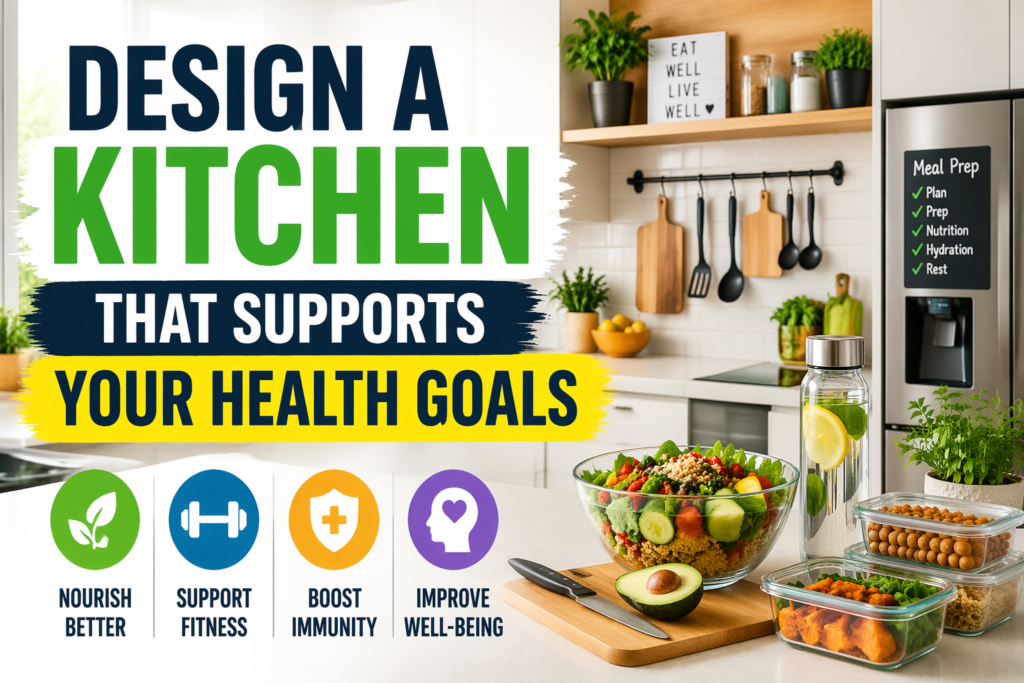
Design a kitchen that supports your health goals with smart organization, healthy pantry tips, and functional layout ideas for better daily habits
LifeCareBalance.com is reader-supported. When you buy through links on our site, we may earn an affiliate commission at no extra cost to you. As an Amazon Associate, we earn from qualifying purchases.
Your kitchen is more than just a place to cook—it’s the foundation of your health and lifestyle. Every meal you prepare, every snack you grab, and every habit you build starts in this space. If your kitchen is poorly organized or filled with unhealthy options, it can quietly sabotage your goals. But when designed intentionally, it becomes a powerful tool for better living.
Designing a kitchen that supports your health goals doesn’t require a full renovation. With smart planning, organization, and a few strategic upgrades, you can turn your kitchen into a space that naturally encourages healthier choices.
Why Kitchen Design Impacts Your Health
Most people underestimate how much their environment affects their behavior. A cluttered kitchen leads to stress and poor food decisions, while a clean, organized space promotes mindful eating and consistency.
When your kitchen is designed for health:
- You cook more meals at home
- You rely less on processed foods
- You make faster, better decisions
- You stay consistent with your nutrition goals
Small changes in your kitchen setup can lead to long-term improvements in your overall health.
Start with Decluttering and Cleaning
The first step in designing a healthy kitchen is removing what doesn’t serve your goals.
Go through your pantry, fridge, and cabinets and:
- Throw away expired items
- Remove ultra-processed snacks
- Donate unopened items you don’t need
A clutter-free kitchen creates mental clarity and makes it easier to stay focused on healthy habits.
Organize Your Kitchen for Success
Organization is one of the most powerful tools for maintaining a healthy lifestyle. When healthy foods are easy to see and access, you’re more likely to choose them.
Smart Organization Strategies:
- Keep fruits and healthy snacks visible on the counter
- Store unhealthy foods out of sight or avoid buying them
- Use clear containers for grains, nuts, and seeds
- Label shelves and jars for convenience
Think of your kitchen as a system designed to make healthy choices effortless.
Create Functional Kitchen Zones
Dividing your kitchen into zones can improve efficiency and reduce stress.
Essential Zones:
1. Prep Zone
This area should include cutting boards, knives, and mixing bowls. Keep everything you need for food preparation within reach.
2. Cooking Zone
Place your stove, spices, oils, and cooking utensils here for easy access while cooking.
3. Storage Zone
Your pantry and fridge should be well-organized and stocked with healthy essentials.
4. Cleaning Zone
Keep your sink, dishwasher, and cleaning supplies organized to maintain hygiene.
When your kitchen flows smoothly, cooking becomes quicker and more enjoyable.
Stock a Health-Focused Pantry
Your pantry directly reflects your eating habits. If it’s filled with processed foods, your diet will likely follow.
Healthy Pantry Staples:
- Whole grains like oats, brown rice, and quinoa
- Legumes such as lentils and chickpeas
- Healthy fats like olive oil, nuts, and seeds
- Natural sweeteners like honey or dates
Avoid keeping too many sugary snacks or instant meals. If unhealthy options aren’t available, you won’t be tempted to eat them.
Upgrade Your Kitchen Tools
The right tools can make healthy cooking easier and faster.
Must-Have Kitchen Tools:
- Blender for smoothies and shakes
- Air fryer for low-oil cooking
- Non-stick pans for healthier meals
- Sharp knives for efficient prep
- Measuring tools for portion control
Investing in basic, high-quality tools can save time and make your cooking experience more enjoyable.
Optimize Your Refrigerator Layout
Your fridge plays a major role in your daily food choices. Organizing it properly can help you stay on track.
Healthy Fridge Setup:
- Top shelves: Ready-to-eat healthy foods
- Middle shelves: Cooked meals and leftovers
- Bottom drawers: Fruits and vegetables
- Door: Condiments and beverages
Wash and cut fruits and vegetables in advance so they’re easy to grab when hunger strikes.
Design a Meal Prep Station
Meal prepping is one of the best ways to stay consistent with healthy eating.
Create a dedicated space in your kitchen for:
- Cutting and chopping
- Portioning meals
- Storing containers
Benefits of Meal Prep:
- Saves time during busy days
- Reduces unhealthy food choices
- Helps control portion sizes
- Keeps you consistent with your goals
Even preparing meals for 2–3 days ahead can make a big difference.
Improve Lighting and Atmosphere
Lighting can influence your mood and behavior more than you realize.
A bright, clean kitchen:
- Makes cooking more enjoyable
- Encourages you to spend more time preparing meals
- Reduces stress
Tips:
- Use natural light whenever possible
- Install warm LED lighting
- Keep your space clean and inviting
A pleasant environment turns cooking into a positive daily habit.
Keep Hydration Accessible
Staying hydrated is essential for overall health, but many people forget to drink enough water.
Simple Hydration Tips:
- Keep a water bottle on your counter
- Use a water filter for better taste
- Add lemon, cucumber, or mint for flavor
When water is visible and easy to access, you’re more likely to drink it regularly.
Reduce Distractions for Mindful Eating
Modern kitchens often include TVs, phones, and other distractions. These can lead to overeating and poor digestion.
Practice Mindful Eating:
- Eat without screens
- Focus on your food
- Chew slowly
- Listen to your hunger cues
Mindful eating helps you enjoy your meals and maintain better portion control.
Add Personal Motivation
Your kitchen should inspire you to stay consistent with your health goals.
Ideas to Personalize Your Kitchen:
- Add motivational quotes
- Use a whiteboard for meal planning
- Keep a grocery list visible
- Display your health goals
These small touches can keep you focused and motivated every day.
Make Healthy Choices Convenient
The easier something is, the more likely you are to do it. Design your kitchen in a way that makes healthy choices the default option.
Examples:
- Keep healthy snacks within reach
- Pre-cut vegetables for quick cooking
- Store meal prep containers in accessible places
Convenience is the key to long-term success.
Consistency Over Perfection
You don’t need a perfect kitchen to live a healthy life. What matters is consistency.
Start small:
- Organize one shelf at a time
- Replace unhealthy snacks gradually
- Improve your setup step by step
Over time, these small changes will transform your kitchen—and your lifestyle.
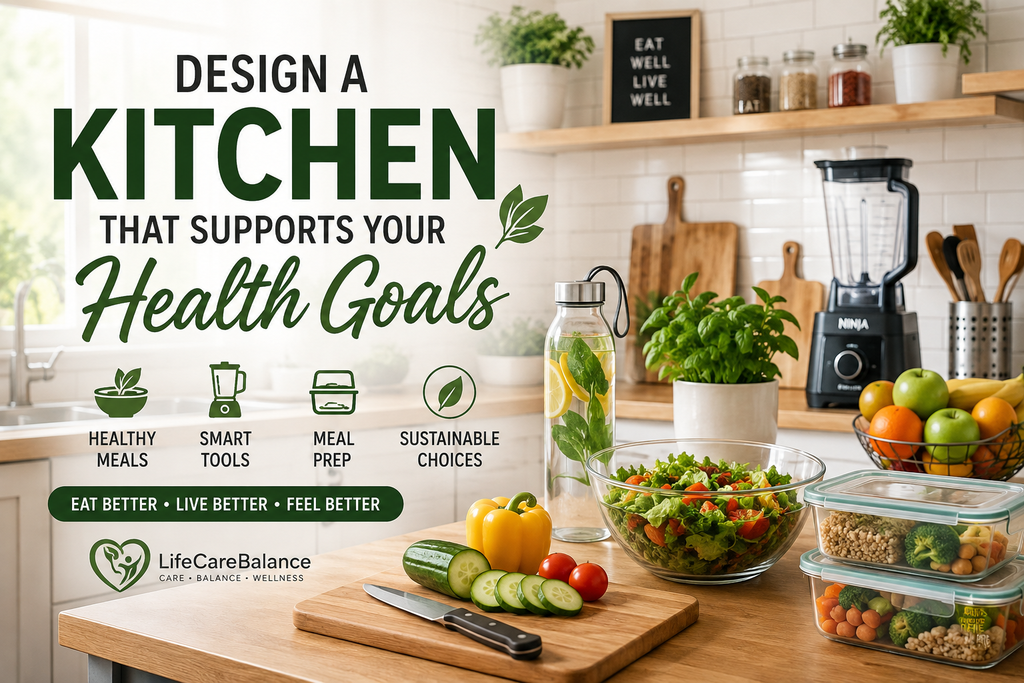
Final Thoughts
Designing a kitchen that supports your health goals is one of the smartest investments you can make in your lifestyle. It’s not about spending a lot of money—it’s about creating an environment that makes healthy living easier.
When your kitchen is organized, functional, and aligned with your goals, healthy habits become automatic. You cook more, eat better, and feel more in control of your life.
Your environment shapes your choices—so design it wisely.
FAQ Section
1. How can I design a healthy kitchen on a budget?
Start by decluttering, organizing your space, and buying whole foods in bulk. Focus on small, affordable changes.
2. What foods should I always keep in a healthy kitchen?
Whole grains, fresh fruits, vegetables, nuts, seeds, and lean protein sources are essential.
3. Do kitchen tools really make a difference?
Yes, tools like blenders and air fryers make healthy cooking faster and more convenient.
4. How often should I reorganize my kitchen?
Every 2–3 months is ideal to maintain cleanliness and efficiency.
5. Can kitchen design help with weight loss?
Absolutely. A well-designed kitchen encourages better habits, which leads to better results over time
1. How can I design a healthy kitchen on a budget?
You don’t need a full renovation. Start by decluttering, organizing your pantry, and replacing processed foods with whole, affordable options like rice, lentils, and seasonal vegetables. Small changes can make a big impact.
2. What is the most important feature of a healthy kitchen?
Accessibility is key. When healthy foods are easy to see and reach, you’re more likely to choose them over unhealthy options.
3. Which kitchen tools are best for healthy cooking?
Essential tools include a blender for smoothies, an air fryer for low-oil meals, non-stick pans, sharp knives, and measuring cups for portion control.
4. How should I organize my fridge for healthy eating?
Place ready-to-eat healthy foods on top shelves, cooked meals in the middle, fruits and vegetables in drawers, and condiments on the door. Pre-cutting fruits and veggies makes them easier to grab.
5. Can kitchen design really affect weight loss?
Yes. A well-organized kitchen reduces temptation, encourages home cooking, and helps you stick to healthier habits consistently.
6. How often should I clean and reorganize my kitchen?
A quick clean should be done daily, while a deep clean and reorganization every 2–3 months helps maintain a healthy setup.
7. What foods should I always keep in a healthy kitchen?
Keep whole grains, legumes, fresh fruits, vegetables, nuts, seeds, and healthy oils like olive oil. These form the base of a nutritious diet.
8. How can I avoid unhealthy snacking at home?
Keep unhealthy snacks out of sight (or don’t buy them), and replace them with healthy options like fruits, nuts, or yogurt.
9. Why is meal prep important for a healthy kitchen?
Meal prep saves time, reduces stress, and prevents last-minute unhealthy food choices. It helps you stay consistent with your goals.
10. How can I make my kitchen more motivating?
Add motivational quotes, use a meal planner board, keep your goals visible, and maintain a clean, bright environment to stay inspired.:https://lifecarebalance.com/
Also readhttps://lifecarebalance.com/budget-adjustable-dumbbells-under-50/:
Also read:https://lifecarebalance.com/beginner-adjustable-dumbbells-for-women/