
Learn how to use a Magic Roll Hair Curler, choose the right type for your hair, create lasting curls, and avoid common styling mistakes.
LifeCareBalance.com is reader-supported. When you buy through links on our site, we may earn an affiliate commission at no extra cost to you. As an Amazon Associate, we earn from qualifying purchases.
Creating beautiful curls at home does not always require an expensive styling tool or a professional salon appointment. A Magic Roll Hair Curler can be a convenient option for people who want soft waves, defined curls, or extra volume as part of their everyday beauty routine.
However, not every product sold as a magic hair curler works the same way. Some use a soft curling ribbon or flexible rods without heat, while others rely on conventional rollers or heated styling technology. Understanding these differences can help you choose a suitable tool for your hair length, texture, budget, and styling goals.
This guide explains how a Magic Roll Hair Curler works, how to use it correctly, which type may suit your hair, and what to consider before buying one.
Quick Answer: Is a Magic Roll Hair Curler Worth Trying?
A Magic Roll Hair Curler may be worth trying if you want to create curls or waves at home without complicated styling techniques.
A heatless curling ribbon or soft roller set is particularly useful if you want to avoid additional heat exposure during styling. Flexible rods and individual rollers can also help create different curl patterns, depending on their size and how you wrap your hair.
Before choosing a curler, consider these points:
- For beginners: Look for a simple set with secure fasteners and clear instructions.
- For long hair: Choose a sufficiently long curling rod or enough individual rollers.
- For short hair: Smaller rollers or shorter curling tools may be easier to handle.
- For overnight styling: Prioritize softness, secure placement, and sleeping comfort.
- For longer-lasting curls: Pay attention to hair preparation, drying time, section size, and styling technique.
No single curler works equally well for everyone. Your natural hair texture, haircut, product choices, and the amount of time available for setting the curls can all affect the final result.
What Is a Magic Roll Hair Curler?
The term Magic Roll Hair Curler generally describes a hair-rolling or curling tool designed to make at-home styling easier. It is not necessarily the name of one specific product or a standardized curling technology.
Depending on the design, a magic curler may use a long padded rod, flexible foam rollers, spiral tubes, or individual rollers that hold sections of hair in place while they set.
Heatless versions create curls by shaping the hair around a tool and allowing it to dry or set. Heated versions use temperature to change the hair’s shape temporarily.
The distinction matters because instructions for one type may not apply to another. A soft curling ribbon, for example, does not require electricity, while an electric curling device must be used according to its manufacturer’s safety instructions.
If you are exploring other personal-care options, the LifeCareBalance guide to wellness products also discusses personal-care and self-care product categories.
Types of Magic Roll Hair Curlers
Understanding the available designs is the first step toward making a sensible purchase.
1. Heatless Curling Ribbon

- CREATE VOLUME, CURLS, AND WAVES WITHOUT HEAT — These self-grip hair rollers help create everything from soft waves and b…
- MULTIPLE ROLLER SIZES FOR CUSTOMIZED LOOKS — Includes 31 self-grip rollers in five sizes to customize your style. The se…
- STAY-PUT STYLING WITHOUT CLIPS — Designed to hold securely in hair without pins or clips for convenient styling while ge…
A heatless curling ribbon is typically a long, padded rod covered with satin, silk, or another soft fabric. The rod is positioned over the head, and sections of hair are wrapped around it.
Scrunchies or similar fasteners hold the ends in place.
This style is often chosen for loose waves, soft curls, and overnight styling. However, the result depends on the length and texture of your hair, the size of the rod, and how comfortably it stays in place.
Best suited for: People who want soft waves without using a heated curling iron.
2. Flexible Foam Curling Rods

- You will get 20pcs dark pink large hair curlers and 20pcs dark pink small hair curlers in a zipper bag, and we also gave…
- The material is quality medical-grade soft silicone, hypoallergenic, odorless and non-slip.No hurt for your healthy hair…
- Easy to clean and store, washable and light weight, can be reused for many time, so practical and economical !These roll…
Flexible rods allow individual sections of hair to be wrapped around a separate roller. The ends can then be bent or secured to hold the hair in position.
Using more, smaller sections can create more defined curls, while larger sections and thicker rods generally create a looser shape.
These tools can be useful when you want more control over the placement and direction of individual curls.
Best suited for: People who want to customize their curl pattern or work with different sections of hair.
3. Individual Hair Rollers

- Value Pack: Set comes with 24 pink hair rollers (4 different sizes), 24 hair clips, a rat tail comb and a storage bag. T…
- Hair Rollers in 4 Size : Jumbo 2-3/8 inches, large 1-7/8 inches, medium 1-3/8 inches, and small 1 inches, different size…
- Easy to Use: Part your hair, keep it slightly moist, wind the ends around the roller and slowly roll it up, then secure …
Individual rollers come in different sizes and materials. Depending on the design, they may be foam, fabric-covered, self-grip, or intended for use with heat.
Their main advantage is flexibility. You can place rollers where you want additional volume or use different sizes to create a varied hairstyle.
Always check whether a particular roller is intended for wet, damp, or dry hair and whether it requires heat.
Best suited for: People who prefer to style specific sections rather than wrap their entire head around one curling ribbon.
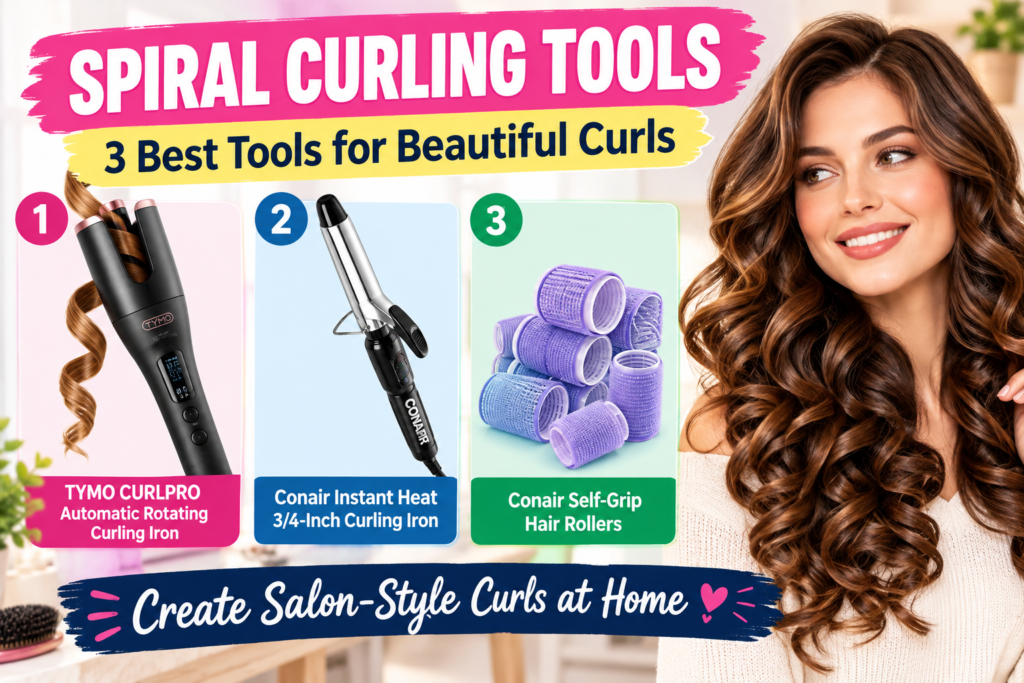
4. Spiral Curling Tools
Spiral tools guide sections of hair into a curved or spiral shape. Some designs use a flexible tube, while others use a special mechanism to pull hair through a styling attachment.
These tools can create more defined curls, but the application technique varies considerably between products.
Follow the supplied instructions, especially when using a tool that requires a hook or threading mechanism, to reduce tangling.
Best suited for: People who want defined curls and are comfortable following a more structured styling process.
Benefits of Using a Magic Roll Hair Curler
The main benefits depend on the specific design rather than the product name alone.
Reduced Exposure to Styling Heat
A genuinely heatless curler does not add the direct heat exposure associated with a heated curling iron. This can be helpful if you are trying to reduce the frequency of heat styling.
However, heatless styling does not repair existing damage or guarantee that hair will never break. Tight wrapping, rough removal, and excessive tension can still cause problems.
The American Academy of Dermatology recommends limiting the use of hot styling tools and avoiding practices that put excessive stress on hair.
Read its advice on hair-care habits that can damage your hair.
Convenient At-Home Styling
Once you learn the wrapping technique, many heatless curlers can be applied in a few minutes. The hair then needs time to set, during which you may be able to continue with other activities.
The total process is not necessarily faster than using a curling iron. If you choose an overnight method, the waiting time may be several hours.
Different Curl Patterns
Roller diameter, section size, wrapping direction, and setting time can all influence the final hairstyle.
A larger rod often produces a softer wave, while smaller rods can produce tighter curls. These are general tendencies rather than guaranteed outcomes.
Portable Design
Many non-electric curling ribbons and flexible rods are lightweight and compact. They can be useful for travel because they do not need a power outlet.
Check the dimensions and storage case before purchasing, especially if you plan to carry the set in a small bag.
Potentially Lower Cost
Basic rollers and heatless curling ribbons are available in a wide range of price points. A simple design may be sufficient if you only want occasional waves.
More expensive materials or accessories are not automatically better. Comfort, fit, durability, and ease of use should guide your decision.
How to Use a Magic Roll Hair Curler Step by Step
The following method is intended for a typical heatless curling ribbon or soft roller. Individual product instructions take priority because not every curler uses the same method.
Step 1: Detangle Your Hair
Start by gently brushing or combing your hair to remove knots. Work from the ends upward if your hair tangles easily.
Detangling before wrapping helps the sections lie more evenly around the curler and makes removal easier.
Avoid pulling hard through knots, particularly if your hair is fragile, bleached, chemically treated, or prone to breakage.
Step 2: Check the Recommended Hair Condition
Some heatless curlers work best with slightly damp hair, while others are designed for dry hair.
For a typical curling ribbon, hair that is mostly dry but still slightly damp may be a useful starting point. Very wet hair may take too long to dry inside the wrap and can leave you with a disappointing result.
Do not assume that every roller should be used on damp hair. Check the instructions for your specific product.
Step 3: Apply a Suitable Styling Product
A lightweight mousse or curl-setting product may help some hair types hold a curl. Fine hair may become weighed down by heavy creams or oils, while textured or dry hair may respond better to a suitable moisturizing styling product.
Use only a small amount initially. Adding more product does not necessarily produce better hold.
If you are building a broader personal-care routine, the LifeCareBalance personalized wellness guide provides additional context on choosing routines that fit your individual needs.
Step 4: Divide Your Hair into Sections
Part your hair as you normally would and divide it into manageable sections.
Smaller sections usually create more defined curls, but they require more time. Larger sections can create softer waves, although they may be harder to wrap evenly.
If you have thick hair, you may need more rollers than someone with fine hair.
Step 5: Position the Curler
For a long curling ribbon, place the rod across the top of your head and secure it with the included clip, if provided.
For individual rollers, position each roller according to the manufacturer’s instructions.
Make sure the tool feels secure without pressing uncomfortably against your scalp.
Step 6: Wrap the Hair Evenly
Take one section at a time and wrap it around the curler.
Keep the tension even, but do not pull tightly at the roots. Excessive tension can make the style uncomfortable and place unnecessary stress on the hair.
If you want curls that frame your face, pay attention to the direction in which the front sections are wrapped. Experiment with one section first if you are unsure which direction you prefer.
Step 7: Secure the Ends
Use the included scrunchies, clips, or fasteners to hold the sections in place.
The ends should remain secure without being squeezed too tightly. Loose wrapping may allow hair to slip, while excessive tension can create discomfort.
Step 8: Allow the Hair to Set
Follow the recommended setting time for your curler.
A heatless ribbon may need several hours or overnight, depending on the hair condition and product instructions. Individual rollers may have different requirements.
If the hair remains damp, allow it to dry fully before removing the curler. Removing it too early can make the curls fall out more quickly.
Step 9: Remove the Curler Gently
Release the fasteners and unwind each section carefully.
Do not yank the rod out or pull through tangled hair. If a section catches, pause and gently loosen it before continuing.
Step 10: Separate and Finish the Curls
Use your fingers to separate the curls for a softer look. A wide-tooth comb may be appropriate for certain styles, but aggressive brushing can loosen the shape or create frizz.
If needed, finish with a light-hold styling spray suitable for your hair.
Give the curls a moment to settle before deciding whether you need more product.
Which Magic Roll Hair Curler Is Best for Your Hair Type?
Your hair type and styling goals matter more than a generic claim that a product works for everyone.
Fine or Thin Hair
Fine hair may lose curl definition quickly or become weighed down by heavy styling products.
Consider a curler that provides secure wrapping without excessive tension. Smaller sections and a lightweight styling product may help create a more defined result.
Avoid assuming that tighter wrapping is always better. A comfortable fit and gentle removal are important.
Thick Hair
Thick hair often requires more sections and sufficient roller length or quantity to accommodate all the hair.
Look for durable fasteners and a design that can hold sections securely without forcing too much hair onto one rod.
Allow enough time for the hair to dry completely if you are using a heatless method.
Long Hair
Long hair may wrap around a rod several times, so the available length of the tool matters.
A longer ribbon or a set with multiple rollers can be easier to manage than a short tool that leaves too much hair unsecured.
Check the product dimensions rather than relying on generic claims about suitability for long hair.
Short Hair
Shorter hair may not wrap around a long curling ribbon in the same way as longer hair.
Smaller rollers or shorter flexible rods may provide more control, especially when styling layers or adding volume near the roots.
Check the minimum hair length recommended by the manufacturer.
Curly or Textured Hair
Naturally curly or textured hair may respond differently to a heatless curler than straight hair.
A curler can help reshape selected sections, but results will depend on your natural curl pattern, hair length, moisture level, and styling technique.
Use a method that allows you to detangle gently and avoid excessive tension. If your hair is fragile or chemically treated, take particular care when securing and removing the tool.
Magic Roll Hair Curler vs. Traditional Curling Iron
| Feature | Heatless Magic Roll Curler | Heated Curling Iron |
|---|---|---|
| Heat required | No, for genuinely heatless models | Yes |
| Styling time | Often requires a longer setting period | Usually quicker |
| Electricity | Not required | Usually required |
| Curl customization | Depends on rod size and wrapping | Depends on barrel size and technique |
| Overnight use | Some soft models may be suitable if comfortable | Not intended for sleeping while operating |
| Heat exposure | Avoids direct styling heat | Adds direct heat exposure |
| Learning curve | Wrapping technique may take practice | Temperature and handling require practice |
Neither method is perfect for every situation.
A heatless curler may suit someone who has time to let the hair set and wants to avoid additional heat exposure. A curling iron may suit someone who needs a more immediate style and is comfortable using a heated tool correctly.
If you use a heated device, follow its temperature guidance and safety instructions. Avoid leaving a hot tool in contact with the hair for longer than necessary.
What to Check Before Buying a Magic Roll Hair Curler
Before purchasing, evaluate the following features rather than choosing a product based on advertising alone.
Material and Construction
Look for a smooth, comfortable covering and durable stitching or construction. Satin and silk are not identical materials, so check the actual fabric composition if it matters to you.
The material should feel comfortable against your hair and skin and should be easy to clean according to the manufacturer’s instructions.
Length and Diameter
The length of a curling ribbon affects how much hair it can accommodate. The diameter influences the general shape of the resulting wave or curl.
Choose dimensions that match your hair length and preferred style.
Included Accessories
Some sets include scrunchies, clips, a storage bag, or several individual rollers. Others contain only the main curling tool.
Check the package contents so you do not assume accessories are included when they are not.
Ease of Use
A simple tool with clear instructions may be more useful than a complicated set with many pieces you will rarely use.
If you are a beginner, consider how easily you can secure the curler, wrap your hair evenly, and remove it without tangling.
Comfort
If you plan to wear a curler for several hours, comfort matters.
Look for a design that stays in place without creating uncomfortable pressure. Do not force yourself to sleep in a roller that causes pain or disrupts your sleep.
Cleaning and Maintenance
Hair products can accumulate on a curler over time. Check whether the material can be hand-washed or wiped clean and how it should be dried.
A tool that is easy to maintain is more practical for regular use.
Price and Value
Compare the construction, accessories, sizing, care instructions, and return policy before deciding.
A low-priced product may be suitable for occasional styling, while someone who uses curlers regularly may prefer a more durable design. Neither price category guarantees a better result.
Common Mistakes to Avoid
Using Hair That Is Too Wet
If the method requires slightly damp hair, soaking-wet hair can take too long to dry.
Follow the product directions and allow the hair to dry completely before removing the curler.
Wrapping Too Much Hair at Once
Large, uneven sections may not wrap securely and can create inconsistent curls.
Divide thick hair into smaller sections when needed.
Pulling Too Tightly
Tight wrapping does not guarantee longer-lasting curls. It can cause discomfort and place unnecessary tension on the hair.
Secure each section gently.
Removing the Curler Too Soon
Hair needs enough time to set. Removing a heatless curler while the hair is still damp may lead to curls that loosen quickly.
Brushing the Hair Aggressively
Forceful brushing can loosen curls, create frizz, or cause breakage in tangled hair.
Start by separating curls with your fingers and use a suitable comb only if needed.
Using Too Much Styling Product
Heavy products can weigh down some hair types or leave buildup on the curler.
Start with a small amount and adjust according to your results.
Ignoring the Product Instructions
Different tools have different requirements. A technique intended for a heatless ribbon may not be suitable for a heated roller or spiral styling device.
Follow the manufacturer’s instructions for hair condition, setting time, cleaning, and safe use.
Are Magic Roll Hair Curlers Safe?
A heatless curler avoids the direct heat exposure associated with a curling iron, but it is not automatically risk-free.
Safety depends on the design, how tightly the hair is wrapped, how comfortably the tool fits, and whether it is used according to instructions.
To use a curler more carefully:
- Avoid wrapping hair so tightly that it pulls at the scalp.
- Stop using the tool if it causes pain or persistent discomfort.
- Remove tangled sections gently rather than pulling the tool through them.
- Do not sleep in a curler that is uncomfortable or not designed for overnight use.
- Keep heated devices away from skin, bedding, and other flammable materials.
- Follow the manufacturer’s cleaning and maintenance directions.
People with fragile or damaged hair should pay particular attention to gentle handling. If a styling routine repeatedly causes breakage or scalp discomfort, discontinue the technique and consider seeking advice from a qualified hair-care professional.
How to Make Heatless Curls Last Longer
The longevity of curls varies considerably from person to person. Hair texture, haircut, humidity, product choice, and the size of the curl all affect the result.
These practical adjustments may help:
Start with the right hair condition. Follow the curler’s instructions for damp or dry hair. Do not wrap soaking-wet hair unless the manufacturer specifically recommends that method.
Use consistent sections. Similar section sizes can produce a more uniform hairstyle.
Allow enough setting time. Give the hair time to dry or set before removing the rollers.
Avoid unnecessary brushing. Separate the curls gently instead of repeatedly brushing through them.
Choose lightweight styling products. A suitable mousse or light-hold spray may help some hair types retain their shape.
Consider the weather. Humidity can affect how long a hairstyle lasts. You may need to adjust your styling routine in humid conditions.
For additional beauty and personal-care guidance, explore the LifeCareBalance face-care products guide. It covers a different part of a beauty routine, so use it as a separate resource rather than as a substitute for hair-styling instructions.
Frequently Asked Questions
1. What is a Magic Roll Hair Curler?
It is a general term for a hair-rolling or curling tool that helps create curls and waves at home. The term can refer to different designs, including heatless ribbons, flexible rods, and individual rollers.
2. Does a Magic Roll Hair Curler require heat?
Not always. Some versions are completely heatless, while other styling tools use heat. Check the exact product design and instructions before buying.
3. Can beginners use a Magic Roll Hair Curler?
Yes. Many simple roller sets are suitable for beginners, although wrapping hair evenly may take practice. Start with a few sections and adjust your technique as needed.
4. Is a heatless curler better than a curling iron?
It depends on your priorities. A heatless curler avoids direct styling heat but usually requires more setting time. A curling iron creates curls more quickly but exposes hair to heat.
5. Can I use a heatless curler on wet hair?
Check the instructions for your particular tool. Many heatless methods work best with slightly damp or mostly dry hair rather than soaking-wet hair.
6. How long should I leave a heatless curler in?
The recommended time varies by product and hair type. Some methods require several hours or overnight, while other roller designs have different setting requirements.
7. Can I sleep in a Magic Roll Hair Curler?
Some soft heatless curlers are designed for overnight use. Only do so if the product is intended for that purpose and feels comfortable. Remove it if it causes pain or pressure.
8. Which curler is best for long hair?
A longer curling ribbon or a set with enough individual rollers may be easier to use on long hair. Check the tool’s dimensions and the manufacturer’s recommendations.
9. Which curler is best for short hair?
Smaller rollers or shorter flexible rods may offer more control over short sections. Your haircut and desired curl pattern also matter.
10. Can heatless curlers damage hair?
They avoid direct styling heat, but rough handling, excessive tension, and forceful removal can still contribute to breakage. Use a comfortable fit and unwrap the hair gently.
11. How can I make curls last longer?
Use the recommended hair condition, wrap consistent sections, allow sufficient setting time, and separate the curls gently. A suitable styling product may also help.
12. Do I need expensive curlers for good results?
Not necessarily. A well-sized, comfortable, easy-to-use curler may be sufficient. Compare material, construction, accessories, and care instructions rather than relying on price alone.
13. Can I use a Magic Roll Hair Curler every day?
Frequency depends on the design and how your hair responds. Even without heat, avoid excessive tension and rough handling. If you notice breakage or discomfort, reduce use or change your technique.
14. Are satin and silk curlers the same?
No. Satin describes a type of fabric weave or finish, while silk is a fiber. Satin products can be made from different materials, so check the product label if you prefer a particular fabric.
15. How should I clean my Magic Roll Hair Curler?
Remove trapped hair after use and follow the manufacturer’s cleaning instructions. Some materials can be hand-washed, while others may require gentle surface cleaning.
Final Thoughts
A Magic Roll Hair Curler can be a practical addition to an at-home styling routine if you choose a design that suits your hair and use it correctly.
Heatless curling ribbons, flexible rods, and individual rollers each offer different advantages. The best option depends on your hair length, natural texture, preferred curl pattern, available time, and comfort.
Before purchasing, check the product dimensions, material, included accessories, care instructions, and whether the tool is genuinely heatless. Avoid unrealistic promises about perfect curls, universal suitability, or completely damage-free styling.
Start with a simple technique, use gentle tension, allow enough time for the curls to set, and adjust your approach based on the results. With realistic expectations and careful handling, you can find a curling method that fits your personal style and routine.
More from LifeCareBalance: For broader lifestyle and self-care ideas, visit our daily wellness essentials guide.