
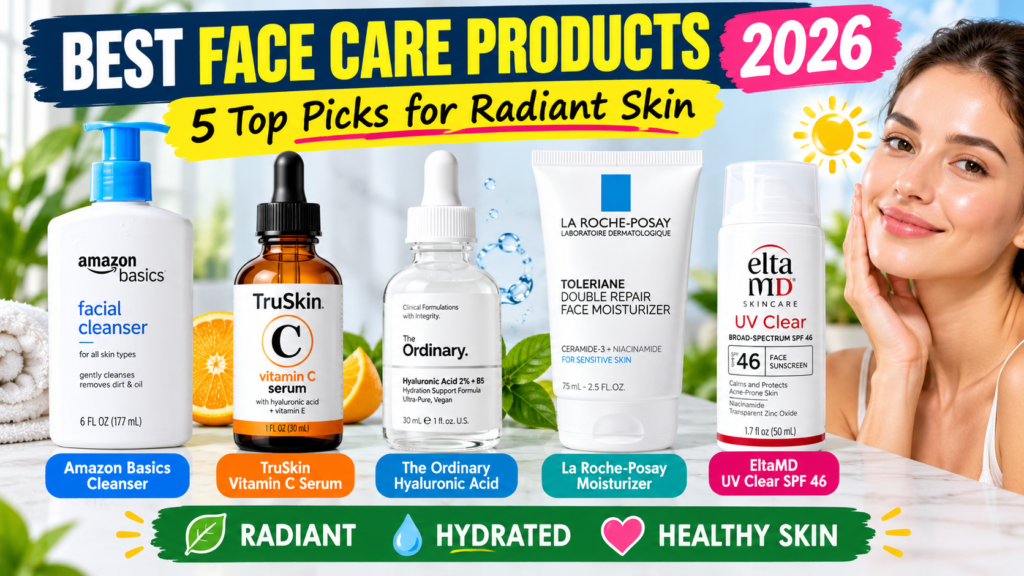
Discover the best face care products for radiant skin in 2026. Compare cleansers, serums, moisturizers, sunscreen, and routines for every skin type.
LifeCareBalance.com is reader-supported. When you buy through links on our site, we may earn an affiliate commission at no extra cost to you. As an Amazon Associate, we earn from qualifying purchases.
Healthy-looking skin does not require a complicated 10-step routine or an expensive bathroom cabinet. For most people, a better approach is to choose a few well-formulated products, use them consistently, and match them to the skin’s needs.
The best face care products for radiant skin generally fall into a few essential categories: a gentle cleanser, a moisturizer, broad-spectrum sunscreen, and—when appropriate—a targeted treatment such as vitamin C or hyaluronic acid.
Your skin type also matters. A product that feels comfortable on dry skin may feel too heavy for oily skin, while a strong exfoliating product may be inappropriate for sensitive skin.
This 2026 guide explains what to look for, which products deserve a place in a basic routine, how to build an AM and PM routine, and how to avoid spending money on unnecessary skincare.
Quick Answer: What Are the Best Face Care Products for Radiant Skin?
For most people, the best starting routine is:
- Gentle facial cleanser — removes dirt, oil, sunscreen, and makeup without unnecessary irritation.
- Targeted serum — vitamin C can be useful for antioxidant support and uneven-looking skin tone, while hyaluronic acid is mainly useful for hydration.
- Moisturizer — supports hydration and the skin barrier.
- Broad-spectrum sunscreen SPF 30 or higher — the most important daytime protection step.
- Exfoliant — optional and best introduced gradually according to your skin type and tolerance.
You do not need every product at once. If you are building a routine from scratch, start with a cleanser, moisturizer, and sunscreen. Add one treatment product only when you know what specific concern you want to address.
The American Academy of Dermatology similarly emphasizes gentle cleansing, moisturizing, and daily broad-spectrum SPF 30+ sun protection as core skincare habits. AAD: Skin Care on a Budget
What Makes a Face Care Product Worth Buying?
A good skincare product should solve a specific problem without creating another one.
Instead of choosing a product because it is trending on social media, consider:
- Your skin type
- Your main skin concern
- The active ingredients
- How often the product is intended to be used
- Whether the formula is likely to irritate your skin
- Whether you will realistically use it consistently
- Your budget
- Whether you actually need the product
More products do not automatically mean better skin. In fact, introducing several strong active ingredients at the same time can make it difficult to determine what is causing irritation.
The goal should be a simple routine that you can maintain.
For a broader approach to choosing wellness products based on your individual goals rather than buying everything that is popular, see the LifeCareBalance Personalized Wellness Guide.
1. Gentle Facial Cleanser

- One 12 Fl Oz bottle of Amazon Basics Hydrating Facial Cleanser
- Formulated with ceramides and hyaluronic acid
- Developed with a blend of glycerin, ceramides, sodium hyaluronate, and Vitamin E to help keep skin moisturized
A cleanser is one of the most useful products in any face care routine.
It removes accumulated oil, sweat, dirt, sunscreen, makeup, and other residue from the skin. The best cleanser is not necessarily the one that makes your face feel extremely tight or “squeaky clean.”
That tight feeling can be a sign that the cleanser is too harsh for your skin.
What to Look For
Depending on your skin type, look for:
- Glycerin
- Ceramides
- Hyaluronic acid
- Gentle surfactants
- Fragrance-free formulas if your skin is sensitive
- Non-comedogenic formulas if you are prone to clogged pores
One affordable example worth comparing is Amazon Basics Hydrating Facial Cleanser, 12 Fl Oz, Pack of 1.
It contains ingredients including glycerin, ceramides, sodium hyaluronate, and vitamin E and is marketed as fragrance-free and non-comedogenic.
Best for:
Dry or normal skin: Hydrating cream or lotion-style cleansers.
Oily skin: Lightweight gel or foaming cleansers.
Sensitive skin: Gentle, fragrance-free formulas with minimal unnecessary ingredients.
You generally do not need to scrub your face aggressively. Gentle cleansing is enough for most daily routines.
2. Vitamin C Serum for Bright-Looking Skin
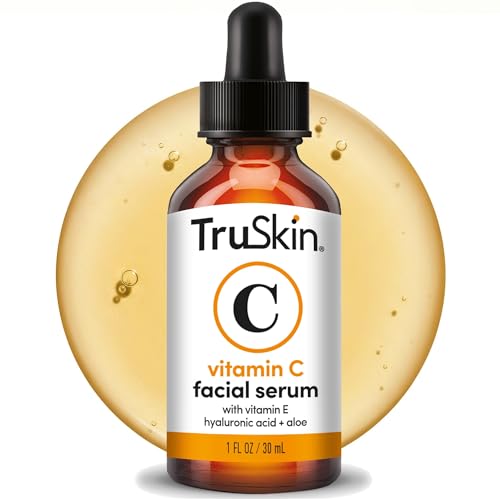
- ADVANCED BRIGHTENING FORMULA: Vitamin C helps fight free radical damage and support natural collagen while improving the…
- HYDRATION-BOOSTED FORMULA: Layers vitamin C with Hyaluronic Acid, Vitamin E, Aloe Vera, and Jojoba Oil to help balance m…
- SUPERIOR FORM OF VITAMIN C: Uses highly stable Sodium Ascorbyl Phosphate to maintain potency over time while helping min…
Vitamin C is one of the better-known skincare ingredients for people looking to improve the appearance of dull or uneven-looking skin.
Research has investigated topical vitamin C for antioxidant, pigmentation, and photoaging-related applications, although the effectiveness can vary depending on the formulation and stability of the product. PubMed: Topical Vitamin C and the Skin
A vitamin C serum can therefore make sense as an optional morning treatment rather than an essential product for everyone.
What Vitamin C Can Help With
Depending on the formulation and individual response, topical vitamin C may help support:
- Brighter-looking skin
- More even-looking tone
- Reduction in the appearance of some dark spots
- Antioxidant protection against environmental oxidative stress
- A more consistent-looking complexion
It should not be treated as a replacement for sunscreen.
Product to Consider
TruSkin Brightening Vitamin C Serum for Face with Hyaluronic Acid, 1 fl oz
This is a popular budget-oriented vitamin C serum that combines vitamin C with hydrating ingredients.
Start slowly if you have sensitive skin. If irritation occurs, reduce frequency or discontinue the product.
3. Hyaluronic Acid Serum for Hydration
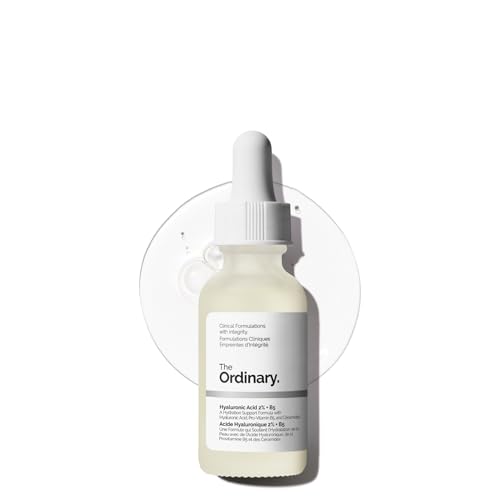
- INSTANT HYDRATION: Provides immediate, long-lasting hydration for smoother, plumper, and healthier-looking skin.
- SUPPORTS SKIN BARRIER: Ceramides lock in moisture and support the skin’s protective barrier.
- REDUCES FINE LINES: Minimizes the appearance of fine dry lines and wrinkles while promoting elasticity and skin smoothne…
If your primary problem is dryness or dehydration, a hydrating serum can be more useful than adding multiple brightening treatments.
Hyaluronic acid is a humectant used in skincare formulations to help attract and retain water at the skin’s surface.
One product worth comparing is:
The Ordinary Hyaluronic Acid 2% + B5 (with Ceramides), Multi-Depth Hydration Serum for Plumper, Smoother Skin
The formula is designed around multiple forms of hyaluronic acid with added skin-supporting ingredients.
Best For
Hyaluronic acid may be particularly useful for:
- Dry-feeling skin
- Dehydrated skin
- Skin that feels tight after cleansing
- Supporting a smoother-looking complexion
- Layering underneath moisturizer
Apply a hydrating serum according to the product directions, then follow with moisturizer.
4. Moisturizer for a Healthy Skin Barrier

- Dual-Action – Repair & Long-Lasting Hydration For Face & Neck: Restores skin’s natural protective barrier in just 1 hour…
- Daily Face Moisturizer With Microbiome Balancing Prebiotics: Features a unique prebiotic action that helps restore skin …
- Ceramide Moisturizer with Niacinamide & Glycerin: Formulated with Ceramide-3 to help retain moisture & maintain a health…
Moisturizer is not optional just because you have oily skin.
Every skin type can benefit from appropriate hydration. The key is choosing a texture and formula that fit your skin.
The American Academy of Dermatology recommends choosing moisturizers based on skin type and highlights ingredients such as ceramides and hyaluronic acid. AAD: How to Pick the Right Moisturizer
Best Moisturizer Texture by Skin Type
| Skin Type | Look For |
|---|---|
| Dry | Cream or richer moisturizer |
| Oily | Lightweight gel or lotion |
| Combination | Lightweight lotion or gel-cream |
| Sensitive | Fragrance-free, simple formula |
| Normal | Lightweight cream or lotion |
Product to Consider
La Roche-Posay Toleriane Double Repair Face Moisturizer, Daily Moisturizer Face Cream with Ceramide & Niacinamide for All Skin Types
This is a practical option for readers who want a daily moisturizer built around barrier-supporting ingredients such as ceramide and niacinamide.
If your skin is very sensitive, introduce new products gradually rather than changing your entire routine at once.
5. Sunscreen SPF 30 or Higher
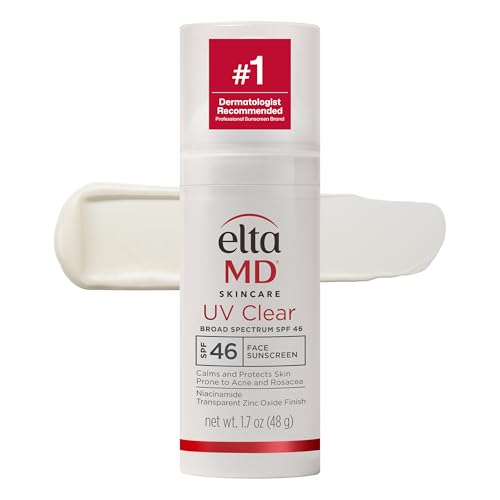
- CLEAR SUNSCREEN FOR FACE: This lightweight face sunscreen with transparent Zinc Oxide provides broad spectrum SPF 46 pro…
- FOR NORMAL, ACNE-PRONE, AND SENSITIVE SKIN TYPES: UV Clear uses an oil-free, non-comedogenic formula that’s designed for…
- SUITABLE FOR HYPERPIGMENTED SKIN: Contains Niacinamide which helps to visibly improve skin tone and reduce the appearanc…
If you only add one daytime protection product to your routine, sunscreen should be near the top of the list.
The American Academy of Dermatology recommends broad-spectrum sunscreen with SPF 30 or higher and notes that sun protection can help reduce premature skin aging and sun-related skin damage. AAD: Skin Care on a Budget
What to Look For
Choose:
- Broad-spectrum protection
- SPF 30 or higher
- A formula suitable for your skin type
- Water resistance when appropriate for outdoor activity
- A texture you will actually use consistently
For oily or acne-prone skin, look for products labeled non-comedogenic when possible.
Product to Consider
EltaMD UV Clear Face Sunscreen SPF 46, Oil-Free Sunscreen with Zinc Oxide, Dermatologist Recommended
This is a well-known facial sunscreen option and is particularly relevant for shoppers looking for a lightweight face sunscreen.
Sunscreen should be the final skincare step in your morning routine before makeup, if you wear it.
Face Care Products by Skin Type
The best skincare routine is not identical for everyone.
Best Face Care Products for Dry Skin
Dry skin generally benefits from a routine focused on gentle cleansing and moisture retention.
Consider:
- Hydrating cleanser
- Hyaluronic acid serum
- Ceramide-rich moisturizer
- Broad-spectrum sunscreen
- Gentle exfoliation only when tolerated
Avoid repeatedly using harsh cleansers or aggressive scrubs if your skin becomes tight, flaky, or irritated.
Best Face Care Products for Oily Skin
Oily skin still needs moisturizer.
A useful routine may include:
- Lightweight cleanser
- Niacinamide or another suitable treatment
- Lightweight moisturizer
- Broad-spectrum sunscreen
- Optional salicylic acid product when appropriate
The goal is not to remove every trace of oil. Over-cleansing can make your routine harder to tolerate.
Best Face Care Products for Combination Skin
Combination skin can require different textures on different parts of the face.
Try:
- Gentle cleanser
- Lightweight serum
- Light moisturizer
- Sunscreen
- Occasional exfoliation if tolerated
You may prefer a lighter product on the T-zone and a slightly richer moisturizer on drier areas.
Best Face Care Products for Sensitive Skin
Sensitive skin usually benefits from simplicity.
Look for:
- Fragrance-free products
- Gentle cleansers
- Simple moisturizers
- Broad-spectrum sunscreen
- Fewer active ingredients
Avoid introducing several exfoliating acids, retinoids, and strong treatments at the same time.
If a product repeatedly causes burning, significant redness, swelling, or a worsening reaction, stop using it and seek appropriate medical advice.
Morning Skincare Routine for Radiant-Looking Skin
A simple morning routine can be completed in five steps.
Step 1: Cleanse
Use a gentle cleanser appropriate for your skin type.
Step 2: Treatment Serum
If you use vitamin C, apply it according to the product directions.
Step 3: Moisturize
Apply a moisturizer that fits your skin type.
Step 4: Sunscreen
Apply broad-spectrum SPF 30 or higher.
Step 5: Makeup
If desired, apply makeup after your skincare products have settled.
The American Academy of Dermatology recommends applying skincare products in an order that generally starts with cleansing, followed by treatments, moisturizer and/or sunscreen, then makeup. AAD: How to Apply Skin Care Products
Nighttime Skincare Routine
Your nighttime routine does not need to be complicated either.
Step 1: Remove Makeup and Sunscreen
Use a suitable first cleanser or makeup remover when necessary.
Step 2: Cleanse
Gently cleanse your face.
Step 3: Treatment
Use one targeted treatment if needed.
Step 4: Hydrate
Apply a hydrating serum if your skin benefits from one.
Step 5: Moisturize
Finish with your regular moisturizer.
You do not need to exfoliate every night.
Should You Use a Facial Exfoliator?
Exfoliation can improve the appearance of rough or dull skin, but it is easy to overdo.
There are two broad categories:
Physical Exfoliation
These products use particles or a textured surface to remove surface cells.
Chemical Exfoliation
These products commonly use ingredients such as:
- AHAs
- BHAs
- Other exfoliating acids
If your skin becomes red, painful, unusually dry, or irritated after exfoliation, reduce the frequency or stop using the product.
Do not assume that stronger exfoliation produces faster results.
Do You Need a Toner?
No.
Toner can be useful if you enjoy the texture or have a specific formula that fits your routine, but it is not an essential step for everyone.
A basic routine can work perfectly well without toner.
This is one area where skincare marketing can make a simple routine seem much more complicated than necessary.
What About Natural Face Care Ingredients?
Natural does not automatically mean safer or better.
Ingredients such as aloe vera, green tea, honey, rose water, and botanical extracts appear in many skincare products, but the final formula matters more than whether an ingredient is labeled “natural.”
For sensitive skin, fragrance and botanical ingredients can sometimes cause irritation.
The American Academy of Dermatology specifically cautions that “natural” does not automatically mean hypoallergenic or irritation-free. AAD: How to Pick the Right Moisturizer
Choose the formula based on your skin’s needs rather than the marketing label.
Are LED Face Masks Necessary for Radiant Skin?
LED face masks are an optional skincare category, not a requirement for healthy-looking skin.
LifeCareBalance already has dedicated guides covering LED face masks, so readers interested specifically in light therapy should use those resources rather than turning a basic skincare routine into a device-heavy routine.
For example, you can compare options in the LifeCareBalance Best LED Face Masks of 2026 guide.
You can also read the LifeCareBalance LED Face Mask Review 2026 for a deeper look at wavelengths, treatment expectations, device specifications, and limitations.
The key point is simple: an LED mask should complement a good skincare routine, not replace cleanser, moisturizer, or sunscreen.
The Best Simple Skincare Routine on a Budget
You do not need five expensive products.
If you are starting from zero, prioritize your purchases in this order:
| Priority | Product | Why It Matters |
|---|---|---|
| 1 | Cleanser | Removes daily buildup |
| 2 | Moisturizer | Supports hydration and skin comfort |
| 3 | SPF 30+ sunscreen | Protects against UV exposure |
| 4 | Targeted serum | Addresses a specific concern |
| 5 | Exfoliant | Optional for texture concerns |
| 6 | Extra treatments | Add only when there is a clear reason |
This approach can prevent the common mistake of spending hundreds of dollars on products that overlap.
For a wider look at useful health and self-care purchases, see the LifeCareBalance Best Wellness Products 2026 guide.
Affordable vs. Luxury Skincare
Price does not automatically determine whether a skincare product is effective.
An affordable cleanser with a sensible formulation can be a better purchase than a luxury cleanser that does not suit your skin.
When comparing products, focus on:
- Ingredients
- Skin compatibility
- Product stability
- Texture
- Packaging
- Ease of use
- Evidence for the active ingredients
- Your budget
Spend more only when the additional cost gives you something useful.
Common Face Care Mistakes to Avoid
Using Too Many Products
More products can mean more opportunities for irritation.
Over-Exfoliating
Frequent or aggressive exfoliation can make skin uncomfortable and irritated.
Skipping Sunscreen
Daily UV protection is one of the most important parts of a long-term skincare routine.
Washing Too Aggressively
Clean skin does not need to feel stripped.
Changing Products Too Frequently
If you change several products at once, it becomes difficult to identify which product is helping—or irritating—your skin.
Choosing Products Only Because They Are Trending
Popularity does not guarantee that a product is right for your skin.
Ignoring Your Skin Type
A lightweight gel may work beautifully for oily skin but feel inadequate for very dry skin.
How Long Does It Take to See Skincare Results?
There is no universal timeline.
Hydration can sometimes make skin feel more comfortable relatively quickly, while improvements in the appearance of uneven tone or texture can take longer.
The result depends on:
- The product
- The active ingredient
- Concentration and formulation
- How frequently you use it
- Your skin type
- The specific concern
- Whether you are protecting your skin from UV exposure
Avoid products that promise dramatic transformation overnight.
A realistic skincare strategy is based on consistency rather than instant results.
A Simple Decision Guide: What Should You Buy First?
If your skin feels dry:
Start with a gentle cleanser, hydrating moisturizer, and sunscreen. Add hyaluronic acid if you want an additional hydration step.
If your skin looks dull:
Prioritize moisturizer and sunscreen, then consider a vitamin C serum or another suitable brightening treatment.
If your skin is oily:
Choose a lightweight cleanser, moisturizer, and sunscreen. Consider a targeted ingredient such as niacinamide or salicylic acid based on your specific concern.
If your skin is sensitive:
Keep the routine simple. Choose fragrance-free products and introduce new products one at a time.
If you want an anti-aging-focused routine:
Start with daily sun protection, moisturizer, and a suitable treatment. More advanced ingredients should be introduced gradually and according to your skin’s tolerance.
How to Build a Better Skincare Routine in 2026
The biggest skincare trend worth following is not a particular brand or viral ingredient.
It is simplification.
A strong routine should answer four questions:
- What is my main skin concern?
- What product category addresses that concern?
- Can my skin tolerate the product?
- Will I use it consistently?
If the answer to all four is yes, you have a much better chance of creating a routine that works for your lifestyle.
For a broader mind-body approach to everyday wellness, the LifeCareBalance Holistic Wellness Guide can also help connect skincare habits with sleep, nutrition, movement, stress management, and other lifestyle factors.
Final Thoughts
The best face care products for radiant skin are not necessarily the most expensive, most popular, or most complicated.
For most people, the foundation is simple: cleanse gently, moisturize appropriately, use daily broad-spectrum sunscreen, and add targeted treatments only when they serve a clear purpose.
Vitamin C can be a useful option for people interested in brighter-looking and more even-looking skin. Hyaluronic acid can provide an additional hydration step. A suitable moisturizer supports skin comfort and barrier function, while sunscreen helps protect against UV-related damage.
Your skin type should guide your choices.
Dry skin generally benefits from richer hydration. Oily skin often prefers lighter textures. Sensitive skin usually does better with fewer ingredients and less aggressive treatment. Combination skin may require a balance between lightweight hydration and targeted care.
Most importantly, do not confuse a complicated routine with a better routine.
Choose products you can tolerate, afford, and use consistently. That is a much more practical path to healthy-looking, radiant skin in 2026.
FAQs
What are the best face care products for radiant skin?
A gentle cleanser, moisturizer, broad-spectrum SPF 30+ sunscreen, and a suitable targeted serum are the most useful starting points for most people.
What is the most important skincare product?
For daytime skincare, broad-spectrum sunscreen is one of the most important products because it helps protect skin from UV exposure. A gentle cleanser and appropriate moisturizer are also foundational.
Is vitamin C good for glowing skin?
Topical vitamin C has been studied for antioxidant, pigmentation, and photoaging-related effects. Results depend on the formulation, stability, skin type, and consistency of use.
Does oily skin need moisturizer?
Yes. Oily skin can still become dehydrated. Choose a lightweight moisturizer that fits your skin and, when appropriate, a non-comedogenic formula.
How often should I exfoliate?
There is no single frequency that works for everyone. Start conservatively and follow the product directions. Reduce or stop exfoliation if your skin becomes irritated.
Do I need toner?
No. Toner can be an optional step, but a basic routine can work without it.
Can I use vitamin C and hyaluronic acid together?
They can generally be included in the same routine, provided your skin tolerates both products. Follow each product’s directions and introduce new products gradually.
Is expensive skincare better?
Not necessarily. A product’s price does not guarantee that it will be more effective for your skin. Ingredient selection, formulation, compatibility, and consistent use matter more.
How can I get radiant-looking skin naturally?
Focus on basic skincare, sun protection, adequate nutrition, regular sleep, physical activity, and a routine that you can maintain. Avoid relying on unsupported “natural” or overnight transformation claims.
When should I see a dermatologist?
If you have persistent acne, significant irritation, a changing skin lesion, severe pigmentation, or a skin problem that does not improve with basic care, consider seeing a qualified dermatologist rather than continually adding new products.