
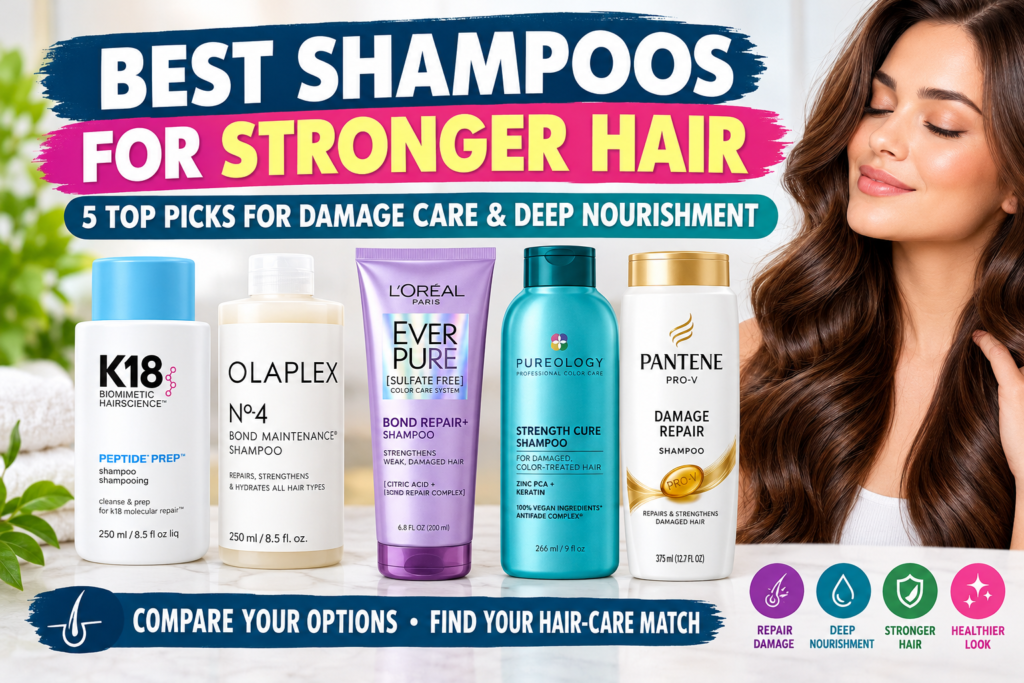
Discover the best shampoos for stronger hair and deep nourishment. Compare top picks for damaged, dry, brittle, and color-treated hair.
LifeCareBalance.com is reader-supported. When you buy through links on our site, we may earn an affiliate commission at no extra cost to you. As an Amazon Associate, we earn from qualifying purchases.
Weak, dry, brittle, and damaged hair can be difficult to manage. If your hair feels rough, tangles easily, looks dull, or breaks when you brush it, the right shampoo may help improve its appearance and manageability. Heat styling, frequent coloring, chemical treatments, rough brushing, and unsuitable hair-care products can all contribute to damage.
Choosing the best shampoo for stronger hair starts with understanding what your hair actually needs. Some hair types need lightweight cleansing, while others benefit from richer moisturizing formulas. Hair that has been colored or exposed to frequent heat may also benefit from a shampoo designed for damaged or chemically treated strands.
In this guide, we compare five strengthening shampoo options, explain which ingredients to look for, and show you how to choose a formula that fits your hair type, budget, and routine.
Quick Answer: What Is the Best Shampoo for Stronger Hair?
The best strengthening shampoo depends on your hair texture, scalp condition, and the type of damage you want to manage.
- For chemically treated or damaged hair: Consider a bond-care shampoo such as K18 Peptide Prep pH Maintenance Shampoo or OLAPLEX No. 4 Bond Maintenance Shampoo.
- For a more accessible bond-care option: L’Oréal Paris EverPure Bond Repair+ Shampoo may be worth comparing.
- For color-treated hair: Pureology Strength Cure Shampoo is an option to investigate for your hair-care routine.
- For everyday damage care on a budget: Pantene Strengthening Damage Repair Shampoo with Castor Oil may be worth considering if its current formula suits your hair.
These are product options to compare, not a claim that every shampoo has been independently tested for this article. Check the current product label, price, ingredients, and directions before buying.
One important distinction: strengthening shampoos may help reduce breakage caused by dryness, friction, or damaged hair fibers. They do not necessarily treat hair loss originating from genetics, hormonal changes, illness, nutritional deficiencies, or scalp conditions.
Why Does Hair Become Weak, Dry, or Brittle?
Hair damage often develops gradually. You might first notice more tangles, rough ends, frizz, or a lack of shine. Later, strands may snap during brushing or styling.
Understanding the possible causes can help you choose a more suitable shampoo.
1. Frequent Heat Styling
Blow-dryers, flat irons, and curling irons can damage hair when used too frequently or at high temperatures. Heat may leave strands dry, rough, and more vulnerable to breakage.
If you regularly use styling tools, look for a shampoo that cleanses without leaving your hair feeling excessively dry. Pair it with a conditioner and use a suitable heat protectant before styling.
2. Coloring and Chemical Treatments
Hair coloring, bleaching, relaxing, and chemical straightening can alter the hair structure and make strands more fragile. Damaged hair may develop split ends, tangles, and a rough texture.
A shampoo designed for damaged or color-treated hair may help maintain softness and manageability. However, shampoo cannot completely reverse severe chemical damage or permanently repair split ends.
3. Dryness and Friction
Dry hair can tangle more easily, and repeated friction from towels, brushes, clothing, and tight hairstyles may contribute to breakage.
A moisturizing shampoo and conditioner combination can make strands easier to detangle. Gently squeezing excess water from your hair instead of rubbing it aggressively with a towel can also help.
4. Choosing the Wrong Formula
A shampoo that works well for thick, coarse hair may feel too heavy on fine hair. Similarly, a strongly cleansing formula may leave already-dry lengths feeling rough.
Choose products according to your scalp and hair texture rather than relying only on marketing terms such as “strengthening,” “repair,” or “growth.”
5. Scalp or Health-Related Problems
Not every case of hair shedding is caused by damaged hair fibers. Persistent shedding or visible thinning can have many causes, including genetic hair loss, illness, certain medications, hormonal changes, and scalp conditions.
If you are experiencing ongoing or sudden hair loss, consult a qualified dermatologist rather than relying on shampoo alone.
Best Strengthening Shampoos to Compare
The following five products offer different approaches to hair cleansing and damage care. Your best choice will depend on your hair’s needs, your budget, and how the formula performs in your routine.
1. K18 Peptide Prep pH Maintenance Shampoo

- Deep Detox + Scalp Reset: A clarifying shampoo designed to work as a hair and scalp build up remover for dirt, oils, met…
- Intentional Active Ingredients: The skincare-inspired formulation of this activated charcoal and salicylic acid shampoo …
- Clinically-Proven Clarifying: This deep cleansing shampoo helps remove 99% of product buildup*, 95% sebum* + 76% copper*…
Best for: People looking for a shampoo focused on gentle cleansing and damage care
K18 Peptide Prep pH Maintenance Shampoo is an option to consider if your hair is exposed to frequent styling, coloring, or other salon treatments. It is positioned as a cleansing product within the K18 hair-care range.
When comparing it with other strengthening shampoos, consider how your hair feels after washing. A suitable shampoo should cleanse the scalp without leaving your lengths excessively rough or tangled.
Potential advantages
- Worth considering for a damage-conscious hair-care routine.
- Can be paired with conditioner or other products suited to your hair.
- May appeal to people who already use products from the K18 range.
Things to consider
- Compare the current price with less expensive alternatives.
- Do not assume that a shampoo alone will reverse extensive chemical damage.
- Review the current ingredient list if your scalp is sensitive.
Who may prefer it?
Consider this option if your hair has been exposed to chemical treatments or frequent heat styling and you want to compare a specialized shampoo with everyday alternatives.
2. OLAPLEX No. 4 Bond Maintenance Shampoo
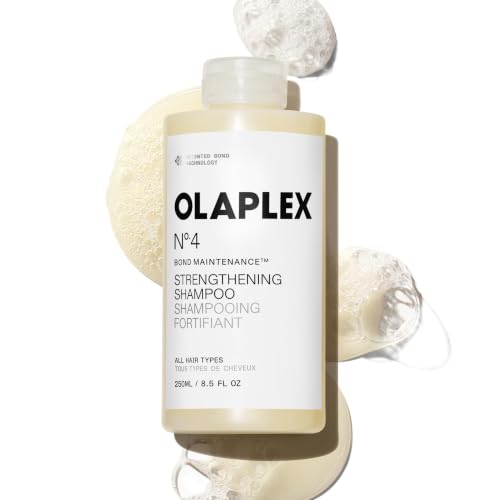
- A highly concentrated, color-safe shampoo proven to reduce breakage and nourish hair leaving it smoother, shinier, and m…
- KEY BENEFITS ✓ Reduces breakage and strengthens hair ✓ Gently cleanses without stripping moisture ✓ Hydrates, smooths, n…
- Clinically Proven 90% smoother, better detangling, more conditioned* 49% reduction in breakage *When used as a system of…
Best for: Hair that has been colored, bleached, or repeatedly styled
OLAPLEX No. 4 Bond Maintenance Shampoo is marketed as part of a bond-care hair routine. It may be worth comparing if your hair feels fragile after coloring, bleaching, or frequent heat styling.
A bond-care shampoo is different from a traditional moisturizing shampoo in its intended approach to damaged hair. However, results depend on the product, the condition of your hair, and how you use the rest of your routine.
Potential advantages
- A specialized option for people concerned about damage from chemical services.
- Can be considered alongside a suitable conditioner.
- May fit into a routine designed to improve hair manageability.
Things to consider
- It may cost more than basic drugstore shampoos.
- Check whether the formula suits your scalp and preferred cleansing level.
- Do not expect it to repair split ends permanently.
Who may prefer it?
This product may be worth comparing if your main concern is the rough, fragile feel associated with frequent coloring or styling.
3. L’Oréal Paris EverPure Bond Repair+ Shampoo

- Shampoo For Our Deepest Hair Repair: EverPure Bond Repair+ Shampoo strengthens weak hair bonds, reduces breakage, and pr…
- Strengthen Damaged Hair From Within: Strengthening shampoo formulated for color treated, bleached, damaged, weak, and fr…
- For Best Use: Apply Bond Repair+ pre-shampoo to damp hair before shampoo. Wait 5-10 minutes. Rinse and follow with Bond …
Best for: Shoppers comparing bond-care products at different price points
L’Oréal Paris EverPure Bond Repair+ Shampoo is another option to investigate when comparing shampoos intended for damaged hair. It may appeal to shoppers who want to explore a bond-care product without automatically choosing a premium salon brand.
Before purchasing, confirm the exact product name and current formula. Product ranges and labels can vary, so make sure the version you select matches your hair-care needs.
Potential advantages
- An option to compare with higher-priced bond-care shampoos.
- May fit a routine for hair exposed to regular styling or coloring.
- Can be considered with complementary conditioning products.
Things to consider
- Compare the cost per ounce rather than only the bottle price.
- Check the ingredient list and directions for the exact version.
- Do not assume that all products in the EverPure range have identical purposes.
Who may prefer it?
Consider this option if you want to compare a widely available hair-care brand with specialized salon products before deciding what fits your budget.
4. Pureology Strength Cure Shampoo

- Sulfate-free shampoo that repairs and strengthens damaged or color-treated hair, restoring up to 99% of hair’s original …
- Ideal for all hair types, this vegan formula reduces breakage and seals split ends, leaving hair healthier and more resi…
- Infused with advanced anti-breakage technology, this shampoo is perfect for those with severely damaged hair, providing …
Best for: Shoppers looking for a strengthening option for color-treated hair
Pureology Strength Cure Shampoo is marketed for damaged hair and is often considered within color-care routines. If you color your hair regularly, compare its current formula and directions with other shampoos made for treated hair.
Color-treated hair may benefit from gentle handling, suitable conditioning, and reduced exposure to excessive heat. A shampoo is only one part of that process.
Potential advantages
- Worth comparing if maintaining the appearance of color-treated hair is a priority.
- Can be paired with a conditioner selected for your hair texture.
- Offers another option for shoppers considering salon-oriented hair care.
Things to consider
- Premium hair-care products may not fit every budget.
- Check the current formula if you have fragrance sensitivities.
- Compare it with other color-care shampoos before deciding whether the added cost is worthwhile.
Who may prefer it?
This product may be worth investigating if you color your hair and want to combine cleansing with a broader damage-care routine.
5. Pantene Strengthening Damage Repair Shampoo with Castor Oil
- Sulfate-free shampoo that repairs and strengthens damaged or color-treated hair, restoring up to 99% of hair’s original …
- Ideal for all hair types, this vegan formula reduces breakage and seals split ends, leaving hair healthier and more resi…
- Infused with advanced anti-breakage technology, this shampoo is perfect for those with severely damaged hair, providing …
Best for: Shoppers comparing everyday damage-care shampoos
Pantene Strengthening Damage Repair Shampoo with Castor Oil may be worth comparing if you prefer an everyday hair-care product over a premium salon formula.
The most important factor is whether the current formula cleanses your scalp effectively while leaving your hair manageable. A product does not need to be expensive to be suitable, and a higher price does not guarantee better results for every person.
Potential advantages
- An option to compare when setting a more moderate hair-care budget.
- May suit shoppers who prefer a familiar everyday hair-care brand.
- Can be incorporated into a routine with conditioner and gentle styling habits.
Things to consider
- Verify the exact product name and ingredient list before purchasing.
- Check whether the formula leaves your scalp comfortable and your lengths manageable.
- If your hair is very fine, observe whether the product leaves it feeling heavy.
Who may prefer it?
Consider this option if you want to compare a more accessible product with specialized strengthening and bond-care shampoos.
Strengthening Shampoo Comparison Table
| Product | Best reason to compare it | What to check |
|---|---|---|
| K18 Peptide Prep pH Maintenance Shampoo | Specialized cleansing and damage-care routine | Price, formula, compatibility |
| OLAPLEX No. 4 Bond Maintenance Shampoo | Hair exposed to coloring or frequent styling | Cleansing feel and cost |
| L’Oréal Paris EverPure Bond Repair+ Shampoo | Bond-care option to compare at different price points | Exact version and ingredients |
| Pureology Strength Cure Shampoo | Color-care and damage-care routine | Current formula and budget |
| Pantene Strengthening Damage Repair Shampoo with Castor Oil | Everyday damage-care option | Scalp comfort and manageability |
How to use this comparison: Start with the problem you want to address. If your hair is dry and tangled, moisture and conditioning may matter more than a product marketed primarily for strength. If it has been chemically treated, compare damage-care formulas and consider whether a complementary conditioner or treatment is appropriate.
Ingredients to Look for in a Strengthening Shampoo
The ingredient list can help you understand what a shampoo is designed to do. No single ingredient guarantees that a product will make every person’s hair stronger.
Keratin and Other Proteins
Keratin is a structural protein associated with hair. Some hair-care products contain keratin or other proteins to improve the feel and appearance of damaged strands.
Protein-containing products may suit some people with damaged hair, but more is not always better. If a product leaves your hair feeling stiff or rough, reassess how often you use it and whether you need more conditioning.
Panthenol
Panthenol, also known as provitamin B5, is used in many cosmetic hair products. Depending on the formulation, it can help improve the feel and manageability of hair.
It is not a guaranteed treatment for hair loss, and the overall formula matters more than one ingredient appearing on the label.
Argan Oil and Other Conditioning Ingredients
Argan oil and similar emollient ingredients may help hair feel smoother and easier to manage. This can be useful for dry lengths that tangle or become frizzy.
However, richer formulas can weigh down fine hair. Choose according to your texture and how your hair responds.
Coconut Oil
Coconut oil is used in some hair-care routines because it can help condition hair. Its suitability depends on the product formulation and individual hair texture.
If your hair becomes greasy or heavy easily, start with a lighter formula rather than assuming that an oil-rich shampoo will be better.
Aloe Vera and Moisturizing Ingredients
Aloe vera and other moisturizing or conditioning ingredients appear in many hair-care products. They may contribute to a pleasant cleansing experience, but the presence of a particular ingredient does not prove that a shampoo will stimulate new hair growth.
Practical tip: Evaluate the complete formula, the instructions, and how your hair feels after several washes. Avoid choosing a product based only on a single ingredient or a dramatic marketing promise.
How to Choose the Right Shampoo for Your Hair Type
For Dry and Brittle Hair
Look for a formula that cleanses without leaving your hair feeling stripped. A moisturizing conditioner is particularly important because shampoo alone may not provide enough slip for easy detangling.
Avoid repeatedly rubbing the lengths together while washing. Focus on gently cleansing your scalp and let the lather rinse through the rest of your hair.
For Fine or Thin Hair
Fine hair can become weighed down by rich formulas. Consider a lightweight shampoo that leaves your scalp feeling clean without excessive residue.
Use conditioner mainly on the mid-lengths and ends if applying it near the roots makes your hair look flat.
Remember that fine hair is not automatically the same as hair loss. If you notice progressive thinning, a dermatologist can help identify the cause.
For Thick, Curly, or Textured Hair
Curly and textured hair can be more prone to dryness and tangling. Choose a cleansing routine that respects your hair’s moisture needs and use conditioner to help with detangling.
Avoid aggressive brushing and rough towel-drying. A wide-tooth comb and gentle handling can help minimize mechanical breakage.
For Color-Treated Hair
Choose a shampoo compatible with your color-care routine and follow the product directions. Use heat styling carefully and consider a conditioner formulated for treated hair.
No shampoo can guarantee that color will never fade. Water temperature, washing frequency, the color service, and other hair-care habits can all influence the appearance of color.
For an Oily Scalp With Dry Ends
Your scalp and lengths may need different approaches. A shampoo should clean the scalp adequately, while conditioner can help the drier lengths feel smoother.
Do not avoid washing for too long simply because the ends are dry. Instead, adjust the frequency to your scalp’s needs and condition the lengths appropriately.
How to Use Strengthening Shampoo Correctly
Even a suitable shampoo may disappoint if you use it in a way that increases tangling or dryness. Follow these general steps unless the product label gives different directions.
- Wet your hair thoroughly. Use comfortable water temperature rather than very hot water.
- Apply shampoo to your scalp. Use an amount appropriate for your hair length and the product’s directions.
- Massage gently. Use your fingertips rather than scratching with your nails.
- Rinse thoroughly. Let the lather run through the lengths instead of aggressively rubbing them together.
- Use conditioner. Apply it according to your hair texture, focusing on the lengths and ends when appropriate.
- Detangle gently. Use a suitable comb and work carefully through knots rather than pulling through them.
- Dry with less friction. Gently squeeze out excess water or use a soft towel. Avoid vigorous rubbing.
- Limit excessive heat. When styling tools are necessary, use a suitable heat protectant and a lower effective temperature.
The American Academy of Dermatology recommends matching hair care to your hair type, cleansing the scalp rather than aggressively washing the lengths, conditioning appropriately, and handling wet hair gently.
Common Mistakes That Can Make Hair Damage Worse
Washing the Entire Length Aggressively
Scrubbing your hair lengths can increase friction and tangling. Concentrate shampoo on the scalp and rinse carefully.
Using Too Much Product
More shampoo does not automatically mean cleaner or stronger hair. Follow the label, and adjust the amount to your hair length and the level of buildup.
Skipping Conditioner
Conditioner helps improve slip and manageability, making hair easier to detangle. If your hair is prone to breakage, skipping conditioner may make your routine more difficult.
Brushing Wet Hair Roughly
Wet hair can be more vulnerable to damage. Detangle carefully using a method appropriate for your texture, starting near the ends and working gradually upward.
Using Heat Without Protection
Repeated high-heat styling can contribute to damage. Reduce unnecessary heat exposure, avoid using tools on soaking-wet hair unless they are designed for that use, and follow the styling tool’s safety directions.
Expecting Shampoo to Solve Every Hair Problem
A shampoo can support a hair-care routine, but it cannot correct every cause of shedding or thinning. If hair loss is persistent, sudden, patchy, or accompanied by scalp irritation, seek professional advice.
How Long Does It Take to Notice a Difference?
There is no universal timeline for results from a strengthening shampoo. Some people may notice that their hair feels smoother or easier to detangle after a wash or a few uses. Other changes depend on the extent of damage, the rest of the routine, and how well the formula suits the individual.
A cosmetic improvement in softness or manageability is not the same as new hair growth. Hair strands that have already split or broken cannot be permanently restored to their original condition by shampoo alone.
Give a suitable routine enough time to evaluate how your hair feels, but stop using a product if it causes irritation or an unwanted reaction. Follow the manufacturer’s directions rather than assuming that more frequent use will produce faster results.
Can Shampoo Reduce Hair Fall?
The phrase “hair fall” can describe two different issues: strands breaking along their length and hairs shedding from the scalp.
A suitable shampoo and conditioner may help reduce breakage associated with dryness, friction, and tangling. That does not mean the shampoo treats every cause of shedding from the scalp.
If you are noticing a widening part, visible thinning, bald patches, or substantially more shedding than usual, consider speaking with a dermatologist. The American Academy of Dermatology notes that hair loss can have multiple causes and that identifying the cause is important when choosing treatment.
Frequently Asked Questions
Which shampoo is best for stronger hair?
There is no single best shampoo for everyone. Consider your scalp, hair texture, damage history, budget, and whether your main concern is dryness, breakage, or color care. Compare products such as K18, OLAPLEX, L’Oréal Paris EverPure, Pureology, and Pantene according to those needs.
Does strengthening shampoo make hair grow faster?
A strengthening shampoo should not be assumed to speed up hair growth. It may help improve the appearance and manageability of damaged hair, while hair growth and scalp shedding involve different biological processes.
Is sulfate-free shampoo always better for damaged hair?
Not necessarily. Some people prefer sulfate-free formulas, but the best choice depends on your scalp, hair texture, product buildup, and personal tolerance. Focus on how well a shampoo cleanses and how your hair responds instead of relying on a single label claim.
Should I use strengthening shampoo every day?
Follow the product label and choose a washing schedule based on your scalp and hair type. People with an oily scalp may need to wash more frequently than people with very dry or textured hair. Daily washing is not automatically right or wrong for everyone.
Can I use strengthening shampoo on color-treated hair?
Some strengthening shampoos are designed to fit color-care routines. Check the current label and product directions before use, and pair shampoo with suitable conditioning and careful heat styling.
Do I need a matching conditioner?
A matching conditioner is not always essential, but using a suitable conditioner can improve detangling and manageability. Choose one that fits your hair texture and condition, whether or not it comes from the same product range.
Can shampoo repair split ends?
Shampoo cannot permanently fuse split ends back together. Conditioning products may temporarily improve their appearance and smoothness, but trimming damaged ends is the reliable way to remove split ends.
When should I see a dermatologist about hair loss?
Seek professional advice if shedding persists, thinning progresses, bald patches appear, or your scalp is painful, inflamed, or unusually itchy. A dermatologist can help identify possible causes and discuss suitable treatment.
Final Verdict: Which Strengthening Shampoo Should You Choose?
The best shampoo for stronger hair is the one that fits your actual hair-care needs—not necessarily the most expensive bottle or the one with the boldest claims.
- Compare K18 Peptide Prep pH Maintenance Shampoo and OLAPLEX No. 4 Bond Maintenance Shampoo if you are considering specialized damage-care routines.
- Explore L’Oréal Paris EverPure Bond Repair+ Shampoo if you want to compare another bond-care option.
- Consider Pureology Strength Cure Shampoo if color care is an important part of your routine.
- Compare Pantene Strengthening Damage Repair Shampoo with Castor Oil if you prefer to evaluate an everyday option.
Before buying, verify the exact product version, current ingredients, bottle size, price, and directions. Results vary by hair type and the source of damage, so choose according to your own needs rather than expecting a shampoo to solve every problem.
For healthier-looking hair, combine an appropriate shampoo with conditioner, gentle detangling, less damaging styling habits, and professional advice when hair loss appears persistent or unusual.
Sources and Further Reading
- American Academy of Dermatology — Tips for Healthy Hair
- American Academy of Dermatology — Hair Loss: Tips for Managing
- Cleveland Clinic — Shampoo for Hair Loss
- Women’s Health — Best Strengthening Shampoos
- NBC Select — Best Shampoos for Damaged Hair
Affiliate Disclosure
LifeCareBalance may earn a commission when you purchase through qualifying affiliate links, at no additional cost to you. Product availability, prices, and formulas can change, so verify current details on the retailer’s website before purchasing.https://lifecarebalance.com/