
LifeCareBalance.com is reader-supported. When you buy through links on our site, we may earn an affiliate commission at no extra cost to you. As an Amazon Associate, we earn from qualifying purchases.
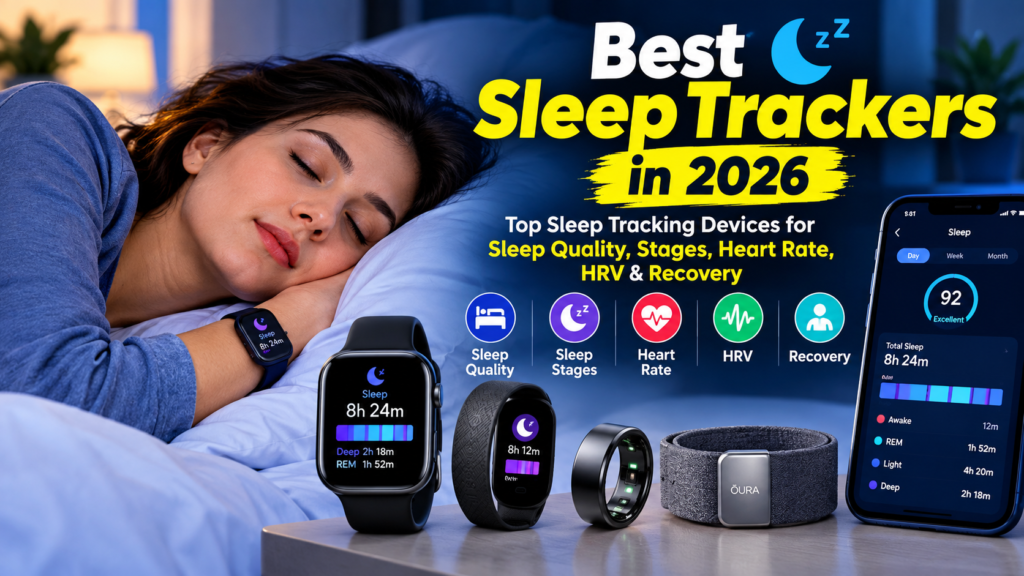
Choosing the best sleep tracker in 2026 is not simply about finding the device with the most sensors or the highest sleep score. The right choice depends on what you want to understand about your sleep, whether you are comfortable wearing a device overnight, which phone you use, and how much you are willing to spend on subscriptions.
Some people want a discreet smart ring that tracks sleep and overnight heart rate. Others prefer a smartwatch that combines sleep tracking with workouts and everyday notifications. Athletes may want recovery insights that connect sleep with training, while people who dislike wearing technology in bed may prefer a sensor placed under the mattress.
There is one important limitation to understand before buying: consumer sleep trackers estimate sleep using movement, heart rate, and other signals. Their estimates are useful for observing patterns, but they do not provide the same measurements as a clinical sleep study.
This guide compares seven sleep-tracking options by their intended use, comfort, compatibility, recurring costs, and practical limitations. The goal is to help you choose a device that fits your needs rather than spend more money on features you may never use.
Quick Answer: Which Sleep Tracker Should You Choose?
- Best dedicated sleep and recovery ring: Oura Ring 5, for people who want detailed overnight trends in a discreet design.
- Best smart ring without a required core-feature subscription: Samsung Galaxy Ring, for compatible Android users.
- Best for athletes and recovery tracking: WHOOP 5.0, for people who want sleep, training strain, and recovery insights in one system.
- Best all-purpose option for iPhone users: Apple Watch, for sleep tracking alongside everyday smartwatch features.
- Best for endurance athletes: Garmin Forerunner or fēnix, depending on training requirements and budget.
- Best budget-friendly wearable starting point: Fitbit Charge 6, for basic sleep and activity tracking in a compact band.
- Best non-wearable option: Withings Sleep Analyzer, for people who prefer not to wear a ring, watch, or band in bed.
These are recommendations for different use cases, not a scientifically established ranking of medical accuracy. Prices, subscriptions, availability, and features can change, so verify the exact model before purchasing.
Best Sleep Trackers in 2026: Comparison Table
| Device | Best for | Main advantage | Main limitation |
|---|---|---|---|
| Oura Ring 5 | Dedicated sleep and recovery tracking | Discreet ring with detailed overnight trends | Membership required for the full app experience |
| Samsung Galaxy Ring | Compatible Android users | Ring-based tracking without a required recurring core-feature membership | Android ecosystem compatibility limits |
| WHOOP 5.0 | Athletes | Sleep and training recovery in one system | Ongoing membership cost |
| Apple Watch | iPhone users | Sleep tracking plus broad smartwatch features | Overnight charging and wearing comfort |
| Garmin Forerunner or fēnix | Endurance athletes | Sleep information integrated with training metrics | Model-specific costs and a potentially bulky design |
| Fitbit Charge 6 | Budget-conscious buyers | Compact activity band with sleep features | Some additional insights may require Premium |
| Withings Sleep Analyzer | People who dislike wearables | Passive monitoring under the mattress | Different measurements from wrist or ring devices |
The table is a practical buying comparison, not a claim that one device consistently measures every sleep metric more accurately than the others.
1. Oura Ring 5 — Best Dedicated Sleep and Recovery Ring

- THE WORLD’S SMALLEST SMART RING – 40% smaller than the previous generation, Oura Ring 5 is thinner, lighter and smaller …
- SIZING IS ESSENTIAL – Oura Ring 5 uses unique sizing different from standard jewelry rings and other Oura Ring generatio…
- EVERYDAY HEALTH SENSING – Oura tracks over 50 health metrics, including sleep, activity, stress, heart health, metabolic…
Oura Ring 5 is a strong candidate for people who want a dedicated sleep tracker without wearing a smartwatch. Its ring format keeps the screen off your wrist, and its companion app brings sleep, heart rate, heart rate variability (HRV), temperature trends, and activity information together.
The ring uses optical sensors, a temperature sensor, and an accelerometer to collect signals throughout the day and night. Its software interprets those signals to estimate sleep patterns and provide personalized trends.
Oura’s published product specifications list battery life of up to six to nine days, depending on ring size and usage. The company also lists a starting US price of $399, with some finishes priced higher. These are manufacturer-listed details, not guaranteed prices for every retailer or future sale.
What makes it useful?
- A discreet, screen-free design for overnight wear.
- Sleep duration and estimated sleep-stage information.
- Overnight heart-rate and HRV trends.
- Temperature trends and broader wellness information.
- Support for compatible iOS and Android phones.
What should you consider?
Oura’s full app experience requires a membership. The ring’s upfront cost and recurring membership should therefore be considered together. Ring sizing is also important: use the sizing kit intended for the exact generation rather than assuming your usual jewelry size will fit.
The device is most useful when you review trends across multiple weeks. A single low sleep score or unusual HRV reading is not enough to establish that something is wrong.
Best for: Buyers who prioritize discreet overnight comfort, detailed sleep trends, and are comfortable paying for ongoing app access.
Read our Oura Ring 5 Review 2026 for a model-specific discussion of its design, features, and ownership costs.
Official product specifications are available from Oura’s Ring 5 product page.
2. Samsung Galaxy Ring — Best Smart Ring Without a Required Core Subscription

- THE WORLD’S SMALLEST SMART RING – 40% smaller than the previous generation, Oura Ring 5 is thinner, lighter and smaller …
- SIZING IS ESSENTIAL – Oura Ring 5 uses unique sizing different from standard jewelry rings and other Oura Ring generatio…
- EVERYDAY HEALTH SENSING – Oura tracks over 50 health metrics, including sleep, activity, stress, heart health, metabolic…
Samsung Galaxy Ring is worth considering if you prefer a ring to a watch and already use a compatible Android phone. It brings sleep and activity information into the Samsung Health ecosystem without requiring a recurring membership for its core tracking features.
A smart ring can be attractive for overnight use because it has no watch face or notifications competing for attention. However, comfort is personal. Some users find a ring less noticeable than a wristband, while others prefer not to wear jewelry during sleep.
What makes it useful?
- Ring-based sleep and activity tracking.
- Integration with Samsung Health.
- A screen-free design.
- No required recurring membership for core Samsung Health tracking features.
- A charging case for topping up the device.
What should you consider?
Compatibility is the first issue to check. Samsung Galaxy Ring is designed for Android users, and the available experience can depend on the phone, Samsung Health, and related software.
Fit matters just as much as sensor specifications. A ring that feels uncomfortable or fits poorly is unlikely to become a useful nightly habit. Follow Samsung’s sizing process and check current compatibility requirements before buying.
Do not assume that a subscription-free product provides every feature found in competing paid services. Compare the metrics, reports, integrations, and coaching you will actually use.
Best for: Android users who want ring-based tracking and want to avoid a required monthly fee for core features.
3. WHOOP 5.0 — Best Sleep Tracker for Athletes and Recovery
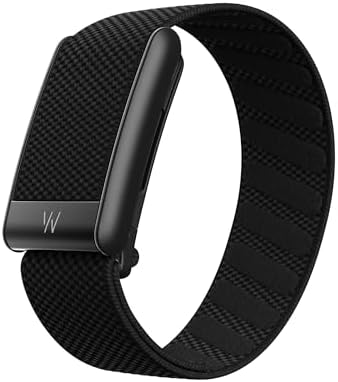
- What You Get – A 12-month membership, WHOOP 5.0 device, a SuperKnit band, and a waterproof* Wireless PowerPack. Choose f…
- HSA/FSA Eligible – All 12-month WHOOP memberships and battery packs qualify for HSA/FSA reimbursement.
- Screenless, Distraction-Free – No screen, no buzzing notifications. WHOOP focuses entirely on your health and performanc…
WHOOP 5.0 takes a training-focused approach to sleep tracking. Instead of functioning as a conventional smartwatch, it uses a screenless wearable and companion app to connect sleep, daily strain, and recovery information.
For athletes, the appeal is not simply knowing how long they slept. It is being able to examine how sleep patterns relate to training load, resting heart rate, HRV, and perceived readiness over time.
WHOOP estimates sleep duration and stages from signals such as heart rate and movement. Its app then combines sleep information with other measurements to produce recovery-related insights.
What makes it useful?
- Sleep tracking and sleep-need estimates.
- HRV and resting-heart-rate trends.
- Training strain and recovery information.
- A screenless design with fewer everyday distractions.
- Coaching features for people who regularly monitor training.
What should you consider?
WHOOP uses a membership-based model. Check the current US membership tiers and the exact features included with each plan before purchasing. Do not assume every plan includes identical hardware or advanced health features.
Recovery scores are algorithm-generated summaries, not direct measurements of how ready your body is for every workout. A low score should not automatically mean you must skip training, just as a high score does not guarantee that intense exercise is appropriate.
Use the information alongside sleep duration, recent exercise, soreness, stress, and how you actually feel.
Best for: Athletes and active users who regularly use recovery data to inform their training decisions.
For an explanation of the signals and limitations behind its sleep estimates, consult WHOOP’s sleep-tracking accuracy guide.
4. Apple Watch — Best All-Purpose Sleep Tracker for iPhone Users

- A FULL-FEATURED HEALTH TRACKER—Apple Watch Series 11 gives you invaluable insights about your body, right from your wris…
- KNOW YOUR SLEEP SCORE—With advanced sleep tracking, Series 11 gives you a daily sleep score. It’s an easy way to help me…
- GET HYPERTENSION NOTIFICATIONS—Did you know that Series 11 can spot signs of chronic high blood pressure? By analyzing h…
If you already own a compatible Apple Watch, you may not need to purchase a separate sleep tracker. Apple Watch combines sleep information with workouts, daily activity, notifications, and the wider Apple Health ecosystem.
Depending on the supported model and software, it can estimate sleep duration and time spent in REM, Core, and Deep sleep. Apple also provides a sleep score on supported software versions.
What makes it useful?
- Sleep duration and estimated sleep stages.
- Sleep history and trends in the Health app.
- Integration with everyday activity and workout data.
- Overnight measurements on supported configurations.
- No separate sleep-tracking subscription for core features.
What should you consider?
Battery management is important. You need to charge the watch regularly while still keeping enough battery for overnight tracking. If you already use the watch throughout the day, you may need to develop a consistent charging routine.
Comfort also matters. A watch that feels bulky or irritates your wrist at night may not be a good fit, even if its software provides useful information.
Apple offers certain health-related notification features on supported devices and in supported regions. Availability depends on the specific feature and model. Notifications about possible health concerns are not the same as a diagnosis.
Best for: iPhone users who want one device for sleep tracking, fitness, and everyday smartwatch functions.
For model compatibility and setup instructions, see Apple’s official guide to tracking sleep on Apple Watch.
5. Garmin Forerunner or fēnix — Best for Endurance Athletes

- Brilliant AMOLED touchscreen display with traditional button controls; lightweight design in 46 mm size
- Up to 13 days of battery life in smartwatch mode and up to 20 hours in GPS mode
- As soon as you wake up, get your morning report with an overview of your sleep, recovery and training outlook alongside …
Garmin watches make the most sense when sleep tracking is part of a broader training routine. Runners, cyclists, and endurance athletes may want sleep information alongside workout history, training load, heart-rate trends, and other performance-related metrics.
Garmin’s sleep features vary by watch model. Depending on the device and software, users may have access to estimated sleep stages, sleep scores, HRV Status, Body Battery, or training-related summaries.
What makes it useful?
- Sleep information within a broader sports-tracking ecosystem.
- Training metrics and workout history.
- Model-dependent recovery and readiness features.
- Long battery life on many Garmin watches, depending on model and settings.
- No required recurring subscription for core watch-based tracking.
What should you consider?
Do not assume every Forerunner or fēnix offers the same features. Compare the exact model’s sleep functions, supported metrics, battery performance, and training tools.
Some watches are large, which can make them uncomfortable to wear overnight. If sleep tracking is your primary objective, a lighter band or ring may be more practical.
Garmin is most valuable when you already use its training ecosystem. If your only goal is to understand your bedtime and approximate sleep duration, the additional sports features may not justify the price.
Best for: Endurance athletes who want sleep trends to sit alongside training information.
6. Fitbit Charge 6 — Best Budget-Friendly Wearable Starting Point

- Fitbit Charge 6 tracks key metrics from calories and Active Zone Minutes to Daily Readiness and sleep; move more with 40…
- See your heart rate in real time: Just link your Charge 6 to compatible exercise machines, like treadmills, ellipticals,…
- Tune into your body: Track your response to stress with a stress management score; learn about the quality of your sleep…
Fitbit Charge 6 is a compact fitness band for people who want sleep tracking alongside everyday activity and heart-rate monitoring. It can be a practical starting point if you do not need a premium smart ring or a full smartwatch.
Its appeal is straightforward: wear a relatively small band, review your sleep information in the app, and use the history to notice patterns in sleep duration and routine.
What makes it useful?
- Compact wristband design.
- Sleep tracking and a nightly sleep score.
- Activity and heart-rate features.
- Several days of battery life under typical use.
- Basic tracking without requiring Fitbit Premium.
What should you consider?
Some additional Fitbit insights may depend on the current Premium offering. Check which features are included with the exact device and current US plan rather than relying on older descriptions of the service.
Sleep stages are estimates. A tracker can be useful for noticing changes across weeks, but a reported amount of deep sleep should not be interpreted as a precise clinical measurement.
A comfortable band and clear app can be more valuable for beginners than an overwhelming set of advanced metrics.
Best for: Budget-conscious users who want sleep and activity tracking in one compact device.
7. Withings Sleep Analyzer — Best Non-Wearable Sleep Tracker

- EXPLORE THE DEPTHS OF YOUR SLEEP PATTERN – Sleep is the ultra-powerful sleep monitor that allows you to detect snoring, …
- WORLD PREMIERE – Sleep is the world's first under-mattress sleep sensor, with revolutionary features.
- LEADS TO MORE RESTFUL SLEEP – By analyzing the phases, depth and interruptions of your sleep, you can learn more about y…
Withings Sleep Analyzer is designed for people who do not want to wear a ring, watch, or band while sleeping. It sits under the mattress and monitors sleep-related signals without requiring a wearable to be charged and worn every night.
This approach can be appealing if you dislike having a device on your wrist or finger. It also means the information it collects differs from the measurements available from a ring or smartwatch.
What makes it useful?
- No wearable to put on before bed.
- Passive overnight monitoring.
- Sleep-related trends and selected physiological measurements.
- An option for people who dislike wearable technology.
What should you consider?
Setup depends on the mattress and bed arrangement. Check the manufacturer’s current compatibility instructions and the exact features available in your country before purchasing.
An under-mattress sensor does not provide the same information as a device measuring signals directly from your wrist or finger. It may not meet your needs if your main priorities are detailed personal HRV trends, daytime activity, or workout tracking.
Be especially careful with breathing-related features. A consumer sleep monitor should not be used to confirm or rule out sleep apnea without appropriate medical evaluation.
Best for: People who want passive sleep monitoring and strongly prefer not to wear technology in bed.
How Accurate Are Sleep Trackers in 2026?
Accuracy depends on the device, the measurement, and the person wearing it. There is no single accuracy percentage that applies to every sleep tracker and every metric.
Consumer trackers commonly combine movement, optical heart-rate readings, and other available signals to estimate when a person is asleep or awake. Some devices also estimate sleep stages and calculate scores from several measurements.
A clinical polysomnography (PSG) study uses measurements such as brain activity, eye movements, muscle activity, heart signals, and breathing to assess sleep. Consumer wearables do not collect the same complete set of signals.
A 2026 study comparing consumer sleep-tracking devices with polysomnography found that accuracy varied across devices and measurements, with particular limitations in identifying individual sleep stages. The results support using trackers cautiously rather than treating their reports as clinical measurements.
Read the 2026 consumer sleep-tracker validation study on PubMed for its methods and findings.
Which measurements are most useful?
Sleep duration: Useful for observing whether you are regularly allowing enough time for sleep. It is still an estimate.
Bedtime consistency: Helps you see whether your sleep schedule changes significantly between weekdays and weekends.
Nighttime awakenings: May help reveal a pattern of interrupted sleep, although brief awakenings can be missed.
Sleep stages: REM, light, and deep sleep estimates can be useful for general context, but they are not precise measurements of brain activity.
Resting heart rate and HRV: Can help you observe changes relative to your personal baseline. They are influenced by many factors, including exercise, stress, illness, alcohol, and measurement conditions.
Sleep scores: Convenient summaries, but different brands use different formulas. A score of 80 from one company is not necessarily equivalent to 80 from another.
How to Choose the Right Sleep Tracker
Before purchasing, answer four practical questions.
1. What do you want to learn?
If you mainly want to understand your sleep schedule, you may not need advanced recovery metrics. If you train regularly, HRV and training-related trends may be useful. If you simply want to avoid wearing a device, a non-wearable monitor may be a better fit.
Start with your actual goal rather than the number of features advertised on the box.
2. Will you be comfortable wearing it overnight?
Smart rings, watches, and bands have different shapes and contact points. A ring may feel less intrusive to one person and uncomfortable to another. A smartwatch may be convenient during the day but bulky at night.
Consider sizing, skin sensitivity, strap adjustment, and charging. The best device is one you can use consistently without disrupting your sleep.
3. What is the total cost?
Compare the purchase price with the recurring costs over two or three years.
- Initial device price.
- Required memberships or subscriptions.
- Optional premium coaching or analytics.
- Chargers, replacement straps, and accessories.
- Potential replacement costs as the battery ages.
A device with a lower upfront price may become more expensive if it requires a membership. A subscription can still be worthwhile if you use the additional features regularly.
4. Does it work with your phone and other apps?
Check the exact model’s compatibility requirements before purchasing. Some features depend on a particular operating system, phone brand, app version, or region.
Also review data privacy settings. Sleep and health data can be sensitive, so understand how the provider stores information, handles integrations, and allows you to manage your account.
For a more detailed buying checklist, read our Sleep Tracker Buying Guide 2026.
How to Use a Sleep Tracker Without Becoming Obsessed With Scores
A sleep tracker should help you understand patterns, not create another source of stress.
Start by using it consistently for a few weeks. Review average sleep duration, bedtime regularity, and any recurring changes. Avoid making major decisions based on a single unusual night.
If you are monitoring recovery, compare HRV and resting heart rate with your own baseline instead of comparing your numbers with another person’s. Consider exercise, stress, illness, travel, and how you feel during the day.
You can also use a simple sleep diary alongside the tracker. Note your bedtime, wake time, caffeine timing, alcohol intake, exercise, and subjective sleep quality. These observations can help you identify patterns that a device’s score may not explain.
If checking sleep data makes you anxious, reduces your enjoyment of bedtime, or leads you to repeatedly change your routine in response to scores, consider reducing how often you check the app.
A tracker is optional. You can improve your sleep habits without buying a wearable.
For more information about using sleep trends in the context of exercise and recovery, see our Sleep Tracking and Recovery in 2026 guide.
Sleep Trackers and Better Sleep Habits
A device can help you notice a pattern, but it cannot replace the habits that support healthy sleep.
Maintain a reasonably consistent bedtime and wake time. Give yourself enough time to sleep, keep your bedroom comfortable, and develop a wind-down routine that works for you. Pay attention to how caffeine, alcohol, exercise timing, and evening screen use affect your sleep.
For most adults, the Centers for Disease Control and Prevention recommends at least seven hours of sleep per night, although individual needs vary. Review the CDC’s About Sleep guidance for general sleep-health information.
If you consistently struggle to sleep, feel excessively sleepy during the day, snore loudly, or experience pauses in breathing during sleep, seek advice from a qualified healthcare professional. Do not rely on a consumer sleep score to diagnose a sleep disorder.
You may also find our Best Sleep Optimization Technology for Deeper Sleep in 2026 guide useful if you are comparing sleep-related technology beyond trackers.
Frequently Asked Questions
What is the best sleep tracker in 2026?
The best option depends on your needs. Oura Ring 5 is worth considering for dedicated sleep and recovery insights, WHOOP 5.0 for training-focused recovery, Apple Watch for iPhone users who want an all-purpose device, and Withings Sleep Analyzer for people who prefer not to wear anything in bed.
Are sleep trackers accurate?
They can be useful for observing sleep duration and long-term patterns. Accuracy varies by device and metric, and estimated sleep stages should not be treated as equivalent to clinical measurements.
What is the best sleep tracker without a subscription?
Samsung Galaxy Ring, compatible Garmin watches, and Apple Watch offer core tracking features without a required separate sleep-tracking membership. Check the exact model and which optional features require paid access.
Is a smart ring better than a smartwatch for sleep?
Not for everyone. A ring may be more discreet for some people, while a smartwatch offers broader everyday features. Comfort, phone compatibility, charging habits, and cost should guide the decision.
Can a sleep tracker measure HRV?
Some rings, bands, and watches estimate HRV. The information is most useful when interpreted as a trend against your own baseline rather than as a universal measure of health or recovery.
Can a sleep tracker diagnose sleep apnea?
Do not rely on a general consumer sleep tracker to diagnose or rule out sleep apnea. Certain specific devices offer authorized or regulated features for particular purposes, but their availability and intended use vary. Seek professional evaluation if you have symptoms or concerns.
Do I need an expensive sleep tracker to improve my sleep?
No. A simple tracker may be enough to observe your sleep schedule, and a sleep diary can also be useful. More expensive devices may offer additional coaching or integrations, but price alone does not establish accuracy.
Are non-wearable sleep trackers worth buying?
They can be worthwhile if wearing a device in bed is uncomfortable. Check their measurement capabilities, mattress requirements, and limitations to ensure they match your goals.
Final Verdict: Which Sleep Tracker Should You Buy?
The best sleep tracker in 2026 is the one that fits your needs, works with your phone, and is comfortable enough to use consistently.
Choose Oura Ring 5 if you want a dedicated ring with detailed sleep and recovery trends and are comfortable with a membership. Consider Samsung Galaxy Ring if you prefer ring-based tracking and use a compatible Android phone. WHOOP 5.0 is aimed at people who regularly use sleep and recovery data to inform training. Apple Watch suits iPhone users who want sleep tracking alongside everyday smartwatch features, while Garmin is a strong option for people already invested in its sports ecosystem.
Fitbit Charge 6 is a practical starting point for budget-conscious users, and Withings Sleep Analyzer offers a non-wearable alternative.
Do not buy a tracker solely because it promises the most detailed sleep stages or the highest score. Compare the features you will actually use, the full cost of ownership, and the limitations of consumer sleep data.
Use your device to identify patterns and support sensible habits—not to chase a perfect score every morning. Consumer sleep trackers are wellness tools, not substitutes for clinical sleep testing or professional advice when symptoms persist.
Editorial disclaimer: This article is for informational purposes only. Product features, prices, subscriptions, and availability may change. Consumer sleep trackers do not replace professional medical evaluation or a clinical sleep study when medically indicated.