
LifeCareBalance.com is reader-supported. When you buy through links on our site, we may earn an affiliate commission at no extra cost to you. As an Amazon Associate, we earn from qualifying purchases.
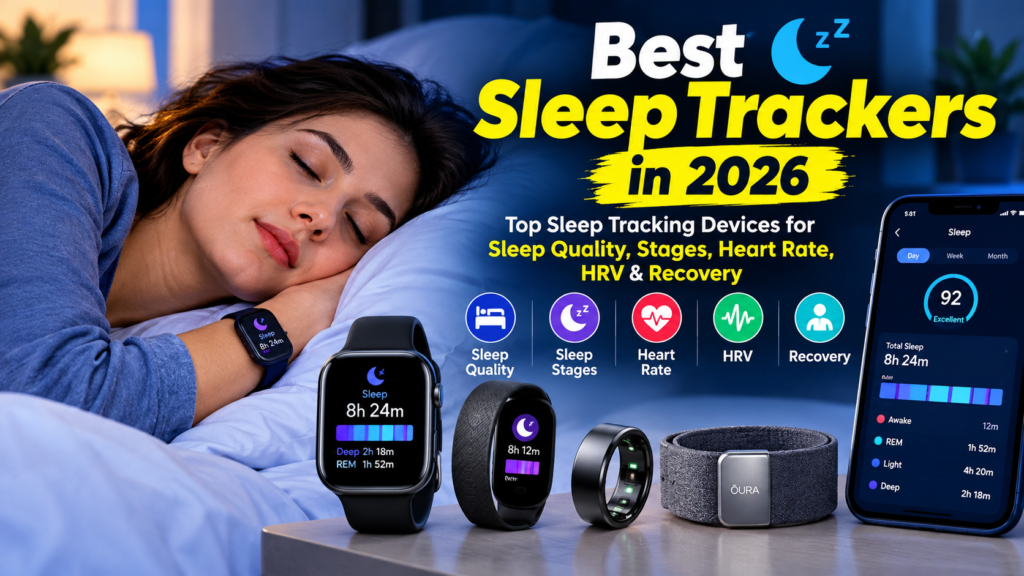
Choosing among the best sleep trackers in 2026 usually comes down to one question: do you want a ring, a band, a watch, or something you never have to wear at all? Smart rings like Oura and the Samsung Galaxy Ring, screenless bands like WHOOP, full smartwatches like Apple Watch and Garmin, budget fitness bands like Fitbit, and non-wearable options like the Withings Sleep Analyzer all measure a similar core set of signals — movement, heart rate, and skin temperature — but they turn that data into very different everyday experiences.
This guide compares the leading sleep tracking devices on comfort, battery life, subscription costs, and the metrics that actually matter for understanding sleep quality, sleep stages, heart rate variability (HRV), and recovery. It also explains, in plain terms, how accurate these devices really are compared with a clinical sleep study, so you can set realistic expectations before you buy.
Quick Answer / Quick Comparison
If you want the short version: the Oura Ring remains the most widely recommended dedicated sleep tracker for comfort and sleep-stage detail, but it requires a monthly or annual membership. The Samsung Galaxy Ring is the strongest subscription-free ring alternative for Android users. WHOOP is built specifically around recovery and training load rather than smartwatch features, and it bundles its hardware into a required subscription. The Apple Watch is the practical pick if you already live in the Apple ecosystem and want one device for notifications, workouts, and sleep. Garmin watches suit athletes who want long battery life and no subscription at all. Fitbit remains the most accessible low-cost entry point. And the Withings Sleep Analyzer is the best choice for anyone who simply does not want to wear anything to bed.
Best Sleep Trackers in 2026
| Sleep Tracker | Type | Sleep Metrics | HRV | Battery | Subscription | Best For |
|---|---|---|---|---|---|---|
| Oura Ring | Smart ring | Stages, latency, efficiency, temperature | Yes | About 4–7 days | Required for full app ($5.99–$6/mo or roughly $70/yr) | Sleep-focused users who want the most detailed ring data |
| WHOOP | Screenless band | Stages, respiratory rate, sleep performance | Yes | About 5+ days | Required; hardware included in membership (roughly $199–$359/yr depending on tier) | Athletes tracking strain and recovery |
| Apple Watch (Series/SE) | Smartwatch | Stages, sleep apnea notifications on supported models | Yes (via Vitals) | About 18 hours to 1–2 days | Not required for core sleep features | iPhone users who want one all-purpose device |
| Samsung Galaxy Ring | Smart ring | Stages, temperature trends, sleep coaching | Yes | Up to about 7 days | Not required | Android/Samsung users who want a ring without a subscription |
| Garmin (Forerunner/Fenix) | Smartwatch | Stages, Body Battery, respiration | Yes | Days to multiple weeks depending on model | Not required | Endurance athletes and multi-week battery life |
| Fitbit (Inspire/entry models) | Fitness band | Sleep stages, sleep score | Limited/varies by model | Several days | Optional (Fitbit Premium, around $9.99/mo, unlocks deeper insights) | Budget buyers and sleep-tracking beginners |
| Withings Sleep Analyzer | Non-wearable mat | Stages, heart rate, snore/breathing disturbance | No (heart rate only) | Plugged in / USB powered | Not required for core features; optional Withings+ subscription | Anyone who dislikes wearing a device to bed |
Prices, subscription tiers, and battery estimates vary by model, region, and ongoing promotions, so treat the figures above as general guidance rather than guaranteed current pricing — always confirm details on the manufacturer’s site before buying.
Detailed Product Reviews
Oura Ring
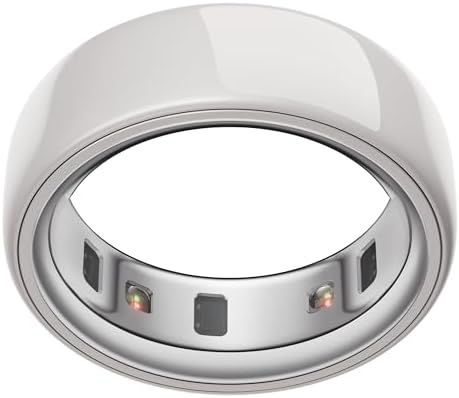
- ACCURACY – SMART SENSING – Oura tracks over 50 health metrics, including sleep, activity, stress, heart health, and wome…
- ACCURATE SIZING ESSENTIAL – Oura Ring 4 uses unique sizing different from standard jewelry rings; use the Oura Ring 4 Si…
- LONG LASTING BATTERY – With up to 8 days of battery life, no screens and no vibrations, Oura Ring 4 allows you to focus …
- Type: Smart ring
- Approximate price: Roughly $300–$400 depending on generation and finish
- Subscription: Required for full features, around $5.99–$6/month or about $70/year
- Battery life: Roughly 4–7 days
- Sleep metrics: Sleep stages, sleep latency, efficiency, restfulness, and skin temperature trends
- HRV/recovery: Overnight HRV and a daily Readiness score
- Compatibility: iOS and Android
- Best for: People who want the most detailed dedicated sleep and recovery data in a comfortable, low-profile form factor
Oura’s strength is that it was designed around sleep first, with a titanium ring body that many users find more comfortable overnight than a watch or band. It layers in body temperature trends, which can be genuinely useful for spotting patterns around illness or menstrual cycles. The ongoing membership fee is the main drawback — without it, the ring still tracks data but the deeper insights and coaching are locked. Oura is worth considering for people who are serious about sleep optimization and don’t mind the subscription. It may not be the right choice for anyone who wants a one-time purchase with no recurring cost, in which case the Samsung Galaxy Ring or a Fitbit band may be a better value.
WHOOP
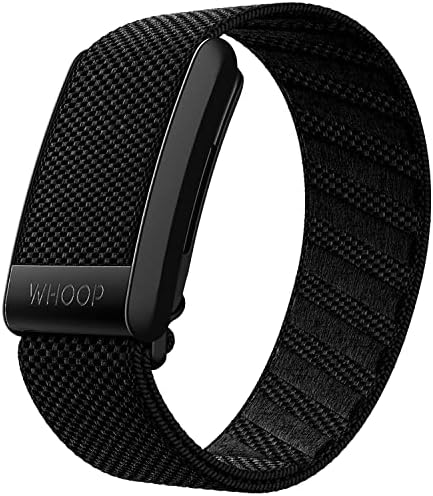
- EVERYTHING YOU NEED IS INCLUDED: Purchase includes an initial 12-month WHOOP membership, 4.0 hardware, Onyx SuperKnit ba…
- CONTINUOUS MONITORING: WHOOP is a unique wearable fitness device that offers continuous monitoring of physiological data…
- PERSONALIZED FOR YOUR GOALS: WHOOP is insight-driven, providing users with clear next steps and a science-backed approac…
- Type: Screenless recovery band
- Approximate price: No separate hardware cost; membership-based
- Subscription: Required, generally in the range of $199–$359/year depending on tier
- Battery life: Roughly 5 or more days, with an on-wrist wireless charging pack that lets you top up without removing the band
- Sleep metrics: Sleep stages, sleep performance percentage, disturbances, respiratory rate
- HRV/recovery: Central to the product — HRV and resting heart rate feed a daily Recovery score and a Strain metric tied to training load
- Compatibility: iOS and Android
- Best for: Athletes and highly active users who want sleep data connected directly to training decisions
WHOOP doesn’t try to be a smartwatch. There’s no screen on the band itself, which some people find liberating and others find limiting if they want to glance at notifications. Its real value is in the way it links your prior day’s exertion to how much sleep it recommends you get that night, and how your recovery score responds over time. Because WHOOP bundles the device into its membership rather than selling hardware outright, there’s no way to use it without paying the subscription — a meaningful factor when comparing long-term costs against a one-time-purchase device like the Galaxy Ring or a Garmin watch.
Apple Watch (Series and SE lines)

- WHY Apple WATCH SE — All the essentials to help you monitor your fitness, keep connected, track your health, and stay sa…
- CELLULAR CONNECTIVITY — Send a text, make a call, and stream music without your iPhone, even while traveling internation…
- HEALTH AND SAFETY FEATURES — Get help when you need it with Crash Detection, Fall Detection, and Emergency SOS. Get deep…
- Type: Smartwatch
- Approximate price: Roughly $250–$400 depending on model
- Subscription: Not required for core sleep tracking
- Battery life: Roughly 18 hours to a couple of days on standard models, requiring more frequent charging than a ring or band
- Sleep metrics: Sleep stages, sleep duration, and on supported models, notifications related to breathing disturbances during sleep
- HRV/recovery: Overnight HRV is surfaced through Apple’s Vitals app
- Compatibility: iPhone only
- Best for: iPhone users who want one device that handles workouts, notifications, payments, and sleep tracking together
The Apple Watch’s biggest limitation for sleep tracking has historically been battery life — a watch that needs nightly charging on a normal schedule has to be charged at some other point in the day to have enough battery for overnight wear. Apple has improved battery efficiency and added dedicated sleep and health features over recent generations, and some models now include an FDA-authorized notification feature related to breathing disturbances during sleep. For people who already wear an Apple Watch during the day and don’t want a second device just for sleep, it’s a reasonable all-in-one option, even if dedicated ring or band products still tend to edge it out on raw comfort for overnight wear.
Samsung Galaxy Ring

- Type: Smart ring
- Approximate price: Around $399
- Subscription: Not required — sleep, HRV, and coaching features are included with purchase
- Battery life: Up to about 7 days
- Sleep metrics: Sleep stages, sleep coaching, skin-temperature-based cycle tracking
- HRV/recovery: Sleeping heart rate variability is combined with sleep and activity data into Samsung’s broader health insights
- Compatibility: Requires the Samsung Health app; works with any Android phone, not just Samsung devices
- Best for: Android users who want ring-based sleep tracking without an ongoing subscription
The Galaxy Ring’s biggest selling point against Oura is straightforward: no monthly fee. Every core feature, including sleep coaching and HRV insights, is unlocked with the upfront purchase. It’s titanium, lightweight, and rated for swimming and showering. The tradeoff is ecosystem lock-in — it requires Samsung Health and doesn’t currently support iPhone, so this isn’t an option for Apple users. For Android users specifically weighing “best smart ring for sleep without a subscription,” it’s one of the clearest answers available.
Garmin (Forerunner and Fenix series)
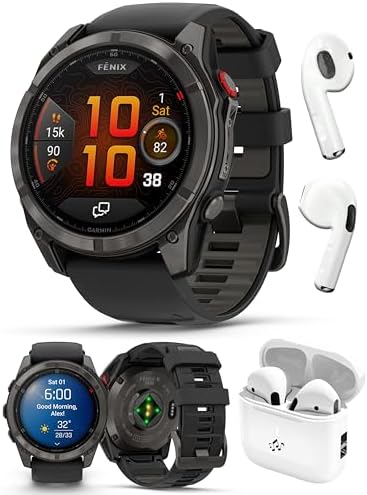
- Stay Connected Beyond Cell Service: With built-in inReach and LTE, the Garmin fenix 8 Pro smartwatch lets you text, call…
- Train Harder, Smarter, Stronger: From advanced fitness tracking to strength training and sport-specific workouts, the Ga…
- Premium AMOLED Design Built Tough: The Garmin fenix 8 Pro features a stunning 1.4″ AMOLED display, titanium bezel, sapph…
- Type: Smartwatch
- Approximate price: Roughly $300 for entry Forerunner models up to $1,000+ for premium Fenix models
- Subscription: Not required
- Battery life: Multiple days to multiple weeks depending on the model and settings, among the longest in the category
- Sleep metrics: Sleep stages, respiration, Body Battery energy tracking
- HRV/recovery: Overnight HRV status feeds into Garmin’s broader training and recovery recommendations
- Compatibility: iOS and Android
- Best for: Endurance athletes and anyone who wants multi-week battery life with GPS and no subscription
Garmin watches trade some smartwatch polish for genuinely long battery life and detailed training metrics, which makes them popular with runners, cyclists, and triathletes who also want sleep and recovery data without another monthly bill. The bulkier design of higher-end models can be less comfortable for some people to sleep in than a slim ring, so comfort-focused buyers should try one on before committing to nightly wear.
Fitbit (entry-level and budget models)
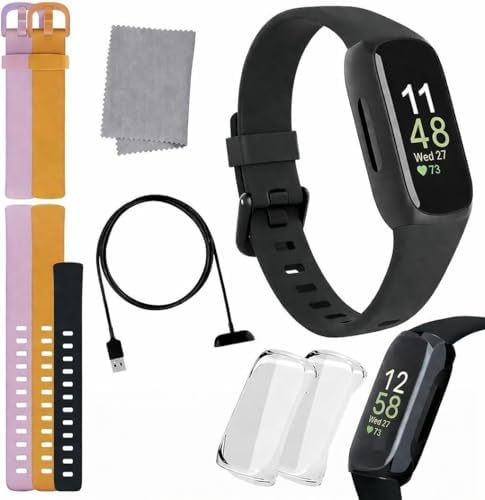
- INSPIRED FITNESS: The Fitbit Inspire 3 is an all in one 24/7 fitness tracker. Track active minutes, fitness exercises, s…
- PREMIUM BUNDLE: The Fitbit Inspire 3 watch bundle includes – 1 Fitbit Inspire 3, 2 silicone replacement bands (small and…
- WATER RESISTANT: Enjoy swim proof water resistant use up to 50 meters. Perfect for swimming and tracking laps in the poo…
- Type: Fitness band
- Approximate price: Roughly $100 or less for entry-level models
- Subscription: Optional — Fitbit Premium (around $9.99/month) unlocks more detailed sleep insights, but basic sleep stage tracking works without it
- Battery life: Several days on typical use
- Sleep metrics: Sleep stages and a nightly sleep score
- HRV/recovery: Available on some models, though generally less detailed than Oura, WHOOP, or Garmin
- Compatibility: iOS and Android
- Best for: First-time sleep trackers and budget-conscious buyers
Fitbit remains one of the easiest ways to try sleep tracking without a major financial commitment. The core sleep-stage breakdown and sleep score are useful for spotting broad patterns, even if the HRV and recovery detail doesn’t match more specialized products. It’s a sensible starting point for someone who isn’t sure whether they’ll stick with sleep tracking long-term, per our <a href=”https://lifecarebalance.com/wellness-products-guide-2026/”>best wellness products of 2026</a> roundup, which covers other beginner-friendly health devices worth considering alongside it.
Withings Sleep Analyzer

- EXPLORE THE DEPTHS OF YOUR SLEEP PATTERN – Sleep is the ultra-powerful sleep monitor that allows you to detect snoring, …
- WORLD PREMIERE – Sleep is the world’s first under-mattress sleep sensor, with revolutionary features.
- LEADS TO MORE RESTFUL SLEEP – By analyzing the phases, depth and interruptions of your sleep, you can learn more about y…
- Type: Non-wearable, under-mattress sensor mat
- Approximate price: Roughly $130–$160
- Subscription: Not required for core sleep tracking; an optional Withings+ membership adds broader health coaching
- Battery life: Plugged into power, so battery life isn’t a factor
- Sleep metrics: Sleep cycle stages, sleep duration, snoring and breathing disturbance detection
- HRV/recovery: Tracks heart rate but not a dedicated HRV metric
- Compatibility: iOS and Android via Wi-Fi sync
- Best for: People who don’t want to wear anything to bed
The Sleep Analyzer slides under your mattress and requires no charging routine or nightly habit change, which is its biggest advantage over every wearable on this list. It’s a strong option for couples, since it only measures the side of the bed it’s placed on, and for anyone who finds rings, bands, or watches uncomfortable overnight. It won’t track daytime activity or HRV the way a wearable can, so it’s best thought of as a dedicated sleep tool rather than an all-purpose health tracker.
Best Sleep Tracker by Category
Best Sleep Tracker Overall: The Oura Ring remains the most consistently recommended pick for people whose top priority is detailed, comfortable overnight sleep tracking, provided the subscription fits your budget.
Best Smart Ring for Sleep: Oura for the deepest sleep-stage detail, or the Samsung Galaxy Ring if you’d rather skip the monthly fee and don’t mind the Android requirement.
Best Sleep Tracker for Athletes: WHOOP, because it explicitly ties sleep need and recovery scores to training load, which is exactly what performance-focused users are looking for.
Best Sleep Tracker for Recovery: WHOOP and Garmin both build recovery scoring into their core experience, drawing on overnight HRV, resting heart rate, and prior-day strain.
Best Sleep Tracker for Apple Users: The Apple Watch, since it keeps sleep tracking inside the same device already used for everything else in the Apple ecosystem.
Best Sleep Tracker for Android Users: The Samsung Galaxy Ring for a subscription-free ring experience, or a Fitbit band for a lower-cost option.
Best Sleep Tracker Without a Subscription: The Samsung Galaxy Ring and Garmin watches both deliver full sleep and HRV features with a one-time purchase.
Best Budget Sleep Tracker: An entry-level Fitbit band offers the lowest upfront cost while still providing sleep stage breakdowns.
Best Non-Wearable Sleep Tracker: The Withings Sleep Analyzer, for anyone who wants sleep insights without wearing a device.
Best Sleep Tracker for HRV and Recovery: WHOOP for training-focused recovery coaching, or Oura for a broader daily Readiness picture that blends HRV, temperature, and prior sleep.
How Accurate Are Sleep Trackers in 2026?
This is one of the most searched questions about sleep tracking, and the honest answer is nuanced. Consumer devices are generally quite good at distinguishing sleep from wakefulness — that is, telling whether you were asleep or awake at a given point in the night. Where accuracy becomes more variable is in the finer-grained metrics:
- Total sleep time and sleep efficiency — Generally tracked with reasonable accuracy in people with typical, unfragmented sleep.
- Sleep latency (how long it takes to fall asleep) and wake after sleep onset (time spent awake during the night) — More prone to error, especially in people with restless or fragmented sleep.
- REM, deep, and light sleep stages — Estimated using movement and heart rate patterns rather than the brainwave activity a clinical sleep study measures directly, which introduces more room for disagreement with a lab result.
- HRV and resting heart rate — Generally reliable for tracking trends over time, though single-night readings can be affected by alcohol, illness, stress, or even how snugly a ring or band fits that night.
- Recovery and readiness scores — Proprietary algorithms built on top of HRV, heart rate, and sleep data; useful for spotting trends but not a precise clinical measurement.
Research backs up this pattern of “good at some things, more limited at others.” A 2025 meta-analysis comparing consumer wrist-worn sleep trackers against polysomnography, the clinical gold-standard sleep study, found meaningful differences across several sleep parameters and concluded that consumer tracker data should be interpreted with caution, even though it remains useful for spotting general sleep patterns over time. A separate 2025 validation study that compared six consumer wearables against polysomnography found real differences between devices and only fair-to-moderate agreement on sleep-stage classification specifically. Another comparison of the Oura Ring Gen 3, Fitbit Sense 2, and Apple Watch Series 8 against polysomnography found high accuracy for detecting sleep versus wakefulness, but more variable performance when it came to identifying individual sleep stages.
The practical takeaway: consumer sleep trackers, including every device covered in this guide, are useful for monitoring trends and noticing changes over weeks and months. They are not a substitute for polysomnography, and no single device on the market today should be described as “clinically accurate” for sleep-stage detection. The Sleep Foundation’s overview of sleep trackers and the Cleveland Clinic’s guide to sleep tracking both offer useful, medically reviewed context on this same point.
What Do Sleep Trackers Actually Measure?
Most consumer sleep trackers rely on a combination of:
- Actigraphy — movement detection, typically via an accelerometer, used to infer whether you’re asleep or awake
- Photoplethysmography (PPG) — an optical heart rate sensor that also enables HRV and respiratory rate estimates
- Skin temperature sensors — used by rings and some watches to detect nightly temperature trends
- Sound sensors — used by non-wearable devices like the Withings mat to detect snoring or breathing disturbances
None of these directly measure brain activity, which is what a clinical sleep study (polysomnography) uses to determine sleep stages with precision. Consumer devices instead use algorithms trained on population-level data to estimate sleep stages from movement, heart rate, and heart rate variability patterns — which is why stage estimates can differ meaningfully from one device to another, and from a lab result.
How Sleep Trackers Estimate REM, Deep and Light Sleep
Broadly speaking:
- Light sleep is associated with more movement and higher heart rate variability transitions.
- Deep sleep is associated with minimal movement, a lower and more stable heart rate, and slower breathing.
- REM sleep is associated with irregular heart rate patterns and occasional muscle twitches despite overall stillness.
Devices infer which stage you’re likely in based on these patterns rather than measuring brainwaves directly, which is a meaningfully different approach from what a sleep lab uses. That’s why stage estimates should be treated as directional — useful for spotting whether your deep sleep is trending up or down over a month — rather than as an exact record of what happened on any single night.
Can Sleep Trackers Measure HRV Accurately?
Heart rate variability, or HRV, is the variation in time between individual heartbeats. Higher HRV is generally associated with a well-rested, less stressed nervous system, while lower HRV can reflect fatigue, illness, stress, or overtraining. Overnight HRV tends to be more stable and easier to measure than daytime HRV, which is why most sleep and recovery trackers calculate it while you sleep.
Wearables using PPG sensors can track HRV trends reasonably well, but single-night readings are sensitive to factors like device fit, alcohol consumption, illness, and even sleeping position. The most useful way to use HRV data isn’t reacting to one low number — it’s watching the trend over one to two weeks and noticing when your baseline shifts meaningfully up or down. Respiratory rate and sleep debt figures, which many of these devices also calculate, are best interpreted the same way: as directional trend data rather than single-day diagnostics.
Sleep Tracker vs Sleep Study
A consumer sleep tracker and a clinical sleep study (polysomnography) are not interchangeable tools. A sleep study is conducted in a lab or with a portable clinical device under professional supervision, and it directly measures brain waves, eye movement, muscle activity, breathing, and blood oxygen levels. It’s the standard used to diagnose conditions like sleep apnea and other sleep disorders.
A consumer tracker, by contrast, estimates sleep from movement and heart rate signals you can check every morning from your phone, with no professional supervision required. That convenience is valuable for spotting long-term patterns, but it comes at the cost of precision — and it means a sleep tracker cannot diagnose sleep apnea, insomnia, or any other medical sleep disorder. If you’re experiencing persistent sleep problems, loud snoring with gasping, excessive daytime fatigue, or other concerning symptoms, a consumer tracker’s data may be worth bringing to a doctor as a conversation starter, but it should not replace a professional evaluation or a clinical sleep study.
Smart Ring vs Smartwatch vs Fitness Band
Smart rings (Oura, Samsung Galaxy Ring) tend to be the most comfortable option for overnight wear because of their small size and light weight, and battery life is generally longer than a smartwatch’s. The tradeoff is that rings offer less daytime functionality — no screen, no notifications, no on-wrist workout tracking in most cases.
Smartwatches (Apple Watch, Garmin) offer the most functionality in a single device — notifications, GPS, payments, and detailed workout tracking alongside sleep data — but their bulk and, for some models, shorter battery life can make nightly wear less comfortable and require more disciplined charging habits.
Fitness bands (Fitbit) sit in between: lighter and cheaper than a smartwatch, with decent battery life, but generally offering fewer advanced sensors and less detailed HRV or recovery data than premium rings, bands, or watches.
There’s no universally “best” form factor — it depends on whether you want a dedicated sleep and recovery tool or a single device for both sleep and daytime use.
Wearable vs Non-Wearable Sleep Trackers
Wearable sleep trackers generally provide more complete data because they’re in direct contact with your skin, enabling heart rate, HRV, and temperature sensing that a mat under your mattress can’t replicate as precisely. But some people simply don’t want to wear anything to bed, find rings or watches uncomfortable, or forget to charge a wearable overnight.
Non-wearable options like the Withings Sleep Analyzer solve the comfort and compliance problem entirely — there’s nothing to remember to put on — at the cost of daytime activity tracking and, in most cases, HRV measurement. If your main goal is understanding your sleep cycles and catching snoring or breathing disturbances without wearing anything, a non-wearable sensor is a reasonable, often underrated, choice.
Subscription Costs and Long-Term Ownership
Subscription costs are one of the most overlooked factors when comparing sleep trackers, and they can change the total cost of ownership significantly over two to three years:
- Oura requires an ongoing membership (roughly $5.99–$6/month or about $70/year) to access full features.
- WHOOP bundles its hardware into a required annual membership, generally in the $199–$359/year range depending on tier.
- Samsung Galaxy Ring and most Garmin watches require no subscription — every core feature is included with the purchase.
- Apple Watch doesn’t require a subscription for core sleep tracking, though some broader health features may sit behind other Apple services.
- Fitbit offers basic sleep tracking for free, with an optional Premium subscription (around $9.99/month) for deeper insights.
- Withings Sleep Analyzer works without a subscription for core sleep data, with an optional Withings+ membership for broader coaching.
If you’re specifically searching for the best sleep tracker without a subscription, the Samsung Galaxy Ring, a Garmin watch, an Apple Watch, or the Withings mat are all reasonable starting points, since none of them requires ongoing payments to access core sleep metrics.
How to Choose the Best Sleep Tracker
Work through these questions before buying:
- Do you want a dedicated sleep and recovery device, or one device for everything? If it’s the latter, a smartwatch makes more sense than a ring or band.
- Are you comfortable with a subscription? If not, prioritize Samsung Galaxy Ring, Garmin, or Withings over Oura or WHOOP.
- Is comfort during sleep your top priority? Rings and non-wearable mats tend to outperform watches and bulkier bands here.
- Are you training seriously and want recovery tied to workload? WHOOP or Garmin’s recovery tools are built specifically for that use case.
- What phone do you use? The Samsung Galaxy Ring requires Android; some Apple Watch sleep features are iPhone-exclusive.
- What’s your budget, including ongoing costs? Add up two to three years of subscription fees, not just the upfront hardware price, before comparing options.
If you’re also evaluating other health-tracking hardware for your home, our <a href=”https://lifecarebalance.com/best-smart-scales-2026/”>best smart scales of 2026</a> guide and our breakdown of <a href=”https://lifecarebalance.com/smart-scales-body-fat-accuracy-2026/”>how accurate smart scales are for body fat</a> cover similar accuracy-versus-convenience tradeoffs that apply just as much to sleep trackers.
Are Sleep Trackers Worth It?
For most people who are curious about their sleep patterns, want to notice how habits like exercise, alcohol, or late-night screen time affect their rest, or want a nudge toward more consistent bedtimes, sleep trackers can provide genuinely useful insights and trends. They’re not necessary for good sleep, and they won’t fix underlying sleep problems on their own, but as a low-effort way to build awareness over time, they tend to deliver reasonable value — provided you go in understanding their limitations rather than treating every nightly score as gospel.
They’re less worth it for anyone expecting clinical-grade diagnostic accuracy, or anyone likely to become anxious or overly fixated on nightly scores rather than long-term trends. If that describes you, it may be worth discussing sleep concerns directly with a doctor rather than relying on tracker data alone.
Common Sleep Tracker Mistakes
- Reacting to a single bad night’s score instead of watching trends over one to two weeks.
- Assuming stage data is exact rather than an estimate, especially for REM and deep sleep percentages.
- Skipping the setup steps, like entering an accurate bedtime routine or wearing a ring in the correct size, which can meaningfully affect data quality.
- Expecting a tracker to diagnose sleep apnea or insomnia rather than treating it as a starting point for a conversation with a healthcare provider.
- Ignoring subscription costs when comparing the total price of ownership between devices.
- Wearing a new device inconsistently, which makes it hard to build the kind of baseline data that makes trend-spotting useful in the first place.
Frequently Asked Questions
What is the best sleep tracker in 2026? There’s no single best option for everyone. The Oura Ring is the most recommended dedicated sleep tracker for comfort and detail, but WHOOP, Apple Watch, Garmin, Samsung Galaxy Ring, Fitbit, and the Withings Sleep Analyzer each suit different priorities around budget, subscriptions, and comfort.
Are sleep trackers accurate? They’re generally accurate at telling whether you’re asleep or awake, but less precise at identifying exact sleep stages compared with a clinical sleep study. They’re best used for spotting trends rather than treated as exact measurements.
What is the best sleep tracker for sleep stages? Oura and WHOOP are generally considered to offer some of the more detailed sleep-stage breakdowns among consumer devices, though all consumer trackers estimate stages rather than measuring them directly.
Can sleep trackers measure HRV? Yes, most wearables listed here — Oura, WHOOP, Apple Watch, Samsung Galaxy Ring, and Garmin — track overnight HRV. The Withings Sleep Analyzer tracks heart rate but not a dedicated HRV metric.
Are smart rings better than smartwatches for sleep? Rings are generally more comfortable for overnight wear and often have longer battery life, but smartwatches offer more daytime functionality in a single device. Neither is universally “better” — it depends on your priorities.
What is the best sleep tracker without a subscription? The Samsung Galaxy Ring, most Garmin watches, the Apple Watch for core sleep features, and the Withings Sleep Analyzer all provide sleep tracking without a required ongoing subscription.
Can a sleep tracker detect sleep apnea? Consumer sleep trackers cannot diagnose sleep apnea or any medical sleep disorder. Some devices can flag signs like irregular breathing patterns that may be worth discussing with a doctor, but a proper diagnosis requires a clinical evaluation or sleep study.
Is Oura better than a smartwatch for sleep tracking? Oura is generally regarded as more comfortable and more sleep-focused than a smartwatch, but a smartwatch offers broader daytime functionality. Which is “better” depends on whether you want a dedicated sleep tool or an all-purpose device.
Do sleep trackers actually improve sleep? They don’t improve sleep directly, but the awareness and trend data they provide may help you identify habits worth changing, which can indirectly support better sleep over time.
Are sleep trackers worth buying? For most people interested in understanding their sleep patterns and habits, yes, provided expectations are realistic about their accuracy limitations and they aren’t relied on for medical diagnosis.
What is the best budget sleep tracker? An entry-level Fitbit band offers the lowest upfront cost while still providing a usable sleep-stage breakdown and sleep score.
What is the best non-wearable sleep tracker? The Withings Sleep Analyzer is the most established non-wearable option, sliding under your mattress and requiring nothing to be worn to bed.
Final Takeaway
The best sleep tracker in 2026 depends far more on your lifestyle than on any single “most accurate” device. If comfort and detailed sleep-stage data matter most, a ring like Oura or the Samsung Galaxy Ring is worth prioritizing. If you’re training seriously and want recovery tied to workload, WHOOP or Garmin fit that role better. If you want one device for everything, an Apple Watch is the practical choice for iPhone users. And if you’d rather not wear anything to bed at all, the Withings Sleep Analyzer remains a genuinely useful, often overlooked option. Whichever you choose, treat the data as a trend-tracking tool rather than a clinical measurement, and bring any persistent sleep concerns to a healthcare provider rather than relying on tracker data alone.