
LifeCareBalance.com is reader-supported. When you buy through links on our site, we may earn an affiliate commission at no extra cost to you. As an Amazon Associate, we earn from qualifying purchases.
A healthy immune system is one of the body’s most important defenses. It helps identify and respond to bacteria, viruses, and other harmful organisms while working alongside the skin, respiratory system, digestive tract, and other protective barriers.
That does not mean a supplement can simply “boost” immunity on demand. Your immune system is a complex network, and its normal function depends on adequate nutrition, sleep, physical activity, and overall health.
Some supplements may be useful when your diet does not provide enough of a particular nutrient or when a healthcare professional identifies a deficiency. Others, including certain probiotics and herbal ingredients, have been studied for specific respiratory or immune-related outcomes, but the evidence varies considerably.
This guide looks at the most commonly discussed immune-support supplements in 2026, what the research actually suggests, what to look for when buying them, and where the evidence is still limited.
Important: Dietary supplements are not a substitute for medical treatment, vaccination, a balanced diet, or other recommended preventive health measures.
What Does the Immune System Actually Do?
Your immune system is a complex network involving cells, tissues, organs, proteins, and physical barriers.
The first line of defense includes barriers such as the skin and the lining of the respiratory and digestive systems. If harmful organisms get past those barriers, immune cells can recognize and respond to them.
The immune system includes both innate and adaptive responses. Innate immunity provides an early, broad response, while adaptive immunity develops more targeted responses to specific threats.
Because the immune system is so complex, there is no single supplement that can guarantee stronger immunity or prevent every infection.
Adequate intake of nutrients such as vitamins A, C, D, E, B6, B12, folate, selenium, zinc, and several minerals is important for normal immune function. However, the benefits of supplementation are much clearer when a person is not getting enough of a particular nutrient.
Related reading: Best Health & Wellness Products 2026
Can Supplements Really Boost Immunity?
The phrase “immune boosting” is widely used in supplement marketing, but it can be misleading.
A better way to think about these products is immune support.
If your body is not getting enough of a nutrient required for normal immune function, correcting that nutritional gap can help your immune system work properly.
However, taking increasingly high doses of vitamins or minerals does not automatically make the immune system stronger.
According to the National Institutes of Health Office of Dietary Supplements, getting adequate amounts of vitamins and minerals is important for immune function, while routine supplementation in people without deficiencies generally does little to prevent or treat specific infections.
That distinction is important when comparing supplements.
The three questions to ask are:
- Do I actually need this nutrient?
- Is there good human evidence for the claimed benefit?
- Is the dose appropriate and safe for me?
These questions are more useful than simply choosing the product with the biggest “immune support” label.
Best Immune-Support Supplements in 2026
1. Vitamin C

- Immune System Support: Contains one 100 count bottle of Nature Made Extra Strength Vitamin C 1000mg for immune support—a…
- Vitamin C Tablets: Verified by USP, these Vitamin C tablets support immune health, provide antioxidant support; Vitamin …
- Wellness Vitamins: A Vitamin C supplement for women and men that offers 1000 mg Vitamin C as part of a wellness routine,…
Vitamin C is one of the most widely used nutrients for immune support.
It is an essential nutrient involved in several immune processes and also functions as an antioxidant. Fruits and vegetables such as oranges, strawberries, kiwi, peppers, broccoli, and tomatoes are natural sources.
Vitamin C deficiency can impair immune function, but severe deficiency is uncommon among people eating a varied diet.
What the Evidence Shows
Vitamin C supports normal immune-cell function and helps maintain the body’s physical barriers.
Research on supplementation and respiratory infections is more nuanced.
Regular vitamin C supplementation does not appear to prevent common colds in the general population, although some studies suggest it may modestly shorten cold duration. People exposed to intense physical exercise may experience a different effect.
Taking vitamin C only after cold symptoms begin has not consistently been shown to improve symptoms.
What to Look For
When shopping for vitamin C:
- Look for a clearly stated dose.
- Avoid unnecessarily high-dose products.
- Consider capsules, tablets, or powder based on personal preference.
- Check the Supplement Facts label for additional ingredients.
Safety
High doses may cause nausea, diarrhea, or stomach discomfort.
People with certain medical conditions, including hemochromatosis, may need to be especially careful with high-dose vitamin C.
Evidence source: NIH Office of Dietary Supplements — Vitamin C and immune function.
2. Vitamin D

- HIGH POTENCY, TASTY CHEWABLE FORM/HELPS MAINTAIN STRONG BONES*: Vitamin D is normally obtained from the diet or produced…
- THE SUNSHINE VITAMIN/SUPPORTS IMMUNE SYSTEM*: As more people avoid sun exposure, vitamin D supplementation becomes even …
- CLASSIFICATIONS/CERTIFICATIONS: Halal, Kosher Contains Gelatin, Non-GMO, Soy Free
Vitamin D is another important nutrient for normal immune function.
The body can produce vitamin D through sun exposure, while foods such as fatty fish and fortified products provide dietary sources.
Vitamin D status varies significantly between individuals, and supplementation may be particularly relevant when dietary intake or blood levels are inadequate.
What the Evidence Shows
Vitamin D receptors are present on many immune cells, and vitamin D plays a role in both innate and adaptive immune responses.
Research has investigated whether vitamin D supplementation can reduce respiratory infections. Results have varied, with some evidence suggesting potential benefits in certain people, particularly those with low vitamin D status.
That is different from saying that everyone should take high-dose vitamin D to avoid getting sick.
What to Look For
When choosing vitamin D:
- Check whether the product contains D3 or D2.
- Look at the amount per serving.
- Avoid automatically choosing extremely high-dose products.
- Consider your dietary intake and medical advice.
Safety
Too much vitamin D can lead to excessive calcium levels and other health problems.
For that reason, high-dose supplementation should not be treated as a routine immune strategy.
3. Zinc

- POTENT IMMUNE SUPPORT (1): Zinc is a trace element that plays a vital role in immune support. (1) Nature’s Bounty Zinc c…
- NUMBER 1 BRAND FOR ZINC (3): Nature’s Bounty is the Number 1 brand for Zinc supplements which are the product of 50 year…
- AN ANTIOXIDANT: An essential mineral, Zinc functions as an antioxidant within the body. (1) Nature’s Bounty Zinc caplets…
Zinc is an essential mineral involved in many biological processes, including normal immune function.
It is found naturally in foods such as meat, shellfish, dairy products, beans, nuts, and whole grains.
What the Evidence Shows
Zinc is particularly interesting when discussing the common cold.
Some research suggests that oral zinc lozenges taken soon after cold symptoms begin may shorten the duration of a cold in some people. Results depend on the formulation, dose, timing, and product.
That does not mean high-dose zinc should be taken every day indefinitely.
What to Look For
When buying zinc:
- Check the elemental zinc amount.
- Avoid unnecessarily high daily doses.
- Consider whether the product is intended as a daily supplement or a short-term lozenge.
- Look for clear labeling.
Safety
Too much zinc can cause nausea, stomach problems, and other issues. Long-term excessive intake can interfere with copper status.
The adult upper limit for zinc is 40 mg per day from all sources unless a healthcare professional recommends otherwise.
4. Probiotics

- Max Strength General Purpose Probiotic: Our non-refrigerated probiotic is designed to support digestive health & gut hea…
- Support Your Gut: Our probiotic contains 10 diverse high-quality probiotic strains and organic prebiotics – synergistica…
- Survives the Gut: From start to finish – this probiotic is designed to survive the gut & maximize the colonization of ou…
Probiotics are live microorganisms that may provide health benefits when consumed in adequate amounts.
They are often associated with digestive health, but researchers have also studied certain probiotic strains for immune and respiratory outcomes.
What the Evidence Shows
Some studies suggest certain probiotics may reduce the frequency, duration, or severity of upper respiratory infections.
However, probiotics are not interchangeable.
Different strains can have different effects, and evidence for one probiotic product cannot automatically be applied to every product containing “probiotics.”
This is one of the biggest mistakes in supplement marketing.
A product containing 60 billion CFU is not automatically better than one containing 10 billion CFU.
What to Look For
When choosing a probiotic:
- Look for the specific strains listed on the label.
- Check the CFU count through the stated expiration date when possible.
- Check storage requirements.
- Consider the reason you are taking it.
- Do not choose solely based on the largest CFU number.
Best Food Sources
Fermented foods such as yogurt and certain other fermented products can also contribute beneficial microorganisms to the diet.
5. Elderberry

- 150mg Elderberry Extract: Elderberries, the fruit of Elder shrubs, have been used for generations to support the immune …
- Immune Support Supplement: Elderberry displays antioxidant properties, and initial studies on Elderberry have suggested …
- A Formula You Can Trust: MaryRuth’s is B Corp Certified and these elderberry extract drops are Clean Label Project Purit…
Elderberry has a long history of traditional use for cold and flu symptoms and remains a popular ingredient in immune-support supplements.
What the Evidence Shows
Some preliminary research suggests elderberry may help relieve symptoms of colds, influenza, or other upper respiratory infections.
However, the number of high-quality human studies is limited.
The evidence is therefore not strong enough to describe elderberry as a guaranteed antiviral treatment or infection-prevention supplement.
Elderberry should also not be promoted as a treatment for COVID-19.
Safety
Raw or unripe elderberries and certain other parts of the elder plant can contain compounds that may cause poisoning and gastrointestinal symptoms.
Commercial products should use properly processed ingredients.
People taking medications should discuss herbal supplements with a healthcare professional because interactions are possible.
6. Echinacea
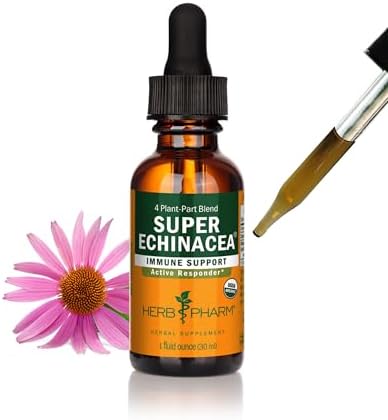
- Supports healthy function of the immune system
- A proprietary blend of the certified organic extracts of four different Echinacea purpurea plants parts
- Rapidly absorbed liquid extract
Echinacea is another popular herbal supplement commonly marketed for cold and respiratory support.
What the Evidence Shows
Research on echinacea has produced mixed results.
Some evidence suggests certain echinacea products may slightly reduce the chance of catching a cold, while it remains unclear whether echinacea consistently shortens the duration of a cold.
One reason for the inconsistent evidence is that echinacea products can differ in species, plant parts, extraction methods, and formulations.
Therefore, a study involving one echinacea preparation cannot automatically be applied to every echinacea supplement.
Safety
Echinacea appears to be reasonably well tolerated by many adults when used for short periods, but allergic reactions and other side effects can occur.
People with allergies to plants in the daisy family or those taking medications should use extra caution.
7. Selenium

- Yeast-Free Selenium; Selenium is an essential trace mineral; This formulation provides yeast-free selenium as L-seleno…
- Antioxidant Health; Selenium is a component of the antioxidant enzyme glutathione peroxidase, which helps to fight cell-…
- Gluten, Wheat & Dairy Free; Solgar Yeast-Free Selenium is non-GMO, vegan, kosher, and free of: gluten, wheat, dairy, soy…
Selenium is an essential trace mineral that plays a role in antioxidant defense and normal immune function.
Food sources include seafood, meat, eggs, dairy products, and some nuts.
What the Evidence Shows
Adequate selenium intake is important for normal immune function, and selenium deficiency can adversely affect immune responses.
However, more selenium is not automatically better.
The evidence does not support taking high-dose selenium simply because it is marketed as an immune supplement.
What to Look For
Choose products with transparent labeling and avoid combining several supplements that all contain selenium unless you have calculated your total daily intake.
Safety
Excessive selenium intake can cause toxicity, including hair or nail changes, gastrointestinal symptoms, and other problems.
8. Vitamin A
Vitamin A is sometimes overlooked in immune-support discussions, but adequate vitamin A is important for normal immune function and the health of epithelial barriers.
It is found in foods such as eggs, dairy products, fish, and liver, while beta-carotene is found in colorful vegetables such as carrots and sweet potatoes.
What the Evidence Shows
Vitamin A deficiency can impair immune responses and increase susceptibility to infections.
However, supplementation is not something everyone needs.
Because excessive preformed vitamin A can accumulate in the body, high-dose vitamin A supplements should not be used casually.
Buying Tip
For general nutrition, a balanced diet is usually a better starting point than taking a high-dose vitamin A supplement.
What About Garlic for Immune Support?
Garlic is frequently marketed as a natural immune booster.
Garlic contains biologically active compounds, and researchers have studied its potential effects on cardiovascular health, inflammation, and respiratory infections.
However, evidence supporting garlic as a reliable way to prevent or treat colds is not strong.
That means garlic can be part of a healthy diet without making the claim that a garlic supplement will “boost immunity” or prevent illness.
Food First
Fresh garlic can be incorporated into a balanced diet as a flavorful food.
If you choose a garlic supplement, check the standardized ingredient information and avoid products that make exaggerated disease-prevention claims.
How to Choose an Immune-Support Supplement
The supplement aisle can be confusing because almost every product seems to promise stronger immunity.
Instead of choosing based on marketing language, use a simple checklist.
1. Start With Your Diet
Look at your normal food intake first.
A varied diet containing fruits, vegetables, whole grains, protein foods, dairy or fortified alternatives, nuts, seeds, and seafood can provide many nutrients required for normal immune function.
2. Consider Nutritional Gaps
Supplements make more sense when they address a known dietary gap or a deficiency identified by a healthcare professional.
Taking several overlapping products without knowing what you need can increase the risk of excessive intake.
3. Read the Supplement Facts Panel
Do not rely only on the front of the bottle.
Check:
- Serving size
- Amount per serving
- Active ingredients
- Other ingredients
- Daily Value percentages
- Suggested use
- Warnings
4. Avoid Proprietary Blends
A proprietary blend may list a group of ingredients without clearly telling you how much of each ingredient is included.
Transparent labeling makes it easier to compare products.
5. Look for Quality Testing
Third-party testing can provide additional information about product identity, purity, and manufacturing quality.
Certifications and testing programs can include organizations such as USP or NSF, although certification does not mean a supplement will produce a particular health outcome.
6. Be Careful With Mega-Doses
More is not necessarily better.
A product containing several times the recommended intake of a nutrient may look impressive on a label but can create unnecessary risk.
Supplements vs. Food: Which Is Better?
For most people, food should be the foundation.
Whole foods provide vitamins and minerals alongside protein, fiber, healthy fats, and other compounds.
For example:
Vitamin C Foods
- Oranges
- Kiwi
- Strawberries
- Bell peppers
- Broccoli
Zinc Foods
- Oysters
- Beef
- Poultry
- Beans
- Nuts
- Dairy
Selenium Foods
- Seafood
- Eggs
- Meat
- Dairy
- Certain nuts
Vitamin D Foods
- Fatty fish
- Fortified milk
- Fortified plant beverages
- Fortified cereals
Supplements can be useful when food intake is insufficient or when a healthcare professional recommends them.
Can You Take Multiple Immune Supplements Together?
This is where many supplement routines become unnecessarily complicated.
Taking vitamin C, vitamin D, zinc, selenium, a multivitamin, and an immune-support blend at the same time can result in overlapping ingredients.
For example, a multivitamin may already contain zinc and selenium. Adding separate zinc and selenium products could push your intake higher than intended.
Before combining products:
- Write down every supplement you take.
- Compare the Supplement Facts panels.
- Add the total daily amount of overlapping nutrients.
- Check the upper intake limits where applicable.
- Ask a healthcare professional or pharmacist if you take medications.
There is no need to build a complicated “immune stack” simply because several products are marketed together.
Immune Health Starts With Daily Habits
Supplements are only one part of the picture.
Eat a Varied Diet
A diet rich in fruits, vegetables, protein foods, whole grains, nuts, seeds, and other nutrient-dense foods provides the foundation for adequate nutrition.
Get Enough Sleep
Sleep supports normal immune function. Consistently poor sleep can affect many aspects of health, so improving sleep habits is a useful part of an overall wellness routine.
Stay Physically Active
Regular physical activity supports overall health and can be part of a healthy immune-supportive lifestyle.
Manage Chronic Stress
Long-term stress can affect sleep, eating patterns, physical activity, and overall health.
Simple habits such as regular exercise, time outdoors, relaxation practices, and a consistent sleep schedule can help support a healthier routine.
Related reading: Best Supplements for Mental Health and Stress Relief in 2026
When Should You Talk to a Healthcare Professional?
Talk with a healthcare professional before starting a new supplement if you:
- Take prescription medications
- Are pregnant or breastfeeding
- Have a chronic medical condition
- Have kidney or liver problems
- Have a known nutrient deficiency
- Are considering high-dose vitamins or minerals
- Are taking several supplements at the same time
Children and teenagers should also not be given adult-dose immune supplements without appropriate professional guidance.
Common Mistakes to Avoid
Mistake 1: Believing “Natural” Means Safe
Natural ingredients can still cause side effects or interact with medications.
Mistake 2: Taking More Because the Label Says “High Potency”
High potency is not automatically better.
Mistake 3: Buying Based Only on Reviews
Customer reviews can tell you about taste, packaging, or convenience, but they cannot prove that a supplement prevents infections.
Mistake 4: Ignoring the Ingredient Form
Different forms of the same nutrient or botanical may have different absorption, tolerability, and evidence.
Mistake 5: Using Supplements Instead of Medical Care
Supplements should not be used as a substitute for evaluation or treatment when you are actually sick.
Mistake 6: Combining Too Many Products
Overlapping ingredients are easy to miss when you use several products.
What Should You Actually Look For in 2026?
A good immune-support supplement should have:
- A clearly identified ingredient
- Transparent dosing
- No unnecessary proprietary blend
- Appropriate serving size
- Clear safety warnings
- Quality manufacturing information
- A realistic health claim
- Evidence that matches the product’s intended use
Be particularly cautious when a product claims to:
- Prevent every cold or flu
- Kill viruses
- Replace medical treatment
- “Supercharge” immunity
- Cure an infection
- Guarantee protection from COVID-19
Those claims go beyond what the evidence can reliably support.
Frequently Asked Questions
1. What are the best supplements for immune support in 2026?
Commonly studied immune-support nutrients include vitamin C, vitamin D, zinc, selenium, and vitamin A. Probiotics, elderberry, and echinacea have also been studied for specific respiratory or immune-related outcomes, but the evidence varies by ingredient and product.
2. Do immune supplements prevent colds and flu?
No supplement can guarantee that you will avoid a cold or flu.
Some nutrients are essential for normal immune function, while certain supplements may have modest effects on specific respiratory outcomes. The results depend on the nutrient, dose, timing, and individual nutritional status.
3. Is vitamin C worth taking every day?
Vitamin C is an essential nutrient, but many people can obtain enough from food.
Regular supplementation may modestly shorten the duration of common colds for some people, but taking vitamin C after symptoms begin has not consistently been shown to improve the illness.
4. Is vitamin D good for immune health?
Vitamin D plays an important role in normal immune function.
Supplementation can be useful when vitamin D intake or status is inadequate, but high-dose vitamin D should not be taken simply as a general infection-prevention strategy.
5. Can zinc help with a cold?
Some research suggests that oral zinc lozenges taken soon after cold symptoms begin may shorten the duration of a cold in some people.
Results vary by product and formulation, and excessive zinc intake can cause problems.
6. Are probiotics good for immunity?
Certain probiotic strains have been studied for upper respiratory infections and may provide modest benefits in some situations.
However, probiotics are strain-specific, so a result from one product cannot automatically be applied to every probiotic supplement.
7. Does elderberry prevent the flu?
There is not enough strong evidence to say that elderberry prevents influenza.
Some preliminary studies suggest it may help relieve symptoms of colds or influenza, but more high-quality research is needed.
8. Does echinacea work?
Evidence is mixed.
Some research suggests certain echinacea products may slightly reduce the chance of catching a cold, but it remains unclear whether echinacea consistently shortens the duration of a cold.
9. Can I take vitamin C, vitamin D, and zinc together?
These nutrients can appear together in some supplement formulas, but you should check the total amount you are getting from all supplements and fortified foods.
Avoid assuming that taking more of each nutrient will provide more immune protection.
10. Should I take an immune supplement if I already eat a healthy diet?
Not necessarily.
If your diet already provides adequate amounts of essential nutrients, additional supplementation may provide little benefit for infection prevention.
11. What is the safest way to choose an immune supplement?
Choose a product with transparent ingredients, clearly stated doses, appropriate warnings, and realistic claims.
Avoid products promising to cure infections or provide guaranteed protection.
12. Can supplements replace vaccines or medical treatment?
No.
Supplements should not replace recommended vaccinations, medical treatment, or professional evaluation when you are sick.
Final Takeaway
The best approach to immune health is not to search for one “magic” supplement.
Instead, focus on adequate nutrition, regular physical activity, sufficient sleep, stress management, and appropriate medical care.
Vitamin C, vitamin D, zinc, selenium, and vitamin A are important nutrients for normal immune function. Probiotics, elderberry, and echinacea may have more specific or limited evidence, depending on the product and the health outcome being studied.
The smartest supplement strategy is therefore not the biggest stack. It is choosing an appropriate product for a specific nutritional need, using a sensible dose, and understanding what the evidence can—and cannot—support.
For more wellness-focused recommendations, see our guide to Best Health & Wellness Products 2026 and our broader Best Wellness Products for 2026 guide.;https://lifecarebalance.com/