
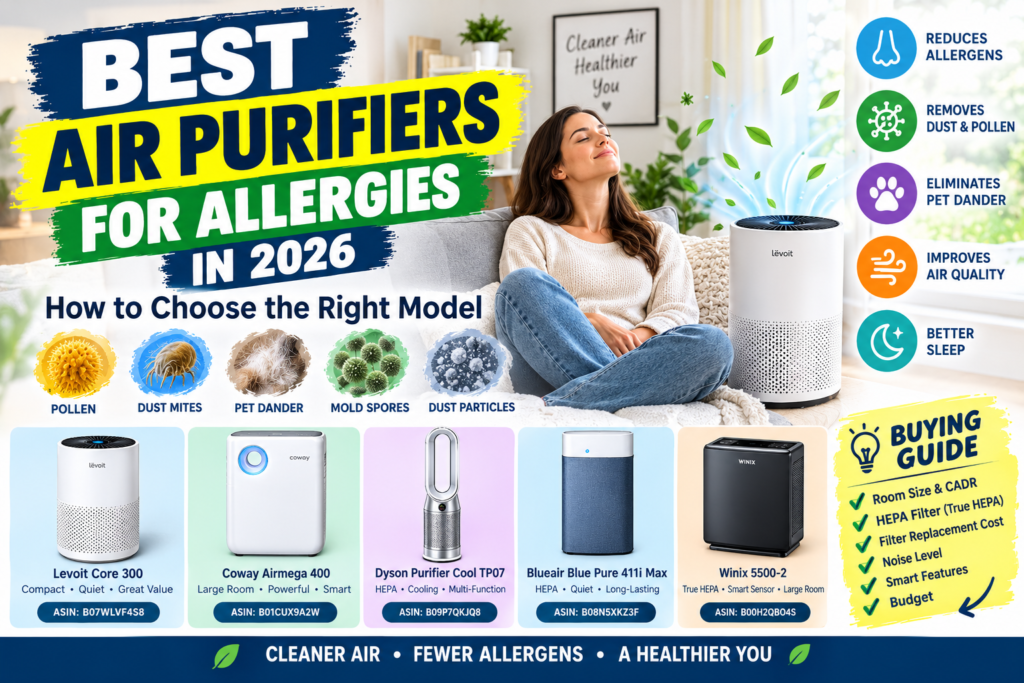
Best Air Purifiers for Allergies in 2026: How to Choose the Right Model
Compare the best air purifiers for allergies in 2026. Learn how to choose by CADR, room size, filtration, noise, filter cost, and pet dander.
LifeCareBalance.com is reader-supported. When you buy through links on our site, we may earn an affiliate commission at no extra cost to you. As an Amazon Associate, we earn from qualifying purchases.
Indoor allergens can make a bedroom or living room uncomfortable, especially for people sensitive to pollen, pet dander, dust, and airborne particles. A properly sized air purifier can reduce some of these particles while they are circulating in the air. However, choosing the right model requires more than comparing advertised room coverage or buying the most expensive device.
The best air purifier for allergies should deliver enough clean air for your actual room, use a filtration system suited to your main concern, operate at a noise level you can tolerate, and have replacement filters you can afford to maintain.
This guide compares five air purifier options for different needs: everyday bedroom use, larger rooms, pet households, and buyers who want more control over their indoor air. It also explains what CADR means, how to compare room-size claims, and which allergy problems an air purifier cannot solve.
Quick Answer: What Is the Best Air Purifier for Allergies?
For most buyers, start by comparing the Coway Airmega Mighty AP-1512HH and Levoit Core 400S-P for typical bedrooms and medium-sized living spaces. Consider the Levoit Core 600S-P when the room needs greater air-cleaning capacity. The Winix 5510 is worth considering if you want a newer model with automatic controls, while the Blueair Blue Pure 311i Max is another option for people who prioritize convenient operation and a compact footprint.
These are product candidates, not a claim that all five have been independently tested head-to-head for this article. Their current specifications, AHAM certification status, exact variants, and replacement-filter costs should be checked before purchasing.
The most important rule is simple: choose a purifier based on its verified clean air delivery rate (CADR) and the size of the space you want to clean—not the largest square-foot figure printed on the box.
Comparison: Five Air Purifiers to Consider
| Product | Best suited to | What to compare before buying |
|---|---|---|
| Coway Airmega Mighty AP-1512HH | Bedroom or medium-sized room | Verified CADR, filter cost, and whether the ion-generating feature can be avoided |
| Levoit Core 400S-P | Bedroom or medium-sized living room | Exact filter version, smoke CADR, app features, and replacement cost |
| Levoit Core 600S-P | Larger room or open living area | Actual room size, high-speed noise, and the current model’s specifications |
| Winix 5510 | Buyers who want automatic controls | Current filter availability, CADR, and PlasmaWave operating options |
| Blueair Blue Pure 311i Max | Everyday bedroom or living-room use | Its HEPASilent filtration design, CADR, and whether its technology matches your preferences |
Note: Models, product names, filter bundles, and specifications can vary by market and generation. Confirm the exact US version before buying.
How We Evaluated These Options
This guide uses a practical comparison framework rather than claiming that LifeCareBalance conducted laboratory tests on every model. The criteria below help buyers judge the published specifications and identify what still needs confirmation.
- Particle-cleaning capacity: CADR values for smoke, dust, and pollen, preferably verified through an independent certification program.
- Room suitability: The recommended area at a stated air-change rate, not just the largest advertised coverage number.
- Filtration approach: Mechanical particle filtration, electrostatic-assisted filtration, and any additional features should be described accurately.
- Noise and everyday use: A unit should be usable at a speed that provides meaningful airflow without becoming disruptive.
- Ownership costs: Replacement filters, availability, cleaning requirements, and expected maintenance.
- Product transparency: Clear manufacturer documentation and enough information to confirm the exact model.
A published specification is not the same as an independent test result. Unless a test result is available from a credible source, manufacturer figures should be described as manufacturer-reported.
1. Coway Airmega Mighty AP-1512HH — A Practical All-Round Option

- [Coverage] Designed to clean spaces up to 1,748 sq. ft. in 60 minutes
- [Four Stage Filtration System] Combination of a washable pre-filter, deodorization filter, Bipolar Device, and HEPA Filt…
- [Auto Mode] Constantly monitoring the air quality, the fan automatically adjustes to most effectively purifiy your space…
The Coway Airmega Mighty AP-1512HH is a long-established room air purifier with automatic fan control, an air-quality indicator, and a combination of particle and odor filtration. Its relatively compact design makes it a candidate for a bedroom, home office, or medium-sized living space.
Why consider it?
The main advantage is that it offers several useful everyday functions without requiring an app-based setup. An air-quality indicator can help users understand when the built-in sensor detects a change, and automatic operation can reduce the need for manual adjustments.
Its washable pre-filter can catch larger debris such as hair and lint before these reach the finer filter. That can be useful in a home with pets, although the pre-filter does not replace the need to remove pet dander from bedding, upholstery, and floors.
What should buyers check?
First, compare the model’s verified smoke, dust, and pollen CADR with the size of the room. Do not assume that the largest coverage figure means the purifier will deliver frequent air changes throughout that entire area.
Second, check the filter replacement schedule and the current price of genuine replacement filters. A low initial purchase price can be less attractive if replacement parts are expensive or hard to find.
Finally, review the product’s ion-generating feature and operating instructions if you prefer a purifier that relies only on mechanical filtration. Do not assume that every electronic feature can be disabled without checking the specific model documentation.
Best for: Buyers seeking a straightforward purifier for a bedroom or medium-sized room, provided its verified CADR matches the intended space.
2. Levoit Core 400S-P — A Smart Option for Medium-Sized Rooms

- 𝐖𝐇𝐘 𝐂𝐇𝐎𝐎𝐒𝐄 𝐀𝐇𝐀𝐌 𝐕𝐄𝐑𝐈𝐅𝐈𝐃𝐄 𝐀𝐈𝐑 𝐏𝐔𝐑𝐈𝐅𝐈𝐄𝐑𝐒: AHAM (Association of Home Appliance Manufacturers) is an ANSI-accredited organiz…
- 𝐀𝐇𝐀𝐌 𝐕𝐄𝐑𝐈𝐅𝐈𝐃𝐄 & 𝐓𝐑𝐔𝐒𝐓𝐄𝐃 𝐁𝐘 𝐄𝐗𝐏𝐄𝐑𝐓𝐒: Certified by the Association of Home Appliance Manufacturers (AHAM), the Core 400S-P…
- 𝐇𝐈𝐆𝐇-𝐄𝐅𝐅𝐈𝐂𝐈𝐄𝐍𝐂𝐘 𝐀𝐈𝐑 𝐏𝐔𝐑𝐈𝐅𝐈𝐂𝐀𝐓𝐈𝐎𝐍 𝐅𝐎𝐑 𝐋𝐀𝐑𝐆𝐄 𝐑𝐎𝐎𝐌𝐒: The LEVOIT Core 400S-P Air Purifier is designed for powerful whole-roo…
The Levoit Core 400S-P is worth comparing if you want a cylindrical purifier with app controls, automatic operation, and a filter designed to address airborne particles. Its smart functions can make it convenient for households that prefer scheduling or remote adjustments.
Why consider it?
App control is useful when you want to change fan settings without walking over to the unit. Depending on the current model and software, smart features may also help you monitor operating status and filter-life indicators.
The more important question, however, is whether its clean-air output is suitable for your room. A purifier with a strong feature list can still be an underpowered choice if the room is larger than its practical cleaning capacity.
Important filtration detail
Do not assume that every Levoit Core 400S listing, replacement filter, or older review describes exactly the same product. Check the suffix, filter version, and current manufacturer’s specifications before relying on a HEPA-related claim.
If odors are also a concern, look at the type and quantity of activated carbon in the replacement filter. Carbon can adsorb some gases and odor compounds, but performance depends on the media, pollutant, and amount of carbon. A particle CADR does not establish how well a purifier removes gases.
What are the trade-offs?
Smart features add convenience, but they are not a substitute for adequate airflow. You should also check whether the fan speed you can comfortably tolerate provides enough cleaning capacity for the room.
Best for: Buyers who want app-based controls and a medium-room purifier, after confirming the exact filtration and CADR specifications.
3. Levoit Core 600S-P — For Rooms That Need More Airflow

- 𝐖𝐇𝐘 𝐂𝐇𝐎𝐎𝐒𝐄 𝐀𝐇𝐀𝐌 𝐕𝐄𝐑𝐈𝐅𝐈𝐃𝐄 𝐀𝐈𝐑 𝐏𝐔𝐑𝐈𝐅𝐈𝐄𝐑𝐒: AHAM (Association of Home Appliance Manufacturers) is an ANSI-accredited organiz…
- 𝐋𝐄𝐕𝐎𝐈𝐓’𝐒 𝐌𝐎𝐒𝐓 𝐏𝐎𝐖𝐄𝐑𝐅𝐔𝐋 𝐀𝐈𝐑 𝐏𝐔𝐑𝐈𝐅𝐈𝐄𝐑: A powerhouse at purifying your air in any room. It scans for tiny airborne contamin…
- 𝐔𝐋𝐓𝐑𝐀-𝐏𝐎𝐖𝐄𝐑𝐅𝐔𝐋 𝐏𝐔𝐑𝐈𝐅𝐈𝐂𝐀𝐓𝐈𝐎𝐍 𝐅𝐎𝐑 𝐄𝐗𝐓𝐑𝐀-𝐋𝐀𝐑𝐆𝐄 𝐒𝐏𝐀𝐂𝐄𝐒: The Levoit Core 600S-P Air Purifier is built for extra-large rooms, …
The Levoit Core 600S-P is designed for buyers who need greater air-cleaning capacity than a small bedroom purifier can provide. It may be worth considering for a large bedroom, a spacious living room, or a more open area, depending on its verified performance and the room layout.
Why airflow matters
A purifier cleans air by drawing it through a filter and returning the filtered air to the room. If its airflow is too low for the room, it may not reduce airborne particle concentrations as quickly as a properly sized alternative.
This is why the CADR figure matters more than the headline coverage number. A large room can require considerably more clean air than a small room, particularly when you want frequent air changes rather than occasional filtration.
What to consider before buying
- Measure the room’s length and width.
- Consider whether the room opens into a kitchen, hallway, or another space.
- Check the verified CADR and the air-change assumptions behind the coverage figure.
- Listen to the unit at the fan speed you expect to use regularly.
- Compare genuine replacement-filter prices and availability.
An open-plan living and dining area can behave differently from a single enclosed room of the same floor area. Furniture placement, blocked airflow, ceiling height, and the movement of air between spaces can all affect practical performance.
Best for: Buyers who need higher airflow for a larger space and can accommodate the unit’s footprint and operating noise.
4. Winix 5510 — An Option for Automatic Operation
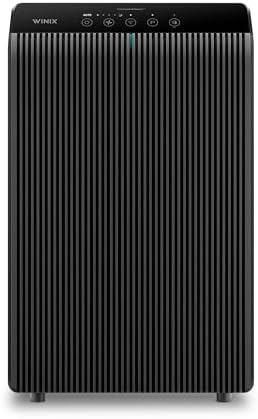
- 𝐀𝐇𝐀𝐌 𝐕𝐞𝐫𝐢𝐟𝐢𝐝𝐞 𝐚𝐭 𝟑92 𝐬𝐪 𝐟𝐭.: Also cleans rooms up to 1,882 sq ft in 1 hour (941 sq ft in 30 minutes, 627 sq ft in 20 min…
- 𝐖𝐢𝐧𝐢𝐱 𝐓𝐫𝐮𝐞 𝐇𝐄𝐏𝐀: Captures 99.99%* of airborne allergens including pollen, dust, smoke, and pet dander, as small as 0.01 …
- 𝐀𝐝𝐯𝐚𝐧𝐜𝐞𝐝 𝐎𝐝𝐨𝐫 𝐂𝐨𝐧𝐭𝐫𝐨𝐥 𝐂𝐚𝐫𝐛𝐨𝐧 𝐅𝐢𝐥𝐭𝐞𝐫: Reduces VOCs and household odors from cooking, pets, and smoke. It is designed to c…
The Winix 5510 is worth investigating if you want a room purifier with automatic controls and a combination of particle filtration and odor-related filtration. Before choosing it, compare its exact current US specifications with the size of the room and the costs of ongoing maintenance.
What makes automatic operation useful?
An automatic mode can adjust fan speed in response to the purifier’s sensor readings. This may be convenient when indoor particle levels change during everyday activities, such as cleaning or cooking.
However, an onboard sensor is not a complete measurement of every allergen or pollutant. A sensor may detect certain particles without identifying whether they are pollen, pet dander, smoke, or another substance. Do not treat a clean-looking indicator as proof that all allergens have been removed.
Understand the additional technology
Winix models may include PlasmaWave technology. If you are concerned about ionization or possible ozone production, read the documentation for the exact model and its operating options. Do not assume every Winix purifier has identical controls or that an option works the same way across generations.
Also check the availability of the correct replacement filter. Similar-looking filters are not necessarily interchangeable, and an incorrect filter can compromise fit or airflow.
Best for: Buyers who value automatic fan control and want to compare a Winix model’s verified performance with simpler mechanical-filter alternatives.
5. Blueair Blue Pure 311i Max — A Compact Everyday Option
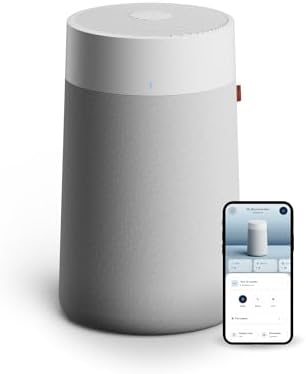
- Powerful Air Purifier for Medium Rooms: The Blue Pure 311i Max quickly cleans air in bedrooms, living rooms, apartments,…
- Removes Dust, Smoke, Pet Dander & Allergens: Blueair’s HEPASilent dual filtration technology captures 99.97% of airborne…
- Smart Air Purifier with App Control: Built-in sensors automatically adjust fan speed when pollution levels rise. Use the…
The Blueair Blue Pure 311i Max is another candidate for buyers looking for a room purifier with straightforward controls and a modern design. Its suitability depends on the room’s size, the verified CADR, and whether you are comfortable with its HEPASilent filtration approach.
What is HEPASilent?
Blueair uses the HEPASilent name for a technology that combines mechanical filtration with electrostatic assistance. It should not automatically be described as identical to a conventional True HEPA filter. Buyers who specifically want a purely mechanical filter should compare the technology and documentation rather than relying only on the product’s marketing category.
What should allergy sufferers prioritize?
The most useful questions are:
- Is the CADR sufficient for the intended room?
- Are the pollen, dust, and smoke figures independently verified?
- Is the unit quiet enough at a speed that still provides useful airflow?
- Can you obtain the correct replacement filters?
- Are you comfortable with the filtration technology and its operating characteristics?
A fabric pre-filter may collect larger debris and can make the exterior easier to maintain, but it does not mean that all pet allergens are captured before reaching the main filter. Pet dander is different from visible pet hair.
Best for: Buyers who want a compact everyday purifier and are comfortable with Blueair’s filtration design after checking the current specifications.
How Air Purifiers Help With Allergies
Airborne allergens can include pollen, pet dander, and particles associated with dust or mold. A properly sized purifier can reduce some airborne particles as air passes through its filter. The benefit depends on the purifier, the pollutant, the room, and how consistently the unit operates.
The U.S. Environmental Protection Agency explains that portable air cleaners can supplement source control and ventilation, but they do not remove every pollutant from a home. See the EPA’s Guide to Air Cleaners in the Home.
Pollen
Pollen can enter a home through open windows, doors, clothing, and pets. A suitable particle purifier may reduce airborne pollen in the room where it operates. It will not stop all pollen from entering or remove pollen that has already settled on furniture and floors.
During high-pollen periods, consider keeping windows closed when outdoor pollen levels are high, changing clothes after spending time outside, and cleaning surfaces regularly.
Pet dander
Pet allergens are not limited to visible hair. They can be carried in tiny particles from skin flakes and saliva and can settle on bedding, upholstery, and other surfaces.
A purifier may help with the airborne portion of the problem, but it cannot remove allergens that remain on a couch or mattress. Regular cleaning and keeping pets out of the bedroom may also help reduce exposure.
Dust and dust-mite allergens
Household dust is a mixture of materials, and dust mites are commonly associated with bedding, carpets, and upholstered furniture. An air purifier can capture some particles while they are airborne, but it cannot clean a mattress or eliminate dust mites living in bedding.
Wash bedding regularly, use suitable allergen-proof mattress and pillow covers if appropriate, and vacuum using a well-maintained cleaner. For more context on household triggers, consult the CDC’s guidance on controlling asthma.
Mold and moisture
Mold can release spores and fragments into indoor air, but an air purifier is not a fix for mold growth. If there is a leak, damp material, or visible mold, the moisture source must be addressed. Simply running a purifier while leaving a moisture problem unresolved is not an adequate solution.
How to Choose the Right CADR and Room Size
CADR stands for Clean Air Delivery Rate. It indicates the volume of filtered air a purifier delivers for specific particle categories. In many product listings, these include tobacco smoke, dust, and pollen.
For room sizing, the Association of Home Appliance Manufacturers provides a searchable directory of certified room air cleaners. Its guidance explains how verified CADR values and suggested room sizes can help buyers compare models.
A common starting point is to choose a smoke CADR of at least two-thirds of the room’s floor area in square feet, assuming a ceiling height around eight feet. For example, a 300-square-foot room would need a smoke CADR of roughly 200 CFM under this rule. A larger CADR can provide faster particle removal.
Treat this as a sizing guideline, not a guarantee. Higher ceilings, open floor plans, and the number of air changes you want can change the requirement. Check the manufacturer’s stated coverage conditions and the independent certification record for the exact model.
Why the biggest advertised coverage number can mislead
Some manufacturers publish coverage based on only one or two air changes per hour. A product may therefore advertise a very large room size while providing fewer air changes than you want for allergy-related particle reduction.
Compare products using the same assumptions wherever possible. If one product’s coverage figure is based on one air change per hour and another’s is based on four or five, those square-foot numbers are not directly comparable.
HEPA vs. Activated Carbon: Which Do You Need?
These filter types serve different purposes.
| Feature | Particle filter, including HEPA | Activated carbon |
|---|---|---|
| Pollen and airborne dust | Designed to capture particles | Not its main purpose |
| Pet dander while airborne | Can capture particles | Not its main purpose |
| Smoke particles | Can capture particles | Does not replace particle filtration |
| Some odors and gases | Not the primary function | Can adsorb some compounds |
| All VOCs | Does not remove all gases | Does not guarantee removal of all VOCs |
The EPA explains that HEPA is a mechanical filtration standard associated with capturing at least 99.97% of particles at 0.3 microns under the relevant filter test conditions. Read its explanation of what a HEPA filter is.
That filter-level efficiency does not mean every purifier removes 99.97% of particles from an entire room instantly. Overall results also depend on airflow, sealing, filter condition, and room conditions.
For odors or certain gases, an air purifier needs suitable gas-phase filtration, often activated carbon. Carbon performance depends on the amount and type of material and the pollutant being targeted. If a household has a strong chemical odor, the first step should be to identify and reduce the source rather than relying solely on a purifier.
What Air Purifiers Cannot Do
A purifier should be treated as one part of indoor air management—not a cure for allergies or a replacement for medical care.
It cannot reliably:
- Remove all allergens from the entire home with one room unit.
- Clean dust, pollen, or pet allergens already settled on surfaces.
- Fix a roof leak, plumbing leak, or persistent dampness.
- Eliminate every VOC, odor, or gaseous pollutant.
- Guarantee that allergy symptoms will disappear.
- Replace prescribed medication or a clinician’s allergy or asthma management plan.
The American Lung Association’s air-cleaning guidance discusses the role of air cleaners and the importance of selecting a suitable unit for the room. It also cautions consumers to consider technology and possible ozone-related concerns.
If symptoms are persistent, severe, or worsening, seek advice from a qualified healthcare professional. Wheezing, breathing difficulty, or severe asthma symptoms require appropriate medical attention rather than relying on an air purifier alone.
How to Use an Air Purifier More Effectively
Buying a capable model is only the beginning. Use and maintenance influence how much air it filters over time.
- Place it in the room that matters most. A bedroom may be a sensible priority if that is where you spend many hours.
- Keep air intake and outlet areas clear. Curtains, furniture, and walls can obstruct airflow if the unit is placed too close.
- Choose a usable fan speed. Higher speeds generally move more air but can be noisier. The best practical setting is one you can run consistently while maintaining adequate cleaning capacity.
- Clean the pre-filter as directed. Do not wash a filter unless the manufacturer specifically says it is washable.
- Replace filters according to the manual. Do not rely solely on appearance or a generic interval from another model.
- Continue routine cleaning. Vacuuming, dusting, and washing bedding address allergens that a purifier cannot reach once they have settled.
- Address pollution sources. Reduce smoke, control moisture, and ventilate when outdoor air quality makes that appropriate.
- Avoid ozone-generating air-cleaning devices. Do not assume a product is safe simply because it is marketed as a purifier.
For more on choosing a model by room size, CADR, filtration, and ongoing costs, see the LifeCareBalance Air Purifier Buying Guide for Beginners.
Which Air Purifier Should You Choose?
Use this quick decision guide to narrow your options.
- For a typical bedroom: Compare the Coway Airmega Mighty AP-1512HH with the Levoit Core 400S-P. Choose based on verified CADR, noise at the setting you will use, and replacement-filter cost.
- For a larger living room: Start with the Levoit Core 600S-P and compare its verified output with the room’s actual size and layout.
- For automatic operation: Compare the Winix 5510’s sensor and control options with the features you will genuinely use.
- For a compact everyday purifier: Consider the Blueair Blue Pure 311i Max if its filtration technology and verified CADR suit your requirements.
- For odor or chemical concerns: Look beyond particle CADR. Check the type and quantity of gas-phase media, identify the source, and improve ventilation when appropriate.
- For the lowest long-term cost: Compare genuine replacement filters and expected replacement frequency before deciding. A cheaper device can become more expensive if its filters cost more or are difficult to find.
If your main priority is large-room performance rather than allergies specifically, the LifeCareBalance Best Air Purifiers for Large Rooms in 2026 guide covers room size and high-CADR options in more detail.
If you are primarily trying to understand the evidence behind air cleaners rather than choose a product, read Do Air Purifiers Really Improve Health in 2026?. For a direct comparison of two popular models, our Levoit Core 400S vs. Coway Airmega 250 article explores differences in filtration, features, and ownership considerations.
Frequently Asked Questions
1. What is the best air purifier for allergies in 2026?
There is no single best model for every home. The right choice depends on room size, verified CADR, filtration technology, noise, filter costs, and the particles you want to reduce. Compare the Coway Airmega Mighty AP-1512HH and Levoit Core 400S-P for typical rooms, and consider higher-capacity options for larger spaces.
2. Do air purifiers actually help with allergies?
A correctly sized purifier can reduce some airborne particles, including pollen and pet dander, while they pass through its filter. The effect on symptoms varies by person and environment. It will not remove all allergens or replace cleaning and appropriate medical care.
3. Is a HEPA filter better than activated carbon?
They address different problems. HEPA filtration targets particles, while activated carbon can adsorb some gases and odors. If airborne allergens are the main concern, prioritize suitable particle filtration and CADR. If odors are also a problem, evaluate the carbon filter separately.
4. What CADR do I need for a 300-square-foot room?
A commonly used starting point is a smoke CADR of about 200 CFM for a 300-square-foot room with an eight-foot ceiling. This follows the two-thirds guideline. Higher ceilings, open layouts, and the desired air-change rate can increase the capacity you need.
5. Should I run an air purifier all night?
Continuous operation can provide more consistent particle removal, but the appropriate setting depends on the room, device, noise level, and manufacturer’s instructions. Use a speed that offers useful airflow without making the unit impractical to operate.
6. Can an air purifier remove pet hair?
A pre-filter may catch larger pieces of hair, while the main particle filter is designed for smaller airborne particles. Hair and allergens that have already settled on furniture still require cleaning.
7. Can an air purifier remove mold?
A purifier may capture some airborne mold particles, but it cannot fix the moisture problem that allows mold to grow. Repair leaks, dry damp materials, and address visible mold appropriately.
8. Are smart air purifiers worth the extra cost?
Smart features can make scheduling and fan adjustments more convenient, but they do not automatically make a purifier more effective. Prioritize verified CADR, room suitability, filter costs, and practical noise levels before paying extra for app features.
9. How often should I replace the filter?
Follow the instructions for the exact model and filter. Replacement timing varies with use, air quality, and filter design. Check filter availability and cost before purchasing the purifier.
10. Can an air purifier replace allergy medication?
No. An air purifier is an environmental tool that may reduce exposure to some airborne triggers. It is not a substitute for prescribed medication, allergy testing, or a clinician’s recommendations.
Final Verdict
The best air purifier for allergies is the one that delivers enough verified clean air for your room, uses a filtration system appropriate to your needs, and remains affordable and practical to maintain.
For a typical bedroom or medium-sized space, compare the Coway Airmega Mighty AP-1512HH and Levoit Core 400S-P. For larger rooms, consider the Levoit Core 600S-P. The Winix 5510 and Blueair Blue Pure 311i Max are additional candidates, but their exact filtration details, current specifications, and suitability should be verified before you buy.
Do not choose by advertised coverage alone. Compare CADR under consistent assumptions, check replacement-filter costs, and consider the noise level at the speed you will actually use. Continue cleaning, controlling moisture, reducing pollution sources, and following medical advice when needed.
An air purifier can be a useful part of an allergy-conscious home, but the strongest buying decision comes from matching the product to the room and understanding what filtration can—and cannot—do.