
LifeCareBalance.com is reader-supported. When you buy through links on our site, we may earn an affiliate commission at no extra cost to you. As an Amazon Associate, we earn from qualifying purchases.
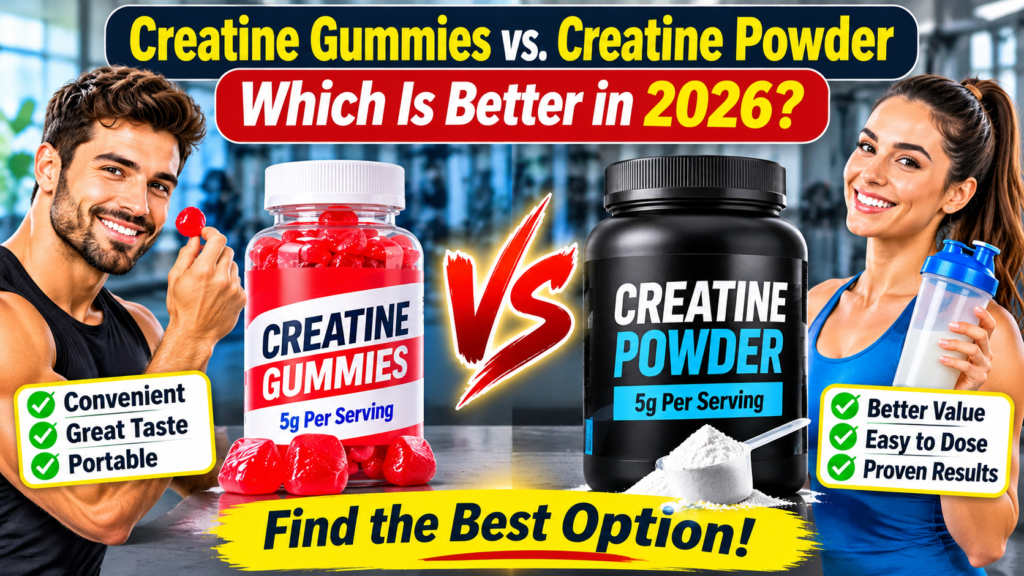
Creatine is one of the most researched sports supplements for supporting strength, power, and high-intensity exercise performance. Traditionally, most people have used creatine monohydrate powder. However, creatine gummies have become a popular alternative for people who prefer a convenient, chewable supplement.
Both formats can provide creatine, but they are not automatically equal. The amount of creatine per serving, product quality, ingredient stability, price, and ease of daily use all matter.
So, which is better: creatine gummies or creatine powder?
For most people, creatine monohydrate powder is the better overall choice because it is usually less expensive, easier to measure, and supported by a much larger body of research. Gummies may still be a reasonable option for people who dislike powder, provided the product delivers a clearly stated and reliable dose.
This guide compares both options to help you choose the right format for your fitness goals and budget.
Quick Answer: Creatine Gummies vs. Powder
Creatine powder is generally the best choice for value, dosing flexibility, and simplicity. Creatine gummies are more convenient and easier to carry, but they can cost more and may contain added sugar or other ingredients.
The active ingredient matters more than the format. If both products provide the same verified amount of creatine monohydrate, they may support similar results. However, there is limited direct research comparing commercial gummies with traditional powder products.
| Comparison | Creatine Gummies | Creatine Powder |
|---|---|---|
| Convenience | Very convenient | Requires mixing |
| Daily dose | Depends on the number of gummies | Easy to measure |
| Cost per gram | Usually higher | Usually lower |
| Added sugar | May contain sugar or sweeteners | Usually none in unflavored products |
| Portability | Easy to carry | Requires a container or scoop |
| Ingredient options | Often includes flavors and binders | Commonly available as plain monohydrate |
| Research history | More limited | Extensive research |
| Best for | Convenience and taste | Value and accurate dosing |

- BUILD LEAN MUSCLE, STRENGTH & RECOVERY: Every serving of Force Factor Creatine Gummies supports athletic performance by …
- SUPPORT COGNITIVE HEALTH & MEMORY: Creatine Gummies deliver a science-backed 5g dose of creatine monohydrate per serving…
- FASTER ABSORPTION FOR BETTER RESULTS: Force Factor Creatine Gummies are formulated with AstraGin, a patented ginseng ext…

- STRENGTH, POWER, RECOVERY: Creatine monohydrate is one of the most studied supplements in the world – supporting muscle …
- SHARPER FOCUS AND MEMORY: Your brain uses creatine too – research links daily creatine supplementation to improved memor…
- NEVER MISS A DAY: Creatine only works when you take it consistently – 3 gummies deliver a precise 4.5g serving in second…
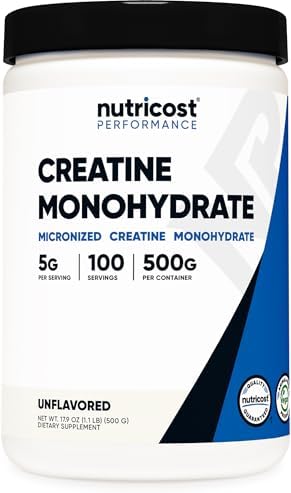
- High Quality Micronized Creatine Monohydrate
- Get The Strength and Endurance You've Been Working For
- 500 Grams of Creatine Monohydrate Per Bottle
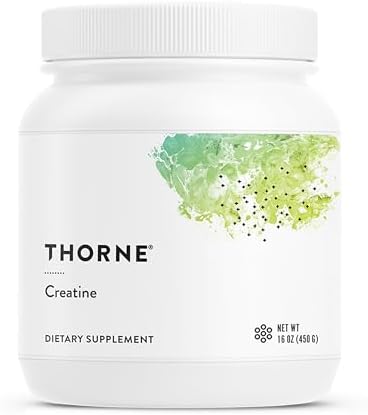
- Muscle Mass: Creatine is an amino acid that promotes lean body mass and supports increases in muscle endurance, muscle c…
- Cellular Energy Production: Creatine helps the cells of the body more efficiently create energy, thus benefiting exercis…
- Brain Function: Although creatine is known for its muscle-enhancing benefits, it has also been shown to support cognitiv…
What Is Creatine?
Creatine is a compound naturally produced by the body and also found in foods such as meat and seafood. Most of the body’s creatine is stored in skeletal muscle, where it helps support the rapid production of energy during short, intense activities.
Examples include:
- Weightlifting
- Sprinting
- High-intensity interval training
- Repeated jumping
- Short bursts of intense athletic activity
Creatine supplements are designed to increase the amount of creatine stored in muscles. This may help support exercise performance and training adaptations when combined with an appropriate workout program.
Creatine monohydrate is the most widely researched form. The International Society of Sports Nutrition identifies it as the most effective and extensively studied creatine form for increasing high-intensity exercise capacity and lean body mass during training.
Research reference: International Society of Sports Nutrition Position Stand.
Creatine Gummies: How Do They Work?
Creatine gummies are chewable supplements that contain creatine, usually in a flavored gummy base. They are marketed as an alternative to traditional powder.
Instead of measuring a scoop and mixing it with water, users chew the recommended number of gummies.
Benefits of Creatine Gummies
1. Convenient to take
Gummies are easy to use at home, at work, or while traveling. You do not need a shaker bottle, water, or a measuring scoop.
2. No mixing required
Some people dislike the texture of powdered supplements. Gummies remove the need to mix creatine into a drink.
3. Pre-measured servings
A gummy product provides a fixed serving size. This can make daily use straightforward, as long as you follow the label instructions.
4. More appealing taste
Flavored gummies may be easier for people who dislike the taste or texture of some powdered products.
Disadvantages of Creatine Gummies
Gummies also have limitations that buyers should understand.
1. Higher cost
Gummies generally cost more per gram of creatine than plain monohydrate powder. You may need several gummies to reach a commonly used daily amount.
2. Added sugar and calories
Some products contain added sugar, while others use sugar alcohols or alternative sweeteners. Check the Supplement Facts panel if you monitor your sugar or calorie intake.
3. Serving sizes can be confusing
A label may advertise a certain amount per serving rather than per gummy. Always check how many gummies make up one serving and how much creatine that serving provides.
4. Product quality deserves attention
Manufacturing a gummy is more complicated than packaging dry creatine powder. Moisture, heat, processing, and storage conditions can affect product quality.
A 2024 test of 12 creatine gummy products by supplement manufacturer NOW Foods reported that five samples contained little to no creatine. This was a limited test, not a representative survey of every gummy brand, but it highlights why buyers should look for credible quality testing.
A separate testing project is available through SuppCo’s creatine testing report.
Creatine Powder: How Does It Work?
Creatine powder is the traditional form of creatine supplementation. Most products contain creatine monohydrate, which can be mixed with water or another drink.
Plain creatine monohydrate is popular because it provides a straightforward way to measure a daily dose without additional flavoring or gummy ingredients.
Benefits of Creatine Powder
1. Better value for money
Powder is usually the more affordable way to get a regular supply of creatine. A container can provide many servings, depending on its size and serving instructions.
2. Easy dose adjustment
You can measure the amount you need with a suitable scale or the product’s serving scoop. This makes powder more flexible than gummies.
3. Strong research background
Most of the established research on creatine supplementation has used creatine monohydrate, commonly provided as powder.
4. Simple ingredient lists
Unflavored creatine monohydrate products often contain just one ingredient. This can make it easier to avoid unnecessary flavors, sweeteners, and fillers.
5. Easy to add to a routine
Powder can be mixed into water, a smoothie, or another suitable drink. You can take it at a time that fits your daily schedule.
Disadvantages of Creatine Powder
Powder is not perfect for everyone.
- It requires mixing before use.
- Some products may feel gritty if they do not dissolve completely.
- You need to carry a container or serving packet when traveling.
- Measuring a serving may be inconvenient for people who prefer ready-to-take supplements.
For most users, these are manageable disadvantages. However, convenience can be an important factor when choosing a supplement you intend to use consistently.
Which Works Better for Muscle Growth?
The key factor is the amount of creatine your body receives, not whether the supplement comes in a gummy or powder format.
Both formats may provide creatine monohydrate. If a gummy and a powder deliver the same reliable amount of this ingredient, there is no established reason to assume the gummy automatically produces better muscle growth.
Creatine may support training by increasing muscle creatine stores. This can help with repeated high-intensity exercise and may improve training capacity over time.
However, creatine is not a replacement for:
- Progressive resistance training
- Adequate protein intake
- Sufficient calories
- Consistent sleep
- Proper recovery
There is limited direct research comparing commercial creatine gummies and powders in long-term training outcomes. Therefore, it would be inaccurate to claim that one format has been proven superior for muscle growth when the actual creatine dose is equal.
Our practical verdict: Powder is the more established and straightforward option. A properly formulated and quality-tested gummy may be suitable if it provides an adequate daily amount.
How Much Creatine Do You Need Daily?
For many healthy adults who choose to supplement, a commonly used maintenance amount is 3–5 grams of creatine monohydrate per day.
The National Institutes of Health Office of Dietary Supplements explains that research protocols commonly use a loading phase followed by a maintenance phase. Loading is optional; taking a smaller daily amount can also gradually increase muscle creatine stores.
A simple approach is:
| Supplement Routine | Common Research Amount |
|---|---|
| Daily maintenance | 3–5 grams |
| Optional loading phase | About 20 grams daily, divided into smaller servings, for 5–7 days |
| After loading | 3–5 grams daily |
A loading phase is not necessary for everyone. Without loading, muscle creatine stores increase more gradually.
Read the NIH Office of Dietary Supplements fact sheet for more information about creatine and sports supplements.
How Many Gummies Equal One Scoop of Powder?
This depends entirely on the product.
For example, imagine a gummy label states that four gummies provide 4 grams of creatine. That serving would provide less creatine than a powder serving containing 5 grams.
Do not assume that one gummy equals one scoop.
Before buying, check:
- Creatine amount per gummy.
- Total creatine per serving.
- Number of gummies per serving.
- Recommended daily serving.
- Whether the product specifies creatine monohydrate.
Compare the actual grams of creatine, not the number of pieces or the total weight of the gummy serving.
Price Comparison: Which Offers Better Value?
Price is one of the biggest differences between gummies and powder.
Creatine powder is generally cheaper because it does not require the same flavored gummy formulation and packaging. Gummies may include additional ingredients and more complex manufacturing steps.
However, the price on the bottle does not tell you the full story.
To compare products fairly, calculate the cost of receiving 5 grams of creatine.
Cost per 5 grams = Total product price ÷ Total grams of creatine in the container × 5
For example, if a powder container costs $30 and contains 500 grams of creatine, the cost per 5 grams is $0.30.
If a gummy container costs $30 and provides 150 grams of creatine in total, the cost per 5 grams is $1.00.
These are hypothetical examples, not current product prices. Actual costs depend on the product, serving size, retailer, and promotions.
| Buying Factor | Better Option for Most Buyers |
|---|---|
| Lowest cost per gram | Powder |
| Larger supply for the price | Powder |
| No mixing | Gummies |
| Flexible serving size | Powder |
| Ready-to-take convenience | Gummies |
If you plan to use creatine regularly, comparing the cost per 5 grams is more useful than comparing bottle prices.
Sugar and Other Ingredients: What Should You Check?
Plain, unflavored creatine monohydrate powder often contains no added sugar. Gummies may include sugar, glucose syrup, flavoring, colors, gelatin, pectin, or sugar substitutes.
This does not automatically make gummies a bad choice. It simply means you should read the full label.
Pay attention to:
- Total carbohydrates per serving
- Total and added sugars
- Sugar alcohols
- Artificial colors and flavors
- Allergens
- Gelatin or plant-based alternatives
- The actual amount of creatine monohydrate
If you are monitoring carbohydrate intake, a plain powder may be easier to fit into your nutrition plan.
People who experience digestive discomfort from certain sweeteners may also prefer a simpler powder formula.
Quality Testing: How to Choose a Reliable Product
Quality matters with both gummies and powder. A supplement label alone does not prove that a product contains exactly what it claims.
When comparing creatine supplements, consider these checks.
Look for Third-Party Certification
Independent certification can provide additional confidence in product identity, label accuracy, and contaminant screening.
Examples include NSF Certified for Sport and other credible third-party testing programs.
You can learn more about testing and certification from NSF’s supplement certification information.
Certification applies to specific products and formulations. Do not assume that every product from a brand is certified just because another product from the same company has a certification.
Check the Full Supplement Facts Panel
The front of a package may highlight a large number, but that number may refer to the entire serving rather than the amount of creatine.
Confirm the exact amount of creatine monohydrate.
Review the Manufacturer
Look for a clearly identified manufacturer, contact information, lot number, expiration or best-by date, and appropriate storage instructions.
Avoid Unsupported Claims
Be cautious of products promising instant muscle growth, guaranteed fat loss, or dramatic strength increases without training.
The U.S. Food and Drug Administration does not approve dietary supplements for safety and effectiveness before they are marketed. Manufacturers are responsible for ensuring their products meet applicable requirements.
Read the FDA’s Questions and Answers on Dietary Supplements.
Are Creatine Gummies as Effective as Powder?
They may be, provided the gummy reliably delivers an adequate amount of creatine.
The ingredient is the important part. Creatine monohydrate does not become a different active ingredient simply because it is placed in a gummy.
However, there are two separate questions:
- Does the product contain the amount of creatine stated on its label?
- Does the person take enough creatine consistently?
Powder has a longer research history and is generally easier to measure. Gummies have less direct research as a commercial format, and product quality can vary.
There is not enough head-to-head evidence to say that every gummy product works exactly like every powder product.
Which Is Better for Beginners?
For beginners, plain creatine monohydrate powder is usually the simplest starting point.
It offers a straightforward ingredient list, flexible dosing, and generally better value. You do not need an advanced supplement formula to begin learning how creatine fits into a training routine.
Gummies may be more suitable if you strongly dislike powder and are more likely to use a chewable product consistently.
Beginners should focus on a few basics:
- Choose creatine monohydrate.
- Read the serving instructions.
- Compare the actual creatine amount.
- Avoid unnecessary performance claims.
- Follow a consistent training and nutrition routine.
You can also explore our fitness and movement products guide for other equipment that may support a home workout routine.
Creatine Gummies vs. Powder for Men and Women
Creatine is used by both men and women. The choice between gummies and powder does not need to be based on gender.
The more important considerations are the amount of creatine, product quality, personal preferences, and overall training routine.
For Men
Men who regularly perform strength training may prefer powder because it is easy to measure and often offers better value for long-term use.
Gummies can still be an option if the product provides a clearly stated amount of creatine and meets quality expectations.
For Women
Women who strength train may also consider creatine monohydrate. There is no general requirement to choose gummies instead of powder based on gender.
A simple powder may be a practical option for people who want to avoid extra sugar or flavoring ingredients. Gummies may appeal to people who prioritize convenience.
The appropriate amount and suitability can depend on individual circumstances. People with medical conditions, those taking medications, and anyone who is pregnant or breastfeeding should discuss supplementation with a qualified healthcare professional.
Can You Take Creatine Every Day?
Creatine supplementation is commonly studied as a daily routine rather than something taken only on workout days.
For many healthy adults, a daily maintenance amount of 3–5 grams of creatine monohydrate is commonly used in research.
Consistency is more important than taking it at a particular time of day. You can choose a time that is easy to remember and fits your routine.
Some people experience temporary water-weight changes or digestive discomfort. Taking more than the recommended amount does not guarantee better results.
People with kidney disease or other relevant medical conditions should seek medical advice before using creatine. Anyone who develops concerning symptoms should stop the supplement and consult a healthcare professional.
Which Should You Buy? A Simple Decision Guide
Choose creatine powder if:
- You want the best value for regular use.
- You prefer a simple ingredient list.
- You want to measure your dose accurately.
- You do not mind mixing a drink.
- You want the format with the strongest research history.
Choose creatine gummies if:
- You dislike mixing powders.
- You want a portable supplement.
- You prefer a chewable format.
- You are comfortable paying more for convenience.
- You have verified the creatine amount and product quality.
There is no need to pay extra for gummies if you are comfortable taking powder and want a straightforward daily supplement.
How Creatine Fits Into a Complete Fitness Routine
Creatine can support a training program, but it cannot replace the habits that drive progress.
For better results, combine a suitable supplement routine with:
Strength training: Use a structured program that gradually challenges your muscles.
Protein intake: Eat enough protein from suitable food sources to support your training goals.
Recovery: Allow sufficient rest between demanding sessions.
Sleep: Maintain a consistent sleep schedule and aim for adequate sleep.
Hydration: Drink enough fluids throughout the day, especially during exercise and in hot conditions.
If you are building a home workout setup, our best adjustable dumbbells for home gyms guide may help you compare strength-training equipment.
For everyday movement, see our best walking pads for 2026 guide.
For post-workout routines, explore our best massage guns for muscle recovery article.
You can also read our guide to sleep tracking and recovery in 2026 to understand how sleep habits and recovery trends fit into a fitness routine.
Frequently Asked Questions
1. Are creatine gummies better than powder?
Not for most people. Powder is usually cheaper, easier to measure, and supported by more research. Gummies may be more convenient if they provide a reliable dose.
2. Do creatine gummies build muscle?
They may support the same creatine-related training benefits if they deliver an adequate and reliable amount of creatine monohydrate. Gummies do not build muscle on their own.
3. How many creatine gummies equal 5 grams of powder?
It depends on the amount of creatine in each gummy. Check the label and calculate the total amount in the recommended serving.
4. Is creatine powder safer than gummies?
Neither format is automatically safe or unsafe. Product quality, ingredient accuracy, serving size, and individual health circumstances matter. Powder is generally simpler, but both formats should be purchased from reputable manufacturers.
5. Do creatine gummies contain sugar?
Many contain sugar or other sweeteners, but formulations vary. Check the total and added sugar amounts on the Supplement Facts panel.
6. Can women take creatine powder?
Yes. Women who are suitable candidates for creatine supplementation can use creatine monohydrate powder. The choice of powder or gummies does not need to depend on gender.
7. Should I take creatine on rest days?
Creatine is commonly used daily, including on rest days, to maintain muscle creatine stores. Follow the product label and appropriate professional advice.
8. Is creatine monohydrate better than other creatine types?
Creatine monohydrate has the strongest research background. Other forms have not consistently demonstrated superior performance benefits.
9. Does creatine cause weight gain?
Some people experience an increase in body weight because creatine can increase water stored in muscles. This is not the same as gaining body fat.
10. Should beginners use gummies or powder?
Powder is generally the better starting option because it is simple and cost-effective. Gummies are an alternative for beginners who prefer a chewable format and can verify the product’s quality and dose.
Final Verdict: Creatine Gummies vs. Creatine Powder
For most people, creatine monohydrate powder is the better overall choice.
It is usually more affordable, easier to measure, and supported by a much larger research base. It also makes it easier to use a straightforward supplement without additional sugar or flavoring ingredients.
Creatine gummies have one clear advantage: convenience. They may suit people who dislike mixing powder or want a portable option. However, buyers should check the actual creatine amount, serving size, added sugar, and independent quality information before purchasing.
The best choice is the format that provides a reliable daily dose and fits your budget and routine.
For most regular gym-goers, start by comparing plain creatine monohydrate powders. Consider gummies only when convenience is worth the additional cost and the product’s quality can be verified.
Medical Disclaimer: This article is for educational purposes only and is not medical advice. Creatine supplements are not suitable for everyone. Consult a qualified healthcare professional before starting supplementation, especially if you have a medical condition, take medication, or are pregnant or breastfeeding.