
LifeCareBalance.com is reader-supported. When you buy through links on our site, we may earn an affiliate commission at no extra cost to you. As an Amazon Associate, we earn from qualifying purchases.
You do not need to spend hundreds of dollars to get a reliable heart rate monitor for running, cycling, indoor workouts, or gym training. Several affordable chest straps and optical armbands offer Bluetooth and ANT+ connectivity, comfortable designs, and useful workout tracking features.
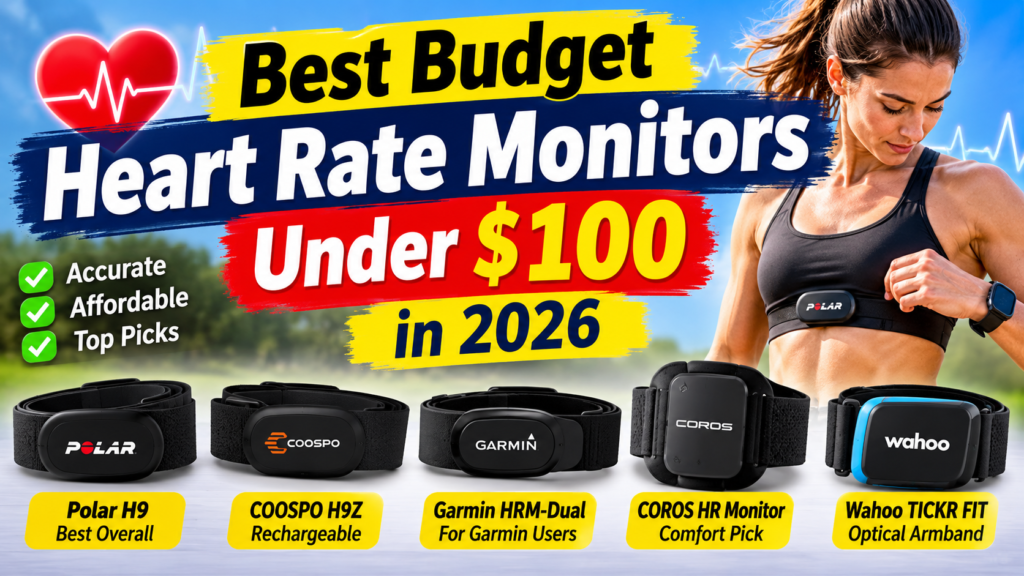
For most budget-conscious athletes, the Polar H9 is an excellent value because it offers electrical chest-strap heart rate monitoring at a lower price than the Polar H10. The COOSPO H9Z is another attractive option for people who prefer a rechargeable monitor. If you want a more comfortable alternative to a chest strap, the COROS Heart Rate Monitor and Wahoo TICKR FIT are worth considering.
In this guide, we compare affordable heart rate monitors available in 2026, explain their strengths and limitations, and help you choose the right device for your workout routine.
Our Quick Picks
- Best Overall Budget Chest Strap: Polar H9
- Best Rechargeable Budget Monitor: COOSPO H9Z
- Best for Garmin Users on a Budget: Garmin HRM-Dual
- Best Armband Alternative: COROS Heart Rate Monitor
- Best Optical Armband for Fitness: Wahoo TICKR FIT
Prices can change depending on retailer, sales, and availability. The under-$100 budget is based on typical US retail pricing, not a guaranteed price for every size or seller.
1. Polar H9 — Best Overall Budget Heart Rate Monitor

- 38% Polyamide, 29% Polyurethane, 20% Elastane, 13% Polyester
- Made in the USA or Imported
- POLAR PRESENTS A NEW AFFORDABLE HRM: When you’re looking for a reliable high quality heart rate monitor for your everyda…
The Polar H9 is one of the strongest choices for people who want dependable chest-strap heart rate monitoring without spending more than $100.
Polar uses electrical heart rate measurement, commonly described as ECG-based sensing. Unlike optical wrist sensors that estimate heart rate using light, a chest strap detects electrical signals associated with heartbeats.
This makes chest straps particularly useful for workouts involving rapid changes in intensity, such as sprint intervals, cycling intervals, and circuit training.
Key Features
- Electrical heart rate measurement.
- Bluetooth Low Energy and ANT+ connectivity.
- Additional 5 kHz GymLink transmission.
- Manufacturer-rated battery life of up to 400 hours.
- Replaceable CR2025 battery.
- Machine-washable soft strap.
- Water resistance up to 30 meters.
Polar lists the H9 at approximately $69.90 on its US website. Retail prices and availability can vary.
What Makes It Worth Buying?
The biggest advantage is its combination of straightforward operation and broad compatibility.
You can connect it to supported smartphones, sports watches, cycling computers, and gym equipment. Its replaceable battery also means you do not need to recharge the monitor after every few workouts.
However, the H9 does not have built-in workout memory, and it does not support two simultaneous Bluetooth connections like the Polar H10.
Best for: Runners, cyclists, gym users, and people who want a dependable chest strap at a reasonable price.
2. COOSPO H9Z — Best Rechargeable Budget Heart Rate Monitor

- Precision Heart Rate Tracking: COOSPO H9Z is equipped with an advanced HR sensor, our heart rate monitor chest strap del…
- Rechargeable & Long-Lasting Battery: Say goodbye to disposable batteries! H9Z built-in rechargeable battery that offers …
- Comfortable Wear: Crafted with soft, breathable materials and an adjustable strap, our heart rate monitor ensures a secu…
The COOSPO H9Z is a good option if you prefer a rechargeable heart rate monitor instead of one that uses disposable coin-cell batteries.
It is designed for running, cycling, indoor training, and general fitness workouts. Its Bluetooth and ANT+ connectivity allow it to communicate with supported fitness equipment and applications.
The rechargeable design is particularly attractive for people who train several times per week.
Key Features
- Rechargeable lithium battery.
- Advertised battery life of up to 50 hours.
- Bluetooth 5.0 and ANT+ connectivity.
- IP67 water-resistance rating.
- Five-color heart rate zone indicator.
- Adjustable chest strap.
- Compatible with supported Android and iPhone applications.
COOSPO advertises approximately 50 hours of battery life and recommends a charging time of around 1.5–2 hours.
What Makes It Worth Buying?
The rechargeable battery is the biggest advantage.
You do not have to purchase replacement coin-cell batteries, and the five-color LED indicator offers a convenient visual indication of training intensity.
Independent testing published by Coach has also reported encouraging heart rate tracking during running and interval workouts.
However, the H9Z has limitations. It does not store workouts internally and is not designed for swimming, despite its IP67 rating.
Best for: People who want a rechargeable chest strap for everyday running, cycling, and gym workouts.
Read our detailed COOSPO H9Z Review 2026 for a closer look at its features and limitations.
3. Garmin HRM-Dual — Best Budget Monitor for Garmin Users

- HRM dual features a soft strap that is comfortable and adjustable
- Simply remove the heart rate module, and it’s washable, too
- Don’t worry about running out of juice
The Garmin HRM-Dual is an established chest-strap heart rate monitor for people who want a straightforward sensor that works with compatible Garmin watches and other supported devices.
It is particularly useful if you already use Garmin equipment and want an external heart rate sensor for workouts where wrist-based readings may be less convenient.
Key Features
- Bluetooth Low Energy connectivity.
- ANT+ connectivity.
- Replaceable CR2032 battery.
- Soft, adjustable chest strap.
- Detachable heart rate module.
- Washable strap.
- Manufacturer-stated battery life of up to 3.5 years under specified usage conditions.
The HRM-Dual is generally available below $100, although prices vary between US retailers.
What Makes It Worth Buying?
Its straightforward design is a major advantage.
You can pair it with compatible Garmin watches, cycling computers, smartphones, and supported fitness applications.
The replaceable battery also makes maintenance relatively simple. When the battery eventually runs low, you can replace it instead of purchasing another monitor.
The main limitation is that the HRM-Dual focuses on basic heart rate transmission. It does not provide the advanced running dynamics and workout storage features found in some more expensive Garmin monitors.
Best for: Garmin watch owners who want an affordable external heart rate sensor without paying for advanced features.
For a closer comparison, read our COOSPO H9Z vs Garmin HRM-Dual comparison.
4. COROS Heart Rate Monitor — Best Budget Optical Armband

- COROS Heart Rate Monitor armband is designed for measuring heart rate during sports and activities. It is not intended t…
- Please note: this product includes a USB charging cable, but does not include a Type-C adapter. COROS Heart rate monitor…
- MULTIPLE CONNECTIONS: The COROS heart rate monitor chest strap is designed to work seamlessly with your COROS watches an…
Not everyone likes wearing a chest strap.
If you find chest straps uncomfortable during long workouts, the COROS Heart Rate Monitor offers an alternative.
Instead of wrapping around your chest, this monitor sits around your upper arm and uses optical sensors to measure changes in blood flow.
Its design makes it appealing for runners, cyclists, and gym users who prefer an arm-worn device.
Key Features
- Optical heart rate sensor.
- Five LED lights and four photodetectors.
- Bluetooth connectivity.
- Supports up to three simultaneous device connections.
- USB-C charging.
- Advertised activity battery life of up to 38 hours.
- Water resistance rated at 3 ATM.
- Adjustable upper-arm band.
COROS lists its starting price at approximately $79.
What Makes It Worth Buying?
Comfort and convenience are its biggest advantages.
You do not need to position a strap around your chest, and the upper-arm placement can be convenient during strength training and cycling.
It can connect to compatible Bluetooth devices and provide real-time heart rate information.
However, optical sensors work differently from electrical chest straps. Their readings can be affected by movement, fit, skin contact, and exercise intensity.
For workouts involving rapid heart rate changes, an electrical chest strap may be the better choice.
Best for: People who prefer an optical upper-arm monitor instead of a traditional chest strap.
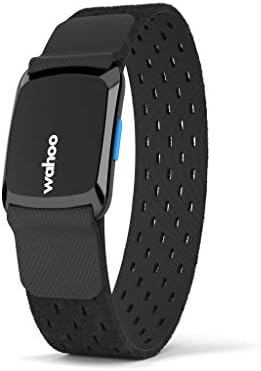
5. Wahoo TICKR FIT — Best Optical Armband for Fitness Training
- CONNECT HEART RATE TO YOUR FAVORITE TRAINING APPS AND DEVICES – Proven technology delivers accurate heart rate and calor…
- HEART RATE, CALORIE, and TIME TRACKING – TICKR FIT measures vital workout metrics, including heart rate, calorie burn, a…
- DUAL-BAND TECHNOLOGY – Equipped with ANT plus and bluetooth smart capabilities for a wireless connection to both smartph…
The Wahoo TICKR FIT is another alternative for people who do not want to wear a traditional chest strap.
It uses optical heart rate technology and sits around the forearm.
Its design is suitable for running, cycling, indoor exercise, and fitness classes.
Key Features
- Optical heart rate tracking.
- Bluetooth and ANT+ connectivity.
- Rechargeable lithium-ion battery.
- Up to 30 hours of battery life.
- IPX7 water-resistance rating.
- Adjustable forearm band.
- Compatible with supported iPhone and Android devices.
Wahoo lists the TICKR FIT at approximately $89.99 in the United States.
What Makes It Worth Buying?
Its main advantage is its comfortable armband design.
You can wear it during workouts without having a strap around your chest. It also supports ANT+ and Bluetooth, making it compatible with a range of supported training equipment.
The rechargeable battery is another useful feature.
However, it does not offer the same sensing method as an electrical chest strap. It also supports fewer simultaneous connections than some competing sensors.
Best for: Gym users, runners, and cyclists who prefer optical heart rate tracking on their forearm.
Best Budget Heart Rate Monitors Under $100: Comparison Table
Here is a quick comparison of the five monitors covered in this guide.
| Heart Rate Monitor | Type | Connectivity | Battery | Best For |
|---|---|---|---|---|
| Polar H9 | Chest strap | Bluetooth, ANT+ | Replaceable | Overall value |
| COOSPO H9Z | Chest strap | Bluetooth, ANT+ | Rechargeable | Rechargeable design |
| Garmin HRM-Dual | Chest strap | Bluetooth, ANT+ | Replaceable | Garmin users |
| COROS HR Monitor | Upper-arm optical | Bluetooth | Rechargeable | Comfortable workouts |
| Wahoo TICKR FIT | Forearm optical | Bluetooth, ANT+ | Rechargeable | Fitness training |
Specifications are based on manufacturer information. Battery performance, compatibility, and retail pricing can vary.
Chest Strap vs. Armband: Which Should You Choose?
One of the most important decisions when buying an affordable heart rate monitor is choosing between a chest strap and an optical armband.
Both designs can provide useful exercise information, but they measure heart rate differently.
Chest Strap Heart Rate Monitors
Chest straps such as the Polar H9, COOSPO H9Z, and Garmin HRM-Dual use electrical sensing.
They detect electrical activity associated with each heartbeat.
This approach is particularly useful during activities where heart rate changes quickly.
Advantages include:
- Responsive readings during high-intensity intervals.
- Secure placement during running and cycling.
- Compatibility with many sports watches and gym devices.
- Useful real-time heart rate information.
Potential disadvantages include:
- Some people find chest straps uncomfortable.
- Correct positioning is important.
- Electrodes may need moisture for reliable skin contact.
- Straps require regular cleaning.
Optical Armband Heart Rate Monitors
Optical monitors such as the COROS Heart Rate Monitor and Wahoo TICKR FIT use light-based sensors to estimate heart rate from changes in blood flow.
They are worn around the upper arm or forearm.
Advantages include:
- No chest strap required.
- Convenient for people who dislike chest straps.
- Rechargeable designs.
- Comfortable placement for many users.
Potential disadvantages include:
- Movement can affect readings.
- Incorrect positioning can reduce reliability.
- Optical readings can lag during rapid intensity changes.
- Battery charging is required.
Which Technology Is Better?
For most people who prioritize responsive workout heart rate data, an electrical chest strap is a sensible starting point.
If comfort is your biggest priority, an optical armband may be a better option.
Neither design should be considered a substitute for medical monitoring.
How to Choose a Budget Heart Rate Monitor
Before purchasing a heart rate monitor, consider the following factors.
1. Accuracy and Sensor Technology
Accuracy should be one of your first considerations.
Chest straps use electrical sensing, while armbands and smartwatches generally use optical sensing.
A properly fitted electrical chest strap is often a better choice for high-intensity intervals and rapid changes in exercise intensity.
However, no consumer monitor guarantees perfect readings under every condition.
2. Bluetooth and ANT+ Compatibility
Connectivity determines whether your monitor can communicate with your existing equipment.
Bluetooth is commonly used with smartphones and fitness applications.
ANT+ is widely supported by compatible sports watches, cycling computers, and exercise equipment.
If you use a Garmin watch, indoor cycling system, or training application, check its supported sensor protocols before purchasing.
Do not assume that Bluetooth support automatically guarantees compatibility with every application.
3. Battery Life
Battery life is another important consideration.
Some monitors use replaceable coin-cell batteries, while others use rechargeable batteries.
For example:
- Polar H9: Up to 400 hours.
- COOSPO H9Z: Advertised up to 50 hours.
- COROS: Up to 38 hours of activity.
- Wahoo TICKR FIT: Up to 30 hours.
These are manufacturer-stated figures, not guaranteed real-world results.
Consider whether you prefer charging your monitor or occasionally replacing a battery.
4. Comfort and Fit
A heart rate monitor should fit securely without causing discomfort.
For chest straps, look for adjustable materials and a design that stays in place during exercise.
For optical armbands, make sure the band fits securely without restricting circulation.
A loose monitor can produce inconsistent readings.
5. Water Resistance
If you exercise outdoors, sweat heavily, or train in wet conditions, water resistance is worth checking.
However, water resistance does not automatically mean that a monitor is suitable for swimming.
For example, COOSPO explicitly advises against swimming with the H9Z.
Always check the manufacturer’s instructions for the exact model.
6. App and Device Compatibility
Before purchasing, identify the equipment you want to connect.
Consider:
- Garmin watches.
- Apple devices.
- Android smartphones.
- Cycling computers.
- Indoor exercise bikes.
- Fitness applications.
- Gym equipment.
A monitor with excellent specifications may still be inconvenient if it does not work with your existing setup.
7. Additional Features
Some affordable heart rate monitors offer extra features such as heart rate zone indicators, vibration alerts, or multiple wireless connections.
These can be useful, but they should not distract you from the essential features.
Prioritize reliable heart rate transmission, comfortable fit, battery life, and compatibility.
Which Budget Heart Rate Monitor Is Best for Different Workouts?
Different workouts place different demands on a heart rate monitor.
Best for Running
The Polar H9 and COOSPO H9Z are both worth considering for runners.
Their chest-strap designs are useful when heart rate changes rapidly during intervals, hill training, and tempo workouts.
Choose the Polar H9 if you prefer replaceable batteries. Choose the COOSPO H9Z if you prefer rechargeable power.
Best for Cycling
The Polar H9 is an attractive option for cyclists because it supports Bluetooth, ANT+, and 5 kHz GymLink transmission.
It can connect to compatible cycling computers and indoor training equipment.
Always verify that your specific bike computer or trainer supports the connection method you intend to use.
Best for Gym Workouts
The Garmin HRM-Dual and COOSPO H9Z are useful choices for general gym training.
If you prefer not to wear a chest strap while lifting weights, consider the COROS or Wahoo optical armband options.
Best for HIIT Workouts
High-intensity interval training involves rapid changes in exercise intensity.
A chest strap such as the Polar H9 is a strong starting choice because electrical sensing responds to changes in the heart’s electrical activity.
Make sure the strap fits securely and the electrodes have proper skin contact.
Best for Everyday Fitness
For regular fitness activities, the choice depends on comfort and convenience.
The COOSPO H9Z is appealing if you want rechargeable operation, while the Garmin HRM-Dual is useful if you already use compatible Garmin equipment.
If you prefer an armband, consider the COROS or Wahoo TICKR FIT.
How to Set Up and Use a Heart Rate Monitor
Most Bluetooth and ANT+ heart rate monitors follow a similar setup process.
- Read the manufacturer’s instructions before your first workout.
- Charge rechargeable monitors or check the replaceable battery.
- Attach the sensor to its strap if the model requires it.
- Position the monitor correctly.
- Moisten chest-strap electrodes when recommended by the manufacturer.
- Open your compatible fitness application or watch settings.
- Search for an external heart rate sensor.
- Select the correct device and complete pairing.
- Start a short workout to confirm that heart rate data is being received.
If your monitor does not connect, check that Bluetooth or ANT+ is enabled where required, the battery is charged, and the sensor is not already connected to an incompatible device.
You may also need to remove an old pairing and reconnect the monitor.
For more detailed device-specific instructions, follow the manufacturer’s support documentation.
Common Mistakes to Avoid When Buying a Cheap Heart Rate Monitor
Choosing the cheapest monitor without checking its specifications can lead to frustration.
Here are some mistakes to avoid.
Buying without checking compatibility: A monitor may support Bluetooth but still fail to connect to a particular watch or application.
Assuming every waterproof monitor supports swimming: Water-resistance ratings have different meanings. Check the manufacturer’s swimming instructions.
Ignoring comfort: A technically capable monitor is not useful if you cannot wear it comfortably.
Expecting medical accuracy: Consumer fitness monitors are designed for exercise tracking, not medical diagnosis.
Ignoring battery maintenance: Rechargeable and replaceable-battery models both require routine care.
Choosing unnecessary features: You may not need internal storage, advanced running dynamics, or multiple wireless connections if your main goal is basic workout heart rate tracking.
Frequently Asked Questions
What is the best budget heart rate monitor under $100 in 2026?
The Polar H9 is our leading overall budget chest-strap recommendation. It offers electrical heart rate measurement, Bluetooth, ANT+, and up to 400 hours of manufacturer-rated battery life.
The COOSPO H9Z is a good alternative if you prefer a rechargeable monitor.
Are cheap heart rate monitors accurate?
Affordable chest straps can provide useful and responsive exercise heart rate measurements. However, accuracy depends on the sensor, fit, skin contact, device condition, and receiving equipment.
A low price does not automatically mean poor performance, but individual products should be evaluated separately.
Is a chest strap better than a smartwatch?
For rapid changes in exercise intensity, a properly fitted electrical chest strap is often more responsive than an optical wrist sensor.
A smartwatch is more convenient for everyday tracking and provides additional features such as notifications, activity tracking, and GPS on supported models.
Can I connect a heart rate monitor to my iPhone?
Yes. Monitors with compatible Bluetooth heart rate transmission can connect to supported iPhones and fitness applications.
Check the app’s compatibility requirements before purchasing.
Can I use a heart rate monitor with an Android phone?
Yes. Many Bluetooth-compatible heart rate monitors work with supported Android phones and fitness applications.
However, compatibility can vary by phone, operating system, and application.
Do I need ANT+ and Bluetooth?
Not necessarily.
Bluetooth may be sufficient if you only want to connect your monitor to a smartphone.
ANT+ is useful if you also use compatible cycling computers, sports watches, or gym equipment.
Buying a monitor with both technologies gives you more connection options.
Which budget heart rate monitor has the longest battery life?
Among the five models in this guide, the Polar H9 has the longest advertised operating time at up to 400 hours.
It uses a replaceable coin-cell battery rather than rechargeable power.
Can I wear a heart rate monitor while swimming?
It depends on the specific model.
Some heart rate sensors support swimming, while others are intended only for sweat, rain, or brief water exposure.
Do not assume that an IP rating makes a monitor suitable for swimming.
Are rechargeable heart rate monitors better?
Rechargeable monitors are convenient because you do not need to buy replacement batteries.
However, replaceable-battery monitors can offer considerably longer operating time between battery changes.
The better option depends on your charging preferences and training routine.
What is the difference between ECG and optical heart rate monitoring?
Electrical chest straps detect electrical activity associated with heartbeats.
Optical monitors use light to estimate heart rate from changes in blood volume beneath the skin.
Both methods have useful fitness applications, but their performance can vary depending on the activity and device placement.
Can a heart rate monitor help with fat-burning workouts?
A heart rate monitor can help you observe exercise intensity and follow a structured training plan.
However, no single heart rate zone guarantees fat loss. Weight management depends on several factors, including nutrition, physical activity, sleep, and overall energy balance.
Final Verdict: Which Budget Heart Rate Monitor Should You Buy?
You do not need an expensive fitness wearable to monitor your heart rate during exercise.
The Polar H9 is our best overall budget recommendation because it combines electrical chest-strap sensing, broad connectivity, and long advertised battery life.
The COOSPO H9Z is a strong alternative for people who prefer rechargeable operation. The Garmin HRM-Dual is worth considering for compatible Garmin users, while the COROS and Wahoo options offer comfortable alternatives for people who dislike chest straps.
Before buying, compare the sensing technology, compatibility, battery type, comfort, and water-resistance limitations.
Our final recommendation: Choose the Polar H9 if responsive chest-strap tracking is your priority. Choose the COOSPO H9Z if you prefer a rechargeable budget monitor. Choose an optical armband if comfort matters more than having an electrical chest strap.
A good budget heart rate monitor should fit your training routine, work with your existing equipment, and provide useful information without unnecessary spending.
Sources and Further Reading
- Polar H9 official specifications: https://www.polar.com/us-en/sensors/h9-heart-rate-sensor
- Polar heart rate sensor comparison: https://support.polar.com/en/polar-heart-rate-sensors
- COROS Heart Rate Monitor specifications: https://www.coros.com/hrm/specs
- Wahoo TICKR FIT official specifications: https://www.wahoofitness.com/devices/running/heart-rate-monitors/tickr-fit-optical-heart-rate-monitor
- Verywell Fit 2026 heart rate monitor testing guide: https://www.verywellfit.com/best-heart-rate-monitors-8594147