
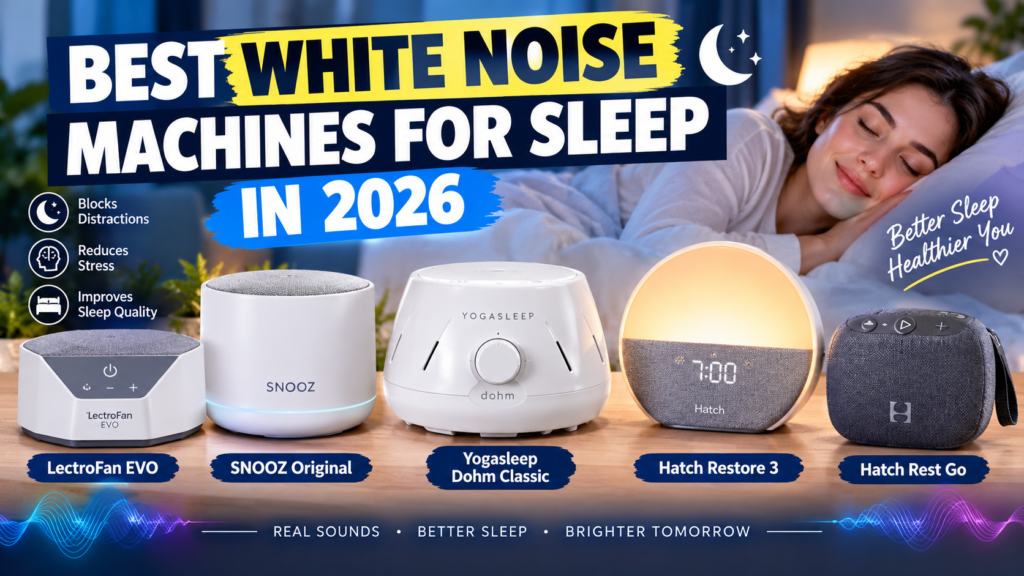
Compare the best white noise machines for sleep in 2026. Explore top picks, key features, sound types, buying tips, and important safety advice.
LifeCareBalance.com is reader-supported. When you buy through links on our site, we may earn an affiliate commission at no extra cost to you. As an Amazon Associate, we earn from qualifying purchases.
A noisy bedroom can make it harder to relax at bedtime. Traffic outside the window, conversations in another room, a barking dog, or a partner’s snoring may interrupt an otherwise comfortable sleep environment. For people who find unpredictable sounds distracting, a white noise machine may be worth considering.
The best white noise machine for you depends on the kind of noise you want to mask, the sound you find comfortable, your budget, and whether you need extra features such as a sleep timer, portable design, or bedside lighting.
Some machines produce sound with a real mechanical fan. Others use electronic noise generation or offer a library of sounds such as rain, ocean waves, and gentle ambient noise. Smart sleep devices may combine sound with lighting and a scheduled bedtime routine.
This guide compares five options for different needs, explains what to look for before buying, and covers important safety considerations. These recommendations are based on product design and intended use, not a claim that every model has been independently tested by LifeCareBalance.
Quick Answer: What Is the Best White Noise Machine?
For adults who want a straightforward sound machine, the LectroFan EVO is worth considering for its range of electronically generated noise and fan sounds. The Yogasleep Dohm Classic is an alternative for people who prefer the sound of a real mechanical fan. The SNOOZ Original offers a fan-based design with app controls, while the Hatch Restore 3 combines sleep sounds with a broader bedtime and wake-up routine. For travel, a compact, battery-powered device such as the Hatch Rest Go may be more practical.
There is no single best option for everyone. If you mainly want to mask unpredictable household noise, prioritize a steady sound, simple controls, and enough volume adjustment to find a comfortable setting. If you want a sunrise alarm or bedtime lighting, a multifunction device may be more useful than a basic sound machine.
Remember that white noise does not work equally well for everyone, and it is not a treatment for an underlying sleep disorder.
Best White Noise Machines for Sleep in 2026
1. LectroFan EVO — Best for Adjustable Digital Noise

- White Noise Machine: Adaptive Sound Technologies LectroFan EVO is a portable sleep device with multiple non-looping soun…
- Non-Looping Sounds: Sleep with fewer interruptions with this reliable sound machine; 22 synthesized ocean sounds, fan no…
- Easy-To-Use Design: This white noise machine for sleeping suits bedrooms and nurseries and includes a convenient sleep t…
The LectroFan EVO is a useful option for adults who want several types of electronic noise in one compact device. Its sound options include different noise colors and fan-like sounds, allowing users to experiment with the background sound they find least distracting.
Best for: Adults who want variety without needing a smart alarm clock.
Why consider it
- Offers multiple electronically generated noise and fan-sound options.
- Lets users adjust the volume to suit the room.
- Has a compact design for a bedside table or desk.
- Provides an alternative to machines that rely on recordings of natural sounds.
Potential drawbacks
- It is primarily a sound machine rather than a full sleep-routine system.
- People who prefer the subtle variations of a physical fan may not enjoy its electronic sound as much.
- Its usefulness depends on personal sound preference and the noise in the surrounding environment.
Buying advice: Choose a digital sound machine if you want to try several types of consistent background noise. Listen at a low, comfortable volume before deciding which sound works best for you.
2. Yogasleep Dohm Classic — Best for a Real Fan Sound

- ORIGINAL SLEEP SOUND MACHINE: Beloved by millions since 1962, the Dohm Classic was the first white noise machine ever cr…
- CUSTOMIZED EXPERIENCE: The Dohm Classic effectively blocks out disruptive sounds like traffic, snoring, or noisy neighbo…
- CRAFTED WITH LOVE: For over 60 years, Yogasleep has consistently set the gold standard in crafting sleep-enhancing produ…
The Yogasleep Dohm Classic uses a physical fan mechanism to produce its characteristic rushing sound. Instead of relying entirely on a digital recording, it creates sound through moving air inside the device.
Best for: People who prefer a natural, fan-like background sound.
Why consider it
- Produces a familiar mechanical fan sound.
- Offers a relatively simple alternative to app-based devices.
- May appeal to people who dislike obvious repetitions in recorded nature sounds.
- Fits a straightforward bedside setup.
Potential drawbacks
- It does not provide the same broad sound library as a multifunction digital sound machine.
- Users who want rain, ocean waves, or a variety of electronic noise colors may prefer another design.
- A mechanical fan sound is a matter of personal preference, not a guarantee of better sleep.
Buying advice: Consider this style if you already find the sound of a room fan soothing. Check the current product specifications and controls before purchasing, since exact features can vary by model and generation.
3. SNOOZ Original — Best for Fan-Based Sound With App Controls

- 𝗙𝗮𝗻 𝗕𝗮𝘀𝗲𝗱 𝗦𝗼𝘂𝗻𝗱 𝗠𝗮𝗰𝗵𝗶𝗻𝗲: 1 fan sound with constant noise from a real fan (no digital sounds, no recordings). Natural, no…
- 𝗔𝗽𝗽 𝗘𝗻𝗮𝗯𝗹𝗲𝗱: Use the free app to schedule auto on/off at bedtime and wake-up. Build a healthy sleep routine and use the …
- 𝟭𝟬 𝗩𝗼𝗹𝘂𝗺𝗲 𝗟𝗲𝘃𝗲𝗹𝘀: Effectively mask noisy neighbors, city street noise, snoring partners, barking dogs, office privacy, a…
The SNOOZ Original combines a real-fan approach with app-based controls. It is designed for people who want a steady fan-like sound but also value the convenience of adjusting settings from a phone.
Best for: Adults who want fan-based noise with additional control options.
Why consider it
- Uses a physical fan to create its sound.
- Provides app-based control and scheduling features.
- Offers a compact bedside design.
- May suit people who want a dedicated device rather than playing sound from a phone overnight.
Potential drawbacks
- It may cost more than a basic sound machine.
- App features may be unnecessary for someone who only wants an on/off switch and volume control.
- It does not eliminate all outside noise, particularly loud or low-frequency sounds.
Buying advice: Compare the current app functions, timer options, power requirements, and return policy before buying. If you do not need app control, a simpler model may offer better value for your needs.
4. Hatch Restore 3 — Best for a Bedtime Routine

- 𝗖𝗿𝗲𝗮𝘁𝗲 𝗵𝗲𝗮𝗹𝘁𝗵𝘆 𝘀𝗹𝗲𝗲𝗽 𝗵𝗮𝗯𝗶𝘁𝘀: 𝖱𝖾𝗌𝗍𝗈𝗋𝖾 𝟥 𝗂𝗌 𝖽𝖾𝗌𝗂𝗀𝗇𝖾𝖽 𝗍𝗈 𝗁𝖾𝗅𝗉 𝗒𝗈𝗎 𝖻𝗎𝗂𝗅𝖽 𝖺 𝖻𝖾𝖽𝗍𝗂𝗆𝖾 𝗋𝗈𝗎𝗍𝗂𝗇𝖾 𝗍𝗁𝖺𝗍 𝗊𝗎𝗂𝖾𝗍𝗌 𝗒𝗈𝗎𝗋 𝗆𝗂𝗇𝖽 𝗌𝗈 𝗒𝗈𝗎 𝖼𝖺𝗇 …
- 𝗛𝗮𝘁𝗰𝗵+ 𝗦𝘂𝗯𝘀𝗰𝗿𝗶𝗽𝘁𝗶𝗼𝗻: 𝖯𝗎𝗋𝖼𝗁𝖺𝗌𝖾 𝗂𝗇𝖼𝗅𝗎𝖽𝖾𝗌 𝟥𝟢-𝖽𝖺𝗒 𝖿𝗋𝖾𝖾 𝗍𝗋𝗂𝖺𝗅 𝗈𝖿 𝖧𝖺𝗍𝖼𝗁+ 𝗉𝗋𝖾𝗆𝗂𝗎𝗆 𝖼𝗈𝗇𝗍𝖾𝗇𝗍 𝖺𝗇𝖽 𝖿𝖾𝖺𝗍𝗎𝗋𝖾𝗌, 𝖿𝗈𝗋 𝗇𝖾𝗐 𝗌𝗎𝖻𝗌𝖼𝗋𝗂𝖻𝖾𝗋𝗌 𝗈𝗇𝗅…
- 𝗨𝗻𝘄𝗶𝗻𝗱 𝗻𝗶𝗴𝗵𝘁𝗹𝘆: 𝖱𝖾𝗌𝗍𝗈𝗋𝖾 𝗁𝖾𝗅𝗉𝗌 𝗒𝗈𝗎 𝖼𝗋𝖾𝖺𝗍𝖾 𝖺 𝖻𝖾𝖽𝗍𝗂𝗆𝖾 𝗋𝗈𝗎𝗍𝗂𝗇𝖾 𝗌𝗈 𝗒𝗈𝗎 𝖼𝖺𝗇 𝖿𝖺𝗅𝗅 𝖺𝗌𝗅𝖾𝖾𝗉 𝖾𝖺𝗌𝗂𝖾𝗋 𝖺𝗇𝖽 𝖿𝖺𝗌𝗍𝖾𝗋. 𝖯𝗋𝖾𝗉𝖺𝗋𝖾 𝗒𝗈𝗎𝗋 𝗆𝗂𝗇𝖽 𝖿…
The Hatch Restore 3 is a multifunction bedside device that combines sound with lighting and wake-up features. Rather than focusing exclusively on white noise, it is designed to support a more structured bedtime and morning routine.
Best for: People who want sleep sounds, lighting, and a scheduled wake-up experience in one device.
Why consider it
- Combines sound and lighting features.
- Can help organize a repeatable bedtime and morning routine.
- Offers an alternative to using a phone for every bedtime function.
- May suit people who enjoy gradual lighting changes and scheduled routines.
Potential drawbacks
- It is more complex than a basic noise machine.
- Some content or features may depend on a paid membership; verify what is currently included.
- It may be unnecessary if your only goal is to mask background noise.
Buying advice: Check the current feature list, subscription terms, app requirements, and the sounds included without a membership. Do not pay for extra features unless you expect to use them.
5. Hatch Rest Go — Best Portable Option to Consider for Travel

- Say hello to Hatch Go: Sleep sounds for babies on the go – nap trapped no more.
- Sleep Sounds on the go: 10 of our most soothing sounds in a goes-everywhere, portable sound machine. Includes: White Noi…
- Designed for Parents: Three easy buttons for quick control, plus a ring to clip onto all the things. Drop proof and droo…
A compact, portable sound machine can be useful when you want familiar background sound away from home. The Hatch Rest Go is designed as a portable sound machine, making it a candidate for travel and other situations where carrying a full bedside device is inconvenient.
Best for: Travelers and families looking for a portable sound option.
Why consider it
- Designed for portability rather than a permanent bedside setup.
- Can be easier to pack than a larger multifunction device.
- Provides a dedicated sound source when a phone speaker is not convenient.
- May be useful when sleeping in unfamiliar surroundings.
Potential drawbacks
- Portable devices generally offer fewer features than larger bedside systems.
- Battery life and charging requirements should be checked against your travel plans.
- A compact device may not offer the same sound range or room-filling output as a larger machine.
Buying advice: Confirm the current battery, charging, sound-selection, and timer specifications before purchase. For use around an infant, keep the device well away from the baby’s head and use the lowest practical volume.
White Noise Machine Comparison
| Product | Main strength | Best suited to | Main trade-off |
|---|---|---|---|
| LectroFan EVO | Electronic noise variety | Adults who want adjustable sound choices | Electronic sound may not suit everyone |
| Yogasleep Dohm Classic | Mechanical fan sound | People who prefer a natural fan-like sound | Fewer sound styles |
| SNOOZ Original | Fan-based sound with app controls | Users who value remote control | App features may be unnecessary |
| Hatch Restore 3 | Sound, lighting, and routine features | People building a structured bedtime routine | More features and potential subscription costs |
| Hatch Rest Go | Portable sound-machine design | Travel and on-the-go use | Fewer features than larger bedside systems |
Product availability, prices, colors, included features, and subscription terms can change. Confirm the latest specifications on the manufacturer’s website or the retailer’s current listing before purchasing.
How White Noise Machines Work
White noise is a type of sound that contains energy across a broad range of audible frequencies. In everyday use, the term is also applied loosely to sound machines that produce other steady or broadband sounds.
A sound machine can make a sudden noise less noticeable by raising the level of the background sound. For example, the difference between a quiet room and a brief sound from the street may feel more noticeable than the same street sound against a steady background.
This is called sound masking. It does not mean that the machine removes the outside noise or prevents the brain from responding to every interruption.
The effect depends on the source of the disturbance, the sound machine’s output, room acoustics, and individual sensitivity. Loud conversations, construction, or strong low-frequency noise may still be noticeable.
A systematic review of research on noise as a sleep aid found that results varied between studies and that the overall quality of evidence for continuous noise improving sleep was very low. Some people may find sound masking helpful, while others may find continuous sound distracting. Read the review in PubMed: Noise as a Sleep Aid — A Systematic Review.
The practical lesson is to treat a white noise machine as an optional environmental aid, not as a guaranteed way to fall asleep faster or sleep more deeply.
White Noise vs. Pink Noise, Brown Noise, and Nature Sounds
Sound machines may advertise several types of sound. Understanding the differences can help you choose a device that fits your preferences.
White Noise
White noise contains energy across a broad range of frequencies. It is often described as a steady hiss. Some people find it useful for masking sudden environmental sounds, while others find it too sharp or bright.
Pink Noise
Pink noise generally has more energy in lower frequencies than white noise. Some listeners describe it as softer or less hiss-like, although the perceived difference depends on the specific sound and playback system.
Brown Noise
Brown noise emphasizes lower frequencies even more strongly. It may sound deeper or more rumbling than white noise. The label alone does not guarantee that a machine produces a particular sound profile, so listen to samples when possible.
Nature Sounds
Rain, flowing water, wind, and ocean recordings are not necessarily white noise. They may be enjoyable because they sound familiar or relaxing, but some recordings include changing intensity or repeating patterns that can become distracting.
Fan Sounds
Fan sounds may come from a real mechanical fan or a digital simulation. People who already sleep comfortably with a household fan may prefer this type of sound.
Which sound is best? There is no universally best sound color. Try a few options at a low volume and select the one that is comfortable and least distracting for you.
Key Features to Look for Before Buying
1. Sound Quality and Consistency
Listen for an even, comfortable sound without obvious recording loops, clicks, or abrupt changes. If you are sensitive to repetitive audio, try the machine for several minutes before deciding.
A machine that produces a physical fan sound may have a different texture from a digital noise generator. Neither approach is automatically better for every listener.
2. Volume Control
Fine volume adjustment is more useful than a high maximum volume. You want to find the lowest setting that provides the desired masking effect.
Avoid choosing a device simply because it can get louder. Maximum output is not a useful selling point if the sound becomes uncomfortable or unnecessarily loud.
3. Sleep Timer and Continuous Playback
Some people want the sound to stop after they fall asleep; others prefer it to continue throughout the night. Decide which option fits your routine.
Check whether the timer is adjustable and whether continuous playback is available. Do not assume every machine has both features.
4. Portability and Power
For a permanent bedside setup, a plug-in device may be convenient. For travel, a rechargeable or battery-powered machine can be easier to use.
Check the actual power requirements, battery life, charging method, and whether the device can operate while charging. These details vary by product.
5. Ease of Use
Simple physical buttons may be preferable if you do not want to open an app at bedtime. App control can be convenient if you want schedules or remote adjustments, but it may introduce setup requirements.
Choose the controls you are most likely to use consistently.
6. Extra Features
Night lights, alarms, Bluetooth, app scheduling, and guided routines can be useful extras. They are not essential to sound masking.
If you want a basic noise machine, avoid paying a premium for features you will not use. If you want to build a complete bedtime routine, a multifunction device may be worth comparing.
7. Price and Ongoing Costs
Compare the full cost, not just the purchase price. Check for subscriptions, replacement parts, charging accessories, and return-policy restrictions.
A simple device that meets your needs may offer better value than an expensive system with many unused features.
Who May Benefit From a White Noise Machine?
Light Sleepers
People who notice small changes in their environment may want to experiment with steady background sound. Whether it helps depends on their sensitivity and the nature of the disturbance.
People Living Near Traffic or Shared Spaces
A machine may make some intermittent sounds less noticeable. It will not soundproof a room or eliminate loud noise.
If noise is severe, also consider practical measures such as sealing gaps, improving window treatments, moving the bed away from the noise source, or addressing the disturbance directly when possible.
Shift Workers
People who sleep during the day may encounter traffic, household activity, and other environmental sounds. A sound machine may be one part of a quieter sleep environment, alongside room-darkening curtains and a consistent sleep schedule.
Travelers
A portable sound machine can provide familiar background sound in hotels or unfamiliar rooms. Check its power and battery requirements before leaving home.
Students and Remote Workers
Some people use steady background sound to make a noisy workspace feel less distracting. Others concentrate better in silence. Test your preference rather than assuming white noise improves focus for everyone.
Parents and Caregivers
Some families use sound machines around infants, but extra caution is needed because sound exposure can affect hearing. A sound machine should never replace safe-sleep practices or supervision.
White Noise Machines and Baby Safety
Parents should be especially careful when using sound machines near infants. A device may sound quiet to an adult while producing a higher sound level near a baby’s head.
The American Academy of Pediatrics has raised concerns about the potential for excessive sound exposure from infant sleep machines. Its guidance recommends placing a machine as far away from the infant as possible, setting the volume as low as possible, and limiting the duration of use when such devices are used.
Practical precautions include:
- Place the device away from the crib or bassinet, not beside the baby’s head.
- Use the lowest volume that serves the intended purpose.
- Avoid placing a speaker inside the crib or attaching it where it could create a hazard.
- Follow the device manufacturer’s instructions and applicable safe-sleep guidance.
- Do not assume that a product marketed for babies is automatically risk-free.
A sound machine is optional. A safe sleep space and appropriate caregiver practices remain essential.
How to Use a White Noise Machine More Carefully
Start with a low volume and increase it only if needed. Place the machine between the source of the disturbance and your sleeping area when practical, without positioning it directly next to your head.
If you notice ringing in your ears, discomfort, or a feeling that the sound is too loud, reduce the volume or stop using the device. Avoid using loud background sound to compensate for severe noise that requires a different solution.
Try the machine for several nights and observe how you feel. If it makes it harder to relax or causes you to wake more often, it may not be the right approach for you.
You can also improve the room itself:
- Keep the bedroom dark, cool, and comfortable.
- Follow a reasonably consistent bedtime and wake time.
- Reduce bright light and stimulating activities before bed.
- Limit caffeine close to bedtime if it affects your sleep.
- Address persistent environmental noise when possible.
For additional sleep-habit guidance, see the National Heart, Lung, and Blood Institute’s insomnia treatment and healthy sleep habits information.
Do White Noise Machines Actually Improve Sleep?
The evidence does not support a blanket promise that white noise improves sleep for everyone. Research findings vary, and the quality of evidence is limited. Some individuals may benefit from masking intermittent environmental sounds; others may find continuous noise disruptive.
A sensible way to approach a sound machine is to identify the specific problem you want to address. If you are waking because of intermittent household sounds, masking may be worth trying. If you are lying awake because of persistent insomnia, anxiety, pain, breathing problems, or another underlying issue, a sound machine may not address the cause.
For broader sleep guidance, the CDC’s About Sleep resource explains recommended sleep duration by age and emphasizes speaking with a healthcare professional about ongoing sleep problems.
If sleep difficulties persist, affect your daytime functioning, or occur alongside loud snoring, gasping, or significant daytime sleepiness, consult a qualified healthcare professional. Do not rely on a sound machine as a substitute for evaluating possible sleep disorders.
Common White Noise Machine Buying Mistakes
Choosing the Loudest Machine
A high maximum volume does not make a machine better. Precise low-volume adjustment is usually more useful.
Paying for Features You Do Not Need
A sunrise alarm, app, and large sound library can be convenient, but a simple device may be enough if you only want a steady background sound.
Assuming Every Sound Is White Noise
Nature recordings, fan sounds, pink noise, and brown noise are different audio options. Choose based on what you find comfortable, not just the marketing label.
Ignoring Room Conditions
A sound machine cannot replace appropriate window treatments, better room placement, or other practical measures when outside noise is severe.
Treating It as a Medical Treatment
White noise is not a proven cure for insomnia or other sleep disorders. Persistent symptoms deserve proper evaluation.
Overlooking Baby Safety
Never assume a baby sound machine is safe at every volume or distance. Follow pediatric guidance and keep sound low.
Frequently Asked Questions
Are white noise machines safe for adults?
They can be used by many adults, but sound level and duration matter. Keep the volume comfortable and avoid unnecessarily loud or prolonged exposure. If you experience discomfort or ringing in your ears, lower the volume or stop using the machine.
Can a white noise machine help you fall asleep faster?
It may help some people by making intermittent environmental sounds less noticeable. Research findings are mixed, so it is not guaranteed to shorten the time it takes to fall asleep.
Should I leave a white noise machine on all night?
That depends on your preference and the device. If you use continuous playback, keep the sound at a comfortable level. A timer is another option if you prefer the machine to turn off after a period.
Is a fan-based machine better than a digital machine?
Neither is universally better. Fan-based models produce a physical fan sound, while digital machines can offer more sound choices. The best option depends on your preferred sound, desired controls, and budget.
Is pink noise better than white noise?
There is no universally best option. Pink noise emphasizes lower frequencies compared with white noise, but personal comfort and the actual sound produced by the device matter more than the label alone.
Can babies use white noise machines?
Some families use them, but careful placement, low volume, limited exposure, and safe-sleep practices are important. Follow pediatric guidance rather than assuming that a baby-specific product is risk-free.
Will a white noise machine block snoring?
It may make some snoring sounds less noticeable, but it will not reliably block all snoring. If snoring is loud, persistent, or accompanied by gasping or pauses in breathing, the person should seek medical advice.
Do I need a smart white noise machine?
No. App control and lighting features are optional. A basic machine may be sufficient if you only want steady background sound.
Are white noise machines useful for travel?
Portable models may help you recreate a familiar sound environment. Check battery life, charging requirements, size, and controls before buying.
What is the best white noise machine for better sleep in 2026?
The best choice depends on your needs. Consider the LectroFan EVO for digital sound variety, the Yogasleep Dohm Classic for mechanical fan sound, the SNOOZ Original for fan-based sound with app controls, the Hatch Restore 3 for a broader bedtime routine, or a compact portable model such as the Hatch Rest Go for travel.
Final Verdict: Which White Noise Machine Should You Choose?
For a simple digital sound machine, consider the LectroFan EVO. If you prefer a real fan-like sound, compare the Yogasleep Dohm Classic and SNOOZ Original. If your goal is a more structured bedtime and wake-up routine, the Hatch Restore 3 may be a better fit. For travel, a portable model may be more practical than a full bedside system.
Before buying, compare current specifications, volume controls, power requirements, subscription terms, and return policies. No machine guarantees better sleep, and continuous sound may not suit everyone.
The most useful approach is to choose a device that addresses a real environmental problem, use it at a comfortable volume, and combine it with healthy sleep habits. If sleep problems persist, seek professional guidance rather than relying on sound alone.https://lifecarebalance.com/