
LifeCareBalance.com is reader-supported. When you buy through links on our site, we may earn an affiliate commission at no extra cost to you. As an Amazon Associate, we earn from qualifying purchases.
Do air purifiers really improve health? The honest, evidence-based answer is: sometimes, modestly, and only for certain pollutants and certain people. A properly sized air purifier with a true HEPA filter can measurably reduce airborne dust, pollen, pet dander, and smoke particles, which may translate into fewer symptoms for some people with allergies or asthma. But it’s not a cure, a substitute for medical treatment, or a stand-alone fix for poor indoor air quality. Its real-world impact depends on the pollutant involved, the purifier’s Clean Air Delivery Rate (CADR), room size, how consistently it runs, and whether the pollution source is also being addressed.
This guide covers what the research actually shows, what air purifiers can and can’t do, and how to use one effectively — without the exaggerated marketing claims common in this category.
Do Air Purifiers Really Improve Health?
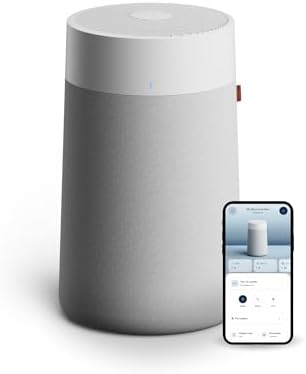
- Powerful Air Purifier for Medium Rooms: The Blue Pure 311i Max quickly cleans air in bedrooms, living rooms, apartments,…
- Removes Dust, Smoke, Pet Dander & Allergens: Blueair’s HEPASilent dual filtration technology captures 99.97% of airborne…
- Smart Air Purifier with App Control: Built-in sensors automatically adjust fan speed when pollution levels rise. Use the…
The direct answer: air purifiers can improve indoor air quality by reducing the concentration of certain airborne particles, and reducing exposure to those particles can, for some people, translate into modest health benefits. That’s not the same as saying an air purifier will prevent illness or cure a condition.
What a portable air cleaner removes depends on its filtration technology. A true HEPA filter captures a high percentage of airborne particles down to 0.3 microns — dust, pollen, pet dander, mold spores, and many smoke particles. Lowering the concentration of these particles in the air you breathe is generally associated with fewer irritant effects for particle-sensitive people.
Health effects tend to be modest rather than dramatic. Most people are exposed to airborne pollutants from multiple sources at once — cooking, outdoor air infiltrating through doors and windows, cleaning products, and settled dust stirred back into the air by daily activity — and a single purifier can’t control all of them. Results also vary widely between households depending on room size, ventilation habits, and how consistently the unit runs. An undersized purifier, or one run only occasionally, does far less than one correctly sized and run continuously.
Bottom line: Air purifiers can be a useful supplement to good indoor air quality practices, particularly for reducing particle exposure. They are not a substitute for source control, ventilation, cleaning, or prescribed medical treatment for respiratory or allergic conditions.
What Does the Research Say About Air Purifiers and Health?
It helps to separate two kinds of evidence: studies measuring pollutant reduction in a room, and studies measuring actual health outcomes in real people. A purifier can perform very well in the first category while showing only limited effects in the second, since health outcomes are shaped by many factors beyond one appliance.
On pollutant reduction, the evidence is fairly consistent: HEPA-based portable air cleaners can meaningfully lower indoor PM2.5 concentrations when properly sized for the space. The EPA notes that air cleaners may reduce the health effects from some particles, such as dust or light spray mists, and that under the right conditions they can effectively remove certain respirable-size particles like tobacco smoke (EPA: Will Air Cleaners Reduce Health Risks?).
On health outcomes, evidence is more mixed and population-dependent. A recent randomized controlled trial followed 100 adults with moderate-to-severe asthma over eight months, comparing an active HEPA H14 air purifier group against a placebo group (PubMed: Indoor Environmental Health and Asthma Relief — A Longitudinal HEPA Filter Trial). The active group showed improvements in Asthma Control Test scores and more symptom-free days, alongside reductions in indoor PM2.5 and PM10. That’s a meaningful data point, but it’s one trial in one population using one filtration standard — it doesn’t establish that every purifier produces the same results for every person with asthma, and it shouldn’t be read as proof that purifiers treat or prevent asthma as a disease.
The consistent theme: filtration can lower measurable pollutant levels in a room, and lower exposure is a reasonable health goal, but individual symptom improvement isn’t guaranteed and tends to be modest when it occurs.
What Health Benefits Can Air Purifiers Potentially Provide?
Reducing PM2.5 Exposure
Fine particulate matter (PM2.5) is small enough to be inhaled deep into the lungs, which is why public health agencies pay close attention to it. Sources include outdoor pollution, wildfire smoke, cooking, and candle or fireplace combustion. A correctly sized HEPA purifier can meaningfully reduce indoor PM2.5, particularly during wildfire smoke episodes when windows need to stay closed.
Helping With Allergies
Airborne allergens like pollen, fine dust, and pet dander can be captured while suspended in the air. But a large share of household allergens — dust mite debris, settled pollen, pet dander on furniture — sit on carpets, bedding, and upholstery rather than floating in the air. A purifier can’t reach these unless they’re stirred back into circulation, so vacuuming, washing bedding, and dusting remain necessary regardless.
Supporting Asthma Management
This needs to be stated carefully. Research, including the RCT above, suggests HEPA filtration may modestly improve asthma control scores and symptom-free days for some adults when used consistently over months. That makes an air purifier a reasonable complementary environmental intervention — not a replacement for prescribed inhalers, controller medications, or a physician’s asthma action plan. Anyone considering it should discuss the decision with their healthcare provider rather than substituting it for treatment.
Reducing Smoke Particles
HEPA filtration can capture a substantial share of the fine particles in tobacco and wildfire smoke — one of the better-supported use cases for portable air cleaners. But smoke also contains gases and odor-causing chemicals that a particle filter alone won’t remove; that requires sufficient activated carbon or another gas-phase media.
Reducing Airborne Dust and Pet Dander
A HEPA purifier captures dust and dander while airborne — particles kicked up by walking across a carpet, for example. It can’t address dust or dander that has already settled unless disturbed again, and it does nothing for surface buildup, which still needs manual cleaning.
What Air Purifiers Cannot Remove or Fix
It’s just as important to be clear about the limits. Air purifiers, even good ones, cannot:
- Remove dust and allergens that have already settled on surfaces
- Fix an underlying moisture problem in a home
- Eliminate the source of mold growth (only removal of the moisture source and physical remediation can do that)
- Reduce radon gas to a meaningful degree
- Remove carbon monoxide
- Capture every volatile organic compound (VOC), especially without sufficient activated carbon
- Eliminate every odor in a home
- Filter out every airborne pathogen
- Keep pace with pollution that continuously enters from outdoors through open doors, windows, or gaps
- Fully offset pollutants that are generated continuously indoors, such as ongoing cooking or smoking
The EPA is direct about this limitation, noting that portable air cleaners and HVAC filters can reduce indoor air pollution; however, they cannot remove all pollutants from the air (EPA: Air Cleaners and Air Filters in the Home). Source control — removing or reducing where pollutants come from — and ventilation with clean outdoor air remain the foundation of good indoor air quality, with filtration acting as a supplement rather than a replacement.
HEPA vs Activated Carbon: Which Is Better for Health?
Neither technology is universally “better” — they solve different problems, and many purifiers combine both.
| Feature | HEPA / Particle Filter | Activated Carbon |
|---|---|---|
| PM2.5 | Effective | Not designed for this |
| Dust | Effective | Not designed for this |
| Pollen | Effective | Not designed for this |
| Pet dander | Effective | Not designed for this |
| Smoke particles | Effective | Partial (particles only, not gases) |
| Odors | Minimal effect | Effective, depending on carbon quantity |
| VOCs | Not effective | Partial, depends on carbon amount and pollutant type |
| Gases (e.g., combustion byproducts) | Not effective | Partial, not comprehensive |
Activated carbon does not remove every VOC, and its effectiveness declines as the carbon media becomes saturated, so filter replacement schedules matter for gas-phase filtration just as much as for particle filtration.
Can Air Purifiers Help With Allergies and Asthma?
The key distinction is airborne versus settled allergens. Pollen tracked in from outdoors, pet dander shed into the air, and dust stirred up by activity can be captured by a HEPA purifier while suspended. Once allergens settle onto bedding, carpet, or furniture, a purifier has no effect on them until they’re disturbed again.
For someone managing allergy or asthma symptoms, placing a correctly sized purifier in the bedroom is one of the more evidence-supported placements, since it targets a space with prolonged exposure time. But treat this as one part of a broader approach that includes regular cleaning and continued medical care — an air purifier is not a diagnostic or treatment tool, and shouldn’t substitute for a healthcare provider’s guidance.
Are Air Purifiers Safe?
Most purifiers using HEPA filtration and activated carbon are considered safe for typical home use. Filter maintenance matters: a filter that isn’t replaced on schedule loses efficiency and can allow captured particles to be released back into the room.
Ionizers and electronic/plasma-based cleaners work differently — they charge particles so they stick to surfaces rather than capturing them in a filter, and some of these technologies can produce ozone as a byproduct.
Consumers should be cautious specifically about devices marketed as ozone generators. The EPA states plainly that much of the written material on ozone and its use indoors makes claims without substantiation, and that ozone is a lung irritant that can cause adverse health effects at concentrations that don’t effectively clean the air. No federal agency has approved these devices for use in occupied spaces (EPA: Ozone Generators That Are Sold as Air Cleaners).
Can Air Purifiers Improve Indoor Air Quality?
Indoor air quality is shaped by three interacting factors: source control, ventilation, and filtration. Source control means reducing pollutants at their origin — fixing moisture problems, choosing low-VOC products, venting cooking exhaust, not smoking indoors. Ventilation brings in clean outdoor air to dilute indoor concentrations, which is limited when outdoor air quality is poor. Filtration works alongside both but can’t replace either.
The EPA frames this clearly: the most effective ways to improve indoor air are to reduce pollutant sources and ventilate with clean outdoor air, with filtration serving as an effective supplement to both (EPA: Guide to Air Cleaners in the Home).
Does a More Expensive Air Purifier Improve Health More?
Price alone doesn’t determine effectiveness. A higher price tag can reflect smart-home features, design, or brand positioning that have nothing to do with air-cleaning performance. What actually matters:
- CADR (Clean Air Delivery Rate) relative to the room size
- Room size and air changes per hour the unit can realistically achieve
- Filter efficiency (true HEPA vs. “HEPA-type” or “HEPA-like” claims, which are not the same standard)
- Activated carbon quantity, since a thin carbon layer saturates quickly and does little for odors or VOCs
- Noise level at the fan speed you’ll actually use, since a purifier that’s too loud on high often gets run on a lower, less effective setting
- Runtime and how consistently the household will actually operate it
- Replacement filter availability and cost, since ongoing maintenance cost affects whether filters get replaced on schedule
A moderately priced purifier that’s correctly sized for the room and run consistently will typically outperform an expensive unit that’s undersized, run on low to reduce noise, or left with an overdue filter.
Why CADR Matters for Health
CADR measures how quickly a unit delivers cleaned air, expressed separately for smoke, dust, and pollen because particle sizes differ. A higher CADR filters air faster and can serve a larger room. An undersized purifier may run continuously without ever meaningfully reducing pollutant concentrations, because new pollutants enter the room as fast as (or faster than) the unit removes them.
Matching CADR to your actual room square footage — not just a manufacturer’s “coverage area” claim on the box — is one of the most consequential decisions in getting real benefit from a purifier. For a step-by-step walkthrough, see our Air Purifier Buying Guide for Beginners 2026.
How to Use an Air Purifier Effectively
- Choose the correct room size. Match CADR and manufacturer coverage recommendations to your actual room dimensions, not an adjacent open space.
- Check CADR ratings for smoke, dust, and pollen, since a unit can perform differently across pollutant types.
- Run the purifier consistently rather than only when you remember to, since continuous operation is what produces measurable pollutant reduction over time.
- Use higher fan speeds when appropriate, particularly during high-pollution periods like wildfire smoke or high pollen days.
- Keep airflow unobstructed by placing the unit away from walls, curtains, and furniture that could block intake or output.
- Replace filters according to manufacturer guidance, since a saturated filter loses both particle and odor-removal efficiency.
- Continue cleaning and vacuuming, since settled dust and allergens are not addressed by air filtration alone.
- Address mold and moisture sources directly, since a purifier does not fix the underlying cause of mold growth.
- Improve ventilation when outdoor air quality allows, opening windows on days when outdoor pollution is low.
- Avoid ozone-generating devices marketed as air cleaners, given the health concerns outlined by the EPA above.
Where Should You Put an Air Purifier?
Placement should follow where people spend the most time and where pollution is generated, not a single “best” spot for every household.
- Bedroom: Often the highest-value placement, given the hours spent there each night.
- Living room: Useful as the primary gathering space, especially with pets or higher foot traffic.
- Home office: Worth considering for anyone at a desk most of the day, particularly in older buildings.
- Nursery: Commonly recommended, paired with correct sizing and quiet nighttime operation.
- High-pollution rooms: Kitchens or rooms near an attached garage may benefit from a unit sized for that specific source.
A single purifier generally can’t serve multiple rooms or an open floor plan unless its CADR is rated for that larger combined square footage.
Air Purifier vs Ventilation vs Cleaning
| Method | Main Purpose | Best For | Limitation |
|---|---|---|---|
| Air purifier | Filters airborne particles from room air | Airborne dust, pollen, dander, smoke particles | Cannot address settled allergens, gases, or the pollution source |
| Ventilation | Dilutes indoor air with outdoor air | Reducing buildup of indoor-generated pollutants | Limited when outdoor air quality is poor or during extreme weather |
| Vacuuming/cleaning | Removes settled dust, allergens, and debris | Allergens on carpet, bedding, and furniture | Does not address airborne particles between cleanings |
| Source control | Removes or reduces the origin of pollutants | Mold, moisture, VOC-emitting products, smoking | Requires identifying and fixing the actual cause, not just symptoms |
No single method covers every gap on its own, which is why the EPA and indoor air quality researchers consistently describe filtration as a supplement to source control and ventilation, not a replacement for either.
Common Air Purifier Mistakes
| Mistake | Why It Matters |
|---|---|
| Buying based only on advertised “room size” on the box | Manufacturer coverage claims can be optimistic; check actual CADR against your square footage |
| Ignoring CADR entirely | Without it, there’s no reliable way to know if a unit can keep up with your room |
| Choosing an ozone generator | Ozone is a lung irritant, and the EPA has raised clear health concerns about these devices |
| Never replacing filters | A saturated filter loses efficiency and can reduce airflow |
| Expecting one purifier to clean an entire large home | Most portable units are designed for single rooms, not whole-house filtration |
| Using a particle filter for gases or VOCs | HEPA media does not capture gas-phase pollutants; that requires activated carbon |
| Assuming “HEPA” means every pollutant is removed | HEPA addresses particles, not gases, odors, or radon |
| Placing the unit where airflow is blocked | Airflow obstruction reduces the effective CADR in practice |
| Expecting a purifier to solve mold | Mold requires moisture control and physical remediation, not filtration |
| Treating an air purifier as a medical treatment | It’s an environmental tool, not a substitute for diagnosis or prescribed care |
If you’re comparing specific models to avoid these pitfalls, our side-by-side breakdown of the Levoit Core 400S vs Coway Airmega 250 walks through how CADR, room coverage, and filter design differ between two popular options.
LifeCareBalance Air Purifier Resources
For readers deciding whether an air purifier is the right investment, our Air Purifier Buying Guide for Beginners 2026 covers sizing, CADR, and filter types in more depth. If you’re weighing specific units, the Levoit Core 400S vs Coway Airmega 250 comparison and our Coway Airmega 250 Review 2026 go through real specifications, including CADR ratings and long-term filter costs, so you can judge performance rather than marketing claims.
Frequently Asked Questions
Do air purifiers really improve health? They can reduce exposure to certain airborne particles, which may provide modest benefits for people sensitive to dust, pollen, pet dander, or smoke. They aren’t a cure for any condition and aren’t guaranteed to improve health for everyone.
Do air purifiers help with allergies? They help with airborne allergens like pollen and pet dander while suspended in the air. Settled allergens on carpet, bedding, and furniture still need regular cleaning.
Can an air purifier help with asthma? Some research, including a recent RCT in adults with moderate-to-severe asthma, found modest improvements in asthma control scores and symptom-free days with consistent HEPA H14 filtration. It may be a helpful complementary tool but should never replace prescribed asthma treatment.
Do air purifiers remove PM2.5? Yes — a properly sized HEPA purifier can meaningfully reduce indoor PM2.5, one of the better-supported benefits of this technology.
Do air purifiers remove dust? They capture airborne dust while suspended, but settled dust on surfaces still needs manual cleaning.
Do air purifiers remove pet dander? Yes, while airborne. Dander that’s settled on furniture or floors requires separate cleaning.
Do air purifiers remove smoke? HEPA filtration captures a substantial portion of smoke particles, but not the gases and odor-causing chemicals also present without sufficient activated carbon.
Do air purifiers remove VOCs? Only partially, and only with adequate activated carbon or similar gas-phase media. No purifier removes all VOCs.
Are air purifiers safe to run all night? HEPA and activated-carbon purifiers are generally safe for continuous overnight use. Ozone-generating devices are a different matter and aren’t recommended for occupied spaces, per EPA guidance.
How long should you run an air purifier? Consistent, near-continuous operation produces better pollutant reduction than intermittent use, since a room’s air is only as clean as its most recent filtration cycle.
Is a HEPA air purifier better for health than other types? For particles — dust, pollen, dander, smoke — true HEPA filtration is generally the most evidence-supported technology. For odors and gases, activated carbon plays a separate role.
Can an air purifier replace ventilation? No. Ventilation brings in outdoor air to dilute indoor pollutant buildup, while a purifier filters air already inside a room. Neither fully replaces the other.
The Bottom Line
Do air purifiers really improve health in 2026? Realistically, they can reduce exposure to certain airborne particles — PM2.5, pollen, pet dander, dust, and smoke particles — when a HEPA unit is correctly sized for the room, run consistently, and kept up with filter replacement. For some people, particularly those with particle-sensitive allergies or asthma, that reduced exposure has been associated with modest symptom improvements in research settings, including a recent randomized trial in adults with moderate-to-severe asthma.
What air purifiers cannot do matters just as much: they don’t remove settled allergens, fix moisture or mold problems, filter out radon or carbon monoxide, eliminate every VOC or odor, or substitute for prescribed medical care. CADR and correct sizing matter more than price, and a purifier only performs as well as its filter maintenance and how consistently it runs.
An air purifier is most useful for people dealing with specific, identifiable airborne triggers — wildfire smoke season, seasonal pollen, pet dander, or a smoker in the household — and least useful as a stand-alone fix for indoor air quality problems that really need source control or ventilation. It isn’t a universal necessity for every home, but for the right situation, used correctly, it’s a reasonable and evidence-supported part of an indoor air quality strategy.