
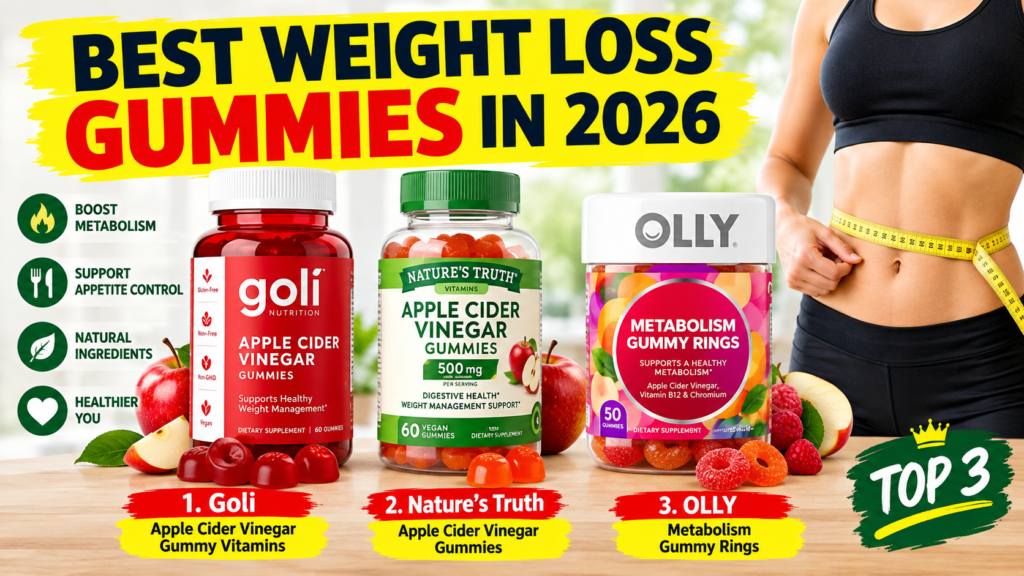
Discover the best weight loss gummies in 2026. Compare ACV, keto, and other formulas, understand the evidence, and learn how to choose supplements safely.
LifeCareBalance.com is reader-supported. When you buy through links on our site, we may earn an affiliate commission at no extra cost to you. As an Amazon Associate, we earn from qualifying purchases.
Losing weight can be challenging when work, family responsibilities, limited time, and inconsistent eating habits make healthy routines difficult to maintain. That is one reason weight loss gummies have attracted attention among people looking for convenient additions to their wellness routines.
These chewable supplements are often marketed with promises of appetite control, faster metabolism, increased energy, or improved fat burning. Some contain apple cider vinegar (ACV), while others feature vitamins, plant extracts, or ingredients marketed for ketogenic diets.
But an important question comes before choosing a product: Do weight loss gummies actually help you lose weight?
The evidence does not support treating these products as reliable, stand-alone weight loss solutions. Research on many supplement ingredients is limited, and findings from studies of an individual ingredient cannot automatically be applied to a commercial gummy containing that ingredient.
This guide explains what to know before buying weight loss gummies in 2026, how popular ingredients compare, what safety checks matter, and which practical strategies have a stronger foundation for long-term weight management.
Quick Answer: Are Weight Loss Gummies Worth Buying?
Weight loss gummies may be convenient, but there is insufficient reliable evidence to recommend them as an effective way to lose a meaningful amount of body weight. Apple cider vinegar gummies have not been adequately studied for weight loss, and keto gummies containing beta-hydroxybutyrate (BHB) should not be assumed to burn body fat.
If you are considering a gummy, evaluate its actual ingredients, serving size, added sugar, potential side effects, independent quality testing, and total cost. Do not buy a product simply because its packaging promises rapid results.
For most adults, sustainable weight management is better supported by a balanced eating pattern, appropriate calorie intake, regular physical activity, adequate sleep, and professional guidance when needed.
Why Are Weight Loss Gummies So Popular?
Gummies offer a familiar, convenient format for people who dislike swallowing tablets or mixing powders. They are portable, easy to portion according to label directions, and often flavored to make daily supplement use more pleasant.
Several factors contribute to their popularity:
- Convenience: Gummies are easy to carry and use while traveling or working.
- Taste: Fruit flavors can make them more appealing than some traditional supplements.
- Simple routines: A clearly labeled serving can be easier to remember than a complicated supplement schedule.
- Marketing appeal: Terms such as “natural,” “metabolism support,” and “keto” can make products sound attractive.
- Variety: Consumers can find formulas marketed around ACV, vitamins, botanical extracts, and ketogenic diets.
However, popularity does not establish effectiveness. A supplement can be convenient and enjoyable without producing measurable weight loss.
Before purchasing any gummy, separate the convenience of its format from evidence that its ingredients deliver the advertised outcome.
Comparing Popular Types of Weight Loss Gummies
There is no scientifically established ranking of gummies that reliably produce the greatest weight loss. The following comparison evaluates common product categories by their intended use and the limitations of the evidence.
| Gummy type | Common marketing claim | What consumers should know |
|---|---|---|
| Apple cider vinegar gummies | Appetite or weight management support | Evidence for weight loss is limited, and gummy-specific research is inadequate. |
| Keto or BHB gummies | Supports ketosis and fat burning | BHB supplementation does not establish that body fat will decrease. |
| Green tea extract gummies | Metabolism support | Research on green tea preparations suggests, at most, modest effects in some settings; results vary. |
| Garcinia cambogia gummies | Appetite control and fat loss | Evidence of meaningful weight loss is weak, and safety concerns have been reported with some products. |
| Vitamin-containing gummies | Energy and nutritional support | Vitamins help meet nutritional needs but are not inherently fat-burning ingredients. |
This comparison is intended to help shoppers evaluate claims, not to declare one category the best weight loss treatment.
1. Apple Cider Vinegar (ACV) Gummies

- Vegan, Non-GMO, Gluten-free & Gelatin-free: Each bottle of Goli contains 60 delicious, vegan, non-gmo, gluten-free & gel…
- Made in the USA with locally and globally sourced ingredients. Goli Gummies are made in allergen-free, cGMP certified fa…
- Patented Formula, Essential Vitamins, Great Taste: Our patented formula contains essential Vitamin B12 to help support c…

- APPLE CIDER VINEGAR: Receive 600 mg of Apple Cider Vinegar per serving.
- VEGAN GUMMIES: Delicious apple flavored gummies suitable for all lifestyles.
- HONEST & TRANSPARENT: Nature’s Truth is committed to delivering the best quality wellness products.

- METABOLISM GUMMY RINGS WITH APPLE CIDER VINEGAR: These tasty gummy rings are formulated with goodness to promote cellula…
- THE GOODS INSIDE: A clinically-studied amount of Chromium Picolinate to support lean body mass and help boost metabolism…
- DELIGHTFULLY TASTY: Super yummy Snappy Apple flavor with other natural flavors and you get Apple Cider Vinegar without h…
Apple cider vinegar gummies are among the most recognizable products in this category. They typically contain apple cider vinegar concentrate or powder, sweeteners, flavorings, and sometimes added vitamins or fruit extracts.
What are the potential benefits?
Apple cider vinegar has been studied for several metabolic outcomes, including blood glucose and body weight. Some small studies of liquid vinegar have reported possible benefits, but the evidence remains limited and inconsistent.
Importantly, findings from liquid vinegar studies cannot be directly transferred to gummies. The products may differ in concentration, formulation, serving size, and other ingredients.
What should buyers consider?
Check the actual ACV amount per serving rather than relying on the front-label marketing. Also review added sugars, serving size, allergens, and warnings.
Some ACV gummies contain added sugar, which can matter when you are monitoring your total calorie intake. ACV products may also cause digestive discomfort and may not be appropriate for everyone.
Verdict: Consider ACV gummies a convenience supplement, not a proven weight loss method. Do not expect them to suppress appetite or reduce body fat reliably.
For further reading, see Healthline’s review of apple cider vinegar gummies.
2. Keto Gummies and BHB Supplements
Keto gummies are marketed primarily toward people following ketogenic or low-carbohydrate eating plans. Some contain beta-hydroxybutyrate (BHB) salts, which are associated with ketone metabolism.
What does BHB do?
BHB is a ketone body that the body can use as an energy source. Supplemental BHB may raise circulating ketone levels, but that does not mean the body automatically burns more stored fat or that a person will lose weight.
Ketosis and body fat loss are not interchangeable concepts. Changes in body weight depend on several factors, including total energy intake, activity, water balance, and adherence to an eating pattern.
Are keto gummies useful for weight loss?
There is insufficient evidence to recommend BHB gummies as a dependable weight loss intervention. They should not be treated as a replacement for a well-planned diet or as a shortcut to achieving ketosis.
Buyers should examine the amount of BHB, other active ingredients, added sugar, calories, and sodium where relevant. Avoid assuming a product is effective merely because it uses ketogenic terminology.
Verdict: Keto gummies are not a proven shortcut to fat loss. If you follow a ketogenic diet, choose foods and supplements based on your nutritional needs rather than marketing claims.
3. Green Tea Extract Gummies
Green tea extract contains plant compounds called catechins and may contain caffeine, depending on the formulation.
Some research has examined green tea preparations for energy expenditure and body weight. However, findings vary, and any effects appear limited rather than dramatic. Results from a particular extract or dose do not prove that every gummy containing green tea will work.
What should you check?
Review the label for:
- The amount of green tea extract per serving
- Whether caffeine is included
- Warnings about stimulant sensitivity
- Instructions regarding food and dosage
- Other stimulants in the formula
Concentrated green tea extracts have been associated with rare liver injury. This is a reason to take supplement safety seriously, especially when a formula contains multiple active ingredients.
Verdict: Green tea extract gummies should not be considered a reliable weight loss solution. If you are sensitive to caffeine or take medication, seek professional advice before using a concentrated extract.
4. Garcinia Cambogia Gummies
Garcinia cambogia is a tropical fruit extract frequently promoted in weight management supplements. Its marketing often focuses on appetite control or the body’s handling of stored fat.
However, available research has not established a dependable, clinically meaningful weight loss benefit. Products containing garcinia cambogia should not be described as proven fat burners.
Safety also matters. Liver injury has been reported in connection with some garcinia-containing products, although the precise cause can be difficult to establish when supplements contain multiple ingredients.
Before buying a formula, check its complete ingredient list, avoid products promising dramatic results, and consult a healthcare professional if you have a medical condition or take medication.
Verdict: Garcinia cambogia gummies are not a first-choice option for weight loss. Weak evidence and potential safety concerns make exaggerated marketing particularly important to avoid.
5. Vitamin-Containing Gummies
Some gummies marketed for weight management include vitamin B12 or other vitamins.
Vitamins have important roles in normal bodily functions. Vitamin B12, for example, supports healthy nerve function and red blood cell formation. Correcting a vitamin deficiency can improve related symptoms, but taking extra vitamins does not automatically increase fat loss.
Who might benefit?
People who have a nutritional deficiency or a specific dietary need may benefit from appropriate supplementation under professional guidance. The correct supplement depends on the individual, not simply on their weight loss goal.
What is the limitation?
A vitamin gummy should not be marketed as a fat burner simply because it contains vitamins associated with energy metabolism. Normal metabolic function and accelerated body fat loss are different outcomes.
Verdict: Choose vitamin gummies to address a genuine nutritional need, not as a substitute for an evidence-based weight management plan.
Ingredients to Evaluate Before Buying
The most useful way to assess a weight loss gummy is to examine the actual formulation rather than relying on the product name.
Apple cider vinegar
Look for a clearly stated amount and a complete ingredient list. Do not assume that an ACV gummy has the same effects as liquid vinegar used in a research study.
BHB ketones
Check the amount and form of BHB, but remember that raising ketone levels does not establish a fat loss benefit.
Green tea extract and caffeine
Review the extract amount and total stimulant exposure, especially if you consume coffee, energy drinks, pre-workout supplements, or other caffeinated products.
Garcinia cambogia
Do not interpret its presence as proof of appetite control or fat burning. Consider the uncertain benefits and possible safety concerns.
Fiber
Some forms of fiber can help support fullness and digestive regularity. However, the effectiveness of a gummy depends on its specific fiber type and dose. A small amount of fiber in a gummy should not be assumed to produce the same effects as an adequate fiber-rich diet.
Vitamin B12 and other vitamins
Check whether the product provides meaningful amounts of nutrients you actually need. More is not necessarily better, and high doses of some nutrients may be inappropriate for certain people.
Added sugars and calories
Read the Nutrition Facts label. Gummies can contain sugars or other caloric ingredients, and the calories consumed across daily servings contribute to total intake.
How to Choose a Weight Loss Gummy Safely
If you decide to purchase a gummy despite the uncertain weight loss evidence, use the following checklist.
1. Read the Supplement Facts panel
Check the serving size, active ingredients, amounts per serving, directions, warnings, and other ingredients. Avoid relying exclusively on the product’s front label.
2. Avoid unrealistic promises
Be skeptical of products promising rapid weight loss, effortless fat burning, or dramatic changes without dietary or activity changes.
No gummy can guarantee a particular amount of weight loss for every user.
3. Look for independent quality testing
Where available, look for credible third-party verification, such as testing or certification from USP or NSF. Check the certifier’s own database or website to confirm what the verification covers.
Quality testing can provide information about identity, purity, or manufacturing standards. It does not establish that a product produces weight loss.
4. Review the manufacturer’s information
A responsible manufacturer should provide a complete label, clear contact information, serving instructions, and appropriate warnings. Be cautious when ingredient amounts are hidden behind vague proprietary blends.
5. Check for medication interactions
Supplements can interact with prescription medicines or affect existing medical conditions. Ask a pharmacist or healthcare professional to review the exact product and ingredient list before using it.
6. Calculate the actual cost
Compare the price per labeled serving and the number of servings per container. Do not commit to a subscription or repeated purchase based on an unproven promise.
7. Check safety alerts
Search the FDA’s Weight Loss Product Notifications page for relevant warnings. The absence of a product from the database is not proof that it is safe.
Are Weight Loss Gummies Safe?
Safety depends on the specific ingredients, doses, product quality, and user’s health circumstances. It is not accurate to assume that every gummy is safe simply because it is marketed as natural or contains familiar ingredients.
Possible problems include digestive discomfort, reactions to ingredients, excessive stimulant intake, medication interactions, and contamination or undeclared substances.
Take extra care if you:
- Are pregnant or breastfeeding
- Have diabetes, high blood pressure, heart disease, or liver disease
- Take prescription medication
- Have a history of supplement reactions
- Are considering several weight loss products at once
Consult a healthcare professional before starting a supplement if any of these circumstances apply. Do not stop prescribed medication or change its dose to accommodate a supplement.
Stop taking a product and seek medical advice if you experience concerning symptoms. Severe symptoms, including difficulty breathing, chest pain, fainting, or signs of a serious allergic reaction, require urgent medical attention.
In the United States, dietary supplements are regulated differently from prescription medicines. The FDA does not approve dietary supplements for safety and effectiveness before they are marketed in the same way it approves drugs. Manufacturers are responsible for product safety and lawful labeling, and the FDA can take action against unsafe or adulterated products.
This makes careful purchasing and realistic expectations especially important.
What Works Better for Sustainable Weight Management?
If your goal is to lose weight and maintain the change, focus on habits with a stronger evidence base than weight loss gummies.
Build meals around satisfying foods
Include vegetables, fruit, protein-rich foods, whole grains, and appropriate sources of healthy fats. Meals that provide protein and fiber may help you feel satisfied, although individual needs differ.
You do not need to follow an extreme diet to make progress. Choose an eating pattern that fits your preferences, budget, culture, and schedule.
Pay attention to portions and total intake
Weight change is influenced by the relationship between energy intake and energy expenditure. Tracking portions or keeping a brief food diary may help some people identify patterns without requiring obsessive calorie counting.
A healthcare professional or registered dietitian can help you develop an appropriate plan.
Increase daily movement
Walking, cycling, swimming, dancing, and other activities you enjoy can help you build a sustainable routine. Resistance training can also help preserve muscle during weight loss.
For many adults, public health guidance recommends working toward at least 150 minutes of moderate-intensity aerobic activity per week, plus muscle-strengthening activity on two or more days, adjusted to individual ability and medical circumstances.
LifeCareBalance readers can explore fitness and movement products for home workouts for practical ideas about making movement easier to maintain.
Get adequate sleep
Sleep supports overall health and can influence appetite, energy, and the ability to follow healthy routines. Establish a consistent bedtime, create a comfortable sleeping environment, and address persistent sleep problems with a healthcare professional.
Monitor progress realistically
Body weight can fluctuate because of hydration, digestion, menstrual cycles, and other factors. Consider longer-term trends rather than interpreting every daily change as fat loss or fat gain.
If tracking weight is stressful or inappropriate for you, other measures of progress—such as stamina, strength, routine consistency, or health markers discussed with a clinician—may be more useful.
For more ideas, explore the LifeCareBalance personalized wellness guide.
Common Mistakes to Avoid
Expecting instant results: Sustainable weight change usually takes time. Do not judge a product by short-term water-weight changes.
Combining several supplements: Multiple formulas can expose you to overlapping ingredients, stimulants, or excessive doses.
Ignoring added sugar: Check the complete nutrition label, not just the advertised active ingredient.
Trusting testimonials as clinical evidence: Personal stories and online ratings cannot establish that a supplement caused weight loss or that it is safe.
Assuming natural means harmless: Plant extracts and other natural ingredients can still cause side effects or interact with medicines.
Replacing meals with unproven gummies: Gummies are not nutritionally complete meal replacements unless a product is specifically formulated and labeled for that purpose.
Ignoring underlying health issues: Some medicines, health conditions, sleep problems, and other factors can influence body weight. Professional assessment can help identify appropriate options.
Frequently Asked Questions
1. Do weight loss gummies actually work?
There is insufficient reliable evidence to conclude that weight loss gummies consistently produce meaningful weight loss. Results from research on individual ingredients do not prove that a finished gummy works.
2. What are the best weight loss gummies in 2026?
There is no established evidence-based ranking of gummies that reliably deliver weight loss. The best purchasing decision is to prioritize transparent labeling, appropriate quality checks, safety information, and realistic claims rather than promises of rapid results.
3. Do apple cider vinegar gummies help burn fat?
ACV gummies have not been adequately studied for weight loss. Limited findings from liquid vinegar research should not be assumed to apply to gummy supplements.
4. Do keto gummies help you lose weight?
Keto gummies containing BHB may affect ketone levels, but that does not establish that they increase body fat loss. They are not a substitute for a suitable eating plan.
5. How long does it take for weight loss gummies to work?
There is no scientifically established timeline for weight loss from these products. Claims that users will see results within four to eight weeks should not be treated as a reliable expectation without product-specific evidence.
6. Can I take weight loss gummies every day?
Follow the product label, but do not assume daily use is appropriate for everyone. Review potential interactions and safety concerns with a healthcare professional, especially if you have a medical condition or take medication.
7. Are weight loss gummies safe for beginners?
The gummy format does not guarantee safety. Beginners should review the ingredients and doses carefully and avoid products with unclear formulations or exaggerated promises.
8. Can weight loss gummies replace diet and exercise?
No. Gummies should not replace balanced nutrition, appropriate physical activity, sleep, or medical care when needed.
9. Are sugar-free weight loss gummies better?
Sugar-free products may reduce added sugar compared with some alternatives, but that does not make them more effective for weight loss. Check the full nutrition label, including calories and sugar alcohols where present.
10. Should I speak to a doctor before using weight loss gummies?
Professional advice is particularly important if you take medication, have an ongoing health condition, are pregnant or breastfeeding, or are considering a supplement with multiple active ingredients.
11. Are weight loss gummies FDA-approved?
Dietary supplements are not FDA-approved for safety and effectiveness before marketing in the same manner as prescription drugs. Be cautious of sellers who use FDA approval claims to imply that a supplement has been proven to cause weight loss.
12. What is the most reliable approach to losing weight?
A sustainable eating pattern, appropriate calorie intake, regular movement, adequate sleep, and consistent habits form a stronger foundation than relying on gummies. Some people may also benefit from clinician-guided treatment based on their individual health needs.
Final Verdict: Should You Buy Weight Loss Gummies in 2026?
Weight loss gummies may be convenient, but convenience is not the same as effectiveness. Current evidence does not justify promising that ACV, BHB, green tea extract, garcinia cambogia, or vitamin-containing gummies will reliably burn fat or produce a particular amount of weight loss.
If you choose to buy one, compare the actual formulation, serving size, sugar content, quality verification, potential interactions, and cost. Avoid exaggerated claims, and remember that independent testing can help assess product quality without proving that a supplement works for weight loss.
For most people, the more dependable investment is a realistic eating plan, regular physical activity, adequate sleep, and professional guidance when appropriate.
At LifeCareBalance, our goal is to help readers make informed wellness decisions—not to promise results that the evidence cannot support.
Health disclaimer: This article is for general educational purposes only and is not a substitute for individualized medical advice, diagnosis, or treatment. Consult a qualified healthcare professional before starting a weight loss supplement.