
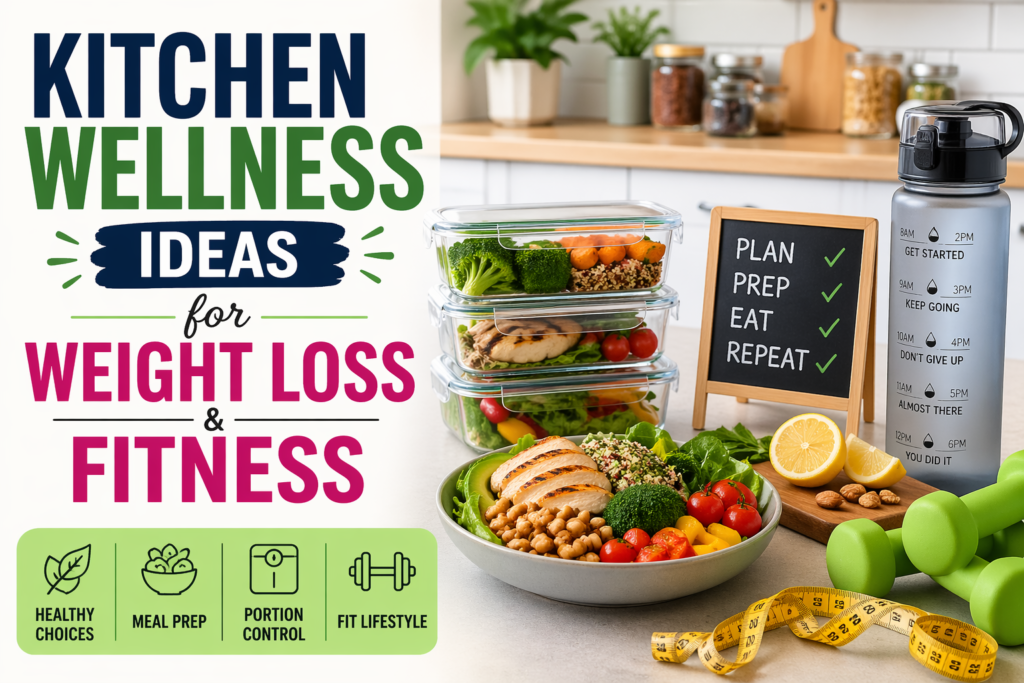
Create a kitchen that supports healthy eating and weight management with smart food organization, meal prep, portion control, hydration, and practical kitchen tools.
LifeCareBalance.com is reader-supported. When you buy through links on our site, we may earn an affiliate commission at no extra cost to you. As an Amazon Associate, we earn from qualifying purchases.
Your kitchen can do more than store food and provide a place to cook. It can either make healthy eating easier or make it harder.
When nutritious foods are visible, meals are planned, portions are easier to manage, and convenient cooking tools are ready to use, healthy choices can become much simpler during a busy week. On the other hand, a kitchen filled with highly tempting snacks, oversized portions, and no meal-prep system can make impulsive eating more convenient.
That does not mean your kitchen can cause or prevent weight loss by itself. Weight management depends on many factors, including overall food intake, physical activity, sleep, individual health, and long-term habits. However, your food environment can influence the choices you make repeatedly throughout the day.
The goal is not to create a perfect “diet kitchen.” The goal is to build a practical kitchen environment that supports nutritious meals, sensible portions, meal preparation, hydration, and consistency.
In this guide, you’ll learn how to organize your kitchen for healthier eating, what foods to keep accessible, how to build a simple meal-prep system, which kitchen tools are actually useful, and how to avoid common mistakes.
Why Your Kitchen Matters for Healthy Eating
Healthy eating is easier when the healthy choice is also the convenient choice.
The CDC recommends planning meals at home, emphasizing vegetables and fruits, choosing varied protein foods, including fiber-rich whole grains, and paying attention to portion sizes. It also recommends keeping nutritious snacks available while storing less-healthy foods out of sight.
This is where kitchen organization becomes useful.
Instead of relying entirely on willpower, you can change the environment around you.
For example:
- Keep washed fruit where you can see it.
- Store prepared vegetables in easy-to-reach containers.
- Keep protein foods available for quick meals.
- Portion calorie-dense snacks instead of eating directly from large packages.
- Keep a water bottle or glass within reach.
- Prepare ingredients before the busiest part of your day.
- Make healthier meals easier to assemble than takeout.
These changes are simple, but they can reduce friction around healthy habits.
For more detailed kitchen organization ideas, see LifeCareBalance’s guide to Design a Kitchen That Supports Your Health Goals.
1. Make Healthy Foods the Easiest Foods to Reach
One of the simplest kitchen wellness ideas is to change what you see first.
If cookies, chips, candy, and sugary drinks are sitting at eye level, they are extremely convenient choices. If washed fruit, yogurt, vegetables, nuts, or prepared meals are easier to reach, nutritious options become more convenient.
Try creating a “healthy first” area in your refrigerator.
Place foods such as:
- Berries
- Apples and oranges
- Cut vegetables
- Greek yogurt
- Hard-boiled eggs
- Prepared chicken or other lean proteins
- Hummus
- Pre-portioned snacks
- Ready-to-eat leftovers
at the front of the refrigerator.
You do not need to completely eliminate treats. The objective is simply to make nutritious foods more visible and convenient.
The CDC specifically recommends keeping healthier foods in front or at eye level and storing less-healthy snacks out of sight.
2. Build a Kitchen Around Balanced Meals
A healthy kitchen should make it easy to build balanced meals.
Instead of thinking about complicated diet recipes, keep a few basic food categories available:
Protein
Examples include:
- Eggs
- Chicken
- Turkey
- Fish
- Greek yogurt
- Cottage cheese
- Beans
- Lentils
- Tofu
- Nuts and seeds
Vegetables
Keep several options available, including fresh or frozen vegetables.
Examples include:
- Broccoli
- Spinach
- Bell peppers
- Carrots
- Green beans
- Cauliflower
- Mixed vegetables
Fruit
Choose whole fruits that you actually enjoy.
Examples include:
- Apples
- Berries
- Bananas
- Oranges
- Grapes
- Pears
Whole Grains and Other Carbohydrate Sources
Useful options include:
- Oatmeal
- Brown rice
- Quinoa
- Whole-grain bread
- Whole-grain tortillas
- Potatoes
- Sweet potatoes
NIDDK recommends a healthy eating pattern that includes vegetables, whole fruits, whole grains, dairy or appropriate alternatives, and varied protein foods.
The idea is not to label individual foods as “good” or “bad.” It is to make balanced meals easier to assemble.
3. Use Portion-Friendly Plates and Containers
Portion size matters even when the food itself is nutritious.
NIDDK explains that the amount you eat is important for reaching or maintaining a healthy weight and notes that portions and serving sizes are not always the same thing.
You can make portion awareness easier without weighing every ingredient.
Useful options include:
- Smaller everyday plates
- Divided meal-prep containers
- Measuring cups for selected foods
- Kitchen scales when accurate portion tracking is useful
- Portion-control plates
LifeCareBalance also has a dedicated guide on Adjustable Portion Control Plates for Weight Loss.
The purpose is not to create rigid eating rules. Portion tools are simply visual aids that can make meal composition easier to understand.
4. Create a Dedicated Meal-Prep Station
Meal prep becomes easier when you do not have to reorganize the entire kitchen every time you prepare food.
Choose one area for:
- Cutting boards
- Food containers
- Measuring tools
- Kitchen scale
- Meal-prep labels
- Frequently used spices
- Reusable storage bags
Your station does not have to be large.
Even one drawer and one section of countertop can be enough.
The American Heart Association recommends planning menus and grocery lists ahead and preparing food in advance when possible.
A practical weekly system might look like this:
Step 1: Choose 2–3 proteins.
Step 2: Prepare 2–4 vegetables.
Step 3: Cook one or two carbohydrate sources.
Step 4: Portion ingredients into containers.
Step 5: Keep several meals ready for the busiest days.
You do not need to prepare seven identical meals.
A flexible system is often easier to maintain.
5. Keep a Small Collection of High-Utility Kitchen Tools
You do not need dozens of gadgets to create a healthy kitchen.
The most useful tools are the ones that remove friction from healthy cooking.
Useful Kitchen Tools for Healthy Eating
Digital Kitchen Scale
Useful when you want more consistent portions or need accurate measurements for recipes.
Meal-Prep Containers
Useful for storing prepared meals, snacks, vegetables, and leftovers.
Blender
Useful for smoothies, soups, sauces, and other quick recipes.
Air Fryer
Useful for preparing foods with less added cooking oil compared with some traditional frying methods. It does not automatically make every food healthy, so the ingredients and overall meal still matter.
Sharp Chef’s Knife
A good knife can make vegetable and protein preparation faster.
Measuring Cups and Spoons
Useful for ingredients where portion accuracy matters.
Water Bottle
A reusable bottle can make water more convenient to keep nearby throughout the day.
The key is to buy tools because they solve a real problem—not because they are trending.
6. Make Meal Prep Easier With Glass or Durable Food Containers
Meal-prep containers are particularly useful because they connect several healthy habits at once.
They can help you:
- Portion meals ahead of time
- Store leftovers
- Pack work lunches
- Prepare grab-and-go breakfasts
- Organize snacks
- Reduce last-minute food decisions
When shopping, consider:
- Container size
- Leak resistance
- Microwave compatibility
- Freezer compatibility
- Dishwasher safety
- Stackability
- Lid quality
- Glass versus plastic
- Number of compartments
Do not automatically assume that one material is perfect for everyone.
Glass can be useful for home storage and reheating, while lightweight plastic or other materials may be more practical for carrying meals.
The best container is the one that fits your actual routine.
7. Stock a Healthy Pantry Instead of a Perfect Pantry
A healthy pantry does not need to contain expensive “superfoods.”
Build it around versatile ingredients you will actually use.
Pantry Staples
Consider keeping:
- Oats
- Brown rice
- Quinoa
- Whole-grain pasta
- Canned beans
- Lentils
- Low-sodium canned vegetables
- No-added-sugar canned fruit
- Nuts
- Seeds
- Natural nut butter
- Herbs and spices
- Olive oil
The American Heart Association recommends keeping useful staples such as beans, whole grains, vegetables, fruits, nuts, seeds, and other versatile ingredients available for quick meals.
A useful pantry should help you make dinner—not simply look healthy on Instagram.
8. Organize Your Refrigerator for Fast Healthy Choices
Your refrigerator can become your most useful weight-management tool if it is organized around convenience.
Try this layout:
Front Shelf
Keep ready-to-eat foods here.
Examples:
- Fruit
- Yogurt
- Prepared vegetables
- Leftovers
- Pre-portioned snacks
Middle Shelf
Store prepared meals and frequently used foods.
Drawers
Use these for produce that benefits from refrigeration.
Door
Use for condiments and beverages where appropriate.
The exact arrangement is less important than visibility.
If vegetables are hidden behind sauces and leftovers are buried beneath containers, you are less likely to use them.
A five-minute refrigerator reset once or twice a week can prevent this.
9. Wash and Prepare Produce in Advance
One of the biggest barriers to eating more vegetables and fruit is convenience.
Buying vegetables is one thing.
Washing, cutting, and preparing them when you are already hungry is another.
After grocery shopping, consider preparing some produce immediately.
For example:
- Wash berries.
- Cut carrots.
- Slice bell peppers.
- Wash salad greens.
- Prepare broccoli.
- Portion grapes.
- Keep fruit visible.
You do not have to prepare everything at once.
Prepare enough for several days and replenish when necessary.
This turns healthy ingredients into ready-to-use ingredients.
10. Create a Simple Weekly Meal-Planning System
Meal planning does not have to mean creating a complicated seven-day diet.
Instead, choose a simple framework.
Breakfast Options
Choose two or three:
- Oatmeal with fruit and nuts
- Greek yogurt with berries
- Eggs with whole-grain toast
- Smoothie with fruit and protein-rich ingredients
Lunch Options
Choose two or three:
- Chicken and vegetable bowl
- Tuna and whole-grain wrap
- Bean and quinoa salad
- Turkey and vegetable sandwich
Dinner Options
Choose three or four:
- Grilled chicken with vegetables and potatoes
- Salmon with vegetables and brown rice
- Bean and vegetable bowl
- Turkey or tofu stir-fry
You can rotate these meals rather than starting from zero every day.
Planning also makes grocery shopping easier.
11. Keep Quick Protein Options Available
Protein is an important part of a balanced diet, and keeping convenient protein foods available can make meals easier to assemble.
Useful options include:
- Eggs
- Greek yogurt
- Cottage cheese
- Chicken
- Tuna
- Salmon
- Beans
- Lentils
- Tofu
- Nuts and seeds
The CDC recommends including a variety of protein foods as part of healthy eating.
Rather than relying on one “perfect” protein source, rotate options throughout the week.
12. Make Water Easy to Choose
Hydration should be simple.
Keep water accessible:
- On the kitchen counter
- In the refrigerator
- Near your work area
- In a reusable bottle
You can also make plain water more appealing with:
- Lemon
- Lime
- Cucumber
- Mint
- Berries
Be cautious with drinks marketed as “healthy” simply because they contain fruit, vitamins, or wellness ingredients. Some beverages can still contain significant amounts of added sugar or calories.
For weight management, replacing sugar-sweetened beverages with water can be a practical change. NIDDK specifically recommends water instead of sugary drinks such as soda and some other sweetened beverages.
13. Create a Better Snack System
Snacking is not automatically unhealthy.
The problem is often uncontrolled portions and low-satiety snack choices.
Instead of keeping large bags open on the counter, portion snacks into smaller containers.
Useful options can include:
- Fruit
- Greek yogurt
- Nuts
- Seeds
- Vegetables with hummus
- Whole-grain crackers
- Cottage cheese
NIDDK recommends avoiding eating directly from large packages and suggests portioning food into individual servings.
This is one of the simplest changes you can make without redesigning your entire kitchen.
14. Keep Less-Healthy Foods Out of Immediate View
You do not have to remove every treat from your home.
Instead, change the visibility.
Keep foods such as:
- Candy
- Cookies
- Chips
- Sugary snacks
in less visible locations.
Meanwhile, keep healthier choices where you can easily see them.
This approach can reduce unnecessary visual cues without creating an overly restrictive kitchen.
The goal is not to create a kitchen where you are never allowed to enjoy your favorite foods.
The goal is to stop making the least nutritious option the easiest option every time.
15. Use Your Kitchen to Support Fitness Too
Although this article is focused on food and kitchen wellness, your kitchen can support an active lifestyle indirectly.
A well-organized kitchen can make post-workout meals easier.
For example, after exercise, having prepared food available can reduce the temptation to rely on fast food simply because you are tired.
You can prepare:
- Protein-rich meals
- Vegetable sides
- Whole-grain carbohydrates
- Fruit
- Yogurt
- Smoothie ingredients
If you want to explore the broader fitness side of your home routine, see LifeCareBalance’s Fitness and Movement Products for 2026.
The kitchen does not replace exercise. It simply helps support the nutrition side of an active lifestyle.
16. Consider a Simple Kitchen Scale
A kitchen scale can be especially useful for people who want greater consistency.
You do not need to weigh every meal forever.
Instead, a scale can teach you what common portions actually look like.
This can be particularly helpful for foods where calories add up quickly, such as:
- Nuts
- Nut butter
- Oils
- Cheese
- Grains
- Granola
- Dried fruit
NIDDK notes that food portions can differ substantially from labeled serving sizes, which is why understanding actual portions can be useful.
A scale is a tool—not a requirement for healthy eating.
17. Build a “10-Minute Meal” Backup Plan
Even the best meal plan can fail when life becomes busy.
That is why every healthy kitchen should have emergency meals.
Examples:
- Eggs + whole-grain toast + fruit
- Greek yogurt + berries + nuts
- Rotisserie chicken + frozen vegetables + microwaveable brown rice
- Canned beans + vegetables + whole-grain tortilla
- Tuna + salad + whole-grain crackers
- Frozen vegetables + pre-cooked protein + rice
The goal is to create meals that are faster than ordering takeout.
This is one of the most valuable forms of kitchen organization because it accounts for real life.
18. Do Not Confuse “Healthy” With “Low-Calorie”
A common mistake is assuming that every nutritious food should be eaten without limits.
Foods such as nuts, olive oil, avocado, granola, cheese, and nut butter can be part of a healthy eating pattern, but portions still matter.
NIDDK emphasizes that both the type and amount of food matter when managing weight.
This is why your kitchen should support balanced eating rather than extreme restriction.
A sustainable setup gives you nutritious choices while still allowing flexibility.
19. Keep Your Kitchen Simple Enough to Maintain
Do not create a complicated system that requires hours every weekend.
Your kitchen wellness routine should survive busy weeks.
A practical weekly reset can take less than an hour:
10 minutes: Clean the refrigerator.
10 minutes: Wash and prepare produce.
15 minutes: Cook a protein and one carbohydrate.
10 minutes: Portion snacks and meals.
5 minutes: Write your grocery list.
The exact timing does not matter.
The principle does.
A small repeatable routine is usually more useful than a perfect system that you abandon after two weeks.
20. Choose Kitchen Products That Solve Real Problems
Kitchen products can support healthy habits, but you do not need a countertop full of gadgets.
Before buying anything, ask:
- Will I use this at least once a week?
- Does it make healthy cooking easier?
- Does it save meaningful time?
- Does it make portioning or storage easier?
- Is it easy to clean?
- Does it fit my available space?
- Is the price reasonable for how often I will use it?
For broader wellness product ideas, you can also explore LifeCareBalance’s Best Wellness Products 2026.
The objective is not to own a “wellness kitchen.”
The objective is to create a kitchen that works better for your lifestyle.
Best Kitchen Products to Support Healthy Eating
If you want to add a few practical products, prioritize tools that make healthy habits more convenient.
1. Glass Meal-Prep Containers
Best for:
- Batch cooking
- Portioning meals
- Leftovers
- Work lunches
- Refrigerator organization
2. Digital Kitchen Scale
Best for:
- Learning portions
- Recipe accuracy
- Tracking calorie-dense ingredients
- Consistent meal preparation
3. Portion-Control Plate
Best for:
- Visual meal planning
- Beginners
- People who prefer simple portion guidance
4. Air Fryer
Best for:
- Quick vegetable preparation
- Chicken
- Fish
- Potatoes
- Convenient weeknight cooking
5. Reusable Water Bottle
Best for:
- Making water accessible
- Work-from-home routines
- Gym routines
- Daily hydration habits
Choose products based on your routine rather than buying every item on a generic “healthy kitchen” list.
A Simple Healthy Kitchen Checklist
Use this checklist when reorganizing your kitchen.
Refrigerator
- Fruit is visible
- Vegetables are easy to access
- Protein foods are available
- Prepared meals have dedicated space
- Old leftovers are removed regularly
Pantry
- Whole grains available
- Beans and lentils available
- Nuts and seeds available
- Healthy cooking oils available
- High-sugar snacks are not the most visible foods
Meal Prep
- Containers are easy to reach
- Kitchen scale is available if needed
- Cutting board is accessible
- Meal plan is simple
- Grocery list is prepared
Hydration
- Water bottle is available
- Water is easy to access
- Sugary beverages are not the default choice
Common Kitchen Mistakes That Can Work Against Your Goals
Even a kitchen filled with healthy foods can become difficult to use if the system is poorly designed.
Mistake 1: Buying Healthy Foods You Never Eat
Do not buy kale, quinoa, chia seeds, or other trendy foods simply because they are considered healthy.
Buy foods you genuinely enjoy.
Mistake 2: Preparing Too Much Food
Meal prep should reduce waste, not create a refrigerator full of meals you no longer want by Friday.
Start with two or three days if weekly prep feels overwhelming.
Mistake 3: Ignoring Portions
Healthy ingredients can still contribute significant calories when eaten in large quantities.
Mistake 4: Keeping Everything on the Counter
Visible food can become an unnecessary temptation.
Keep frequently used healthy foods visible and less-healthy foods less prominent.
Mistake 5: Buying Too Many Kitchen Gadgets
A complicated kitchen is not necessarily a healthier kitchen.
Buy fewer products that solve real problems.
Mistake 6: Making the Plan Too Strict
If your system leaves no room for restaurants, celebrations, desserts, or busy days, it may be difficult to maintain.
Build flexibility into your routine.
How to Build a Weight-Loss-Supportive Kitchen in One Weekend
You do not need a complete renovation.
Use this simple process.
Saturday Morning: Clean
Remove expired food and clean the refrigerator.
Saturday Afternoon: Organize
Move nutritious foods into visible, convenient locations.
Saturday Evening: Plan
Choose a few breakfasts, lunches, and dinners.
Sunday Morning: Shop
Buy only the ingredients needed for the plan plus a few flexible staples.
Sunday Afternoon: Prep
Wash produce, cook selected proteins and grains, and prepare a few grab-and-go meals.
Sunday Evening: Set Up
Place containers, water bottles, meal-planning tools, and frequently used ingredients where they are easy to reach.
By Monday morning, your kitchen should already be working for you.
Can a Kitchen Really Help With Weight Loss?
A kitchen cannot guarantee weight loss.
However, it can support behaviors associated with healthier eating and weight management.
Planning meals can reduce last-minute food decisions. Portion awareness can help you understand how much you are eating. Keeping nutritious foods accessible can make healthier choices more convenient.
NIDDK recommends a sustainable healthy eating plan combined with physical activity for weight management rather than relying on quick fixes.
The biggest benefit of a well-designed kitchen is therefore not a particular appliance or plate.
It is consistency.
When healthy food preparation becomes easier, you have fewer decisions to make every day.
Final Thoughts
The best kitchen wellness ideas for weight loss are not complicated.
You do not need an expensive kitchen makeover, dozens of supplements, or a countertop full of smart appliances.
Start by changing your environment.
Keep nutritious foods visible. Organize your refrigerator. Stock versatile ingredients. Prepare a few meals ahead. Use practical containers. Pay attention to portions. Keep water accessible. Create quick backup meals for busy days.
Most importantly, build a system you can realistically maintain.
A kitchen designed around convenience, balanced meals, and sensible portions can become a practical part of a healthier lifestyle. It will not replace exercise, sleep, medical care, or an overall nutritious eating pattern—but it can make those healthy habits easier to follow consistently.
The goal is simple: make the healthier choice the easier choice.
Frequently Asked Questions
What are the best kitchen wellness ideas for weight loss?
The most useful ideas include organizing healthy foods where they are easy to see, preparing meals in advance, using portion-friendly containers, keeping water accessible, and creating quick healthy meals for busy days.
Does kitchen organization help with weight management?
Kitchen organization cannot guarantee weight loss, but it can make healthier food choices and meal preparation more convenient. A supportive food environment can help reinforce consistent habits.
Should I use smaller plates for weight loss?
Smaller plates can be a useful portion-awareness strategy for some people. NIDDK also recommends smaller dishes, bowls, and glasses as one approach to managing portions at home.
What foods should I keep in a healthy kitchen?
Focus on foods you will actually eat, including vegetables, whole fruits, whole grains, varied protein foods, beans, lentils, nuts, seeds, and other nutritious staples.
Is meal prep good for weight loss?
Meal prep can make healthy eating more convenient and can help with portion planning. However, the foods and portions you prepare still matter.
Do I need a kitchen scale?
No. A kitchen scale is optional. It can be useful if you want more consistent portions or are learning how much of certain calorie-dense foods you typically consume.
What kitchen tools are most useful for healthy eating?
Useful options include meal-prep containers, a kitchen scale, measuring tools, a good knife, a blender, an air fryer, and a reusable water bottle. You only need the tools that fit your routine.
How often should I meal prep?
There is no universal schedule. Some people prefer preparing several meals on Sunday, while others prefer smaller two- or three-day preparation sessions. Choose the schedule you can maintain.
Can I keep snacks in a weight-loss kitchen?
Yes. A healthy eating routine does not require eliminating every snack or treat. Portioning snacks and keeping them less visible can make moderation easier.
What is the biggest kitchen mistake for healthy eating?
One of the biggest mistakes is creating a system that is too complicated to maintain. A simple kitchen with accessible nutritious foods is more useful than an expensive kitchen full of gadgets you rarely use.