
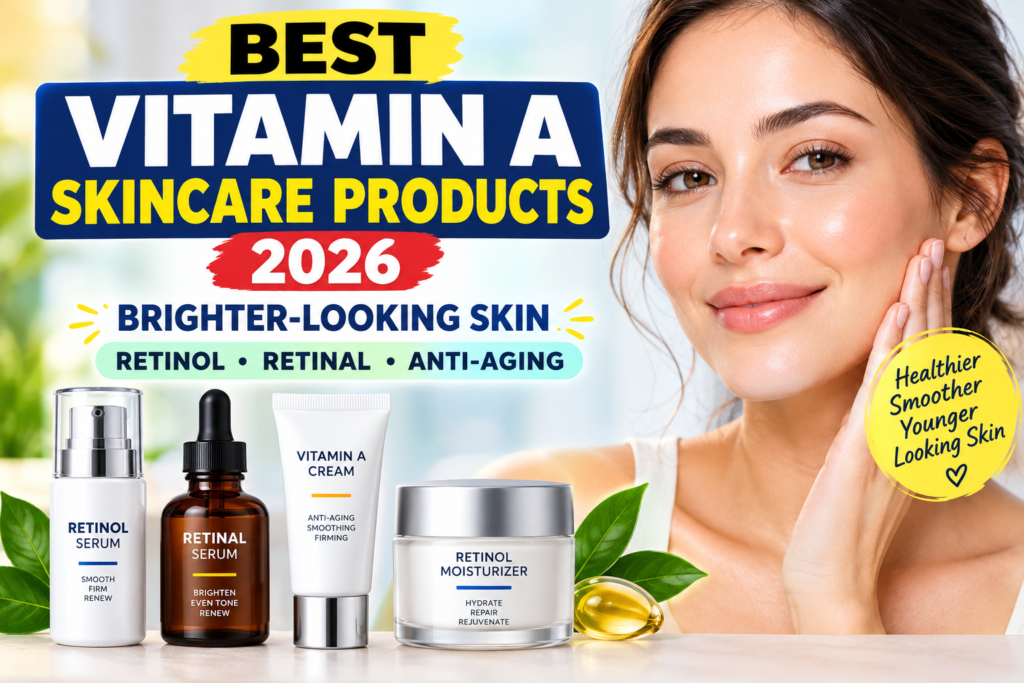
Explore the best Vitamin A skincare products for brighter-looking skin. Compare retinol serums, acne treatments, benefits, and safe-use tips.
LifeCareBalance.com is reader-supported. When you buy through links on our site, we may earn an affiliate commission at no extra cost to you. As an Amazon Associate, we earn from qualifying purchases.
Vitamin A skincare products are widely used to improve the appearance of fine lines, uneven skin tone, rough texture, and acne-prone skin. Ingredients such as retinol and other topical retinoids have different strengths and uses, so choosing the right formula matters more than buying the strongest product.
If your goal is brighter, smoother, healthier-looking skin, a consistent routine built around an appropriate Vitamin A product, moisturizer, and daily sunscreen can be a practical starting point.
In this guide, you will learn how Vitamin A works in skincare, which product types may suit different skin concerns, how to introduce retinol safely, and what to look for when shopping for skincare products in the United States.
Quick Answer: Which Vitamin A Skincare Product Is Best?
For many adults who want to improve the appearance of fine lines and uneven texture, an over-the-counter retinol serum or cream is a reasonable starting point. People with acne may benefit from a product containing adapalene, while prescription retinoids may be appropriate for certain skin conditions under professional guidance.
The best choice depends on your skin type, sensitivity, goals, budget, and previous experience with retinoids. No product can guarantee brighter skin or completely eliminate wrinkles and dark spots.
What Is Vitamin A in Skincare?
Vitamin A is a nutrient, but in topical skincare the term commonly refers to Vitamin A derivatives called retinoids. These include retinol, retinaldehyde (retinal), adapalene, and prescription ingredients such as tretinoin.
These ingredients are not interchangeable. They differ in formulation, strength, availability, and approved uses.
- Retinol: An over-the-counter ingredient commonly used in products targeting fine lines, uneven texture, and visible signs of photoaging.
- Retinaldehyde (retinal): Another Vitamin A derivative used in some cosmetic products. Its effectiveness and tolerability depend on the formula and individual skin.
- Adapalene: A topical retinoid used to treat acne. Some formulations are available over the counter in the United States.
- Tretinoin: A prescription topical retinoid used for conditions including acne. A clinician can advise whether it is suitable for your skin.
The American Academy of Dermatology explains that retinoids can help improve mild acne, pigmentation irregularities, and fine lines, but irritation is possible and the appropriate product varies by person.
For more information, read the American Academy of Dermatology’s retinoid and retinol guide.
Benefits of Vitamin A Skincare Products
1. Helps Improve the Appearance of Fine Lines
Some topical retinoids can improve the appearance of fine lines associated with sun exposure and aging. Results develop gradually and depend on the ingredient, formulation, and consistency of use.
Retinol is not an instant wrinkle remover. It is better viewed as one part of a long-term skincare routine.
2. Supports Smoother Skin Texture
Retinoids influence skin-cell turnover and can help improve the appearance of rough or uneven texture over time. Starting with a suitable formula and avoiding excessive exfoliation can help reduce irritation.
3. May Improve Uneven Skin Tone
Certain retinoids can help improve the appearance of some pigmentation irregularities, including post-acne marks. Irritation, however, can cause additional discoloration, particularly in skin that is prone to post-inflammatory hyperpigmentation.
Introduce the product gradually and stop or reduce use if persistent burning, redness, or peeling develops.
4. Can Help Manage Acne
Some topical retinoids help prevent clogged pores and are used in acne treatment. Adapalene is a well-established over-the-counter option for acne in the United States.
If acne is painful, widespread, scarring, or not improving, consult a dermatologist rather than relying exclusively on cosmetic retinol products.
5. Supports a More Consistent Skincare Routine
A simple routine is often easier to maintain than a collection of overlapping active ingredients. Pairing one appropriate Vitamin A product with a gentle cleanser, moisturizer, and sunscreen can help you focus on gradual improvement while protecting your skin barrier.
Best Vitamin A Skincare Products and Types to Consider
The following options represent different product categories and shopping considerations. They are not a claim that every formula suits every skin type, and current ingredient lists should be checked before purchasing.
1. CeraVe Skin Renewing Retinol Serum

- [ RETINOL FOR FACE ] This anti aging serum leverages encapsulated retinol with MVE Technology to ensure efficient delive…
- [ WRINKLE SERUM ] Face serum formulated with retinol to refine texture and diminish fine lines. Wrinkle remover for face…
- [ GENTLE ON SKIN ] Apply this fragrance-free, non-comedogenic retinol serum in the evening, building up to daily use to …
Best for: Shoppers looking for an over-the-counter retinol serum with a focus on skin texture and hydration.
CeraVe’s Skin Renewing Retinol Serum is a product to consider if you want a retinol treatment as part of a basic anti-aging routine. Check the current packaging for the exact formula and instructions, as product formulations can change.
What to consider before buying:
- Whether the formula suits your skin’s sensitivity
- Whether you already use another retinoid
- Whether the product fits your skincare budget
- Whether you can use it consistently alongside moisturizer and sunscreen
Start slowly rather than applying it every night from the beginning.
2. RoC Retinol Correxion Deep Wrinkle Serum
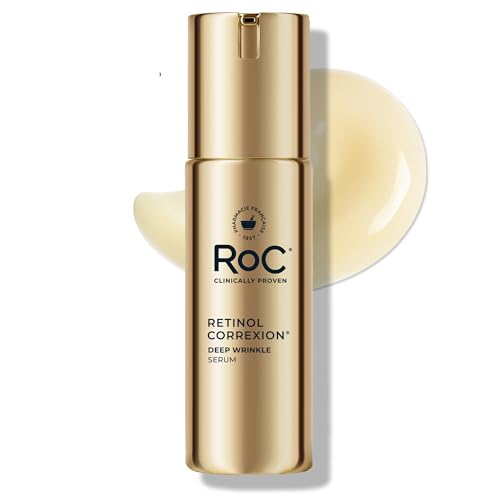
- SCIENCE & BEAUTY: We produce an array of skin care products inc SPF moisturizers,hyaluronic & niacinamide acids,facial c…
- ANTI-AGING FORMULAS: Whether you’re seeking a solution to visibly target deep wrinkles, fine lines, dark circles, crow’s…
- VISIBLY ANTI-WRINKLE SERUM TREATMENT: With RoC Retinol & RoC’s mineral complex for additional hydration & enhanced effic…
Best for: Adults primarily concerned about the appearance of fine lines and wrinkles.
RoC offers retinol-focused skincare products designed for visible signs of aging. Before purchasing a specific serum, confirm the exact product name and ingredient list because the brand sells multiple formulations.
A retinol serum may be useful for a gradual anti-aging routine, but results are not guaranteed and irritation can occur.
Shopping tip: Compare the directions, packaging size, and ingredient list rather than choosing a product based on advertising claims alone.
3. Differin Adapalene Gel 0.1%

- TARGETS ACNE: Clear and prevent acne with the first FDA-approved prescription strength over-the-counter acne retinoid
- CLEARS, TREATS & PREVENTS: Differin works differently than other Acne treatments by normalizing skin cell turnover and e…
- RX STRENGTH ACNE RETINOID: Adapalene was created for superior tolerability compared to other prescription retinoid produ…
Best for: People seeking an established over-the-counter topical treatment for acne.
Differin Gel contains adapalene 0.1%, a topical retinoid used for acne. It is not simply a cosmetic retinol serum, so follow the product’s Drug Facts label and directions.
Important considerations:
- Initial dryness, redness, and irritation can occur.
- It may take several weeks to see improvement in acne.
- Do not combine it with multiple irritating acne treatments without checking the product instructions or consulting a clinician.
- Seek professional advice if acne is severe, painful, or scarring.
If your main concern is acne rather than wrinkles, this category may be more relevant than a cosmetic retinol cream.
4. Retinaldehyde Cream
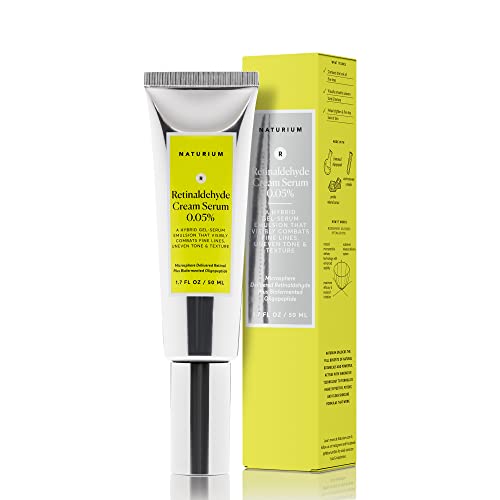
- ANTI-AGING & SMOOTH: Our results-driven serum visibly addresses the look of fine lines and wrinkles, uneven tone and tex…
- RESULTS-DRIVEN FORMULA: Formulated with sustained-release retinaldehyde, this potent next-gen retinol directly converts …
- MOST SKIN TYPES: Perfect for sensitive, dry, aging, and combination skin, though a patch test prior to use is advised. A…
Best for: Experienced skincare shoppers considering a retinal-based cosmetic formula.
Retinaldehyde, also called retinal, is used in some over-the-counter skincare products. It is chemically distinct from retinol, and individual products vary in concentration and formulation.
Do not assume retinal is always gentler or faster than retinol. Suitability depends on the product and your skin’s tolerance.
Before buying: Check the disclosed concentration when available, the manufacturer’s directions, and whether the formula contains fragrance or other ingredients that may irritate your skin.
5. Retinol Eye Cream
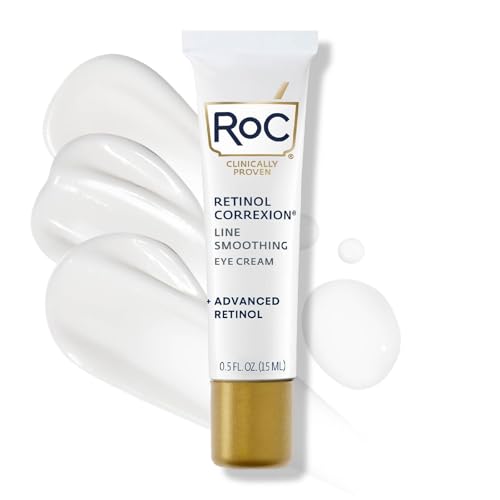
- PROVEN RESULTS: RoC eye cream with retinol combines RoC Retinol & our mineral complex. This hypoallergenic cream was des…
- SCIENCE & BEAUTY: We offer skin care treatments including moisturizers, cleansers, serums, wrinkle and tone regimens, pl…
- ROC RETINOL CORREXION EYE CREAM: Address the 3 key signs of eye aging—puffiness, dark circles & wrinkles—with 1 hard-wor…
Best for: People who want to target the appearance of fine lines around the eyes.
Some eye creams contain retinol or other Vitamin A derivatives. They may help improve the appearance of fine lines over time, but they cannot guarantee the removal of dark circles or puffiness, which can have many causes.
Use only as directed and keep the product out of the eyes. If you have eczema, persistent irritation, or very sensitive skin around the eyes, ask a dermatologist before using a retinoid there.
6. Prescription Tretinoin
Best for: People whose skin concerns require a clinician’s assessment.
Tretinoin is a prescription topical retinoid used for conditions including acne. A qualified healthcare professional can determine whether it is appropriate and explain how to use it.
Do not purchase prescription treatments from unverified sellers or use someone else’s medication. Stronger treatment is not automatically the best treatment.
Comparison: Which Vitamin A Product Type Fits Your Goal?
| Product type | Main consideration | Access in the US |
|---|---|---|
| Retinol serum | Fine lines and uneven texture | Over the counter |
| Retinol cream | Cosmetic anti-aging routine | Over the counter |
| Retinaldehyde cream | Alternative cosmetic retinoid | Often over the counter |
| Adapalene 0.1% gel | Acne treatment | Certain formulations over the counter |
| Tretinoin cream or gel | Clinically assessed skin concerns | Prescription |
How to choose: For cosmetic anti-aging, consider a retinol product. For acne, look into evidence-based acne treatments such as adapalene. For persistent pigmentation, severe acne, or significant irritation, professional guidance can help identify a more suitable approach.
How to Use Vitamin A Skincare Products Safely
The right application routine can help reduce unnecessary irritation. Follow the directions on your specific product, particularly if it is an acne medication rather than a cosmetic serum.
Step 1: Start With a Low-Frequency Routine
If you are new to retinol, begin with two nights per week or follow the product’s specific directions. Increase frequency gradually only if your skin tolerates it.
Step 2: Apply at Night
Many retinol products are intended for evening use. Apply the product to clean, dry skin according to its label.
Step 3: Use a Small Amount
For a typical facial retinol product, a pea-sized amount is often sufficient for the entire face. Avoid the eyelids, corners of the nose, lips, and any areas the product label tells you to avoid.
Step 4: Follow With Moisturizer
A fragrance-free moisturizer containing ingredients such as ceramides can help reduce dryness and support the skin barrier. Some people also find it helpful to apply moisturizer before retinol.
Step 5: Wear Sunscreen Every Morning
Use a broad-spectrum sunscreen with SPF 30 or higher. Reapply as directed, especially after swimming, sweating, or spending extended time outdoors.
Step 6: Avoid Overloading Your Routine
Avoid introducing multiple strong active ingredients at the same time. Combining retinoids with exfoliating acids, scrubs, or other potentially irritating products may increase discomfort.
If you experience persistent burning, swelling, severe redness, or painful peeling, stop using the product and seek medical advice.
Best Ingredients to Pair With Vitamin A
A supportive skincare routine can help keep skin comfortable while you use retinol.
Hyaluronic Acid
Hyaluronic acid is a humectant that attracts and retains moisture. It can help improve skin hydration and reduce the feeling of dryness.
Niacinamide
Niacinamide supports the skin barrier and can help improve the appearance of uneven tone. It is often included in moisturizers and serums.
Ceramides
Ceramides help support the skin’s protective barrier and reduce moisture loss. A ceramide-containing moisturizer can be useful if retinol makes your skin dry.
Glycerin
Glycerin is another humectant that helps attract water to the skin and supports hydration.
You do not need to buy a separate product for every ingredient. A well-formulated moisturizer may already contain several of these ingredients.
Common Vitamin A Skincare Mistakes
Using Too Much Too Soon
Applying a high-strength retinoid frequently from the beginning can increase irritation. Start gradually and follow the product label.
Expecting Immediate Results
Retinoids are not overnight treatments. Improvement in acne, fine lines, or pigmentation may take several weeks to months, depending on the concern and product.
Ignoring Irritation
Persistent redness, burning, or peeling is not a sign that a product is working better. Reduce use or stop and seek professional advice if symptoms persist.
Skipping Sunscreen
Daily sun protection is important for preventing further UV damage and supporting an anti-aging skincare routine.
Combining Multiple Retinoids
Using retinol, retinal, adapalene, and prescription tretinoin together without professional guidance can increase irritation without necessarily improving results.
Who Should Avoid Vitamin A Skincare Products?
Topical retinoids are not appropriate for everyone.
- Pregnancy: Avoid topical retinoids during pregnancy, including over-the-counter retinol, unless your healthcare professional gives specific advice. Dermatology guidance recommends avoiding these ingredients during pregnancy.
- Sensitive or irritated skin: People with eczema, rosacea, or a damaged skin barrier should seek professional guidance before starting a retinoid.
- People using acne medications: Check with a pharmacist or clinician before combining treatments.
- Breastfeeding: Ask your healthcare professional about the appropriate product and precautions.
Read the American Academy of Dermatology’s pregnancy skincare guidance before choosing active skincare ingredients during pregnancy.
How Long Does Vitamin A Take to Work?
There is no single timeline that applies to every Vitamin A product.
- First few weeks: Dryness, redness, or peeling may occur as side effects. Do not treat these symptoms as proof of effectiveness.
- Several weeks: Some people begin to notice improvement in acne or skin texture.
- Several months: Changes in the appearance of fine lines and pigmentation may become more noticeable with consistent use.
Results depend on the product, skin concern, formulation, frequency of use, and sun protection habits. Some conditions need medical treatment rather than cosmetic skincare alone.
A Simple Morning and Evening Routine
Morning Routine
- Cleanse with a gentle face wash.
- Apply a moisturizer suited to your skin type.
- Finish with broad-spectrum SPF 30 or higher sunscreen.
Evening Routine
- Remove makeup and cleanse gently.
- Apply your selected retinol product according to its instructions on the nights you use it.
- Follow with a moisturizer.
On nights when your skin feels irritated, skip the retinoid and focus on gentle cleansing and moisturizing. A simpler routine is often easier to maintain.
Related LifeCareBalance Guides
Explore these related skincare resources for additional product-selection guidance:
- Best Anti-Aging Creams for Youthful Skin
- Affordable Anti-Aging Skincare Products for Women
- Best Luxury Skincare Products for Face Glow
- LifeCareBalance Home
Use these links where they fit naturally in the article. Do not add unrelated internal links just to increase the link count.
Authoritative Resources and Further Reading
- American Academy of Dermatology — Retinoid or Retinol?
- American Academy of Dermatology — Pregnancy Skincare
- Cleveland Clinic — Retinol: Cream, Serum, Benefits, and Use
- NHS — Acne Treatment
- NICE — Acne Vulgaris: Management Recommendations
Frequently Asked Questions About Vitamin A Skincare
Is Vitamin A good for brighter skin?
Some topical retinoids can improve uneven skin tone and texture over time. Daily sunscreen is also important to help prevent further UV-related pigmentation.
Can I use retinol every day?
Some people tolerate certain retinol products daily, but beginners should start less frequently and follow the label. Daily use is not necessary for everyone.
Does retinol remove dark spots?
Retinol may help improve the appearance of some pigmentation irregularities. Results vary, and persistent or changing dark spots should be assessed by a healthcare professional.
Is retinal better than retinol?
Neither is automatically the best choice for everyone. Formula, concentration, skin sensitivity, and intended use all affect the decision.
Can I use Vitamin A products on sensitive skin?
Some people with sensitive skin may tolerate a carefully selected product, but retinoids can worsen irritation. Seek professional guidance if you have persistent redness, eczema, or rosacea.
Should I apply moisturizer after retinol?
Yes. Moisturizer can help reduce dryness and support the skin barrier. You can also ask a dermatologist whether applying moisturizer before your retinoid would suit your skin.
Can I use retinol while pregnant?
Avoid topical retinoids during pregnancy, including cosmetic retinol products. Consult your healthcare professional for suitable alternatives.
At what age should I start using retinol?
There is no universal age when everyone needs retinol. The decision should be based on your skin concerns, product suitability, and tolerance rather than age alone.
Is sunscreen necessary when using retinol?
Daily broad-spectrum SPF 30 or higher is recommended. Sun protection helps limit UV damage and supports a healthy skincare routine.
How long does retinol take to show results?
Some concerns may improve after several weeks, while changes in fine lines and pigmentation can take several months. Results vary by product and individual.
Final Thoughts
Vitamin A skincare products can be useful for improving the appearance of fine lines, uneven texture, and certain forms of acne and pigmentation. The most suitable product depends on your skin concerns, tolerance, and whether you need a cosmetic retinol or a treatment such as adapalene.
Start gradually, moisturize regularly, use sunscreen every day, and avoid combining too many irritating ingredients. If you are pregnant, have a persistent skin condition, or experience significant irritation, seek professional advice before continuing treatment.
For most people, a simple and consistent routine is a more practical starting point than purchasing multiple high-strength products.