
Build a healthier lifestyle with simple kitchen habits that boost nutrition, save time, and improve daily wellness. Discover smart cooking tips, clean eating practices, and easy routines for a better life.
LifeCareBalance.com is reader-supported. When you buy through links on our site, we may earn an affiliate commission at no extra cost to you. As an Amazon Associate, we earn from qualifying purchases.
A healthy life doesn’t start in the gym—it starts in your kitchen. The way you prepare, cook, and consume your food has a direct impact on your physical health, mental well-being, and overall lifestyle. By building simple yet powerful kitchen habits, you can transform your daily routine and create long-term wellness.
In this guide, we’ll explore practical and easy-to-follow healthy kitchen habits that can significantly improve your life.
1. Keep Your Kitchen Clean and Organized
A clean kitchen is the foundation of healthy living. When your space is organized, cooking becomes easier, faster, and more enjoyable.
Cluttered kitchens often lead to unhealthy choices because you feel overwhelmed or stressed. On the other hand, a tidy kitchen motivates you to cook fresh meals instead of ordering fast food.
Tips:
- Clean as you cook
- Keep countertops clutter-free
- Store ingredients in labeled containers
- Regularly check for expired food
A hygienic kitchen also reduces the risk of foodborne illnesses, keeping you and your family safe.
2. Plan Your Meals in Advance
Meal planning is one of the most powerful habits you can adopt. It helps you avoid unhealthy last-minute food decisions and ensures you always have nutritious meals ready.
When you plan your meals, you are more likely to include balanced portions of proteins, carbohydrates, and healthy fats.
Benefits of Meal Planning:
- Saves time and money
- Reduces food waste
- Helps maintain a healthy diet
- Supports weight management
Start by planning meals for 3–5 days and gradually build a weekly routine.
3. Cook More at Home
Home-cooked meals are generally healthier than restaurant or processed foods. When you cook at home, you have full control over ingredients, portion sizes, and cooking methods.
Eating out frequently often leads to consuming excess salt, sugar, and unhealthy fats.
Healthy Cooking Tips:
- Use less oil and salt
- Prefer grilling, steaming, or baking
- Choose fresh over processed foods
- Avoid deep frying
Cooking at home not only improves your diet but also strengthens family bonding.
4. Stock Healthy Ingredients
Your food choices depend heavily on what’s available in your kitchen. If your pantry is filled with junk food, you’re more likely to eat it.
Instead, keep your kitchen stocked with nutritious options.
Must-Have Healthy Foods:
- Fresh fruits and vegetables
- Whole grains (brown rice, oats)
- Lean proteins (chicken, eggs, beans)
- Healthy fats (nuts, olive oil)
When healthy options are easily accessible, making better choices becomes effortless.
5. Practice Portion Control
Even healthy food can become unhealthy if eaten in excess. Portion control is essential for maintaining a balanced diet and avoiding overeating.
Many people unknowingly consume more calories than needed simply because of large serving sizes.
Simple Portion Tips:
- Use smaller plates
- Avoid eating directly from packages
- Listen to your body’s hunger signals
- Stop eating when you feel satisfied, not full
Balanced portions help in weight management and improve digestion.
6. Stay Hydrated
Water plays a crucial role in overall health, yet it’s often overlooked. Keeping water easily accessible in your kitchen encourages regular hydration.
Many people confuse thirst with hunger, leading to unnecessary snacking.
Hydration Tips:
- Keep a water bottle nearby
- Drink water before meals
- Add lemon or mint for flavor
- Limit sugary drinks
Proper hydration improves digestion, energy levels, and skin health.
7. Reduce Processed Foods
Processed foods may be convenient, but they often contain high levels of sugar, sodium, and unhealthy fats.
Making a habit of minimizing processed food intake can significantly improve your health.
Examples to Limit:
- Packaged snacks
- Sugary cereals
- Frozen ready meals
- Soft drinks
Instead, focus on whole, natural foods that nourish your body.
8. Read Food Labels Carefully
Understanding what you eat is a key step toward better health. Food labels provide important information about ingredients, calories, and nutritional value.
What to Check:
- Sugar content
- Sodium levels
- Artificial additives
- Serving size
Being aware of what goes into your body helps you make smarter food choices.
9. Prep Ingredients Ahead of Time
One of the biggest barriers to healthy eating is lack of time. Preparing ingredients in advance can make cooking quick and stress-free.
Meal Prep Ideas:
- Chop vegetables in advance
- Marinate proteins
- Cook grains in bulk
- Store meals in containers
With everything ready, you’re less likely to rely on unhealthy fast food.
10. Use Healthy Cooking Methods
How you cook your food matters just as much as what you cook.
Certain cooking methods preserve nutrients, while others can add unnecessary calories.
Best Cooking Methods:
- Steaming
- Grilling
- Baking
- Stir-frying with minimal oil
Avoid excessive frying, as it increases unhealthy fat intake.
11. Limit Sugar Intake
Excess sugar consumption is linked to various health issues, including obesity, diabetes, and heart disease.
Reducing sugar in your kitchen can lead to significant health improvements.
Ways to Cut Sugar:
- Avoid sugary drinks
- Use natural sweeteners in moderation
- Limit desserts and sweets
- Check hidden sugars in packaged foods
A low-sugar diet helps maintain stable energy levels and better overall health.
12. Practice Mindful Eating
Healthy eating is not just about food—it’s also about how you eat.
Mindful eating involves paying attention to your meals, chewing slowly, and enjoying each bite.
Benefits:
- Prevents overeating
- Improves digestion
- Enhances satisfaction
Avoid distractions like TV or mobile phones while eating.
13. Maintain Food Safety
Food safety is a crucial but often ignored aspect of kitchen habits.
Improper handling of food can lead to contamination and illness.
Safety Tips:
- Wash hands before cooking
- Store food at proper temperatures
- Cook meat thoroughly
- Avoid cross-contamination
Safe food practices protect your health and well-being.
14. Build a Routine
Consistency is key to long-term success. Healthy kitchen habits should become part of your daily routine.
Start small and gradually incorporate new habits into your lifestyle.
Example Routine:
- Morning: Prepare healthy breakfast
- Afternoon: Eat balanced lunch
- Evening: Cook a light, nutritious dinner
Over time, these habits will become second nature.
15. Involve Family Members
Healthy living becomes easier when everyone in the household participates.
Cooking and eating together encourages better habits and strengthens relationships.
Ideas:
- Cook meals together
- Teach kids healthy eating
- Share responsibilities
A supportive environment makes it easier to maintain a healthy lifestyle.
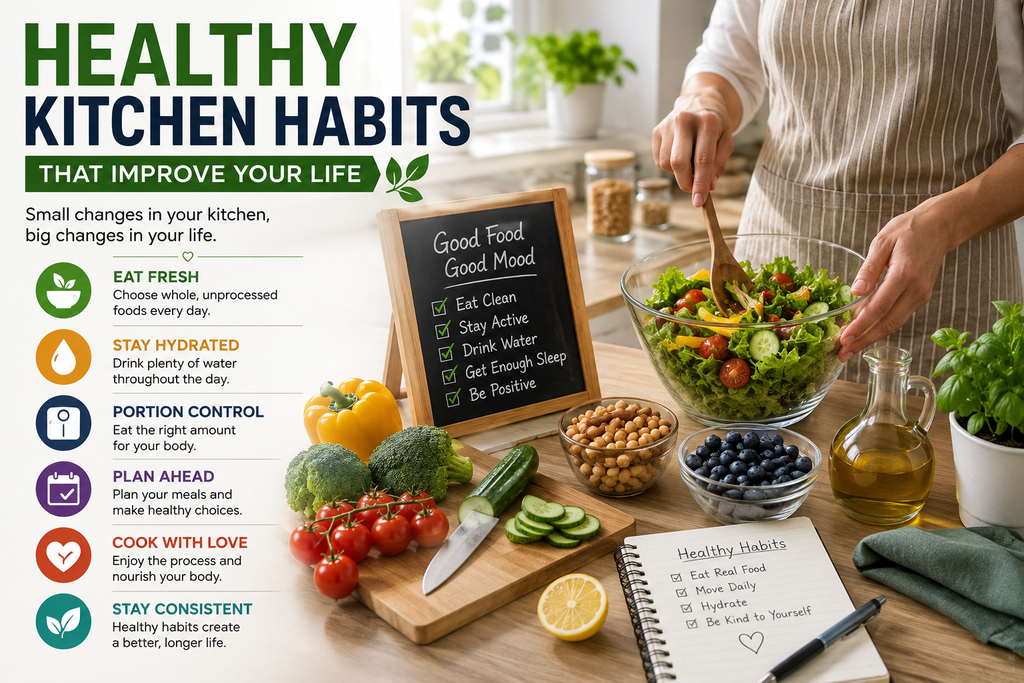
Conclusion
Healthy kitchen habits are the building blocks of a better life. Small changes in how you shop, cook, and eat can lead to significant improvements in your overall health.
You don’t need to make drastic changes overnight. Start with one or two habits and gradually build a routine that works for you.
Remember, your kitchen is more than just a place to cook—it’s where your journey to a healthier, happier life begins.
1. What are healthy kitchen habits?
Healthy kitchen habits are daily practices like meal planning, cooking at home, using fresh ingredients, and maintaining cleanliness. These habits help improve your overall health and lifestyle.
2. How can I start building healthy kitchen habits?
Start small by organizing your kitchen, planning meals, and reducing processed foods. Gradually add habits like portion control and mindful eating to create a sustainable routine.
3. Why is cooking at home important for health?
Cooking at home allows you to control ingredients, portion sizes, and cooking methods. It helps reduce intake of unhealthy fats, sugar, and salt commonly found in restaurant meals.
4. How does meal planning improve my lifestyle?
Meal planning saves time, reduces stress, and ensures you eat balanced meals. It also helps avoid unhealthy last-minute food choices and supports weight management.
5. What foods should I keep in a healthy kitchen?
A healthy kitchen should include:
- Fresh fruits and vegetables
- Whole grains
- Lean proteins
- Healthy fats like nuts and olive oil
These foods support better nutrition and energy levels.
6. How can I reduce unhealthy eating at home?
You can reduce unhealthy eating by:
- Avoiding junk food in your kitchen
- Preparing meals in advance
- Drinking enough water
- Practicing portion control
7. What is mindful eating and why is it important?
Mindful eating means paying full attention to your food while eating slowly and without distractions. It helps improve digestion and prevents overeating.
8. How does kitchen cleanliness affect health?
A clean kitchen prevents bacteria and food contamination, reducing the risk of illnesses. It also creates a positive environment for cooking healthy meals.
9. Can healthy kitchen habits help with weight loss?
Yes, healthy kitchen habits like portion control, cooking at home, and reducing sugar intake can support weight loss and long-term weight management.
10. How long does it take to build healthy habits?
It depends on consistency, but most habits take a few weeks to become routine. Start small and stay consistent for lasting results.:https://lifecarebalance.com/
Also read:https://lifecarebalance.com/best-adjustable-dumbbells-for-beginners-men/
Also read:https://lifecarebalance.com/best-adjustable-dumbbells-for-skinny-guys-at-home/